The Wars of the Roses produced plenty of controversial figures. But few met a more sudden or suspicious end than William, Lord Hastings.
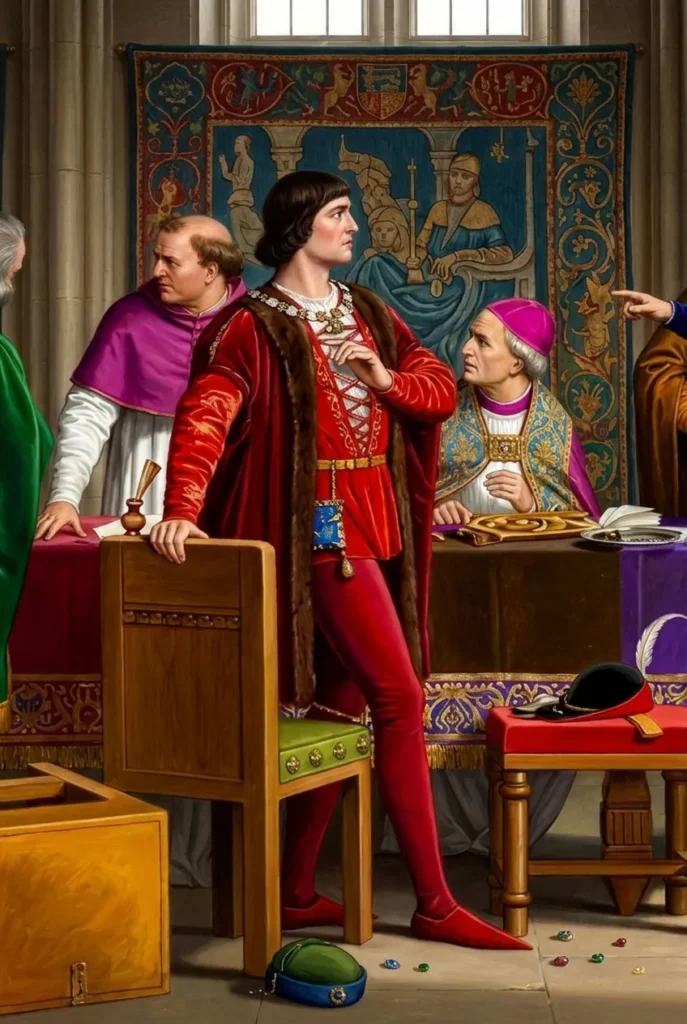
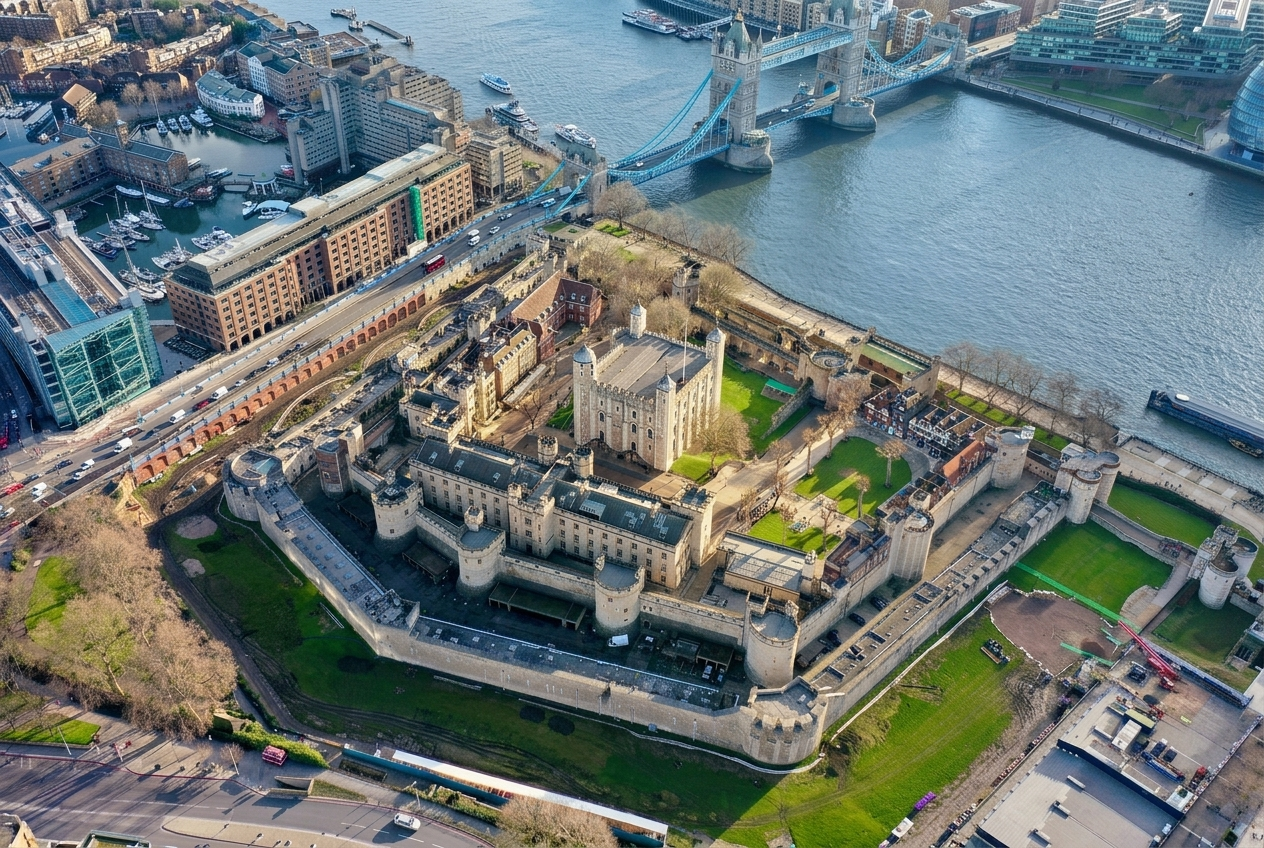
On June 13, 1483, Hastings walked into a council meeting at the Tower of London. Before the day was out, he’d lost his head.
The man who ordered his execution was Richard, Duke of Gloucester, then Lord Protector of England and soon to be King Richard III. Hastings was accused of treason and summarily beheaded without a trial.
It was a rather extraordinary fate for a man who had spent decades loyally serving the House of York.
Richard’s detractors insist Hastings stood between him and the crown. His defenders, you can be certain, beg to differ.
So was Hastings a traitor, a political obstacle, or simply loyal to the wrong Yorkist? And where does the truth lie? Lets assess.
Lord Hastings: From Royal Favorite to Suspected Traitor
Who Was Lord Hastings?
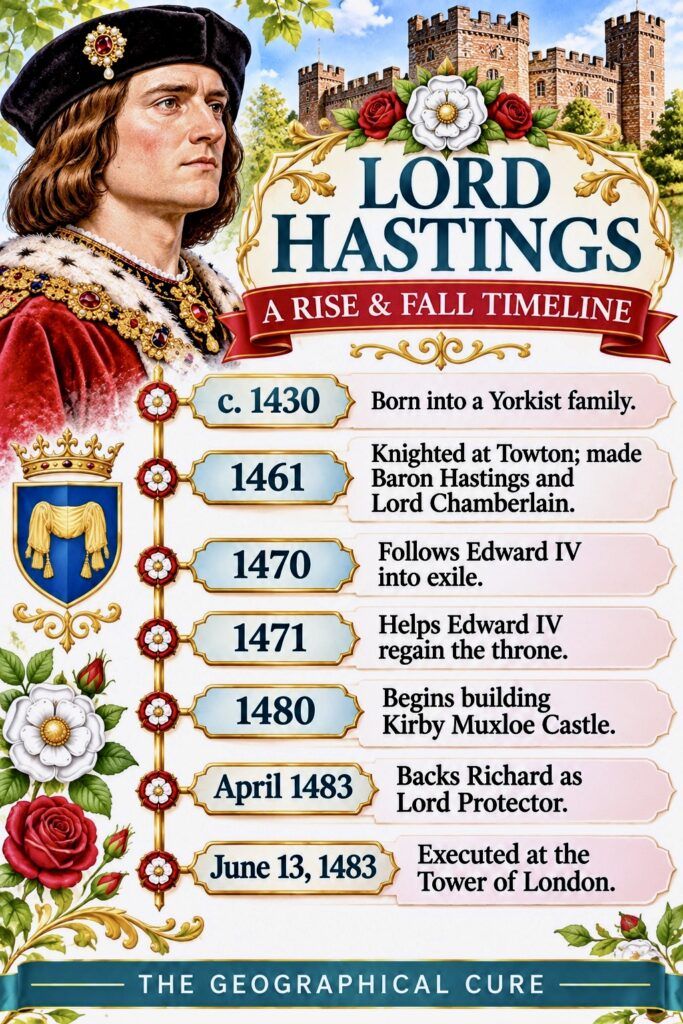
Born around 1430, William Hastings was the eldest son of Sir Leonard Hastings and Alice Camoys. He inherited family estates in Leicestershire and Warwickshire.
His Yorkist loyalties ran deep. His father had served Richard, Duke of York, who recommended young Hastings to his son Edward, the future Edward IV.
Hastings became one of Edward’s closest friends and most trusted supporters. He fought alongside him during the Wars of the Roses and was knighted after the Battle of Towton in 1461.
Edward rewarded his loyalty handsomely. He made Hastings a baron in 1461, appointed him Lord Chamberlain, and showered him with estates, lucrative offices, and royal favors. He later became Lieutenant of Calais.

Hastings wasn’t just a court favorite either. He was a capable soldier and diplomat with enormous political influence.
When Warwick the Kingmaker turned against Edward in 1470, Hastings stuck by his king, even though Warwick was his own brother-in-law. He accompanied Edward and Richard into exile and helped Edward reclaim his throne in 1471.
By then, Hastings was one of the most powerful men in England. One contemporary observer claimed he had more influence over Edward than anyone alive.
Edward even granted him the extraordinary privilege of being buried near him in St. George’s Chapel at Windsor Castle.
That’s a tight bond.

Relationship With Elizabeth Woodville
Although Hastings loved Edward, he had a much frostier relationship with his queen, Elizabeth Woodville.
Elizabeth reportedly resented Hastings for encouraging Edward’s fondness for drinking and saucy wenches. Not that the notoriously lusty Edward needed much encouragement in that department.
But the real problem was political. Hastings was competing with Elizabeth’s relatives for the king’s favor, lucrative offices, and influence.
The rivalry became particularly bitter when Hastings secured the coveted Calais appointment over Elizabeth’s brother Anthony Woodville, Earl Rivers.
As Lord Chamberlain, Hastings also enjoyed constant access to Edward, something the Woodvilles couldn’t entirely control.
Still, relations weren’t uniformly hostile. Hastings had family connections to the Woodvilles and sometimes cooperated with them. Court politics rarely divided into such tidy camps.
But the rivalries never entirely disappeared. And when Edward IV died unexpectedly in April 1483, they suddenly became a great deal more dangerous.

Edward IV Dies: An Uneasy Alliance
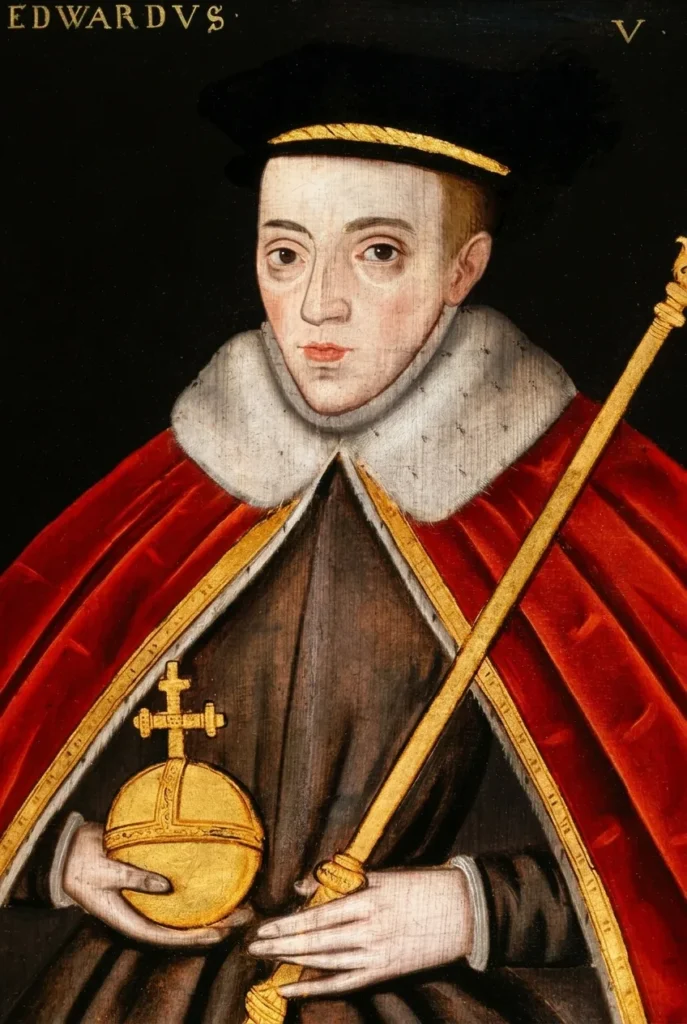
When Edward IV died in April 1483, his 12 year old son inherited the throne as Edward V. Edward had designated his younger brother Richard, Duke of Gloucester, as Lord Protector during the boy’s minority.
Elizabeth was hardly thrilled. She disliked Richard, and her family was determined to remain control of the young king.
But Richard intercepted the young king’s entourage and arrested her brother Anthony Woodville. She and her son, Richard Grey, fled to sanctuary at Westminster Abbey.
Hastings, meanwhile, initially backed Richard. He distrusted the Woodvilles and preferred Edward’s brother to the queen’s ambitious relatives.

But there was a catch. Hastings’ first loyalty was to Edward IV and, by extension, his young son. He’d supported Richard as Protector, not necessarily as a replacement king.
For years, Hastings and Richard had served Edward IV loyally. Hastings had little reason to expect that Richard would turn on him.
But by June, Richard postponed Edward V’s coronation. Richard controlled the young king, and the Protector was surrounding himself with his own allies.
Was Hastings beginning to wonder just how much protecting Richard intended to do?
A Treasonous Plot or Loyalty to the Wrong Yorkist?
As Richard tightened his grip on the government, Edward IV’s old advisers began to feel increasingly sidelined.
Hastings and Lord Stanley, in particular, may have resented their diminishing influence. Richard surrounded himself with his own favorites, especially the Duke of Buckingham and John Howard.
Hastings had enjoyed enormous influence under Edward IV. Now Buckingham seemed to be taking his place. That must have stung.
Meanwhile, Hastings, Stanley, John Morton (Bishop of Ely), and Thomas Rotherham (Archbishop of York), were holding private meetings.
Ostensibly, they discussed Edward V’s coronation and government business. But were they discussing something more sinister?
According to the contemporary observer Dominic Mancini, Buckingham learned of these gatherings and alerted Richard.
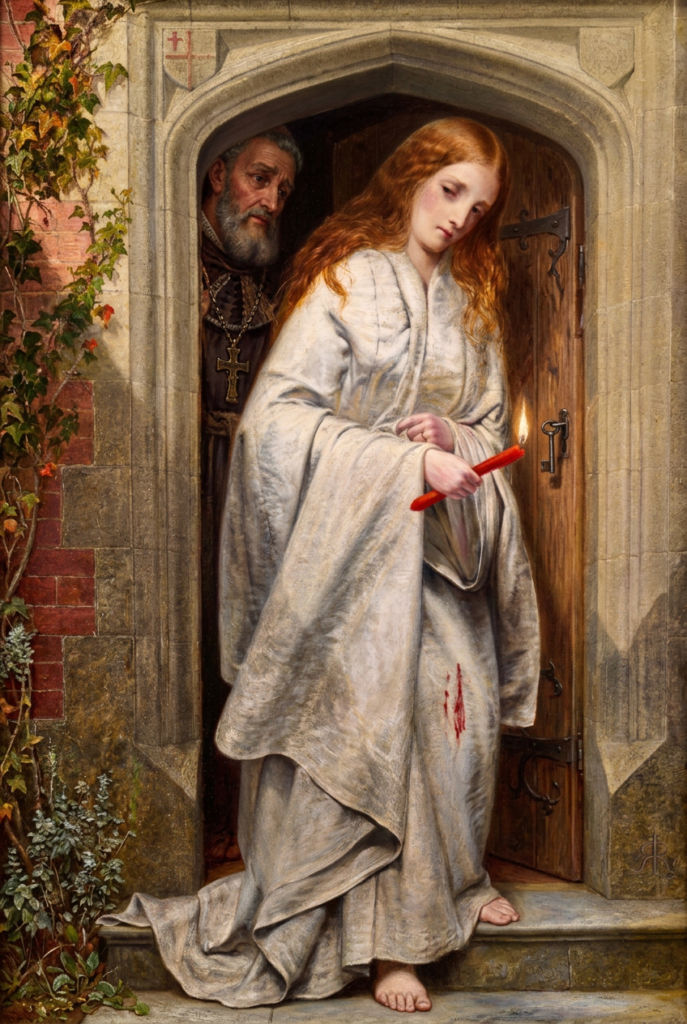
There was another suspicious connection. Jane Shore, Edward IV’s former mistress and later Hastings’ lover, was romantically involved with Thomas Grey, Elizabeth’s son.
Could Shore have acting as a go between Hastings and his former Woodville enemies? Possibly. But there’s no solid evidence to that effect.
Within days of Hastings’ execution, Shore herself was imprisoned. It’s suggestive. But her arrest may have had more to do with Dorset than Hastings.
Still, it raises an intriguing possibility. Hastings had helped Richard neutralize the Woodvilles only weeks earlier. Now, he might have been contemplating an alliance with them.
But politics makes strange bedfellows. Whatever their personal animosities, Hastings and Elizabeth Woodville shared one overriding interest: keeping Edward V on the throne.

And protecting Edward V’s interests wasn’t necessarily treason. Hastings could support Richard as Protector while opposing any attempt to disinherit the young king.
But Richard may have perceived things differently. A group of powerful, disgruntled councillors, potentially joining forces with the Woodvilles, posed a serious threat to his authority.
Perhaps they were plotting to oust Richard as Protector and take control of Edward V’s government themselves? And could he chance that?
There’s no convincing contemporary evidence of such a plot, much less a scheme to murder Richard. But it’s not difficult to understand why Richard might have been suspicious.
Was Richard genuinely frightened of a conspiracy? Or did he seize on these meetings as a convenient excuse to eliminate a man who stood between him and the crown?
A Council Meeting Turns Deadly
The Dramatic Meeting
If it was a coup, the Hastings alliance severely underestimated Richard. When informed of the meetings, he acted swiftly.
On June 10, Richard sent letters north requesting armed assistance against alleged threats from the queen’s family. He didn’t name Hastings as an enemy.
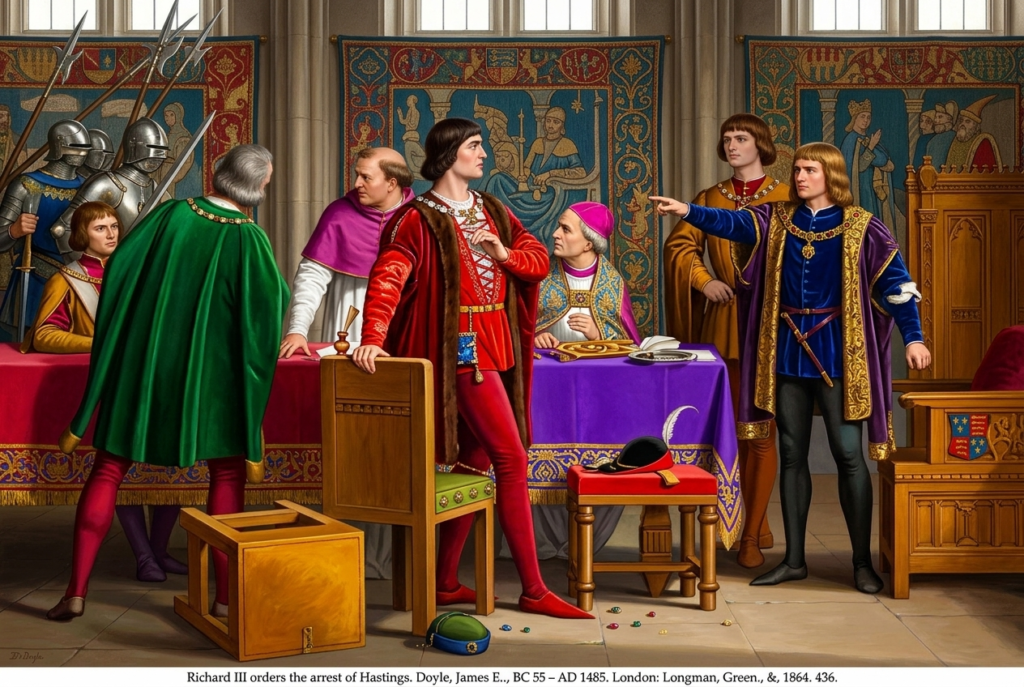
Just three days later, in a scene immortalized by Shakespeare, Richard called a dramatic council meeting at the Tower of London.
Richard announced his knowledge of the conspiracy and accused Hastings and his conspirators of treason. Armed guards were standing by.
One June 13, Hastings was arrested and executed at the Tower without a conventional trial. Stanley, Morton, and Rotherham were arrested as well. After Hastings’ execution, a herald publicly announced that a conspiracy had been uncovered and its leader punished.
Why the Reversal?
Richard’s sudden reversal on Hastings was extraordinary. And inconsistent with his known behavior. What had changed?
There are three plausible explanations.
First, Richard genuinely believed Hastings was conspiring against him. He knew that disgruntled councillors were meeting privately. In the paranoid political climate of 1483, that was hardly reassuring.
Second, Richard may have discovered that Hastings opposed his accession. A powerful, well-connected Yorkist loyal to Edward V was a serious obstacle if Richard intended to claim the throne himself.
Third, Buckingham may have manipulated Richard’s suspicions. He had ambitions of his own, and Hastings was a formidable rival for influence. The contemporary observer Dominic Mancini gives Buckingham a central role in the affair.
Unfortunately, the surviving evidence doesn’t tell us which explanation is correct. Or whether several were operating at once.
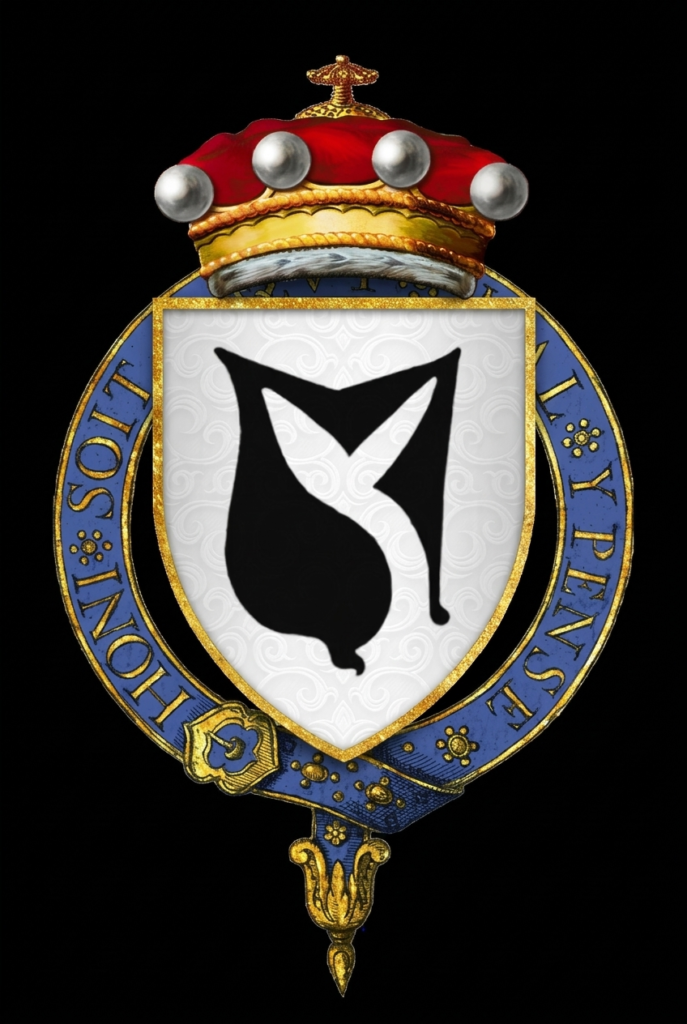
Why Not Imprison Hastings?
If Richard simply wanted Hastings out of the way, why not imprison him?
He imprisoned Morton and Rotherham, two other alleged conspirators. He’d also kept Anthony Woodville and Richard Grey in custody for weeks rather than immediately executing them.
Why was Hastings different?
Perhaps Richard considered him uniquely dangerous. Hastings had enormous prestige, substantial resources, and the loyalty of influential Yorkists. Even behind bars, he might have become a rallying point for opposition.
Or perhaps Richard wanted to make an example of him. Executing one of Edward IV’s closest allies would send a chilling message to the political establishment. Richard would brook no opposition, even from longtime friends.
There’s a less calculating possibility too. Richard may have discovered something he considered a personal betrayal and responded with disproportionate fury.
His long record of loyalty to Edward IV was no guarantee that he’d remain measured when his own survival was at stake.
And fear and political calculation aren’t necessarily mutually exclusive.
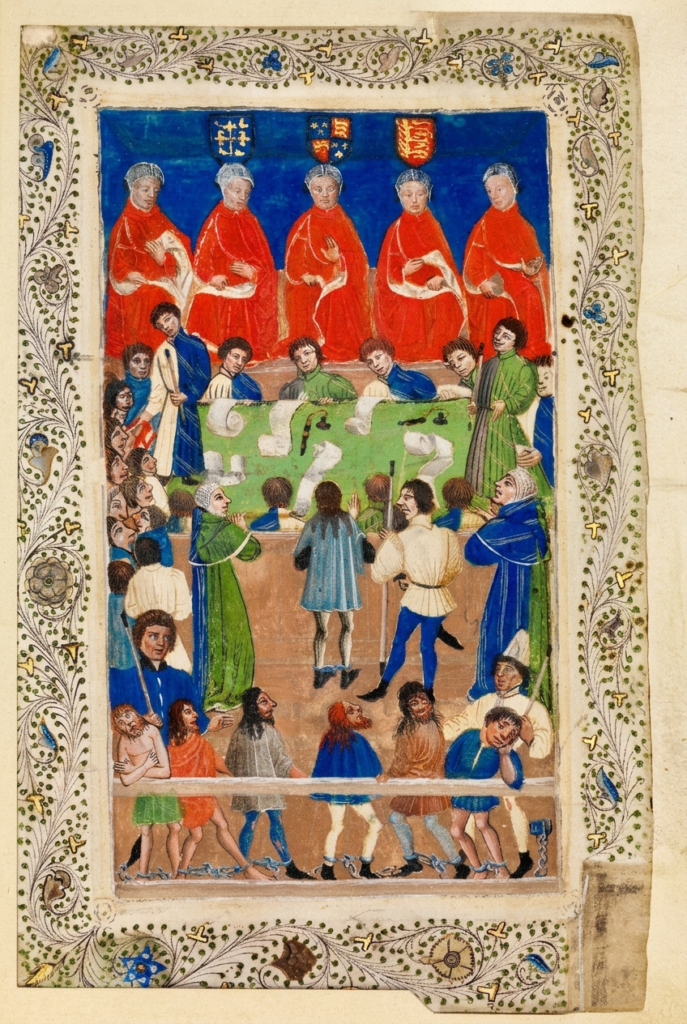
The Lord High Constable Argument
There’s also a possible legal explanation for the hasty execution.
Philippa Langley, drawing on historian Annette Carson’s research, argues that Richard, as Lord High Constable of England, had extraordinary powers to try and execute suspected traitors through a summary judicial proceeding.
If so, Hastings’ execution may have been lawful, even without a conventional trial. And Richard may have thought this was just business as usual.
But there’s a catch. Very few records of the Constable Court exist. And, there is no surviving record that a proceeding took place, much less one establishing Hastings’ guilt.
And it still doesn’t really explain why Richard chose execution over imprisonment.
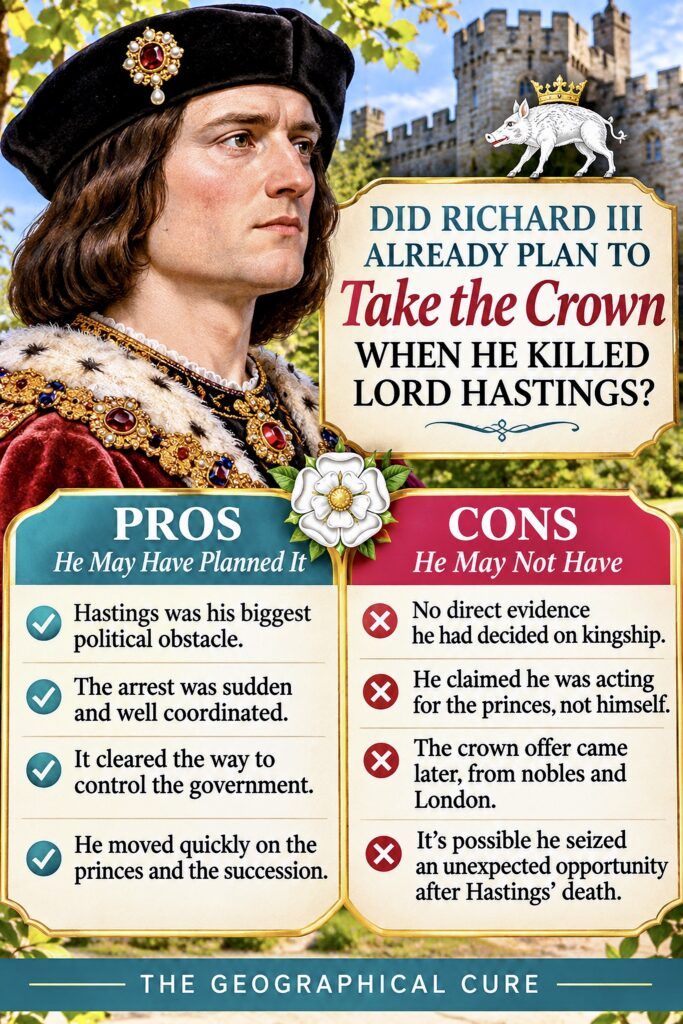
Had Richard Already Decided to Take the Crown?
Then, there’s a darker possibility. Did Richard have Hastings beheaded because he’d already decided to become king?
Or was he genuinely alarmed by a suspected conspiracy and increasingly fearful for his own safety?
Historians have been arguing about Richard’s motives for centuries. No surprise there.
The Prosecution’s Case
The case against Richard rests largely on the suspicious sequence of events in June 1483.
Richard had already taken control of Edward V, arrested his Woodville relatives, and postponed the boy’s coronation.

On June 10, claiming the queen’s faction threatened his life, he summoned armed supporters from the north.
Three days later, he executed Hastings and arrested several influential councillors. No convincing evidence of treason was made public.
The timing looks suspiciously convenient. And Richard wasn’t finished.
On June 16, he secured custody of Edward V’s younger brother Richard On June 22, a sermon challenged the legitimacy of Edward IV’s children. Buckingham then promoted Richard’s claim, and on June 26, Richard accepted the crown.
Parliament later formalized his claim in Titulus Regius in 1484.

In less than two weeks, Hastings was dead, both princes were in Tower, and the Protector was king.
Coincidence? The prosecution argues that Richard wasn’t merely reacting to events. He was directing them.
Perhaps he had no grand plan when Edward IV died. But by mid-June, he may have decided the crown was within reach. Hastings stood squarely in his way, and he needed to eliminate that political threat.
It’s a powerful circumstantial case. But does the chronology prove premeditation? Or are we mistaking a series of improvised decisions for a carefully orchestrated coup?
The Defense
Richard’s defenders (and I tend to be one of them) see a very different picture.
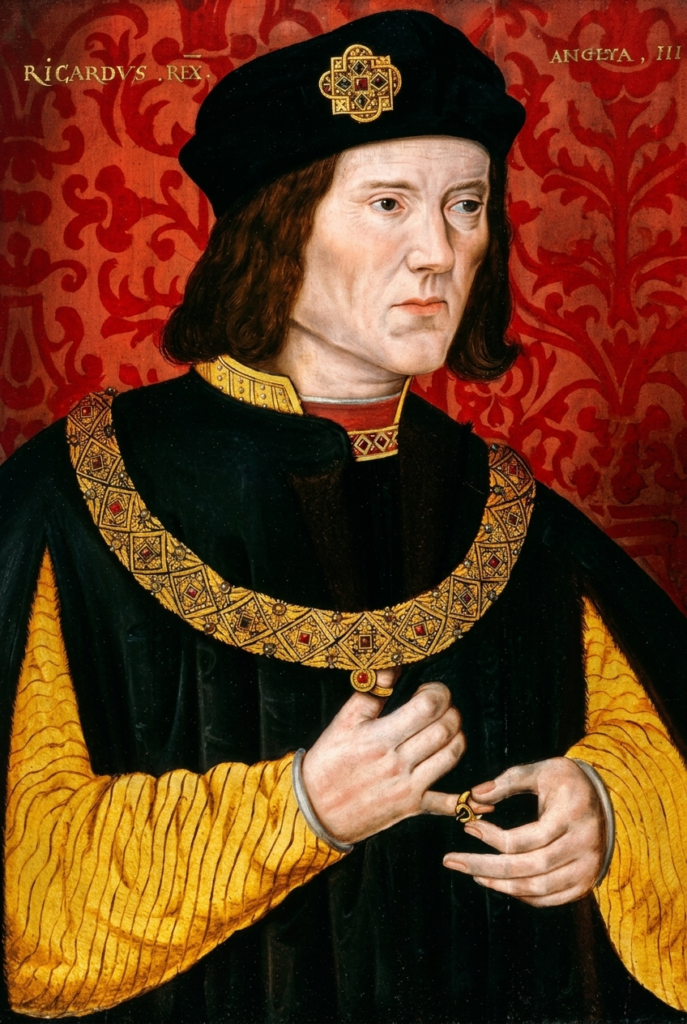
For years, Richard had been unfailingly loyal to Edward IV. He supported him through rebellion, exile, and restoration. Unlike their brother George, Richard had never tried to overthrow him.
Why assume he suddenly, almost overnight, became a calculating usurper?
There’s also Edward IV’s own judgment. He apparently trusted Richard enough to name him Lord Protector, entrusting the government to him during his young son’s minority. Edward’s final instructions haven’t survived, but contemporary accounts support the appointment.
Edward evidently considered Richard a safeguard for his dynasty, not a threat to it.
And Richard didn’t immediately claim the crown. For weeks, he governed in Edward V’s name and prepared for Edward’s coronation.
That doesn’t prove his intentions were honorable. But it complicates the theory that he’d planned a usurpation from the outset.

By April 1483, Richard faced an extraordinarily dangerous political situation. The king was dead, his heir was a child, and powerful factions were competing for control of the government.
The Woodvilles had every incentive to marginalize Richard. Their push for a speedy coronation threatened to curtail his protectorship.
Richard may genuinely have feared for his position, perhaps even his life. And Hastings’ private meetings with disgruntled councillors weren’t necessarily innocent.
Why were they meeting in secret? What if they were planning to remove Richard as Protector, possibly with Woodville assistance?
If Richard believed his enemies were preparing to strike or assassinate him, he may have acted preemptively, however brutally. Removal was a matter of political survival.
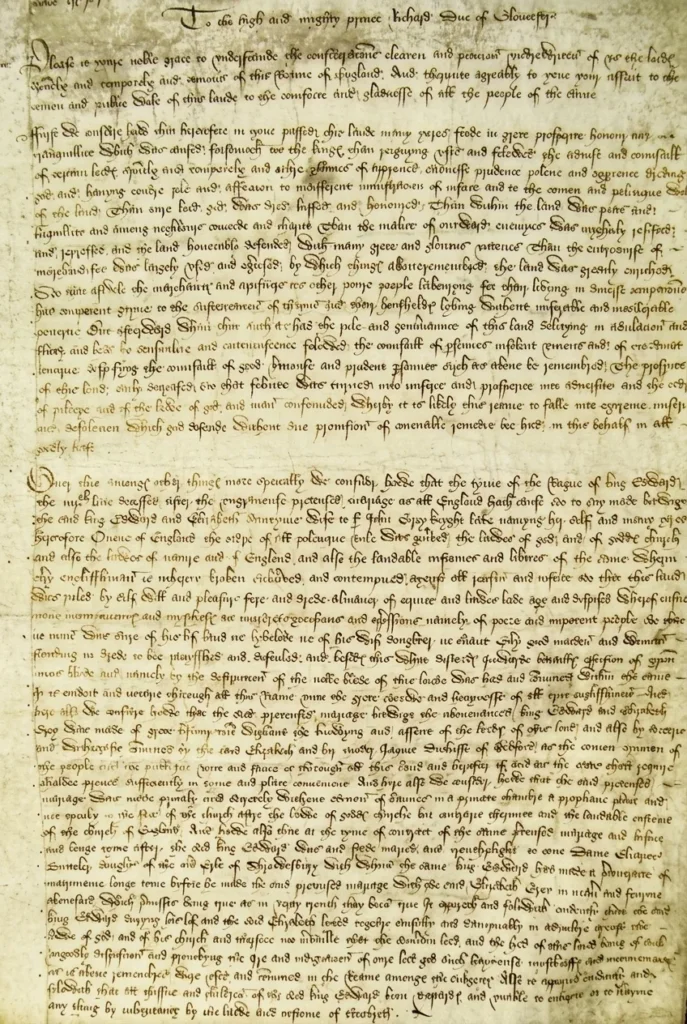
There’s also the question of Edward V’s legitimacy. If Richard genuinely believed Edward IV had entered a binding pre-contract with Eleanor Butler, he may have considered his nephews illegitimate and himself the rightful heir.
That doesn’t establish the precontract was genuine. Nor do we know when Richard learned of the allegation. But it offers a possible legal and dynastic motive beyond naked ambition.
Finally, Richard didn’t simply announce that he was king. His accession was publicly justified through a claim of hereditary right, supported by a petition from leading figures of the realm.
They wanted him to be king. They weren’t coerced into it. Or at least not all of them.
The defense concludes that Richard may have been responding to a genuine crisis, rather than executing a long-planned conspiracy for the crown.

Ultimately, the defense doesn’t have to prove that Richard never wanted the crown. Only that his intentions may have changed as the political crisis unfolded.
He could have started out determined to protect his position, become increasingly convinced that his enemies threatened him, and finally concluded that the safest place for him was on the throne.
That’s a rather different story from a carefully orchestrated usurpation.
The Verdict: Treason or Political Elimination?
I don’t buy the theory that Richard set out with a master plan to steal the crown and purge his way to power. To me, it looks less like a carefully plotted usurpation than a desperate attempt to preserve his power, perhaps even save his skin.
The chronology is certainly damning. But suspicious timing isn’t proof of premeditation.
We have allegations of a Hastings conspiracy, but little solid evidence of what he was plotting, if anything. Nor is there proof that Richard had already decided to take the crown.
I suspect fear was a stronger motive than ambition, though the two may have become intertwined.

But Hastings’ execution remains the sticking point. Whatever Richard’s legal authority, the haste and severity of his treatment of a longtime ally seem strangely at odds with his previous conduct.
I can believe Richard genuinely feared a conspiracy. I have a harder time believing Hastings had to die for it. Richard had other options. He chose the most irreversible.
But a pre-arranged execution isn’t the same as a pre-arranged usurpation. Richard could have decided Hastings was dangerous, planned his removal, and only subsequently concluded that taking the crown was his safest course.
You don’t have to solve every mystery to reach a reasoned verdict.
I hope you’ve enjoyed my history of Lord Hastings and Richard III. You may find these other English histories interesting:
- Royal Whodunits
- English myths
- History of Medieval and Tudor England
- Tudor queens of England
- Power Women of Medieval & Tudor England
- Historical Mistresses and Favorites
- Wives of Henry VIII
- Worst kings of England
- Anglo-Saxon kings of England
Pin it for later.