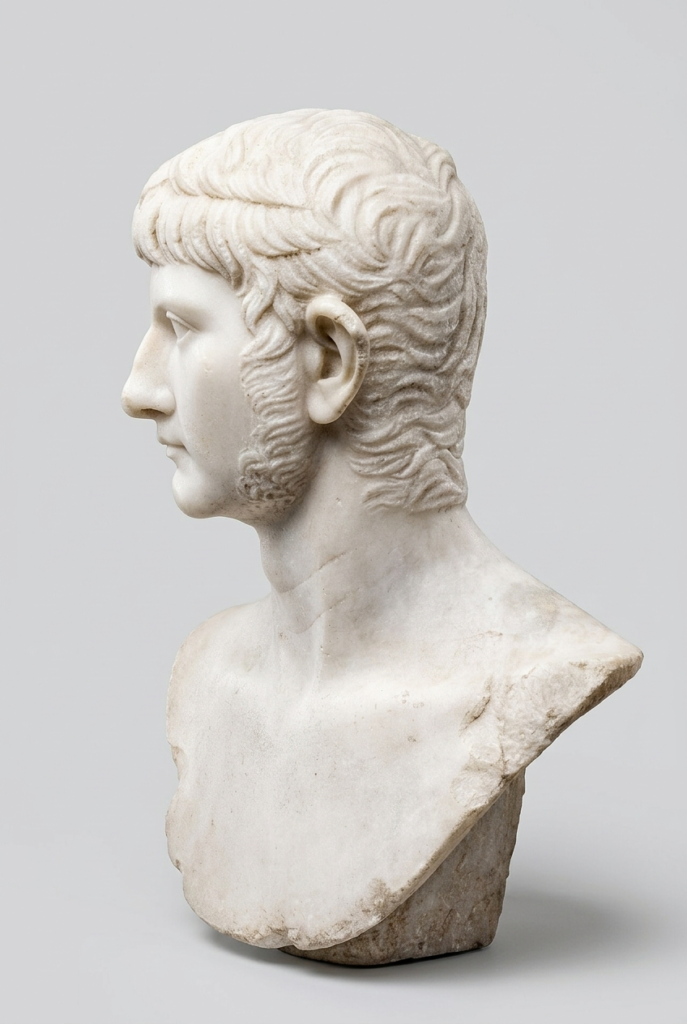
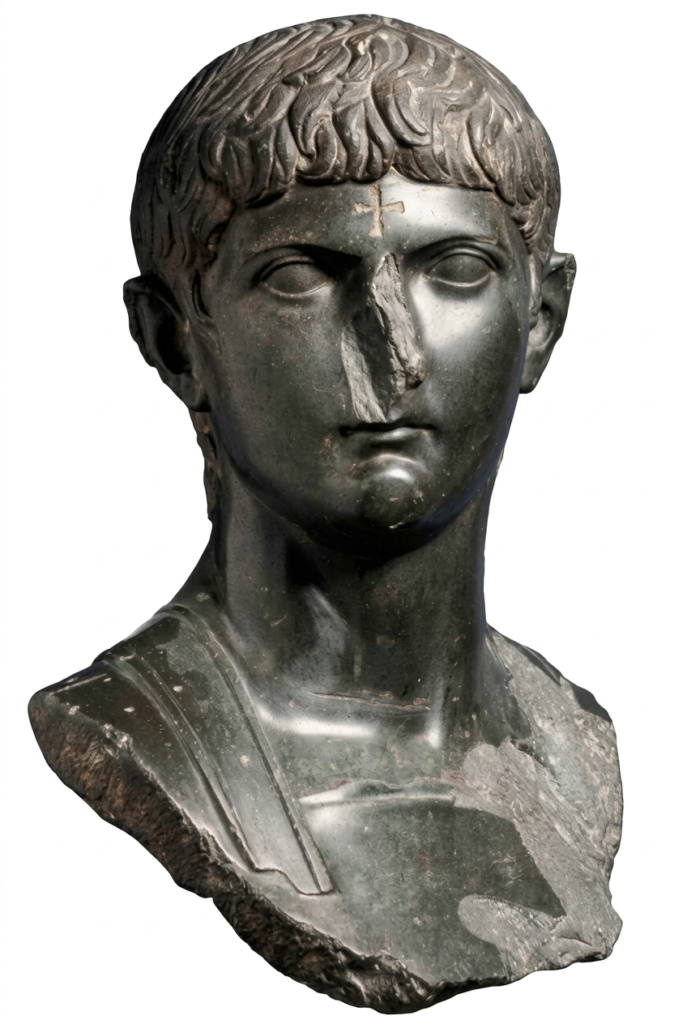
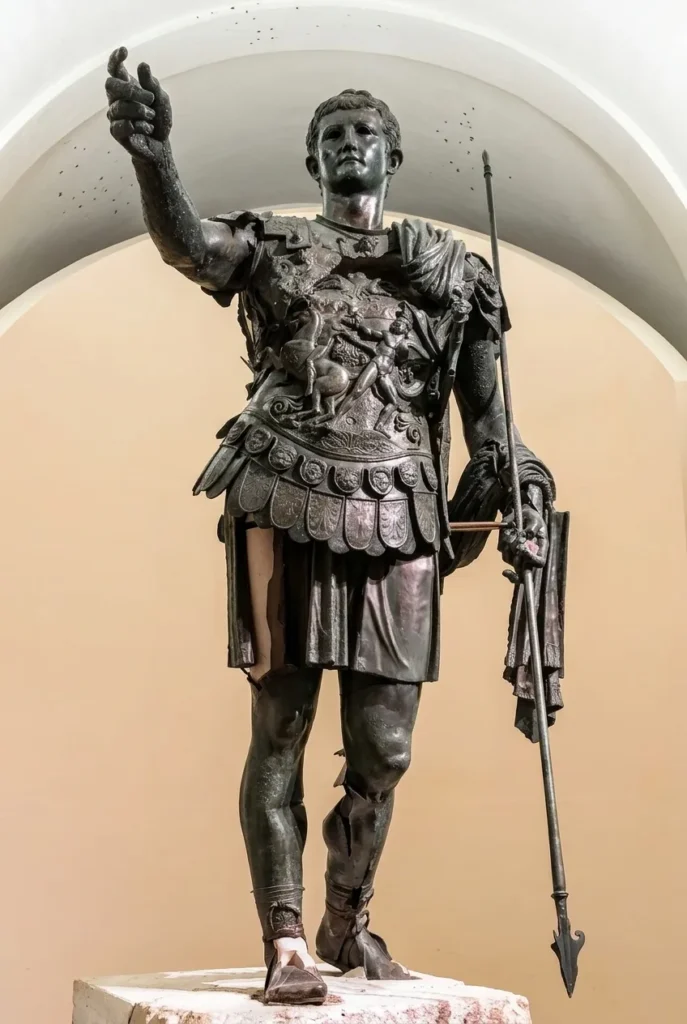
Germanicus was the most dashing young man in Rome. He was enormously popular, heir to Tiberius, and destined to become the next emperor.
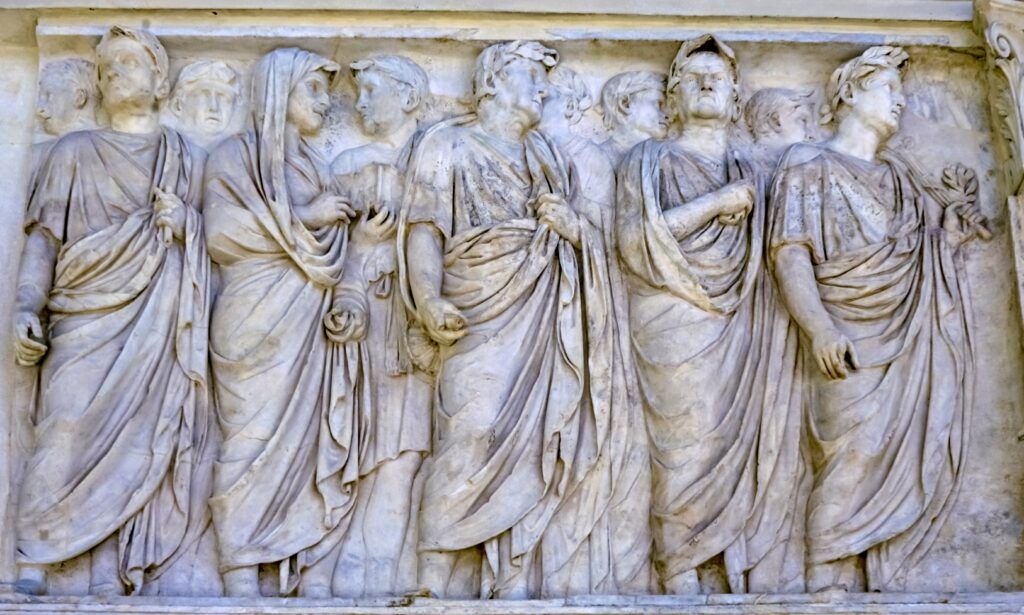
He and his wife Agrippina the Elder were one of Rome’s true celebrity couples.
He was the fearless conquering general. She was the beautiful granddaughter of the divine Augustus, fiercely devoted to her husband and his career.
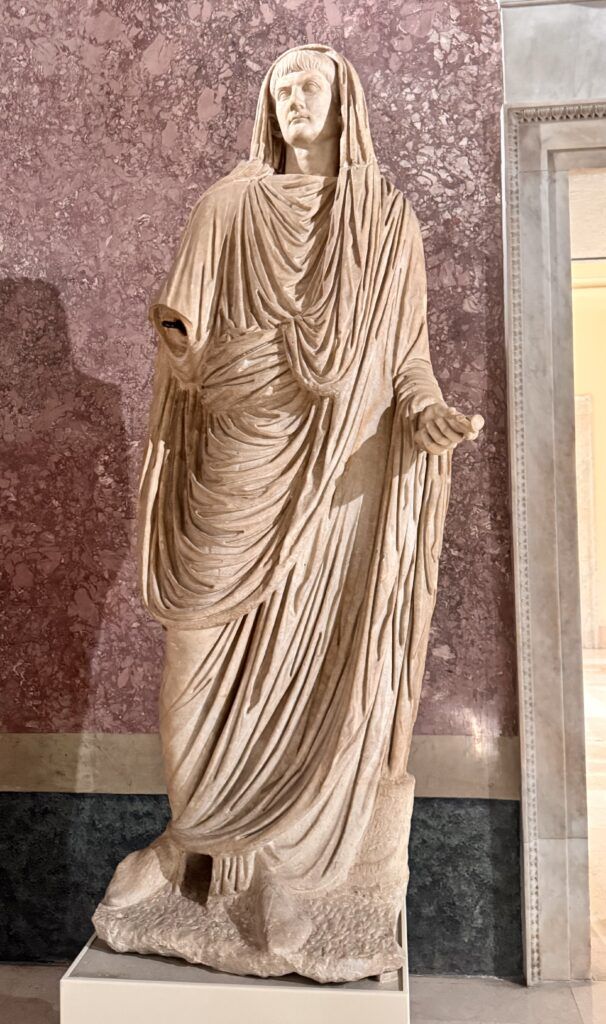
Then, in AD 19, Germanicus fell suddenly and mysteriously ill in Syria. He was only 33.
Almost immediately, whispers of murder began to circulate. Germanicus himself believed he was being poisoned.
Did someone want Rome’s golden prince dead?
Let’s do some detective work.
The Chief Suspects
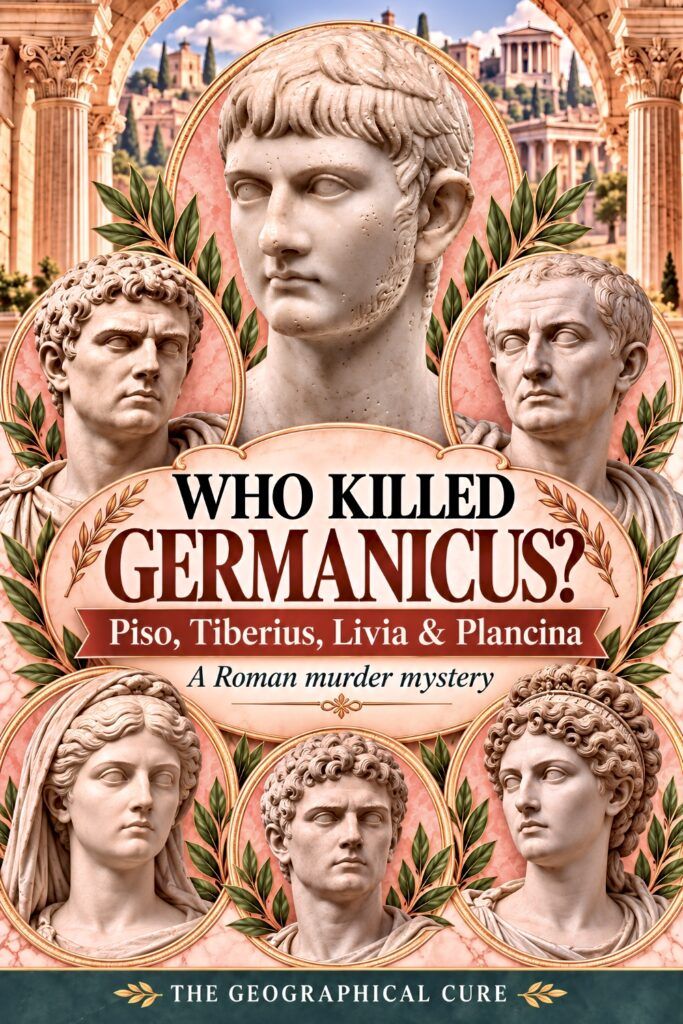
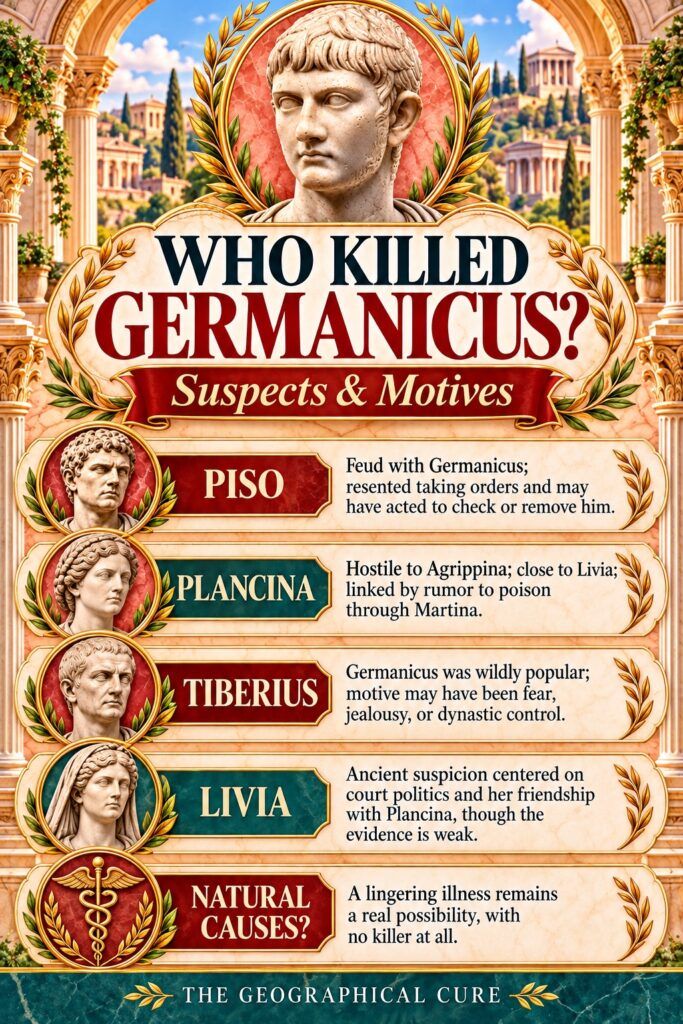
Before we get into Germanicus’ life and death, here’s the cast of possible assassins:
- Piso: the hostile governor Germanicus himself blamed for his death.
- Plancina: Piso’s wife, an enemy of Agrippina, with an uncomfortable connection to the alleged poisoner Martina.
- Tiberius: Germanicus’ adoptive father, emperor, and the man who may have had reason to fear his enormous popularity.
- Livia: dragged into the case largely through her friendship with Plancina and her fraught relationship with Agrippina.
- Natural causes: the boring but entirely plausible explanation that Germanicus simply died of disease.
Now let’s see what actually happened. Who or what killed Germanicus?
The Death of Germanicus: Whodunit?
Early Life
Germanicus arrived in the world on May 24, 15 BC. He was the son of Nero Claudius Drusus and Antonia Minor.
His pedigree could hardly have been more prestigious. His mother was a niece of Augustus, while his father was the son of Livia and younger brother of Tiberius.
His father died when Germanicus was still a child. But Augustus clearly had big plans for him.
In AD 4, Augustus adopted Tiberius as his son and heir.

There was a catch. Tiberius was required to adopt Germanicus, even though he already had a biological son of his own. That effectively placed Germanicus directly behind Tiberius in the imperial succession.
Around AD 5, Germanicus married Agrippina the Elder, Augustus’ granddaughter. It was a formidable dynastic match. He brought the Claudian bloodline. She brought the blood of Augustus himself.
The marriage also appears to have been genuinely close. They eventually had nine children, although only six survived childhood.
Among them were the future emperor Caligula and Agrippina the Younger, future wife of Claudius and mother of Nero.
Political & Military Career
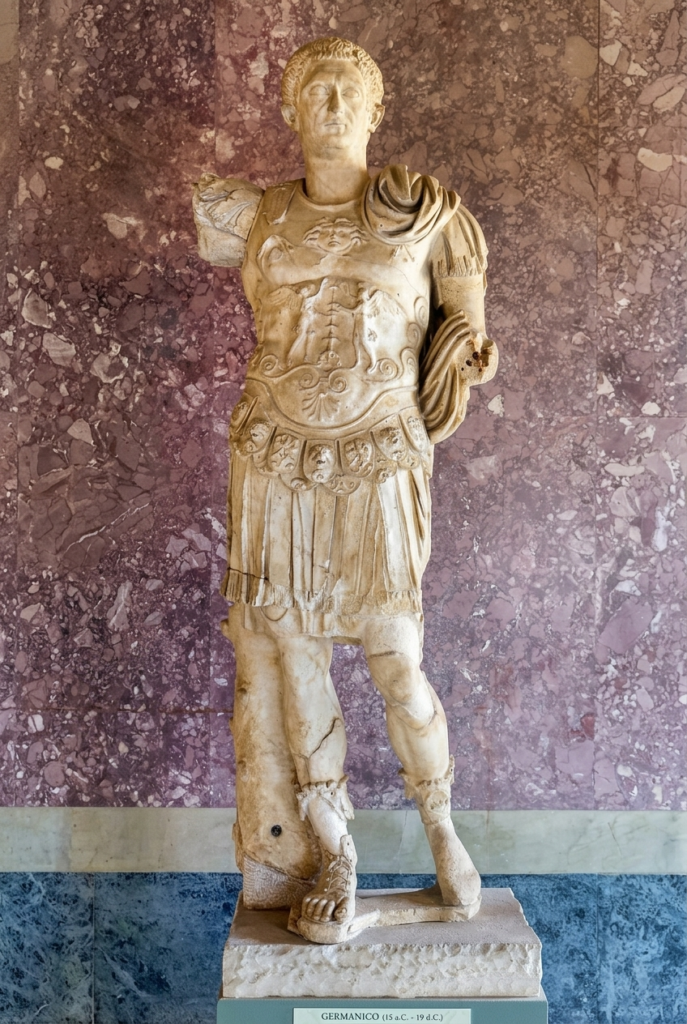
Germanicus’ political career moved at warp speed. He became quaestor in AD 7 at a young age, and was immediately sent to help Tiberius suppress the enormous revolt in Pannonia and Dalmatia. He distinguished himself there and emerged with a reputation as a capable commander.
After the disaster in the Teutoburg Forest in AD 9, Rome desperately needed competent men on the Rhine. Germanicus served in Germania and continued to rise. He became consul in AD 12 and, the following year, received command in Germany.
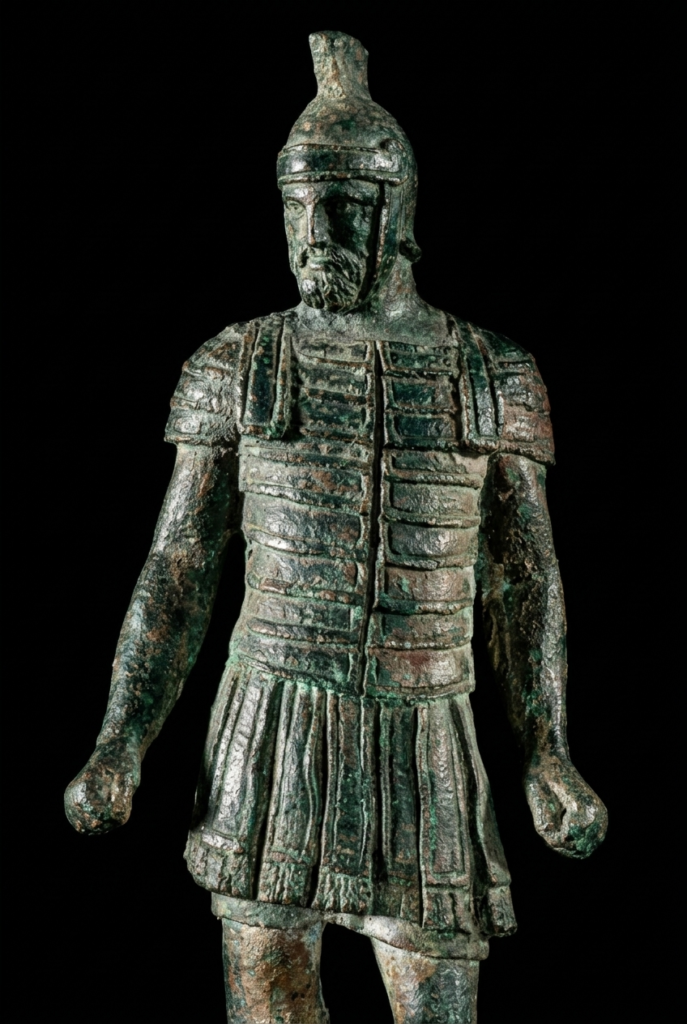
By the time Augustus died in AD 14, Germanicus commanded the eight legions stationed along the Rhine, roughly a third of Rome’s legionary army. That was an enormous amount of military power to place in the hands of a young prince.
Defying convention, Agrippina and their children went with him to the frontier. Their little son Gaius became a mascot of sorts for the troops, toddling around camp dressed in miniature military gear. The soldiers nicknamed him Caligula, “Little Boots,” after the tiny caligae he wore.
Unfortunately, as we know, Little Boots grew up to be considerably less adorable.
The Prince With The Personality
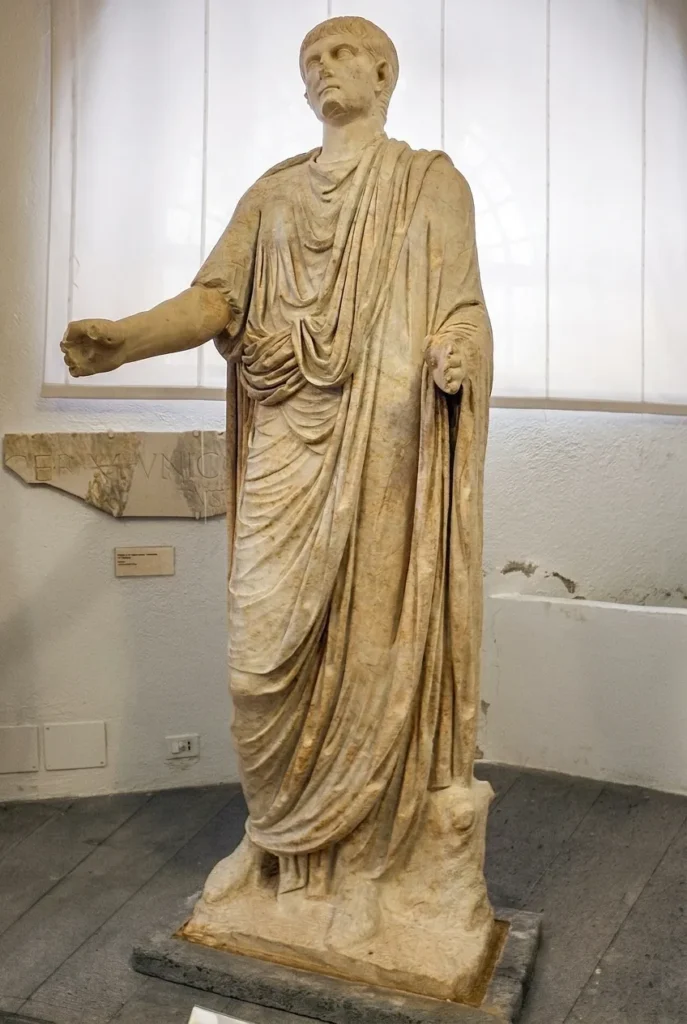
But bloodlines and military victories only tell part of the story. It was really Germanicus’ personality that made him a remarkable tour de force.
He was magnetic, handsome, brave, generous, and unusually good at winning people over. Suetonius practically gushes over him. He praises his courage, learning, kindness, and extraordinary ability to inspire affection.
Tacitus paints much the same picture. Germanicus was warm and approachable, the opposite of the aloof and suspicious Tiberius.
He had enormous prestige without much apparent arrogance. And, at least according to Tacitus, none of the naked hunger for power that plagued so many Roman princes.
The strongest proof came in AD 14. When the Rhine legions mutinied after Augustus’ death, some of the soldiers reportedly offered Germanicus the empire itself.
He refused. Instead, he kept them loyal to Tiberius.

That should have reassured Tiberius. Maybe it did. Maybe it didn’t.
Because Germanicus had something Tiberius could never manufacture: people adored him. The army loved him. The Roman public loved him. Crowds poured out of Rome to greet him when he returned from Germany.
And that popularity is where the tension begins.
Was Germanicus simply too beloved for his own good? Did Tiberius see a loyal adopted son? Or a potential rival who could have taken the throne almost for the asking?
In imperial Rome, being loved by everyone could be a dangerous thing.
Germanicus’ Death
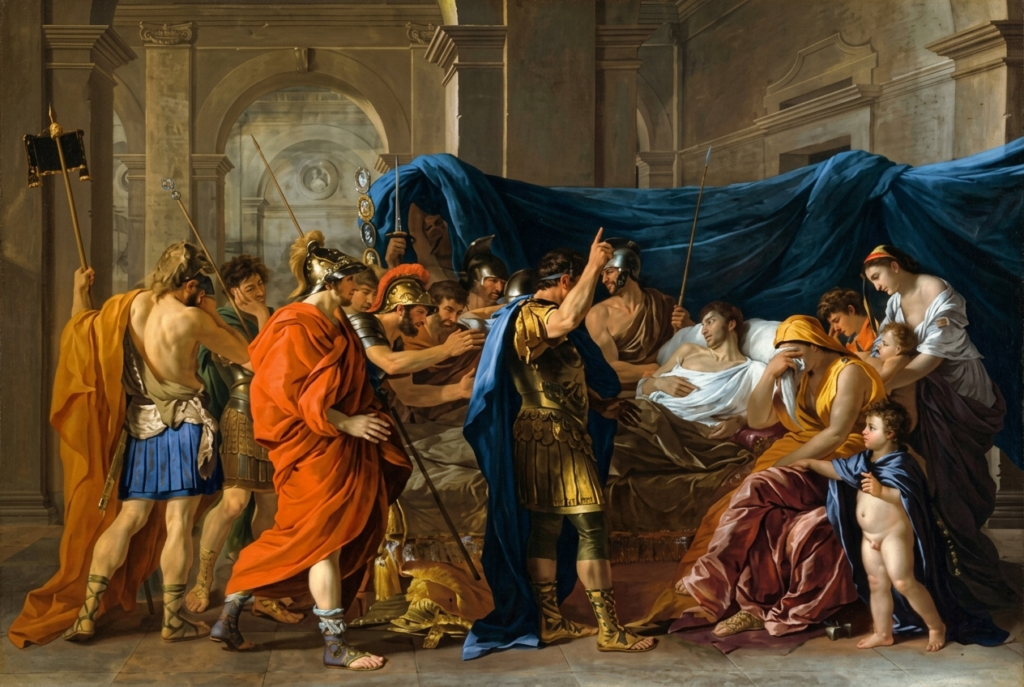
But on to the main event we’re analyzing. Ancient accounts give a very dramatic murder narrative. Germanic died in Antioch Syria in 19 CE at about 34. He’d been sent east by Tiberius.
Germanicus had a bitter quarrel with Gnaeus Calpurnius Piso, the governor or Syria. Piso disobeyed and undermined Germanicus, actively working against his superior. The feud became so serious that Germanicus ordered Piso’s recall to Rome.
But then Germanicus fell ill. Suetonius calls it a “lingering illness.”
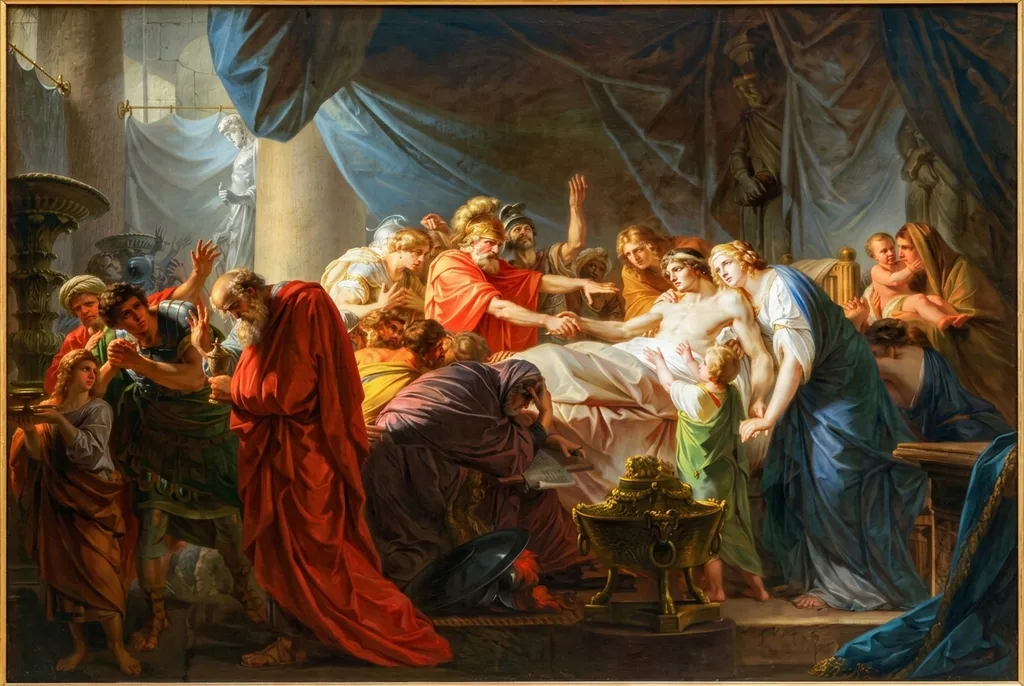
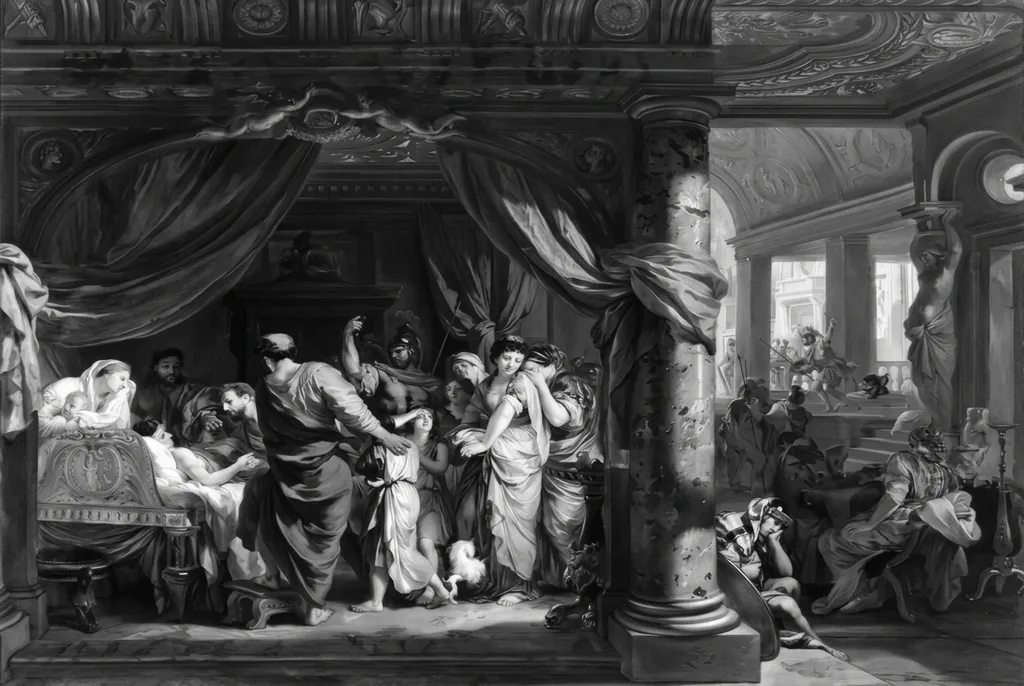
He improved enough that people publicly celebrated his recovery. But he became ill again, this time severely, and deteriorated until he died on October 10.
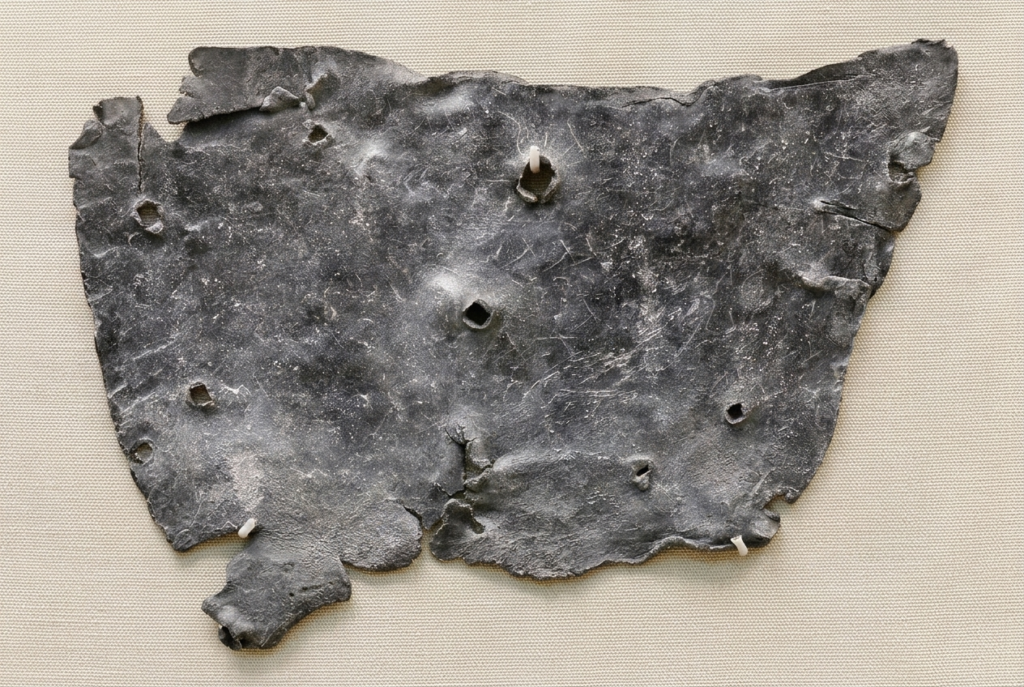
On his deathbed, Germanicus accused Piso and his wife Plancina of poisoning him. Tacitus says that ominous objects were later found in his quarters: lead curse tablets, human remains, and other items associated with magical attacks.
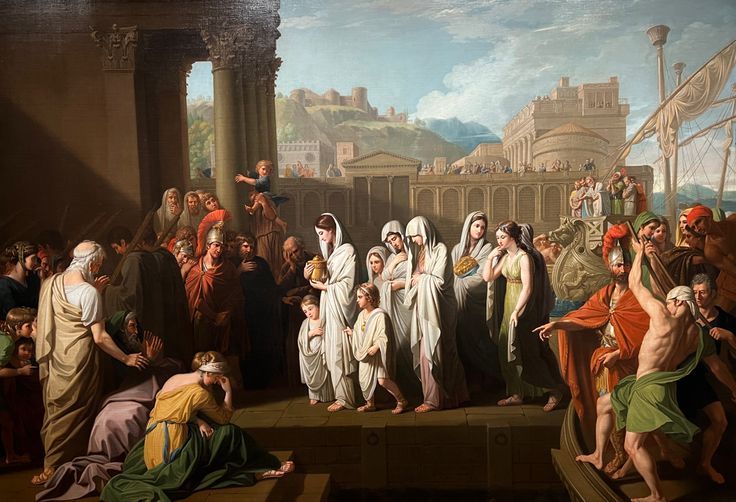
After Germanicus died, Agrippina returned to Rome with his ashes and publicly accused Piso of murder. He was put on trial, or something close to it. After just one day in court, Piso was dead, officially by suicide.
Meanwhile, Rome was engulfed in grief. The people mourned the loss of their beloved prince.
Agrippina became the guardian of Germanicus’ memory and of the dynasty he was once destined to continue. Outspoken and furious, she also became the public face of the accusation.
The Chief Suspects
And now we turn to the suspects and the evidence against them.
Piso
First, the most obvious one, Piso. On his deathbed, Germanicus blamed Piso. Was he right?
Ancient writers certainly point the finger at him. Modern historians are more cautious.
Piso Versus Germanicus
Piso and Germanicus had a very real political conflict. Germanicus was extraordinary authority over the eastern provinces, while Piso was governor of Syria.
Technically, Germanicus outranked him. Piso wasn’t happy about it.
He was a proud aristocrat from one of Rome’s oldest families, older than Germanicus, and not accustomed to being ordered around by a young imperial prince. Tacitus says he ignored some of Germanicus’ commands and reversed others outright.
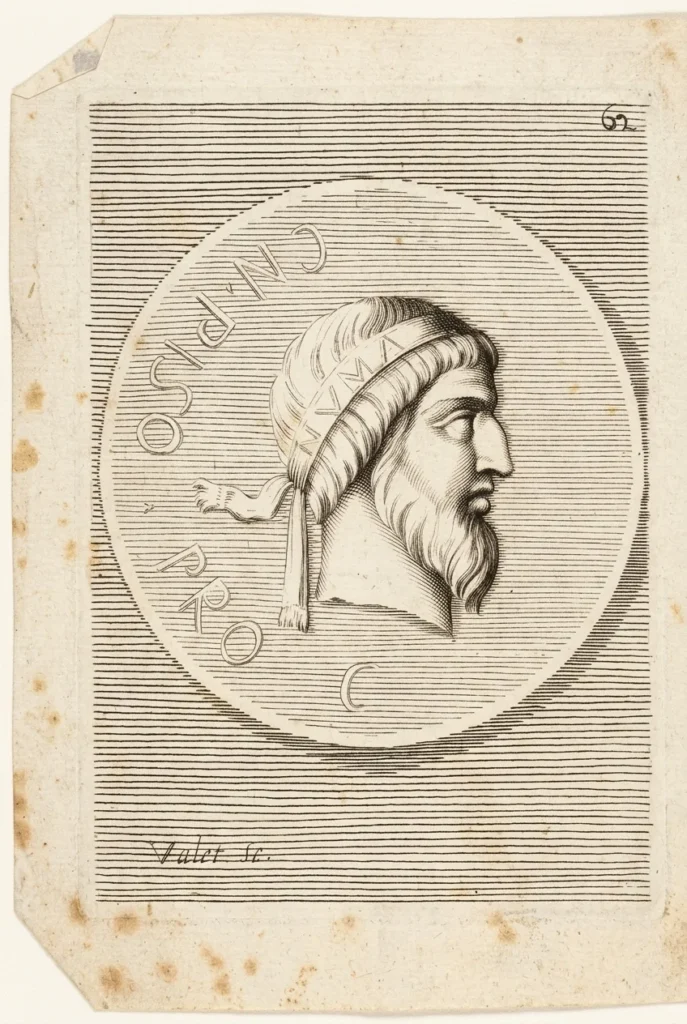
The hostility became personal. Piso eventually accused Germanicus of arrogance and luxury, while Germanicus saw Piso as openly insubordinate.
But why was Piso behaving so boldly?
One possibility is simply that he was an arrogant old Roman grandee who resented Germanicus’ authority.
Another is more intriguing: ancient writers suspected that Tiberius had sent Piso east partly to keep an eye on his hugely popular adopted son.
Suetonius says Piso had received secret instructions from Tiberius to “check and thwart” Germanicus. But belief is not proof. No such orders survive.

Plancina, Martina, and the Poisoning Charge
Then there was Piso’s wife, Plancina.
She was close to Livia and openly hostile to Agrippina. Tacitus also tells us that one of Plancina’s favorites was a woman named Martina, who had a notorious reputation as a poisoner.
The optics are awful. But looking awful and committing murder are two different things, at least most of the time.
Martina was never shown to have poisoned Germanicus. And when Piso finally went on trial, the poisoning charge was actually the weakest part of the case.
So, Piso certainly had hostility, opportunity, and suspicious connections. What we don’t have is proof that he poisoned Germanicus.
Could Piso have believed he was serving Tiberius by keeping Germanicus in check? Absolutely possible.
Did Tiberius secretly order him to murder Germanicus? That’s a much bigger leap.
The really interesting thing about Piso is that there’s an enormous amount of smoke around him. But when Rome actually put him on trial, the murder evidence was surprisingly lousy. That makes him a much better murder-mystery suspect than a villain.

Why Did Piso Kill Himself?
Why did Piso kill himself if the case against him was so weak?
He may simply have realized that he’d become expendable. That was hardly unusual in the Julio-Claudian court.
Serve the emperor, become inconvenient, and suddenly discover that nobody remembers giving you orders. Sejanus would learn that lesson spectacularly a decade later.
Piso might have done it to save face. He’d acted badly toward Germanicus. Perhaps he knew Rome would never forgive him. Romans didn’t need courtroom-leave proof. They needed someone to blame.
Livia
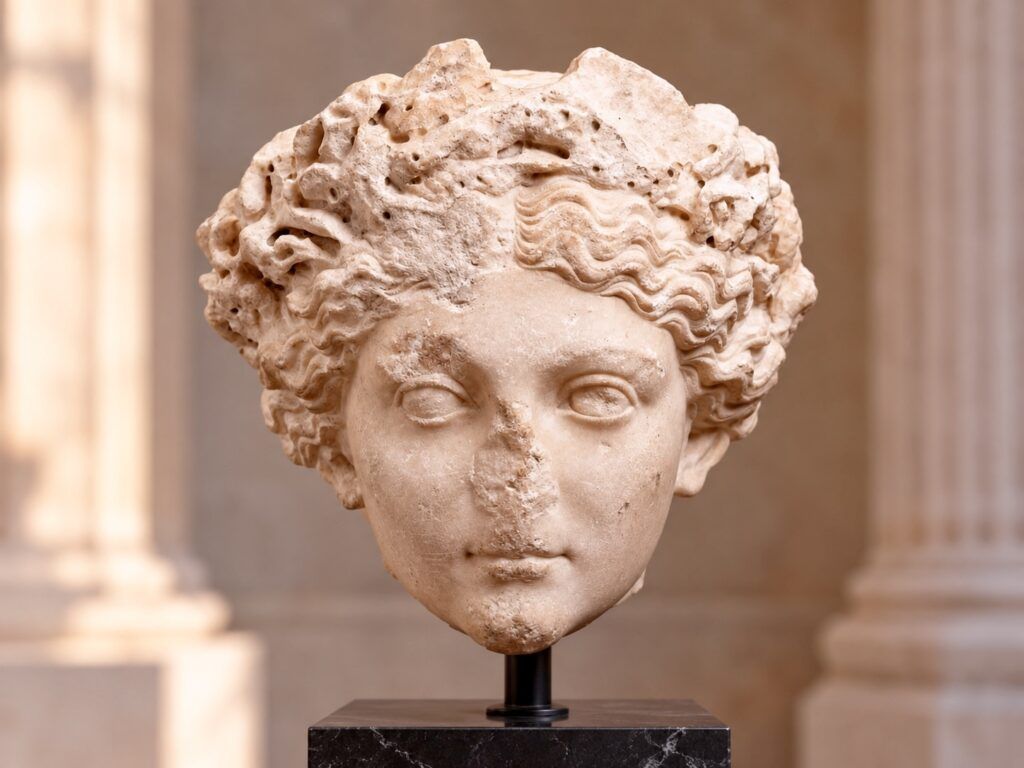
There’s also some suspicion around Livia, Augustus’ widow and Germanicus’ grandmother.
As per usual, Tacitus evokes a suitably poisonous atmosphere. He says Livia disliked Agrippina the Elder, and Plancina was a close friend of hers.
Then comes the really damaging bit. After Germanicus died and Piso and Plancina were prosecuted, Tacitus says Livia intervened behind the scenes on Plancina’s behalf and helped secure her pardon.
Romans were outraged. To them, it looked as though Livia were protecting a woman suspected of helping murder her own grandson.
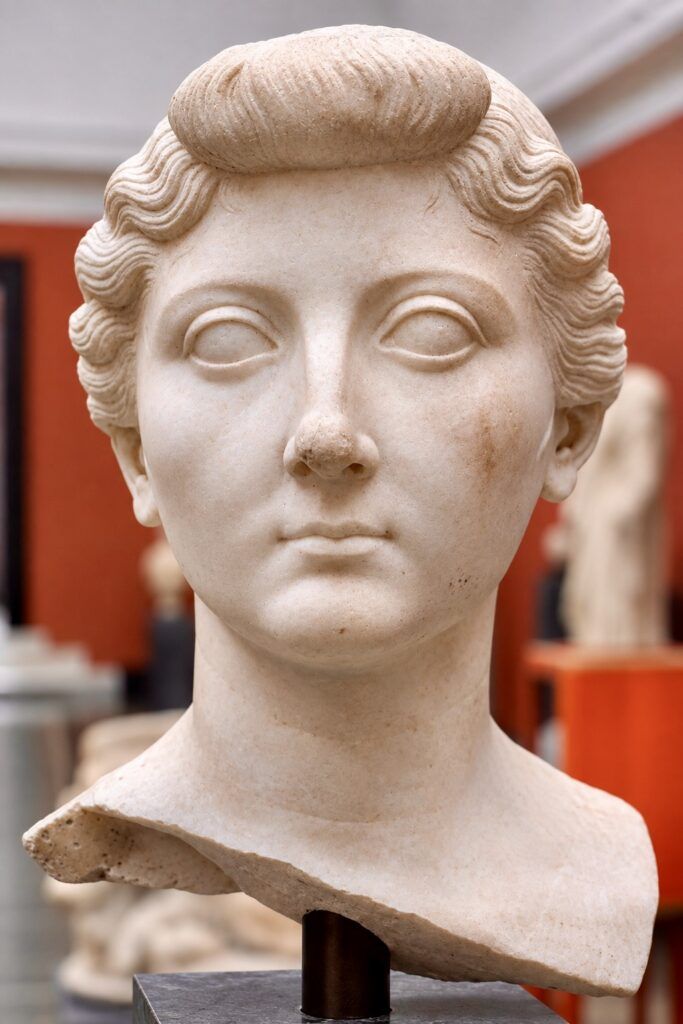
But Tacitus never gives us a clean accusation that Livia ordered Germanicus killed. And the case against her is remarkably weak. There’s no evidence of an order, a conspiracy, poison, or even a particularly convincing motive.
Germanicus was enormously popular, which may have made Tiberius uneasy. But by this point Tiberius was already emperor, and Germanicus was his adopted son and expected successor.
His existence did not threaten Livia’s decades-long effort to put Tiberius on the throne. She’d already won that battle.
There’s another problem with the theory. Germanicus was the son of Livia’s beloved Drusus, whose death had devastated her.
I think she’s innocent on this charge. Livia really gets dragged into the Germanicus murder mystery because of one thing: Plancina.

Tiberius
Did the emperor himself do the deed? Tiberius’ fingerprints are certainly all over this case.
Too Popular for Comfort
Was he jealous of Germanicus’ popularity? Tacitus certainly thought there was tension. Germanicus was wildly loved, an alternative emotional center of the dynasty. Tiberius was emperor, but Germanicus was the “prince who was promised.”
And temperamentally, the two men were utterly different.
Tiberius was withdrawn, wary, taciturn, and deeply uncomfortable with the theatrical side of power. Germanicus was handsome, charismatic, approachable, and adored by the army and Roman people.
A ruler could survive being unpopular. It was harder to ignore a member of his own family who was so roundly adored.
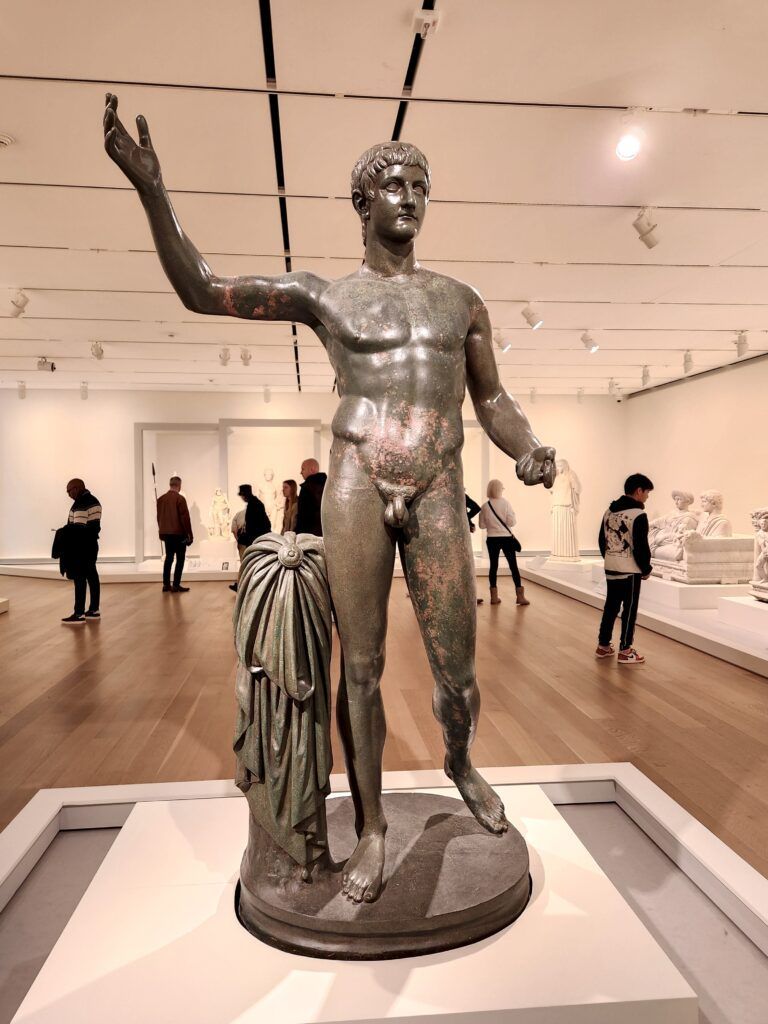
Germanicus was loyal too. When the Rhine legions offered him the throne, he refused and kept them loyal to Tiberius. That should have reassured the emperor.
But Germanicus still mattered politically. Rome’s emperors couldn’t survive without the army, and Germanicus had an extraordinary hold over the soldiers. Even obedience didn’t make that popularity disappear.
Why Was Piso So Bold?
Then Tiberius sent Piso to Syria. Did he give Piso secret instructions to watch Germanicus? Obstruct him? Keep his ambitions in check?
Somethings seems amiss here. And ancient writers certainly suspected as much.
Piso behaved with remarkable confidence while defying a man who technically outranked him. Why exactly did he think he could get away with it?
The logical explanation is that he was acting on Tiberius’ orders.
The Mysterious Letter
Then there’s the mysterious document.
Tacitus says people claimed Piso possessed a letter from Tiberius containing instructions about Germanicus. According to the rumor, Piso intended to produce it before the Senate and force the emperor to explain himself.
If true, that would be explosive. A private letter from Tiberius might’ve shown that Piso was not acting entirely on his own. It might even have explained why he’d behaved with such astonishing confidence in Syria.
That’s catnip for a murder mystery.
There’s just one problem: no letter survives. We don’t know what it said, whether it implicated Tiberius in anything criminal, or even whether it existed at all.
And then Piso died before he could supposedly produce it. Convenient? Extremely. Proof? Not remotely.
Princess Diana Syndrome
Tiberius’ reaction to Germanicus’ death did nothing to help appearances either.
Germanicus was the Princess Diana of imperial Rome. The public grief was enormous. It was close to mass hysteria.
Crowds lined the route, soldiers and magistrates participated, and people openly hailed Agrippina as the glory of Augustus’ family. Tacitus says nothing bothered Tiberius more than enormous public enthusiasm for Agrippina.
Poor guy. What a bummer for him.
Peculiarly, Tiberius and Livia stayed out of sight when Agrippina returned carrying his ashes.

Was that private grief? Imperial restraint? Or relief? We don’t know. But it looked dreadful.
After that, Agrippina became increasingly convinced that Tiberius’ regime was hostile to her and her children. Tacitus say she openly accused him of persecuting the descendants of Augustus.
In 29, once Livia was dead and Tiberius was set free, a troublesome Agrippina is exiled. She dies Pandateria in 33.
Piso’s Convenient Death
Tiberius’ chilly response, however, proved nothing. But it kept suspicion alive. And, meanwhile, the trial of Piso only deepened the suspicion.
Tiberius took pains to appear impartial. Perhaps that was what a responsible emperor was supposed to do. To suspicious Romans, however, it looked rather convenient.
And Piso never really got his day in court. After one day of proceedings, he was escorted home by the Praetorian Guard.
Tacitus says people wondered whether the guard had been assigned to protect Piso or slay him. The next morning, Piso was found with his throat cut and a sword on the floor.
The official conclusion was suicide. But it could’ve easily been an assassin.
So Did Tiberius Do It?
Did Tiberius eliminate Germanicus and then eliminate the man who knew too much?
Suetonius preserves exactly that suspicion, saying it was widely believed Germanicus died through the machinations of Tiberius, with Piso as his instrument. Cassius Dio likewise says Tiberius prosecuted Piso partly to clear himself of suspicion.
Piso’s death certainly makes that theory more tantalizing. But suicide is still entirely plausible.
By the time he died, Piso’s political position was dreadful, public opinion had turned viciously against him, and Plancina had effectively abandoned him.
The larger case against Tiberius has the same problem. There’s an enormous amount of smoke, but very little hard evidence.
No secret orders survive. No witness says Tiberius ordered a poisoning. Piso’s supposed letter disappeared, if it ever existed at all. And Germanicus had already demonstrated his loyalty.
Tiberius had possible motive. He had connections to the principal suspect. And his behavior gave ancient Rome plenty to gossip about.
But fingerprints around the edges of a case are not the same thing as proof of course.
My verdict? I wouldn’t convict Tiberius of murdering Germanicus. There’s too much smoke and not quite enough fire.
But I absolutely think he knew more than he let on.
And as for Piso, I think Tiberius silenced him. The timing is simply too neat, the missing letter too convenient, and Piso’s death too useful to the emperor.
Germanicus’ murder remains unproven. But Piso’s death looks very much like a cleanup operation. That’s on Tiberius.
The Case For Natural Death
There is, of course, a much less dramatic possibility: Germanicus may simply have died of disease. We have to consider it, no matter how titillating the murder charges are.
The ancient scandal sheets are fun to read. But they’re so sensationalized that they can be a vexation for historians trying to get at the truth.
Germanicus’ illness was prolonged, not sudden. He improved for a time, then relapsed and deteriorated. That pattern could fit any number of infections or fevers common in the ancient Mediterranean.
The supposed signs of poisoning are just as frustratingly vague. Darkened skin, foaming at the mouth, and a body that seemed slow to decay may have impressed ancient observers. But none of those details proves poison.
And when Piso finally went on trial, the poisoning charge was never convincingly established.
So after all the intrigue, secret letters, family rivalries, and suspicious deaths, the least exciting explanation may still be the strongest one:
Germanicus got sick and died.
I hope you’ve enjoyed my Germanicus murder mystery. You may find these other Roman histories interesting:
- History of the Rise and Fall of Rome
- History of the Roman Emperors
- Historical Facts about Rome
- History of Nero
- History of Julius Caesar
- History of Hadrian
- History of Claudius
Pin it for later.