
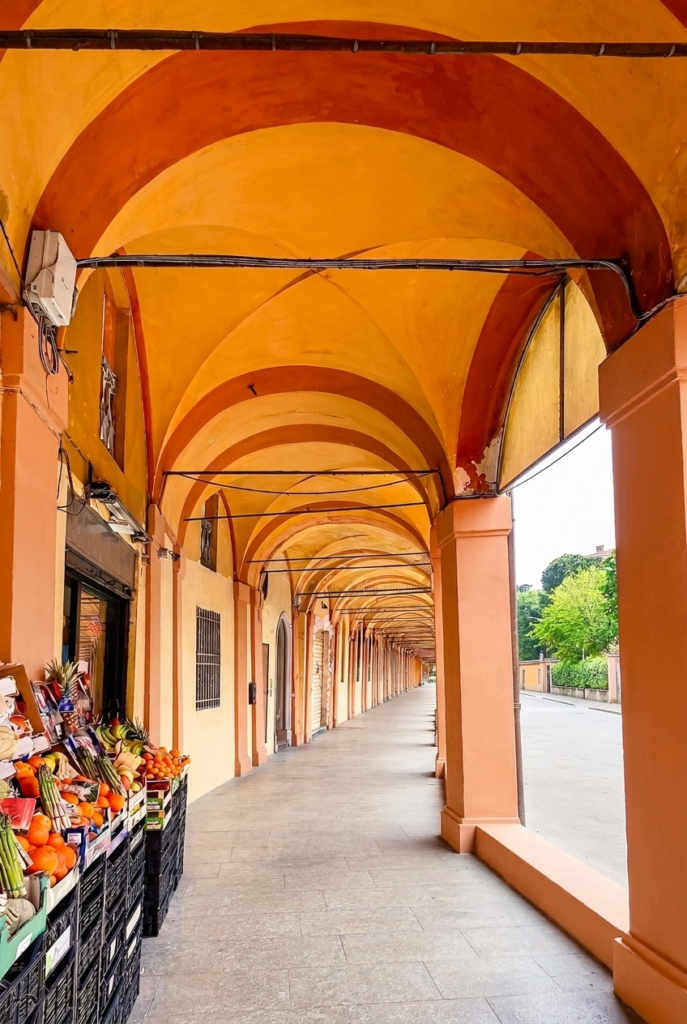
On the southwestern edge of Bologna’s centro storico stands Porta Saragozza. It marks the beginning of the portico to beat all porticos: the Portico di San Luca, the longest covered arcade in the world.
The portico winds for almost 2.5 miles from the city toward the Sanctuary of the Madonna di San Luca on Colle della Guardia. Along the way are 666 arches, at least according to tradition.
The wonderfully ominous number has inspired a local legend that the portico represents a serpent, finally crushed beneath the sanctuary dedicated to the Virgin Mary.
>>> Click here to book a portico and sanctuary guided tour
Guide To the Porticato & Sanctuary
Mini History of the Portico
Construction began in 1674 and continued until 1739. The original purpose was practical as well as devotional: pilgrims could make the climb to San Luca protected from rain and summer sun.
The route later became one of Bologna’s defining architectural landmarks and is now included among the city’s UNESCO-listed porticoes.
About halfway along the route, you reach the elegant Arco del Meloncello. From here, the portico leaves Via Saragozza and begins climbing into the hills. The uphill section is punctuated by 15 chapels depicting the Mysteries of the Rosary.
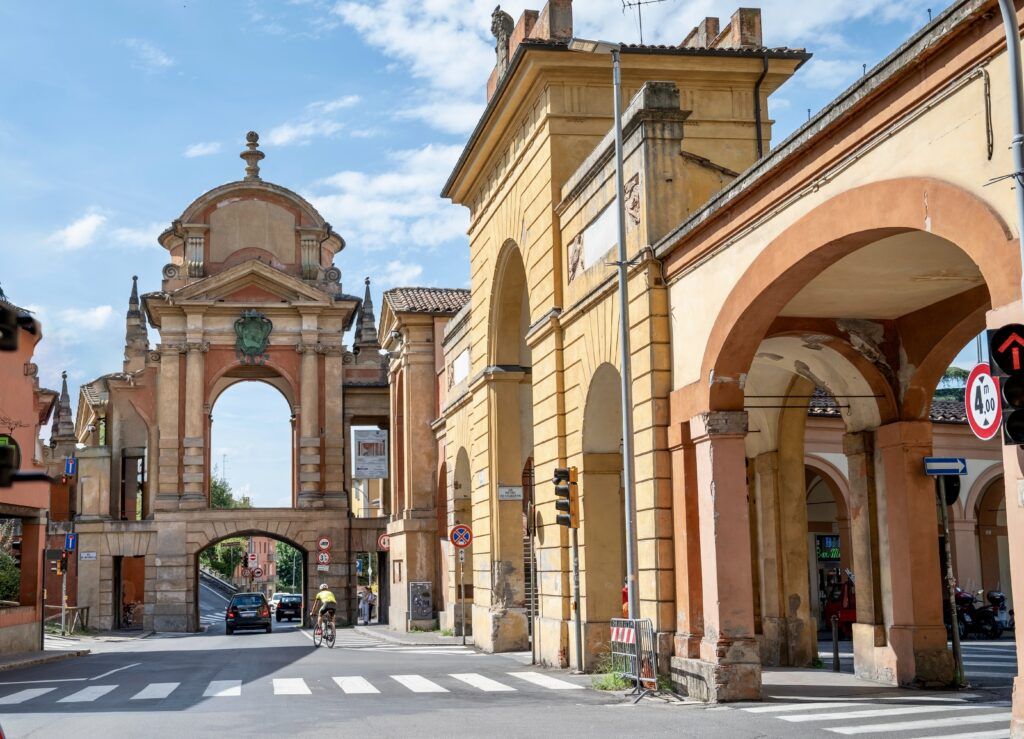
No one seems to know for certain why there are exactly 666 arches. The traditional explanation is symbolic rather than mathematical. And if you decide to count them yourself, you may well come up with a different total.
>>> Click here to book a round trip to San Luca with a food tasting
Walking the Portico
The first stretch passes shops, restaurants, and everyday neighborhood life. After the Arco del Meloncello, the city begins to fall away and the walk turns into a steady climb beneath the repeating arches.
Religious images and small chapels appear along the route. In earlier centuries, particularly devout pilgrims sometimes made part of the ascent on their knees as an act of penance.
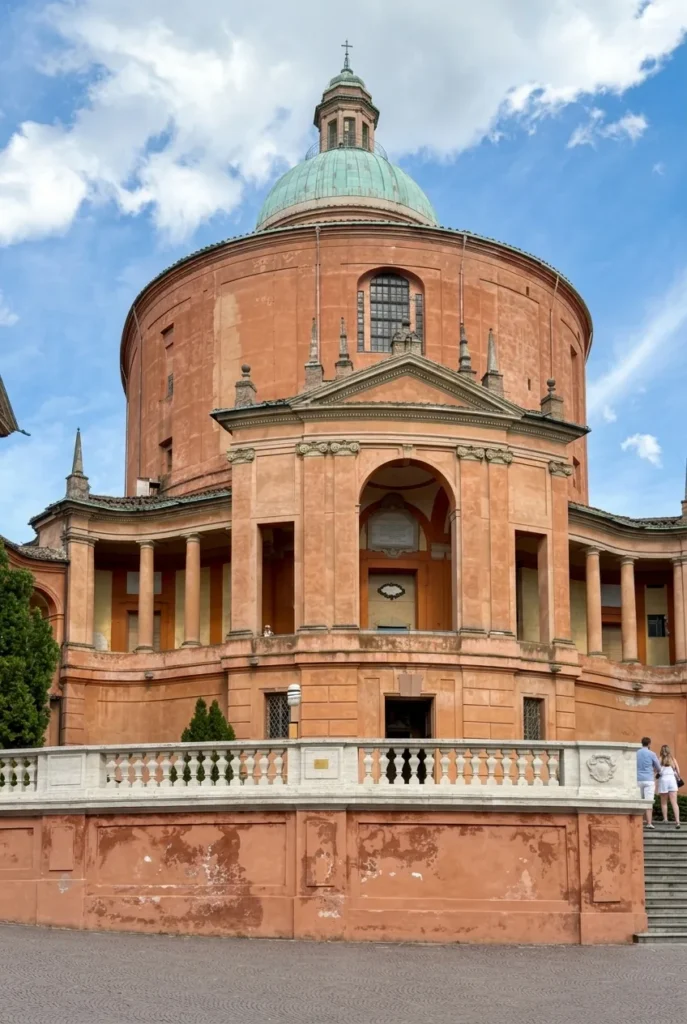
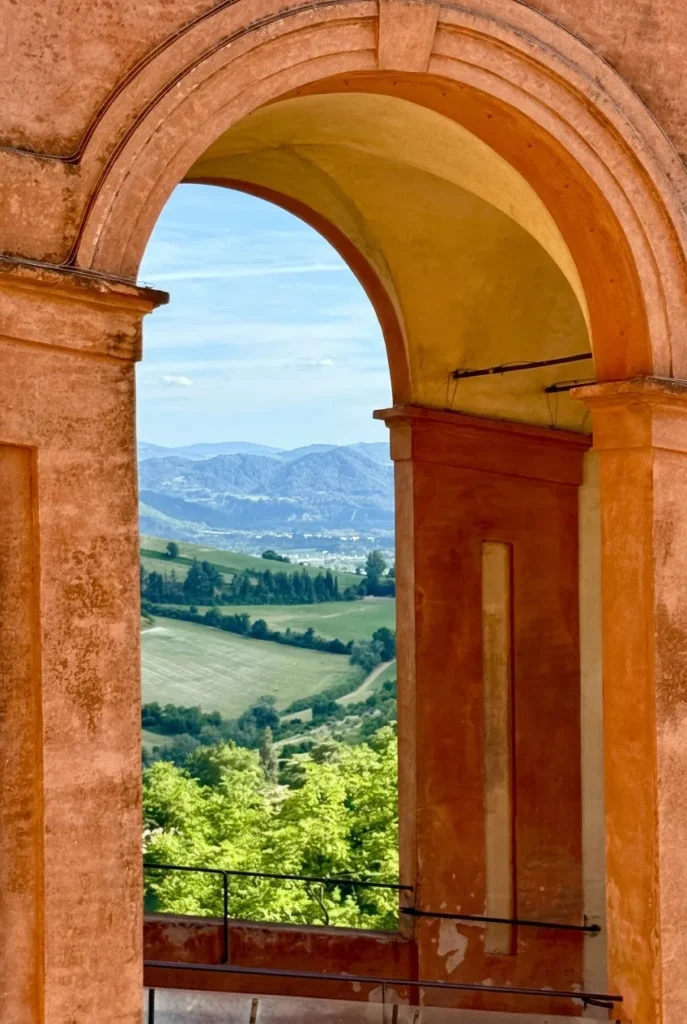
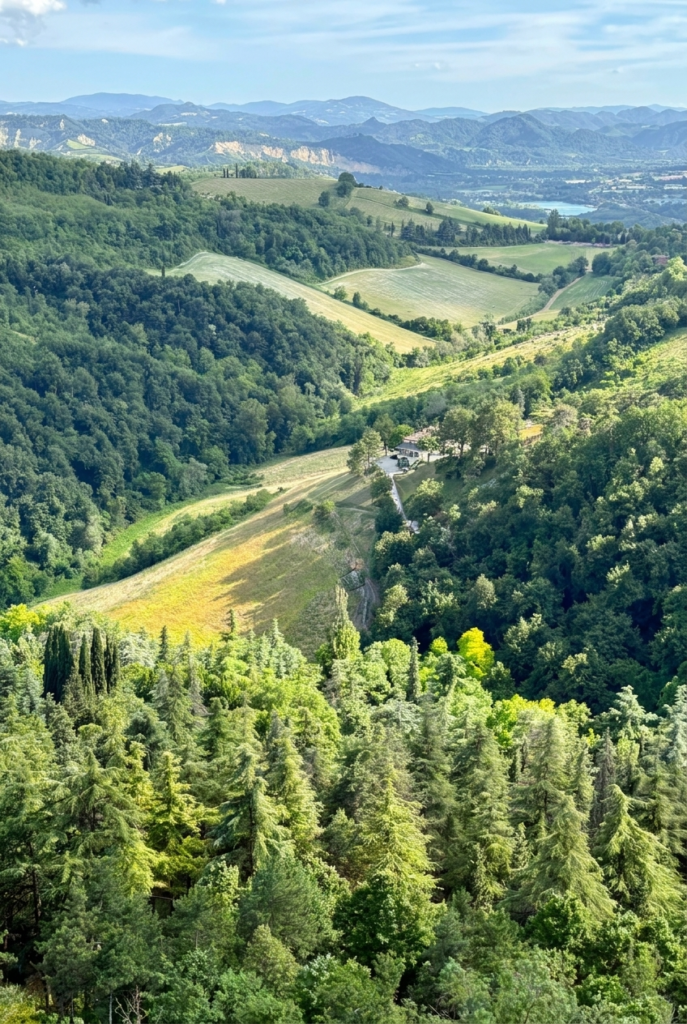
After roughly two hours at an easy pace, you reach the Santuario di San Luca, the monumental 18th century church crowning the hill. The reward is a broad view over Bologna and the green hills beyond.
Sanctuary of the Madonna di San Luca
The Madonna di San Luca is one of Bologna’s most deeply rooted religious symbols. The focus of devotion is a Byzantine icon of the Virgin and Child traditionally attributed to St. Luke the Evangelist. Art historians date it much later, probably to the 12th century.
The icon belongs to the Byzantine Hodegetria type, in which Mary gestures toward Christ as the “way” to salvation. Its arrival in Bologna is wrapped in legend.
According to a story recorded in the 15th century, a Greek pilgrim named Theocles encountered the icon in Hagia Sophia in Constantinople. An inscription supposedly directed that it be taken to the “Mount of the Guard.”
Theocles had no idea where that was and wandered west until, in Rome, he learned of the Colle della Guardia outside Bologna. He eventually carried the icon there, where it became the object of an increasingly powerful local cult.

No one knows exactly when the icon reached Bologna. Tradition settled on 1160, but the historical evidence is murky.
What is clear is that a religious community existed on the hill by the late 12th century and that devotion to the Madonna was already established there.
Her importance to Bologna intensified dramatically in 1433. After weeks of relentless rain threatened the harvest, the icon was carried down from the hill into the city in a public procession.
According to tradition, the rain stopped. Bologna has repeated the procession every year since, bringing the Madonna from San Luca to the Cathedral of San Pietro during Ascension week.
The Sanctuary
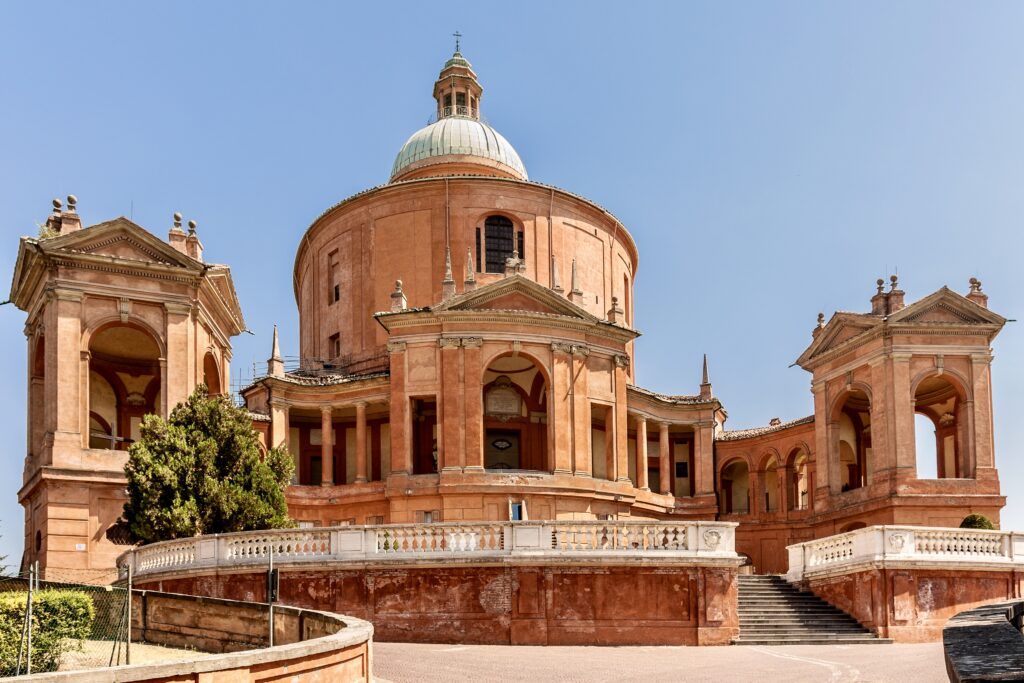
The present sanctuary is largely the work of Bologna architect Carlo Francesco Dotti.
He began the rebuilding in the 1720s, replacing an older church that was no longer considered grand enough for such an important pilgrimage site.
The main structure was substantially complete by the 1750s. Dotti’s son Giovanni Giacomo later completed the projecting exterior tribunes in 1774.
Dotti gave the church an elliptical plan that opens into short arms forming a Greek cross. A massive drum and dome rise above it. The curving spaces and theatrical handling of the architecture belong very much to the Roman Baroque tradition.
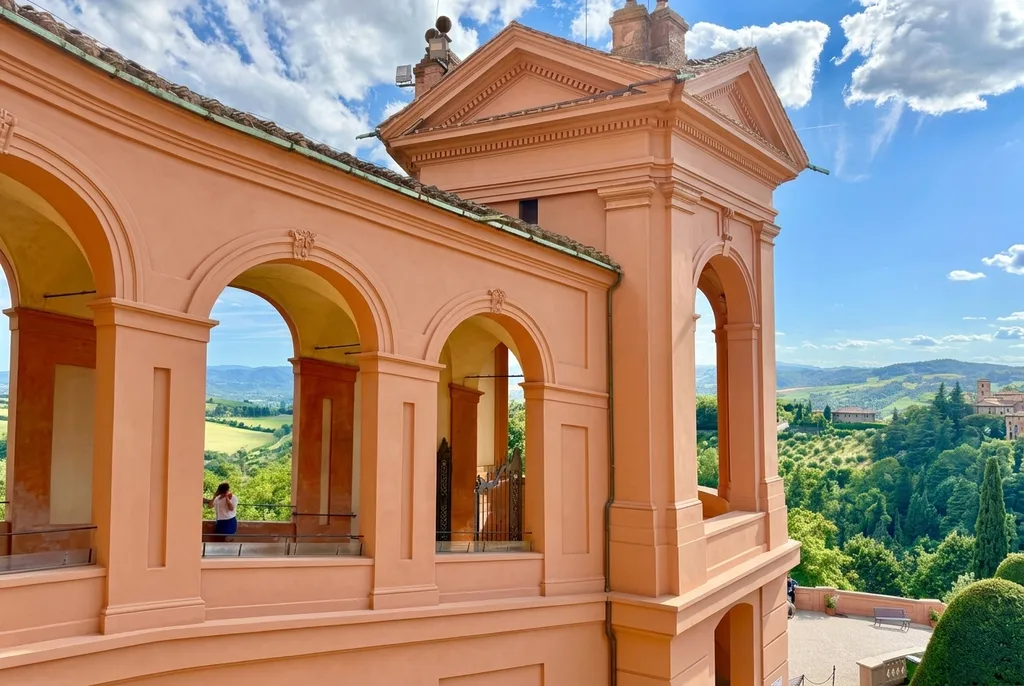
The effect recalls the experiments with oval and centralized churches that Bernini and other architects had developed in Rome during the previous century.
Dotti had a tricky job. The sanctuary needed to provide a fitting climax to the long pilgrimage beneath the Portico di San Luca. But it also had to work from a distance.
It does. The great dome sits on top of the Colle della Guardia like a beacon and is visible from huge swaths of Bologna.
The exterior is actually restrained by Baroque standards. Instead of loading the facade with sculpture and decoration, Dotti relied on curves, mass, and the dramatic silhouette of the dome. The two sweeping tribunes also help absorb arriving pilgrims and visually connect the church to the end of the portico.
Inside San Luca
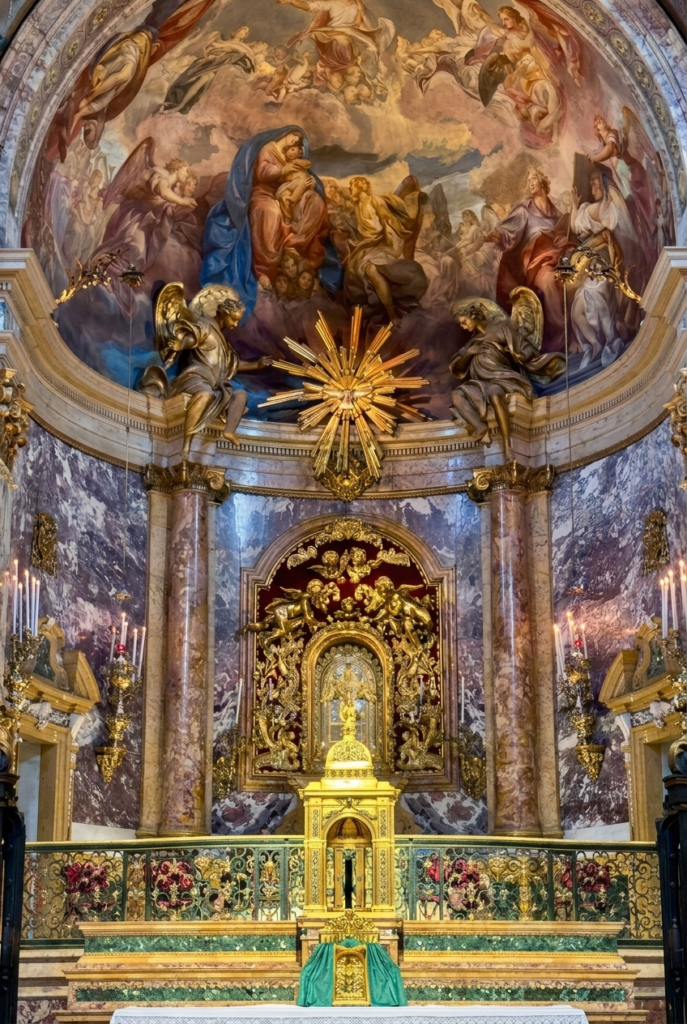
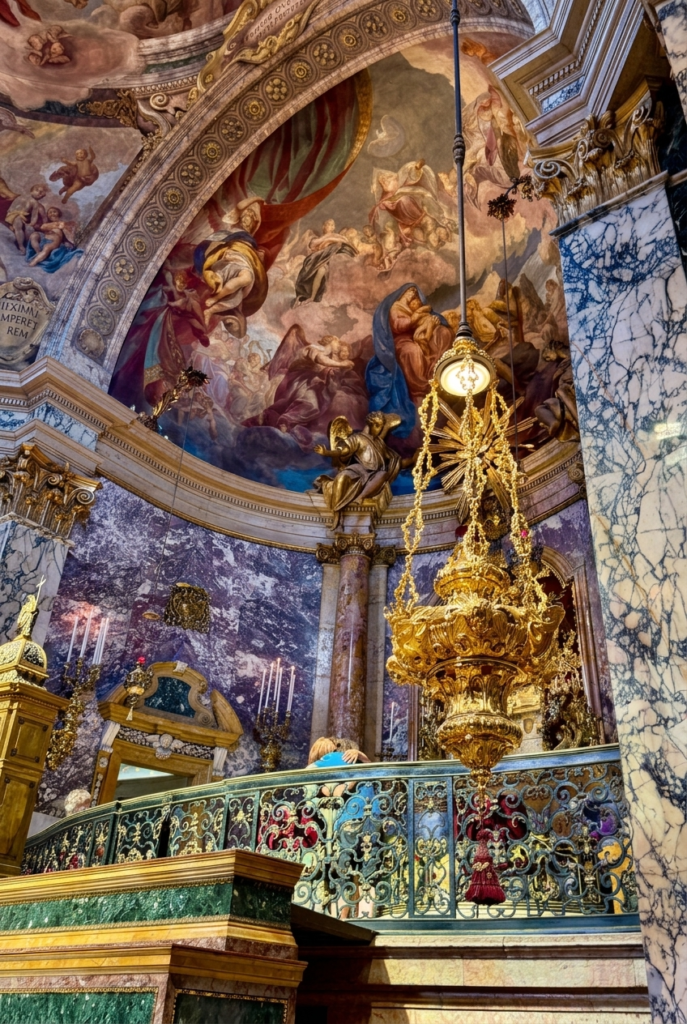
The interior is much richer. Your eye is immediately pulled toward the elevated presbytery and the chapel behind the high altar where the famous icon is kept.
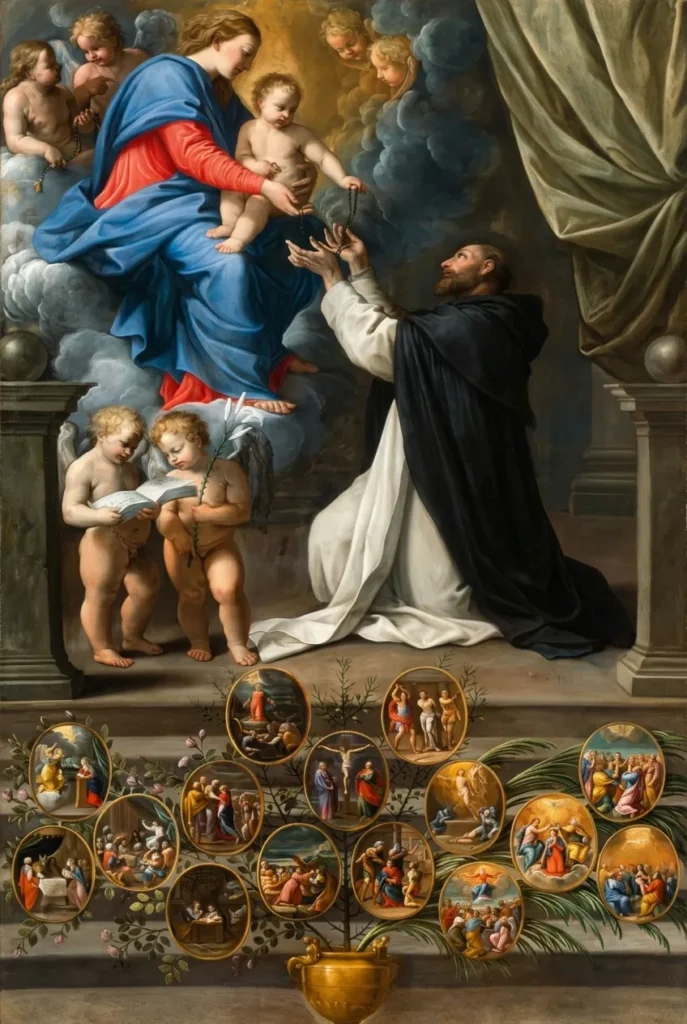
There’s also some very good Bolognese art. In the third chapel on the right is Guido Reni’s early Madonna of the Rosary, painted before 1598.
The Virgin appears to St. Dominic, while the Mysteries of the Rosary are arranged in small medallions below. Guercino is represented by a painting in the main sacristy, and the church also contains work by Vittorio Maria Bigari, Giovanni Viani, Nicola Bertoni, and other Bolognese artists.
The high altar came later. It was installed in 1815 to a design by Angelo Venturoli and is lavishly finished in marble and bronze.
San Luca Sky Experience
Before leaving, you can climb into the dome as part of the San Luca Sky Experience.
The route takes you up roughly 100 steps through the old spiral staircases to a small panoramic terrace high above the sanctuary. The staircase is narrow and a little disorienting because the walls and steps are the same color and seem to merge into one continuous surface.
But it’s not a particularly difficult climb.
At the top, you’re about 138 feet above the level of the Colle della Guardia. The terrace gives you a 180 degree panorama across Bologna, Casalecchio, and the green hills surrounding the city.
Practical Tips for San Luca
How To Get There
You can reach the sanctuary one of 4 ways:
- walk 2.5 miles up the portico;
- take bus 58 from the Arco di Meloncelli. The standard ticket is €2.30 and is valid for 75 minutes, including transfers, each way;
- take the San Luca Express Bus from Piazza Maggiore. It’s €15 round trip for adults. That includes the ride up and back on the same day plus an audio guide;
- or drive up and park on the street or in the designated lot.
Hours: 7:00 am to 6:30 pm
Tickets:
The sanctuary is free to enter. Access to the panoramic terrace via the San Luca Sky Experience costs €5, with reduced tickets available for €3.

I hope you’ve enjoyed my guide to the Portico and Sanctuary of San Luca. You may find these other Emilia-Romagna guides useful:
- Bologna’s Santo Stefano
- Bologna’s Anatomical Theater
- One day in Parma itinerary
- Things to do in Modena
- Guide to Parma’s Palazzo della Pilotta
- Parma art guide
- Guide to Correggio’s Camera di San Polo
- Guide to Parma National Gallery
- Guide to Correggio’s cathedral dome fresco
- Guide to Parma Cathedral
Pin it for later.

