Of all the Tudor villains, Thomas Cromwell is often portrayed as the most ruthless. But there’s more to his story than that one dimensional caricature.
Cromwell was an incredibly capable chief minister and a rather humane family man, at least some of the time.
Above all, he was an expert on all things Henry. And his loyalty was absolute.
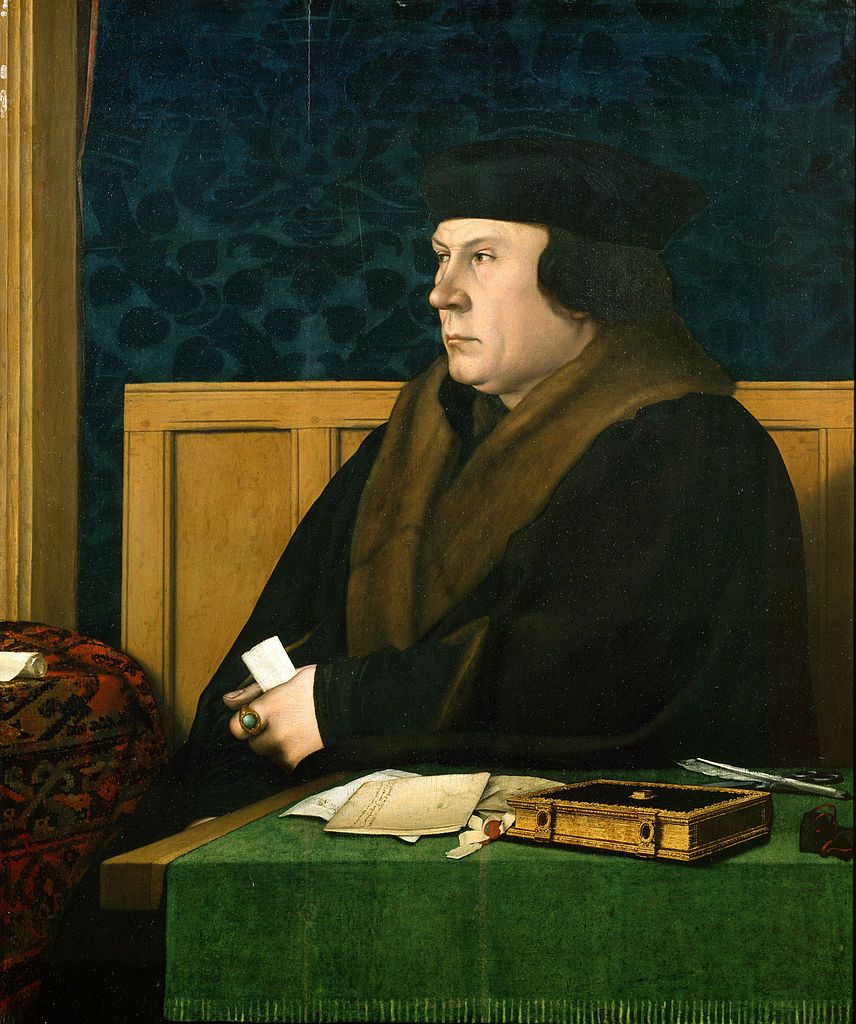
Cromwell could read minds, negotiate through mazes, and excel at crisis management. He understood Henry’s moods, ambitions, insecurities, and appetites better than almost anyone.
These were essential skills because, by age 40, Henry was a capricious, neurotic, and whimsical monarch. You did his dirty business or you didn’t survive.
Cromwell helped Henry VIII get rid of Anne Boleyn, dismantle the monasteries, and invent the English church.
Then, Henry destroyed him with venom. How did it all happen? Let’s explore Cromwell’s dramatic rise and even more dramatic fall.
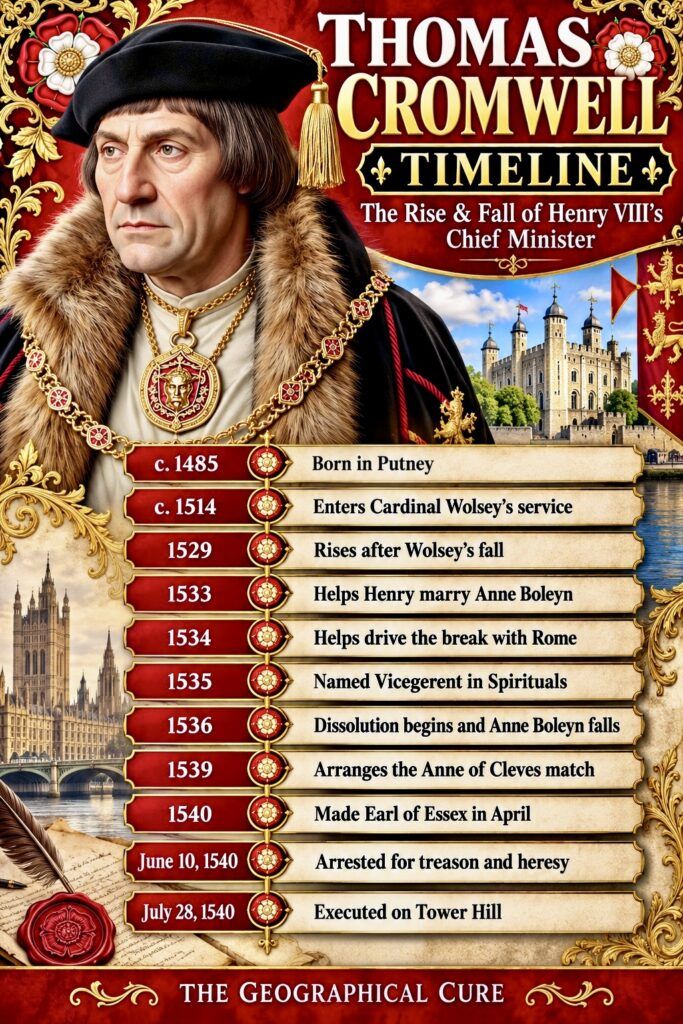
How Did Thomas Cromwell Go From Indispensable To Disposable?
What Cromwell Did for Henry VIII
Cromwell didn’t become Henry’s most powerful minister by sitting around looking important. He got things done. Whatever Henry wanted, Cromwell found a way to deliver it, usually at someone else’s expense.
And Henry wanted quite a lot.
Cromwell Got Rid of the Catholics
First on Henry’s wish list was getting rid of his wife Katherine of Aragon. Cardinal Wolsey had failed miserably to persuade Pope Clement VII to grant an annulment. Then, Thomas More abruptly resigned as Lord Chancellor in 1532.
Cromwell replaced him as Henry’s chief counselor. Now it was his turn at bat.
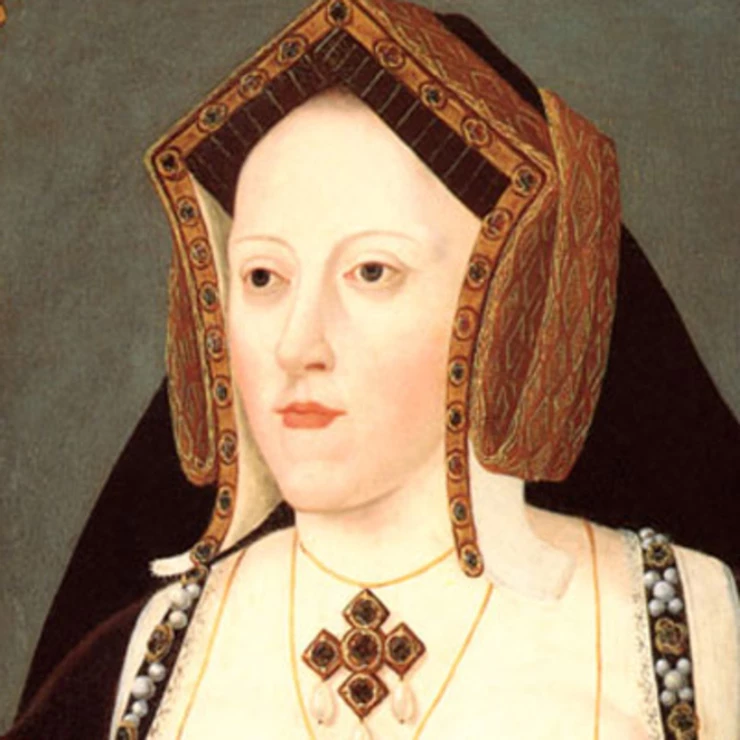
Along with Thomas Cranmer, Cromwell proposed the idea that Henry shouldn’t have to answer to Rome. He was the King of England, after all. Why should a pope in Italy have the final say over his marriage?
Henry loved the argument. Cranmer obligingly annulled his marriage to Katherine in May 1533, clearing the way for wife #2 Anne Boleyn.
But getting rid of papal authority was one thing. Making everyone accept Henry’s new religious supremacy was another. And Cromwell wasn’t inclined to tolerate dissent.
That brought him squarely into conflict with Thomas More, who refused to swear the oath of supremacy. Cromwell helped engineer his downfall, and More was executed on Tower Hill in 1535.
The age of persuasion had ended. The age of coercion had arrived.
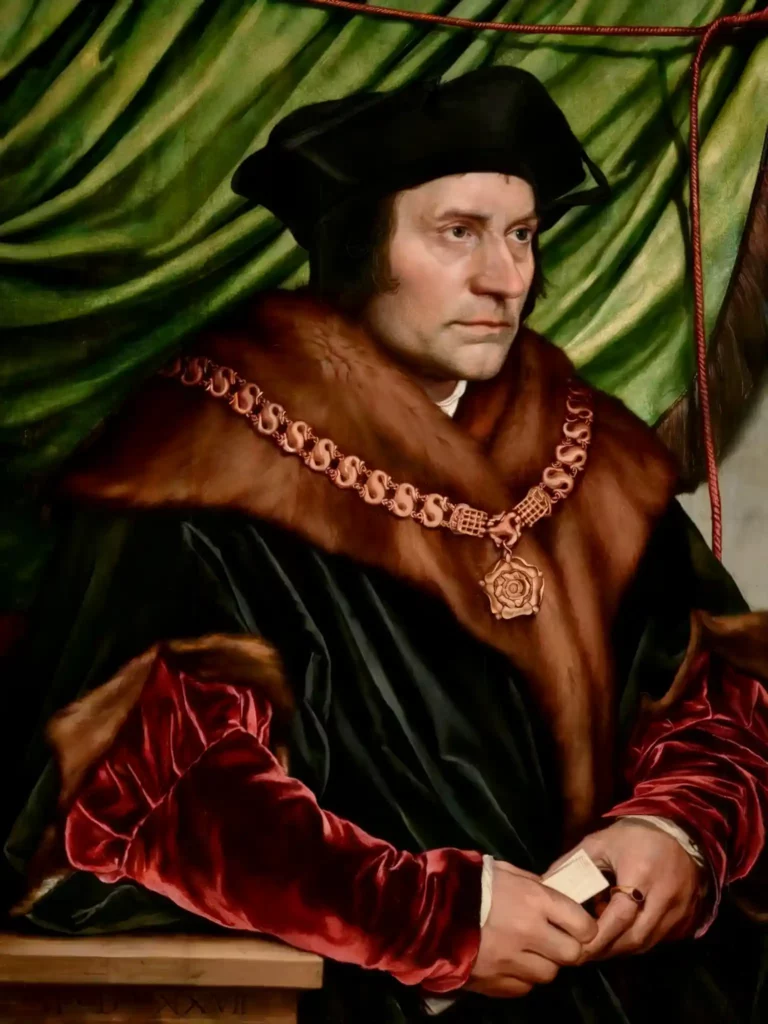
More probably deserved it, in truth. He was a fussily pious, stiff-necked man with an unnatural fondness for persecuting heretics. Perhaps he even thought Cromwell was a heretic.
Cromwell Got Rid of the Monasteries
So, with the Catholics gone, what was next?
Well, once he broke from Rome, Henry coffers were empty and he was strapped for cash. England’s monasteries were wealthy and loyal to the pope. Cromwell and Henry decided to wiped them out.
Between 1536 and 1540, every monastery in England was dissolved. Their lands and treasures were seized. Some estates went straight to Henry, others were handed off to nobles to keep them loyal.
It wasn’t reform. It was a state-sponsored smash-and-grab. And it ended a way of life that shaped England for centuries.
Cromwell Got Rid of Anne
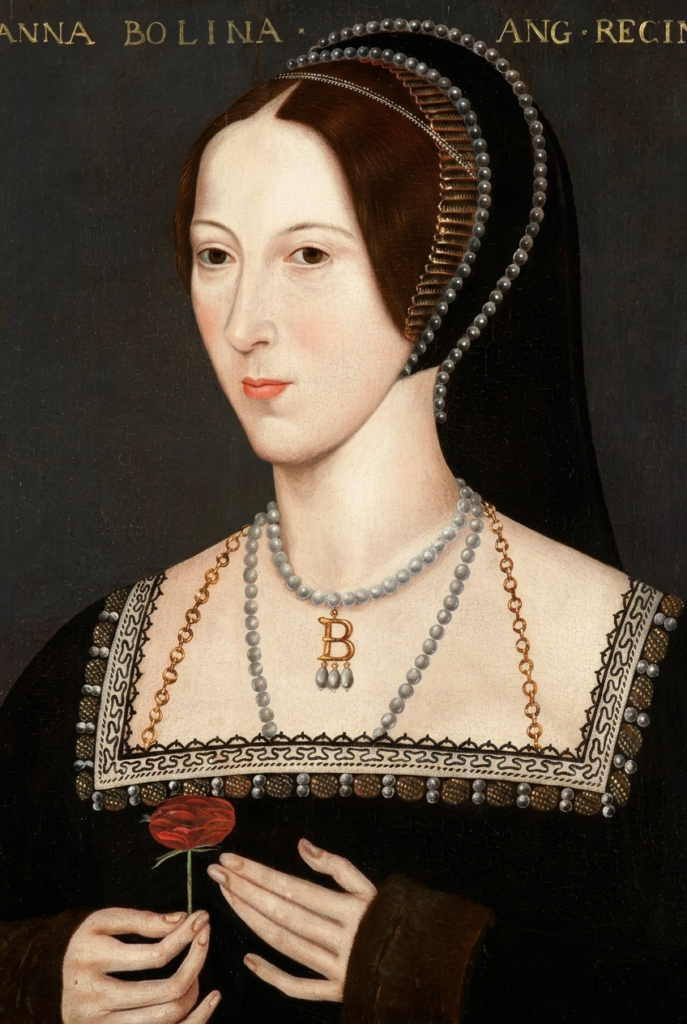
While Henry was rich thanks to Cromwell, he still had no son. Anne had failed, just like Katherine before her. Without much ado, Henry soured on her and turned his lusty gaze on Jane Seymour.
Naturally, Cromwell’s next task was to cast off Anne. With the king’s blessing, Cromwell launched a brutal, McCarthy-like prosecution against her. It was flat-out character assassination.
Cromwell spun tales of lust, affairs, incest, and treason. Within weeks, Anne was arrested, tried, and executed on Tower Green.
With Anne dispatched, Henry proposed to Jane the very next day. A year later, she finally gave him the son he’d so desperately coveted. But just 12 days later, she died from childbed fever.

Henry’s bedchamber was a dangerous place for a wife, even one who delivered exactly what he wanted.
Cromwell Scoured Europe for Brides
With Jane gone, what was Henry to do next? A king needed a queen.
So he sent his chief minister off in search of prospective brides. But Henry’s marital happiness wasn’t the only thing on Cromwell’s mind.
England was increasingly isolated after its break with Rome. Catholic France and the Holy Roman Empire threatened to join forces against Henry. Cromwell immediately saw the advantages of an alliance with Protestant Germany.
Anne of Cleves looked especially promising. Her family had powerful German connections, and the marriage might give Henry some much-needed diplomatic protection.

To help in the selection process, Henry had Hans Holbein paint portraits of prospective brides, including Anne. The now corpulent king poured over the images and settled on her.
The two married in January 1540. In April, Henry rewarded Cromwell by making him Earl of Essex and Lord Great Chamberlain. Just seven weeks later, Cromwell was arrested for treason.
What on earth happened? How did Henry’s indispensable minister go from collecting titles to the executioner’s block in less than two months?
Where It All Went Wrong
By 1540, things were going sideways for Cromwell. Court factions were jockeying for power, old enemies were circling, and his once secure position was looking decidedly shaky.
Did Cromwell see his downfall coming? It’s hard to say.
He surely knew the political winds were shifting. But he miscalculated just how completely Henry could turn against a trusted adviser.
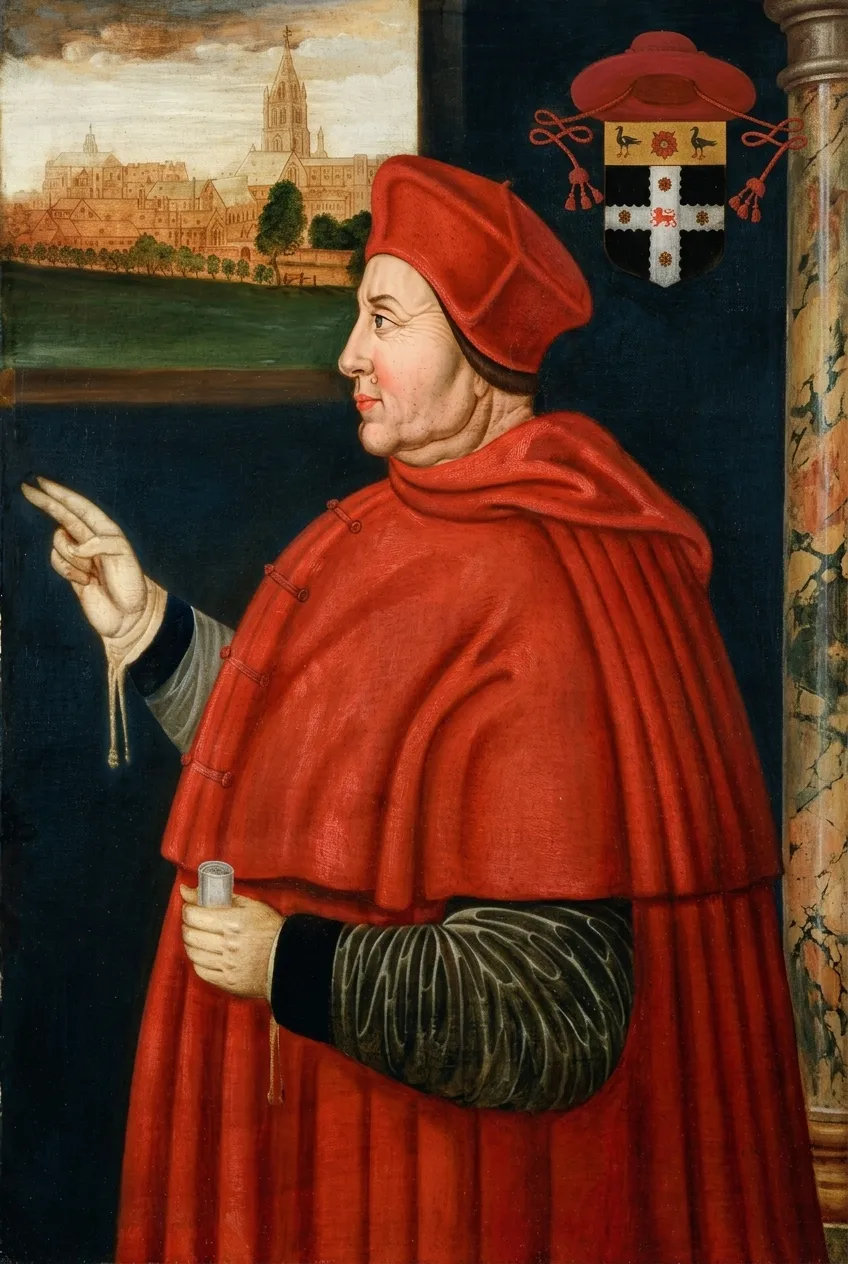
He should have known better. There was plenty of precedent: Katherine, Wolsey, More, Anne Boleyn, and now Anne of Cleves.
Henry had an impressive track record of discarding people who no longer suited him. And Cromwell had helped dispose of several of them himself.
Now it was his turn to find out how quickly royal favor could evaporate into thin air.
Cromwell Becomes the Dissolutions Scapegoat
The first strike against Crowell was that he’d the gall to make Henry look bad. The dissolution of the monasteries was deeply unpopular. As its public face, the lion’s share of the blame fell squarely on Cromwell.
Even Anne Boleyn objected to how the loot was being divided. She wanted the money spent on education and charity, not lining the pockets of Henry and his cronies. This helped drive a wedge between her and Cromwell.
Then came the Pilgrimage of Grace in 1536. Tens of thousands of angry northerners rebelled against Henry’s religious policies. They wanted the monasteries back and Cromwell and his wicked advisers out.
Naturally, the rebels insisted they were loyal to Henry. It was all his minister’s fault. How convenient.
Henry was furious at the backlash. Never mind that he’d approved the policies that caused it. Henry was perfectly happy to let Cromwell take the heat.
That was the way of the world in his eyes. Kings took the credit. Ministers took the blame.
Unpopular Religious Reform
But Cromwell had another problem. He was pushing religious reform further than Henry wanted to go.
Cromwell favored evangelical reform and Protestant thinkers. Henry, despite breaking with Rome, remained remarkably conservative. He wanted to ditch the pope, not necessarily his theology.
In 1539, came the real warning bell. Henry passed the Six Articles Act, reaffirming traditional Catholic teachings including transubstantiation. It was a slap in the face to reformers and left Cromwell looking increasingly vulnerable.
His conservative enemies smelled blood.
Chief among them was Stephen Gardiner, Bishop of Winchester. Trained by Wolsey, Gardiner was an experienced political operator and a staunch religious conservative. He wanted Cromwell gone.
Eliminating Cromwell might also improve Henry’s standing with Catholic Europe. And Henry could always pretend he was never enthusiastic about religious reform in the first place.
Too Powerful, Too many Enemies
To top that off, Cromwell was almost offensively powerful.
He controlled vast amounts of government business, handed out patronage, and accumulated an impressive collection of offices, estates, and wealth.
This extraordinary rise, however, also made him a political liability.
Virtually every powerful faction at court had reasons to want him gone. He’d made enemies almost as efficiently as he’d made money.
To the old aristocracy, a blacksmith’s son who had climbed so high was also an affront to the natural order. They whispered poison in the king’s ear. Who did this upstart think he was?
But it wasn’t all snobbery.
Some hated his religious reforms. Others resented his ruthless methods. Still others simply wanted him gone so they could have the king’s ear for a change.
His fiercest enemy was the Duke of Norfolk. He was a blue-blooded aristocrat who despised Cromwell’s lowly origins, evangelical sympathies, and enormous influence over Henry.
Norfolk had another reason to hate Cromwell. The dissolution closed Thetford Priory, the Howard family’s ancestral burial place, despite Norfolk’s pleas to spare it.
He was forced to relocate family remains and tombs to Framlingham. This only deepened his already bitter hatred of Cromwell.
Even Cromwell’s family was causing headaches.
His son Gregory married into the powerful Seymour family. But then he became embroiled in a mysterious scandal in Sussex and refused to perform the penance demanded of him.
The exact offense remains unknown. But it was exactly the sort of embarrassment that contributed to the hostility surrounding Crowell.
Disastrous Anne of Cleves Meeting
Perhaps the key to Cromwell’s downfall was the Anne of Cleves fiasco. Henry met prospective wife #4, Anne of Cleves, in January 1540.
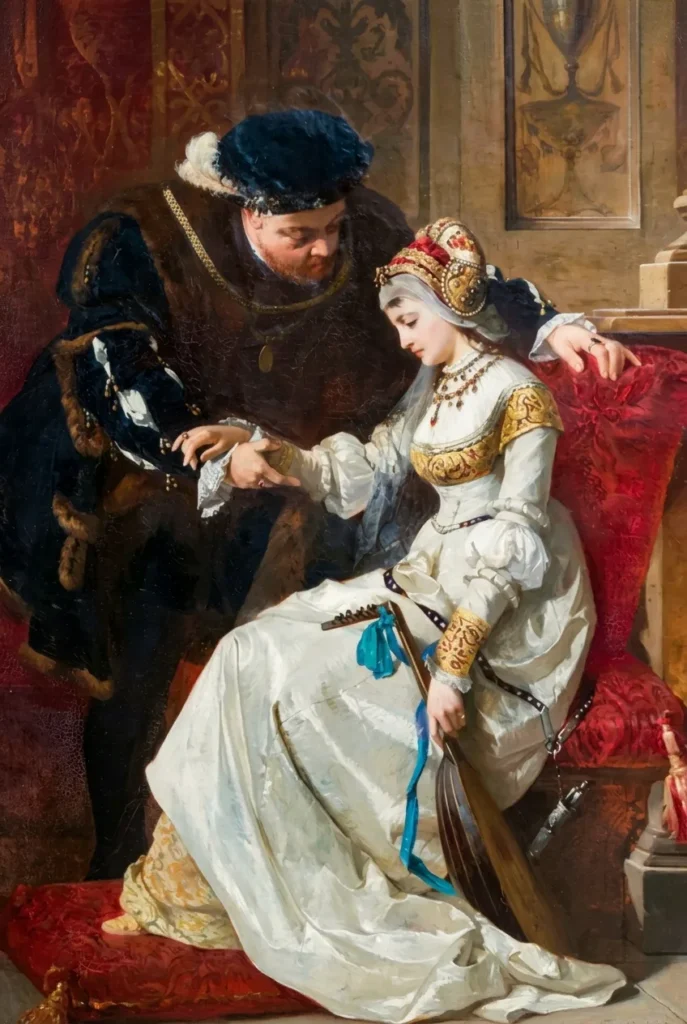
Never one to resist a little mischief, Henry decided to surprise his prospective bride when she arrived in Rochester. He donned a cloak, rounded up a few courtiers, and set off to play the romantic stranger in a little game of courtly love.

According to chivalric tradition, a woman should instinctively recognize her true love, even in disguise. Unfortunately, Anne hadn’t read the script.
Henry approached her, embraced her, and kissed her. Anne had never met him, didn’t recognize him, and reportedly rebuffed his advances. Some accounts say she simply ignored him.
Henry was mortified. He was the king, the king, for god’s sake. Foiled, he removed his disguise. But the damage was done. His romantic fantasy was caput, and his enormous ego took a major hit.
Anne of Cleves Fallout
To cover his wounded vanity, Henry claimed that Anne was unattractive, repulsive even. He was reputedly furious with Cromwell for saddling him with a beast instead of a beauty.
Was she ugly though? There’s no contemporaneous evidence that anyone considered her unappealing. People thought the Holbein portrait was a good likeness.
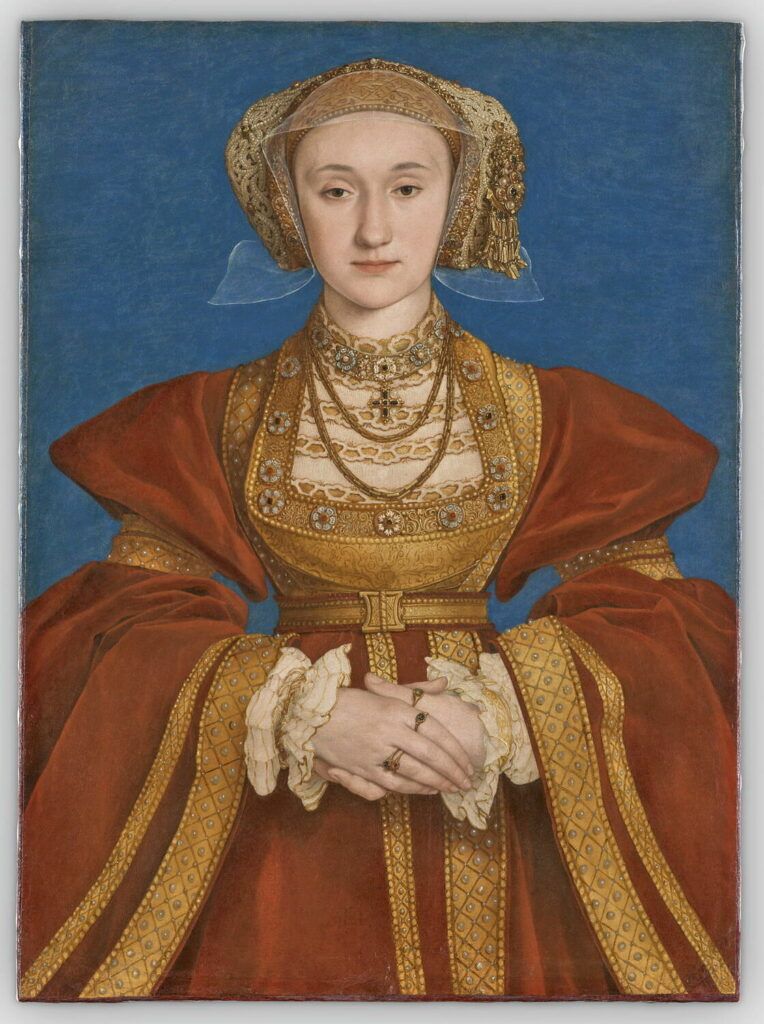
Strip away the intrigue, and Cromwell’s fatal mistakes may have been surprisingly simple. He misjudged Henry’s religious and diplomatic priorities. And he misjudged how much Henry needed to pick out a bride he desired. Rare blunders for Cromwell.
The Cleves marriage was supposed to strengthen England against potentially hostile Catholic powers. But the diplomatic winds were shifting.
Suddenly, the German alliance looked about as attractive to Henry as his prospective bride. Cromwell had gambled considerable political capital on a marriage his king no longer wanted.
Unfortunately, Henry was stuck. Backing out now risked an international incident.
Henry Blames the Bride
So, with great reluctance, Henry married his “Flanders Mare” on January 6, 1540. The couple shared a bed on several occasions, but the marriage was never consummated.
For a king who fancied himself the very picture of masculine virility, that was humiliating. Worse, embarrassing questions about Henry’s sexual prowess had already surfaced during Anne’s trial. The once studly king was no longer quite the stud.
Fortunately for Henry’s pride, there was a convenient scapegoat. He could blame Anne’s bad looks rather than admit the royal equipment might not be functioning as advertised.
Henry Blames Cromwell
Cromwell also took a hit. He understood political power brilliantly.
What he failed to understand was how Henry’s vanity could override logic. Henry wasn’t a dispassionate monarch evaluating an alliance. He wanted a bride he desired and one who admired him. He didn’t get that, and perhaps wasn’t designed for arranged marriages.
Cromwell next job was to find a respectable way out of the mess he’d created. Cromwell explored Anne’s earlier betrothal to Francis of Lorraine as grounds for an annulment.

But he wasn’t quick enough. He was arrested before he could extricate Henry.
Anne, meanwhile, wisely accepted the annulment and walked away happy. Taking with her Richmond Palace, Hever Castle, a generous income, and the title of the King’s Sister. If only Katherine of Aragon had been so wise.
Anne got a splendid retirement package. Cromwell got the Tower.
Norfolk Has a Niece
With Cromwell in the doghouse, his longtime enemy the Duke of Norfolk saw an opportunity.
Plus, he had an ace up his sleeve: his pretty young niece, Catherine Howard, who had caught the king’s eye.
Catherine was a lady-in-waiting to Anne of Cleves, and Henry was already smitten. Norfolk couldn’t have asked for better timing.

Cromwell was already on shaky ground over the Cleves affair. Norfolk and his conservative allies saw a chance to settle old scores. They weren’t about to waste it.
And Henry, who rarely needed encouragement to blame someone else for his mistakes, was finally ready to listen.
Arrest & Execution
On June 10, 1540, Cromwell walked into a Privy Council meeting to conduct business. Instead, he was arrested and accused of heresy, corruption, and treason.
There was no conventional trial. Parliament simply condemned him by an Act of Attainder.
From the Tower, Cromwell wrote to Henry begging for mercy. He was flummoxed. Henry had just granted him two more titles weeks ago.
Henry read his missive, reputedly softened for a second. But no pardon was forthcoming.
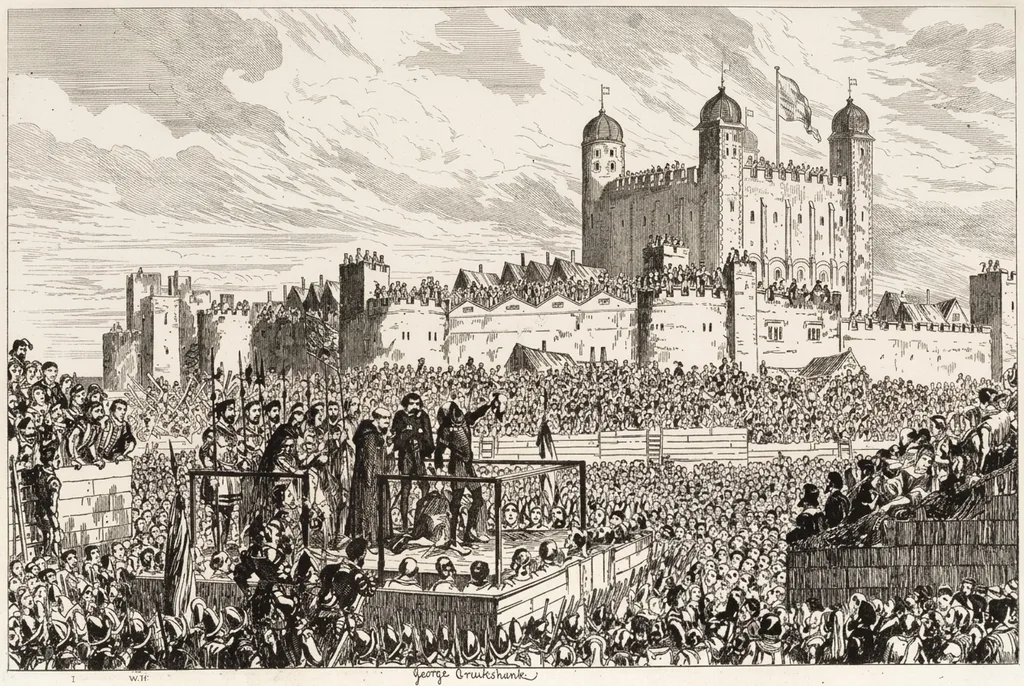
On July 28, 1540, Cromwell was beheaded on Tower Hill. That same day, Henry married Catherine Howard.
A wedding and an execution. Henry had a busy day.
One final delicious irony. Henry later complained that his councillors had wrongly persuaded him to execute “the most faithful servant” he’d ever had.
Well, yes, Henry. You had a remarkably capable minister, listened to his enemies, and cut off his head. Perhaps a more measured performance review would have sufficed.
I hope you’ve enjoyed my history of the rise and fall of Thomas Cromwell. You may find the other English histories interesting:
- Royal Whodunits
- English myths
- History of Medieval and Tudor England
- Tudor queens of England
- Power Women of Medieval & Tudor England
- Historical Mistresses and Favorites
- Wives of Henry VIII
- Worst kings of England
- Anglo-Saxon kings of England
Pin it for later.