The Pinacoteca Nazionale in Bologna is a serious, specialist museum. It’s one of the best places anywhere to drill down on and understand the Bolognese school, especially the artists Carracci and Guido Reni.
It also has important works by Giotto, Raphael, Perugino, Titian, Tintoretto, Guercino, and others.
Bologna’s own tourism office calls it one of Italy’s important national galleries, and its collection spans the Renaissance through the Baroque.
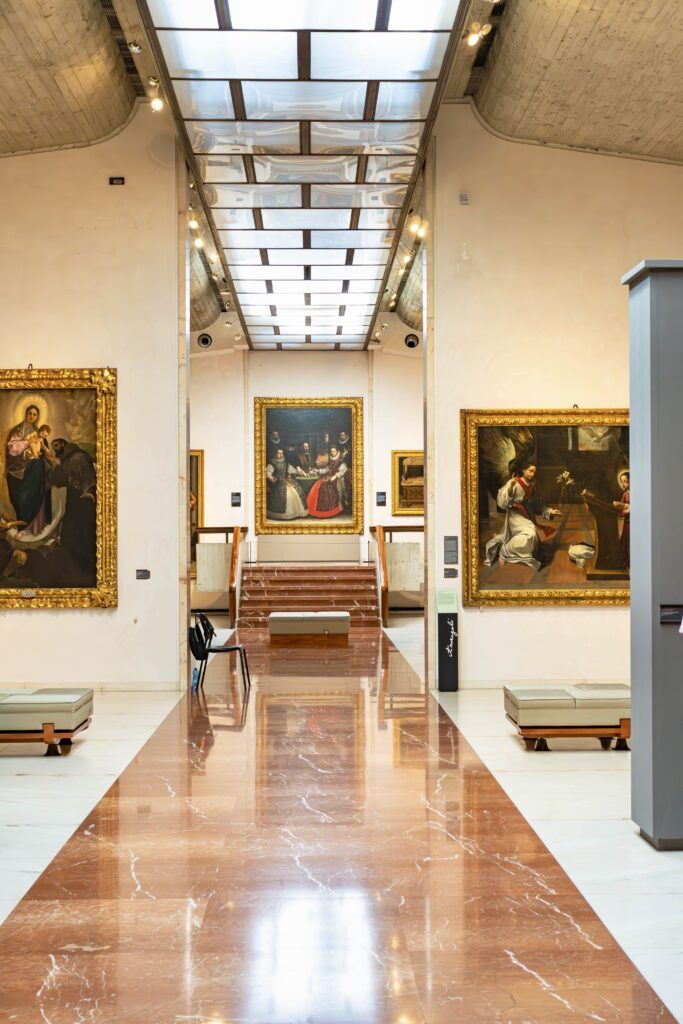
Its greatest strength is depth rather than encyclopedic breadth. The Guido Reni room alone is superb. The Carracci paintings are equally central because Bologna was where their academy and naturalistic revolution began.
It’s not one blockbuster after another like the Uffizi. Not by a long stretch.
But it’s an underrated Old Masters museum that will appeal to traditionalists or those wanting to soak up the regional art vibe.
Most of the paintings are from demolished churches in the city. When Napoleon suppressed the monasteries, he took off with the best paintings to Paris. Fortunately, Bologna was fortunately enough to get them back.
Quick Tips
- Allow about 1½–2 hours for the permanent collection.
- Tickets are €12. Buy online if you’re visiting at a busy time and bypass the ticket-office line. Free with Bologna Card.
- Hours are Tuesday through Sunday from 9:00 am to 7:00 pm.
- Leave backpacks and bulky bags in the free cloakroom before going upstairs.
- Don’t treat it as a generic Italian painting museum. Its great strength is Bolognese and Emilian art.
- If you’re driving, the museum recommends parking around Via Irnerio, Piazza VIII Agosto, or near the bus station.
- The museum is located on the first floor and is accessible to wheelchair users thanks to an elevator, a stair lift, a retractable elevator, a platform, and a cargo mount.
What To See at Bologna’s National Gallery
14th Century Bolognese Artists
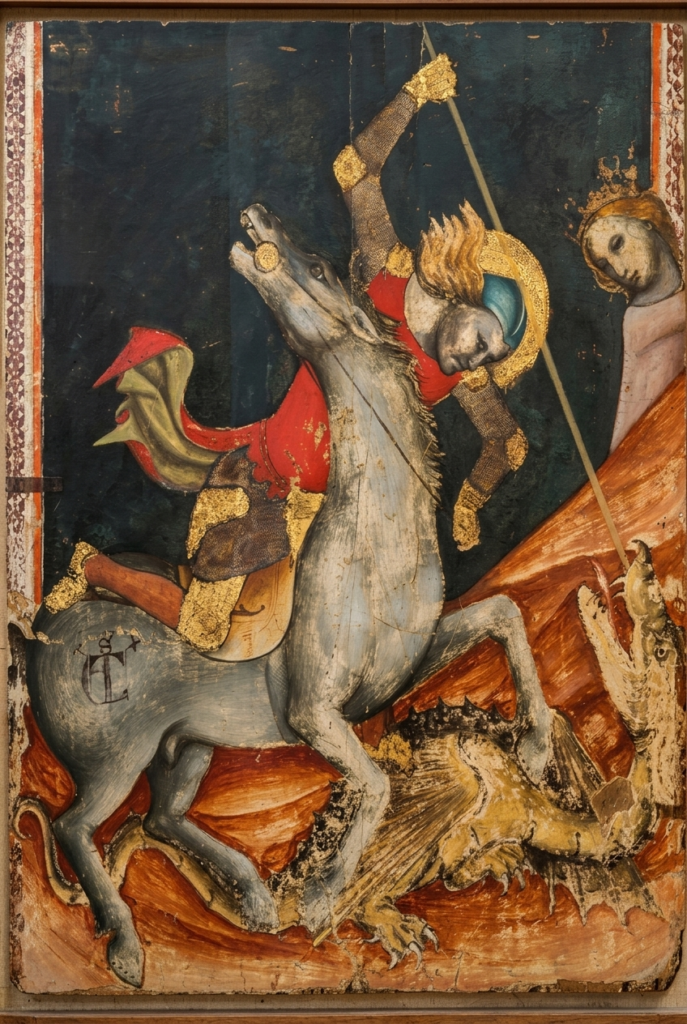
You’ll start with the Bolognese medieval masters. The star of this lot is Vitale da Bologna.
His paintings, St. George and the Dragon and Life of St. Antony Abbott, are intense. Brilliant colors, a hint of depth, and a delight in nature are easy to see.
Some of Vitale’s approach is seen in the work of his peers as well. Look at the colorful Mort della Vergine by Pseudo Jacobin and a glowing Madonna col Bambino by Simone de’ Crosefissi.
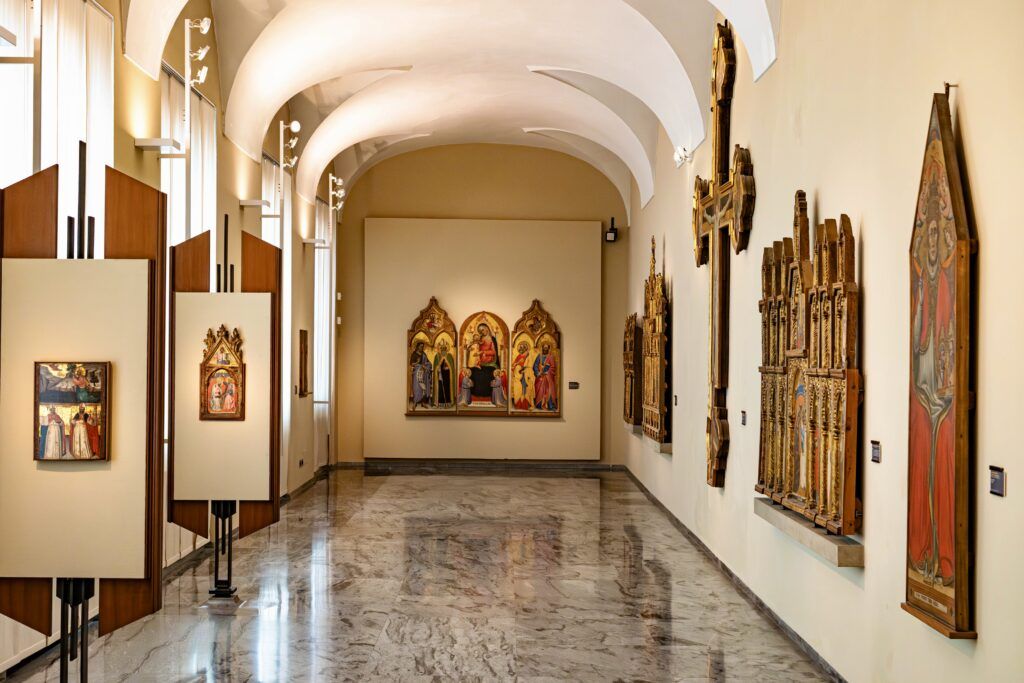
The next room is devoted to “foreign” painters. Pride of place is given to the only Giotto in Bologna, Polyptych with the Madonna and Saints.

Painted in tempera and gold on wood, the polyptych shows a regal Virgin as the Christ Child tenderly touches her cheek. St. Peter and Paul stand alongside the archangels Gabriel and Michael.
What makes the work feel so modern for the era is Giotto’s naturalism. The figures have weight, emotion, and psychological presence, a striking break from the flatter, more stylized conventions of Byzantine art.
You’ll also see works by Lorenzo Monaco, Giovanni Martorelli, and Andrea di Bartolo in this room.
The next three rooms feature detached frescos from Bologna’s churches. Again, Vitale stands out with his Madonna del Rican. It depicts an old legend where Mary sews the shirt that would be gambled for by soldiers at the crucifixion.
Renaissance Works
This section contains more “foreigners.” There are fine works by Antonio and Bartolomeo Vivarini and Cima da Conegliano of Venice. There’s an early Tintoretto Visitation and a tiny Last Supper by El Greco.
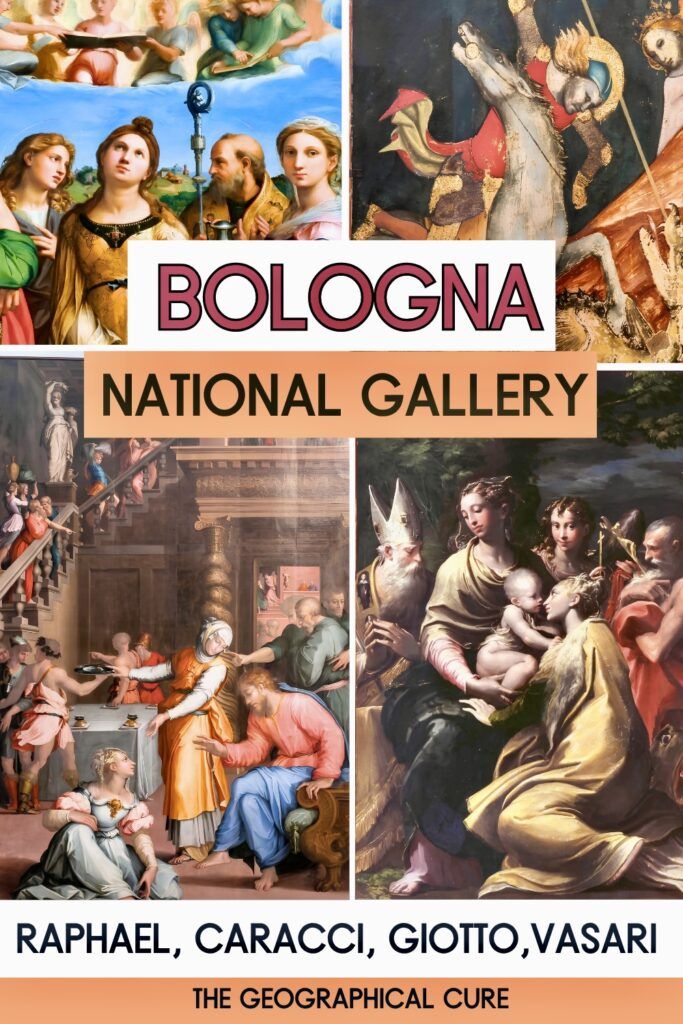
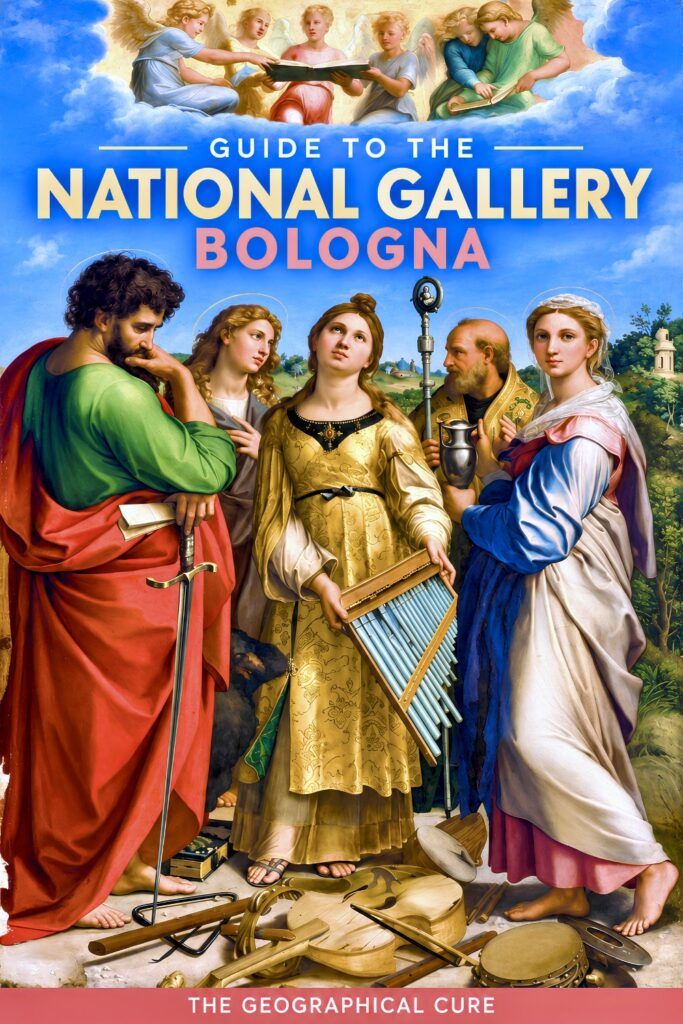
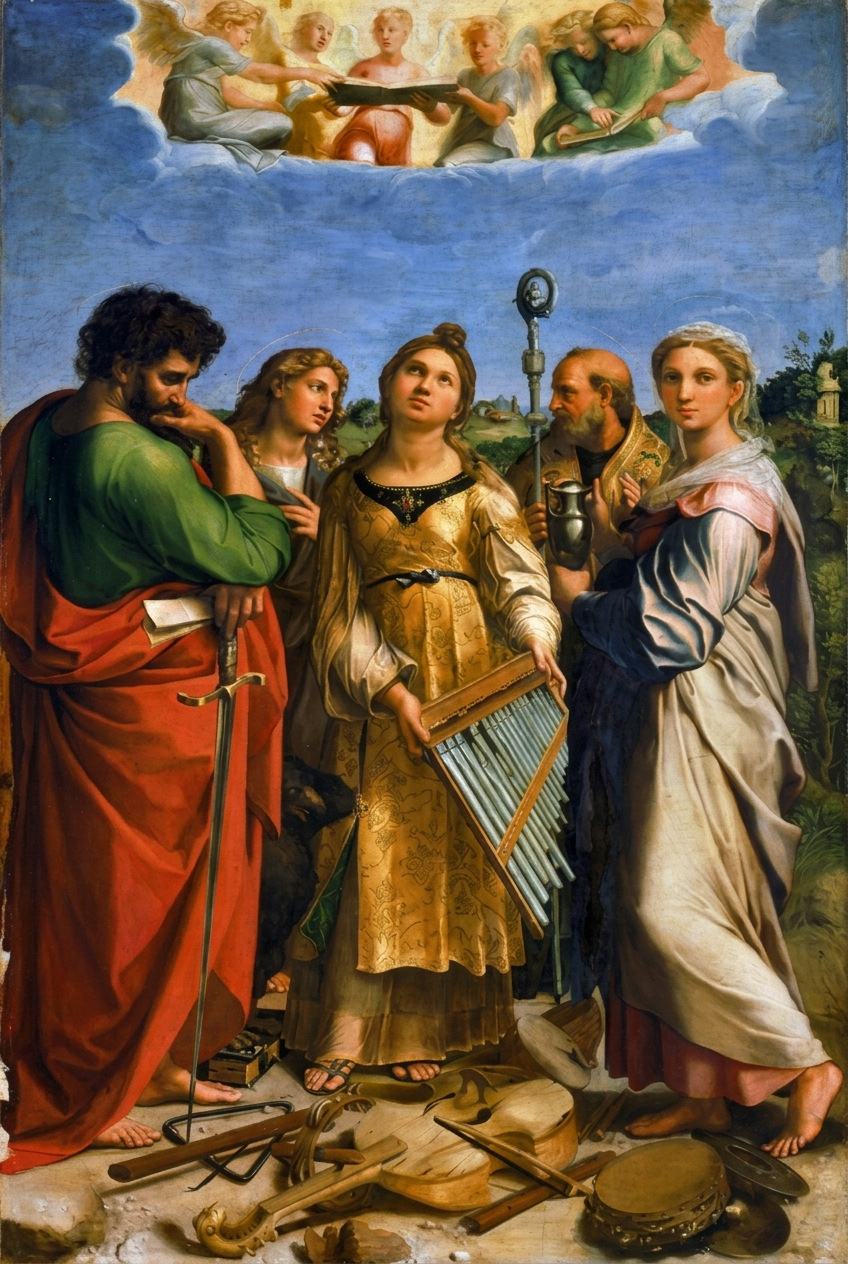
But the star of this section, and the museum’s most famous painting, is Raphael’s Ecstasy of St. Cecilia.
He painted the altarpiece for the chapel of Elena Duglioli in Bologna’s Church of San Giovanni in Monte. Its arrival in the city had an enormous influence on Bolognese painters.
It shows the patron saint of music holding a small organ and gazing upward, transfixed by the heavenly choir. The organ pipes are slipping from her hands, while discarded musical instruments lie at her feet.
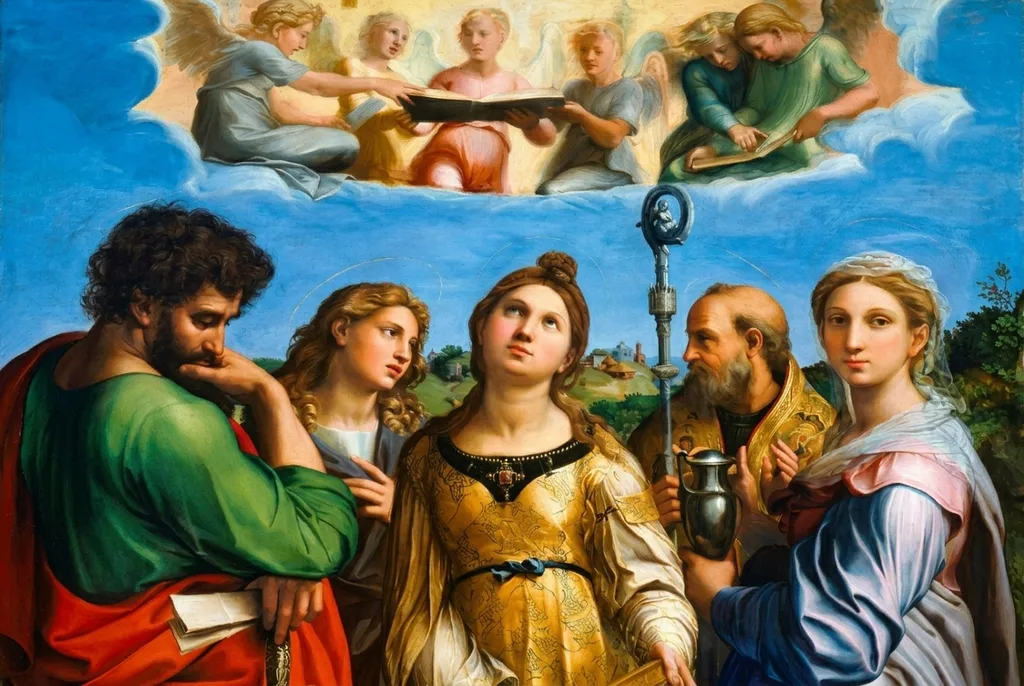
The contrast is deliberate. Earthly music has been superseded by divine harmony. Raphael’s assistant Giovanni da Udine is credited with painting the remarkably realistic instruments.
Around Cecilia stand four contemplative saints. Paul leans on his sword, John the Evangelist is accompanied by his eagle, Augustine wears his bishop’s robes, and Mary Magdalene holds her ointment jar and looks directly out at the viewer.
Raphael painted the work in Rome. But its arrival in Bologna helped spread his High Renaissance style throughout the city and strongly influenced the next generation of local painters. The Pinacoteca itself emphasizes how profoundly the painting affected Bolognese artistic culture.
Mannerism Works
This is where the collection gets really interesting. The museum has 14 works there and explicitly presents them as the generation immediately preceding, or overlapping with, the Carracci revolution.
You’ll see works by Parmigianino, Pellgrino Tibaldi, Giorgio Vasari, Niccolo dell’Abate, Giulio Romano, and Titian.
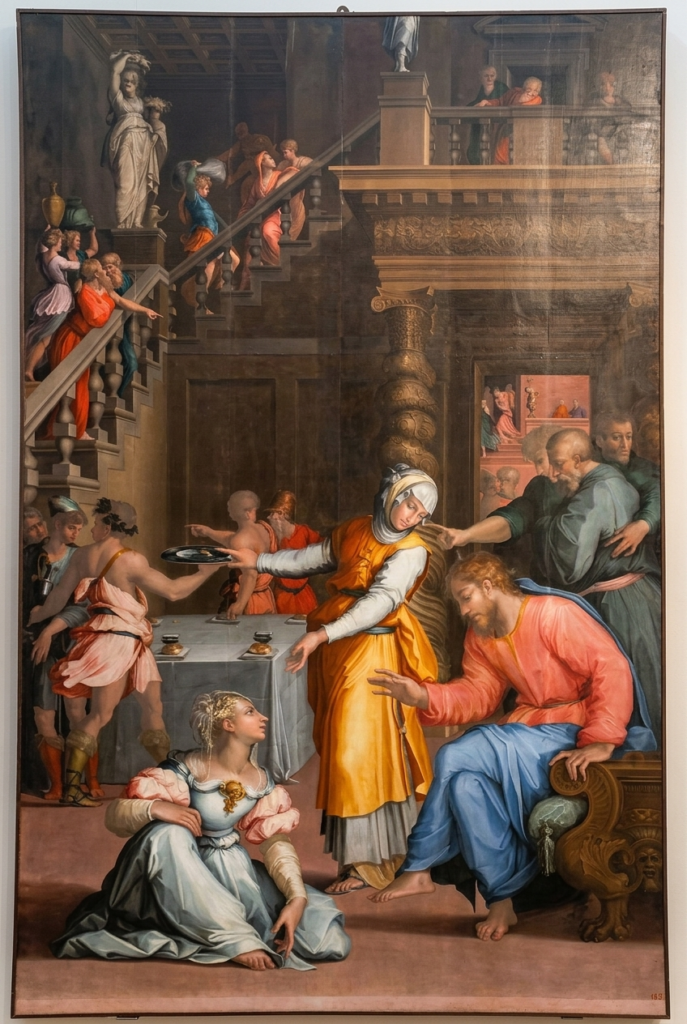
The two enormous Giorgio Vasari paintings, Feast of St. Gregory the Great and Christ in the House of Martha and Mary, were painted for the refectory of San Michele in Bosco. They are huge, theatrical, crowded things, with elaborate architecture, conspicuous poses, Michelangelesque bodies, and lots of spatial manipulation.
The star of the show in the section, however, is Parmigianino’s painting, the Madonna and Child with Saints Margaret, Jerome, and Petronius. It’s in Room 18.
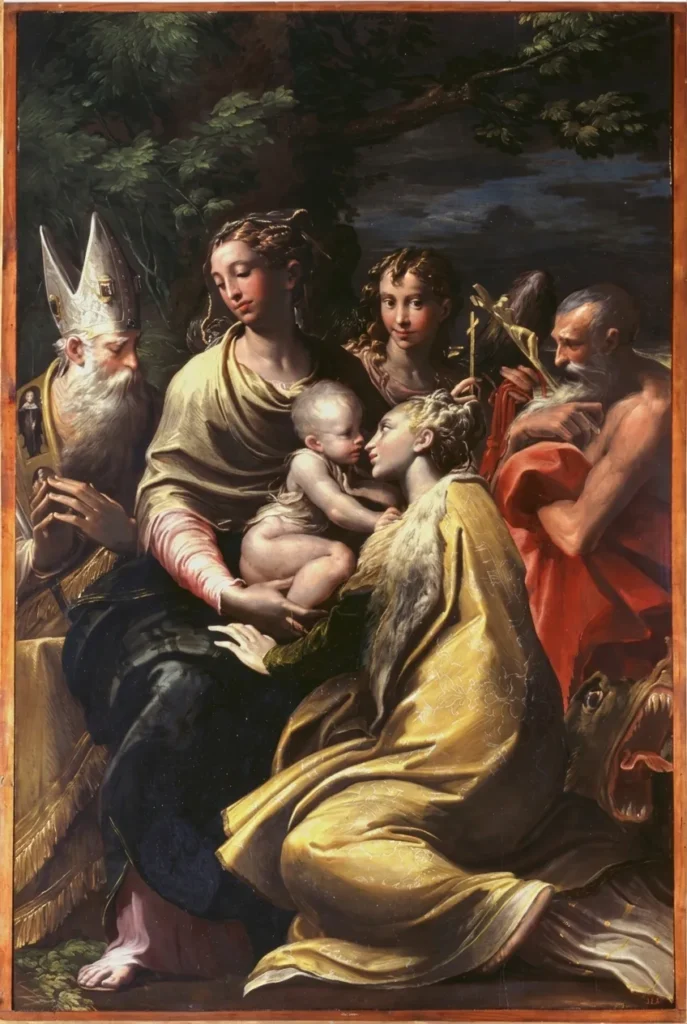
It is very Parmigianino: elegant, slightly strange, psychologically elusive. The whole composition feels unnaturally refined rather than conventionally harmonious.
The important interaction is between the Christ Child and Saint Margaret, who lean toward one another, while the angel just behind them looks straight out at you. The figures have the elongated grace and polished surfaces that became shorthand for the Mannerists.
I would also spend time with Niccolò dell’Abate in Room 21. He occupies a slightly different branch of Emilian Mannerism.
His fresco Ruggero Going to the Castle of Logistilla, around 1548–50, mixes Parmigianino’s courtly grace with Michelangelesque anatomy, Raphael, Correggio, and Dosso. The result is much more decorative and fantastical than the heavy Tuscan version of Mannerism.
Baroque Works
The Italian Baroque was indeed an exotic fruit. And Bologna played an outsized role in its development.
The Carracci, especially Annibale and Ludovico, helped push Italian painting away from the artificial elegance of late Mannerism and toward greater naturalism, emotional clarity, and observation from life. Their reforms at the Accademia degli Incamminati had an enormous influence on 17th century painting.
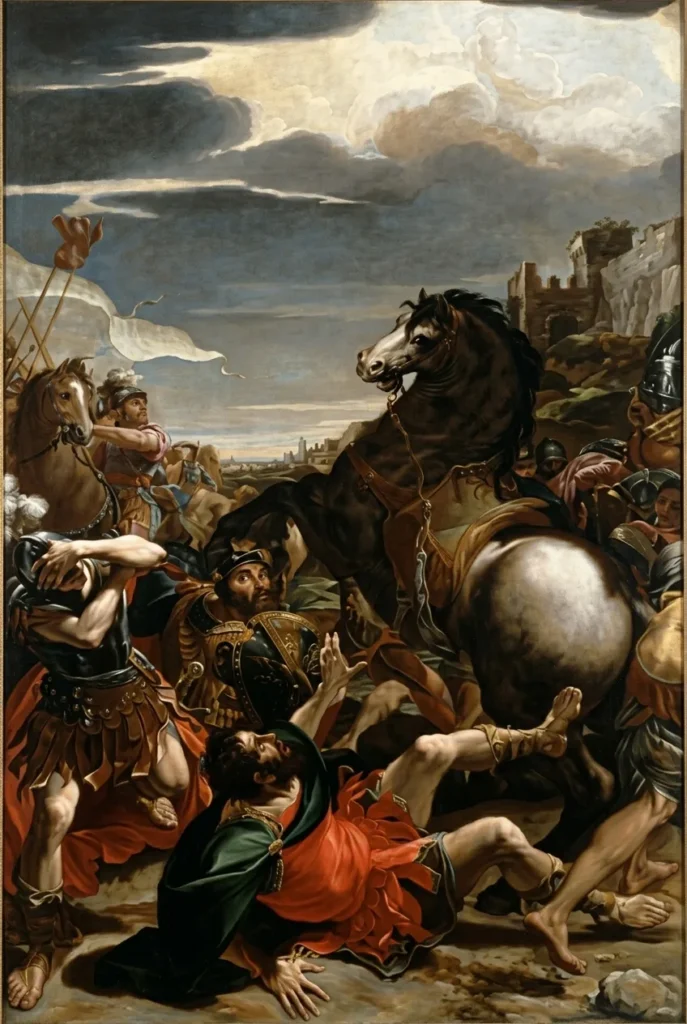
The Carracci get a room to themselves. The paintings not to miss include Ludovico’s Conversion of St. Paul (Caduta di San Paolo), Annibale’s Madonna di San Ludovico, and Agostino’s Last Communion of St. Jerome. The latter became one of the defining works of the Carracci school, combining careful drawing, Venetian color, and closely observed human emotion.
Some of the religious paintings in these galleries can feel rather conventional. Artists were working in the age of the Counter-Reformation, when the church prized clarity, decorum, and direct emotional impact. But at their best, the Bolognese painters turned those requirements into something remarkably powerful.
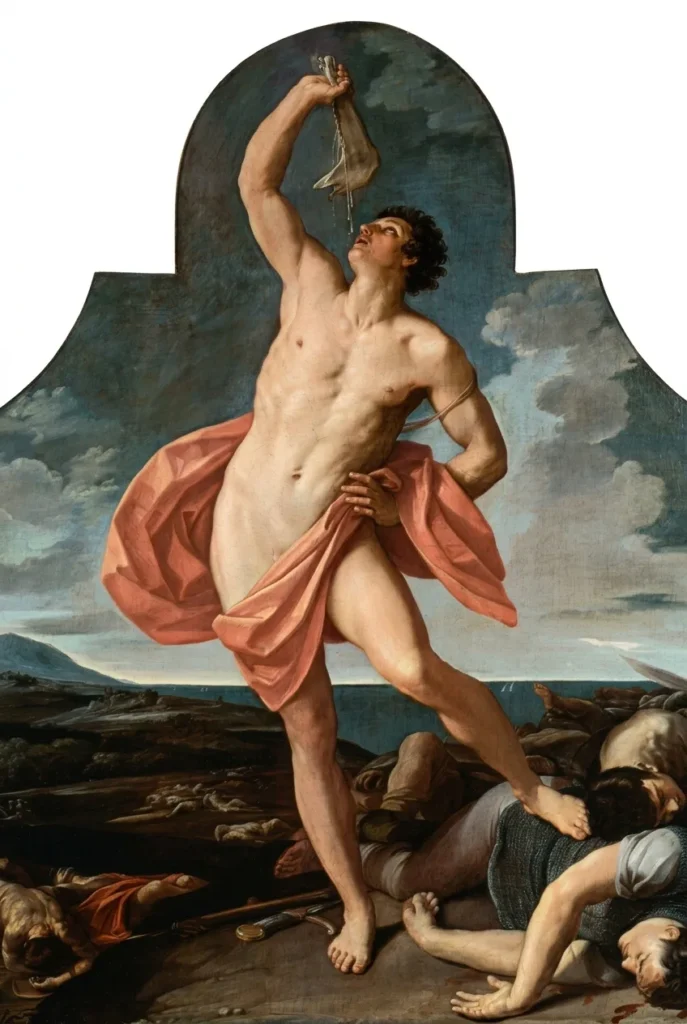
Bologna’s favorite son, Guido Reni, has a lavish room dedicated to him where you can enter his rather strange and beautiful world. He was one of the most celebrated painters in Europe during his lifetime and became famous for an idealized classicism shaped by Raphael, ancient sculpture, and Annibale Carracci.
His paintings show off his precision of line and extraordinary command of color and composition. After the fevered distortions of Mannerism, Reni’s balanced arrangements and idealized figures must have seemed startlingly lucid.
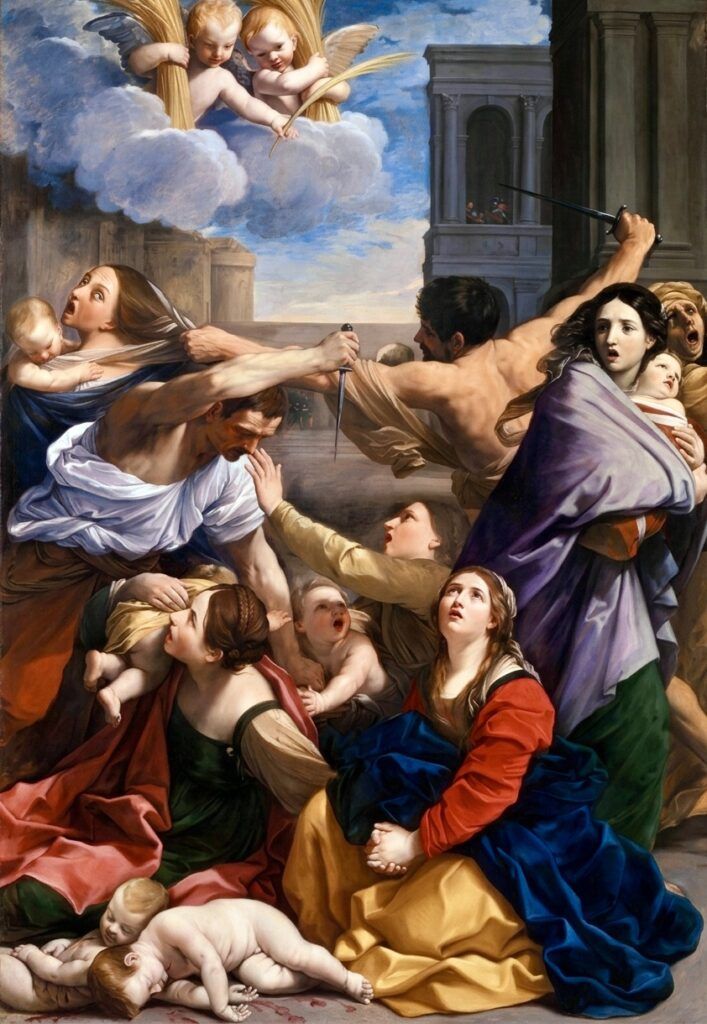
Highlights include the hypnotic Samson Victorious, Massacre of the Innocents, and the monumental Pietà of the Beggars. The Massacre is especially striking. Despite its horrific subject, Reni organizes the violence into an almost eerily controlled and symmetrical composition.
There’s also a portrait of Reni by his pupil Simone Cantarini.
Don’t skip the other Bolognese Baroque masters. Domenichino is represented by major altarpieces including The Martyrdom of St. Agnes, while Guercino brings a darker, more emotional style in works such as St. Sebastian Cured by Irene. Francesco Albani is here too, with his Baptism of Christ.
I hope you’ve enjoyed my guide to the National Gallery of Bologna. You may find these other Emilia-Romagna guides useful:
- Bologna’s Santo Stefano
- Bologna’s Anatomical Theater
- One day in Parma itinerary
- Things to do in Modena
- Guide to Parma’s Palazzo della Pilotta
- Parma art guide
- Guide to Correggio’s Camera di San Polo
- Guide to Parma National Gallery
- Guide to Correggio’s cathedral dome fresco
- Guide to Parma Cathedral
Pin it for later.