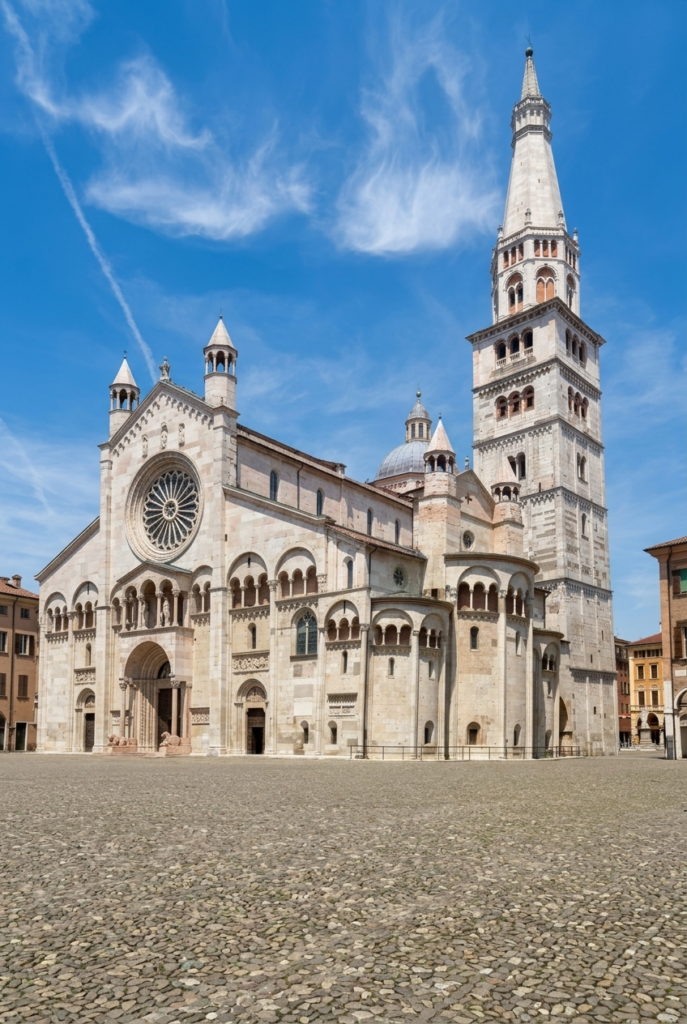
The Via Emilia cuts straight through Modena. Just off it, in the heart of Piazza Grande, stands one of Italy’s great Romanesque treasures: the UNESCO-listed Cathedral of San Geminiano.
Begun in 1099, the cathedral was designed by master builder Lanfranco and completed over the following centuries.

The real showstoppers are the sculptures. Wiligelmo, one of the great sculptors of the Middle Ages, covered the facade and portals with extraordinary biblical reliefs, fantastic creatures, prophets, and other carved figures.
The result is almost a living museum of medieval sculpture, with a handful of Renaissance masterpieces added to the mix.
In this guide, I’ll show you exactly what to look for inside and out, so you don’t miss the cathedral’s best art, architecture, and wonderfully strange details.
What To See At Modena Cathedral: Tales In Stone
Start your visit by walking all the way around the exterior. Some of the best sculpture is on the side portals.
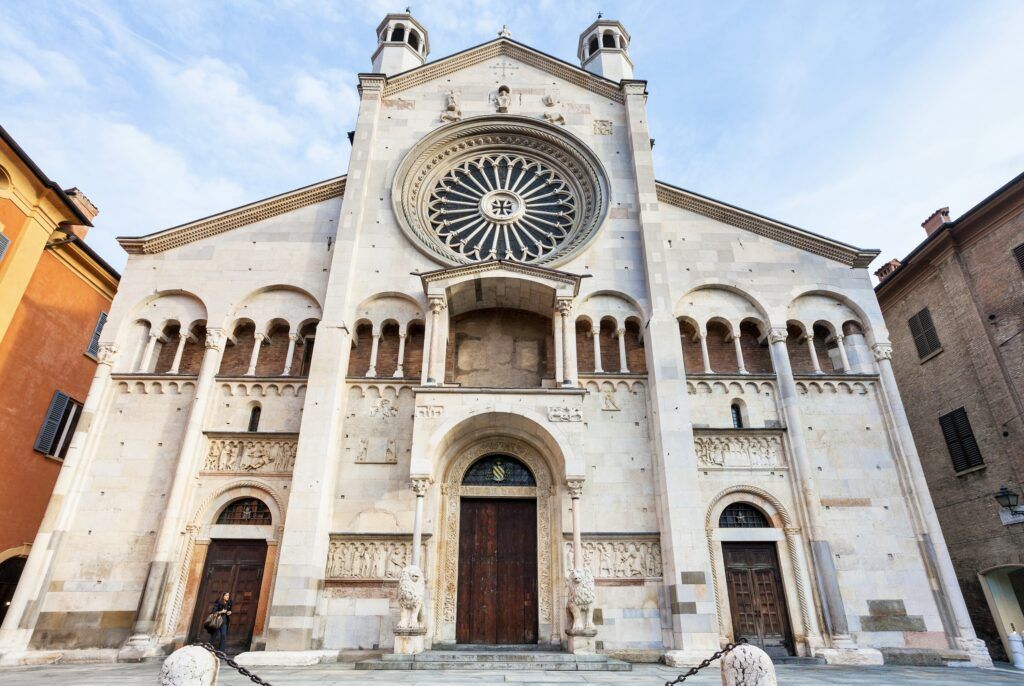
West Facade
The west facade is packed with sculpture.
At the top is an angel, while below are Christ in a mandorla, symbols of the four Evangelists, and Samson wrestling with the lion. The great rose window, divided into 24 sections, was added later by the Campionesi masters in the 13th century.
Below that runs a loggia with capitals carved with fantastic beasts, monsters, and other strange creatures. The medieval imagination is everywhere.
Then comes the star of the show: Wiligelmo’s four great relief panels illustrating Genesis. They’re almost a medieval picture book carved in stone.
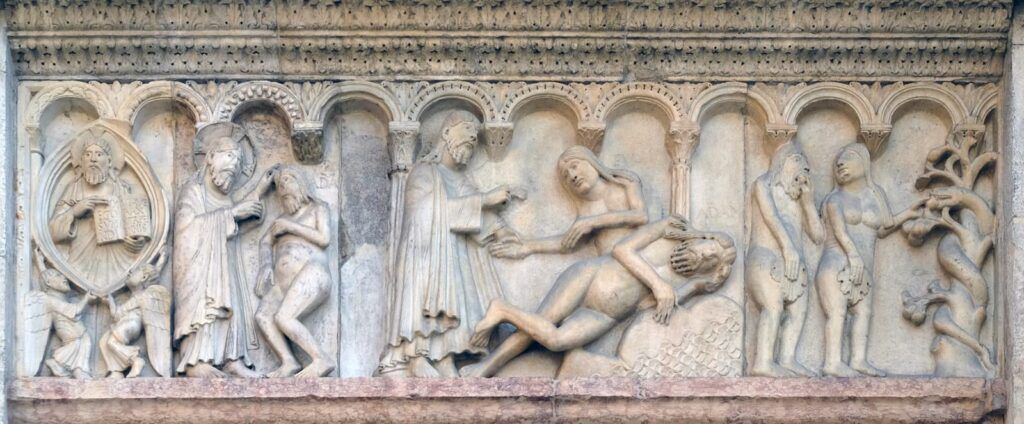
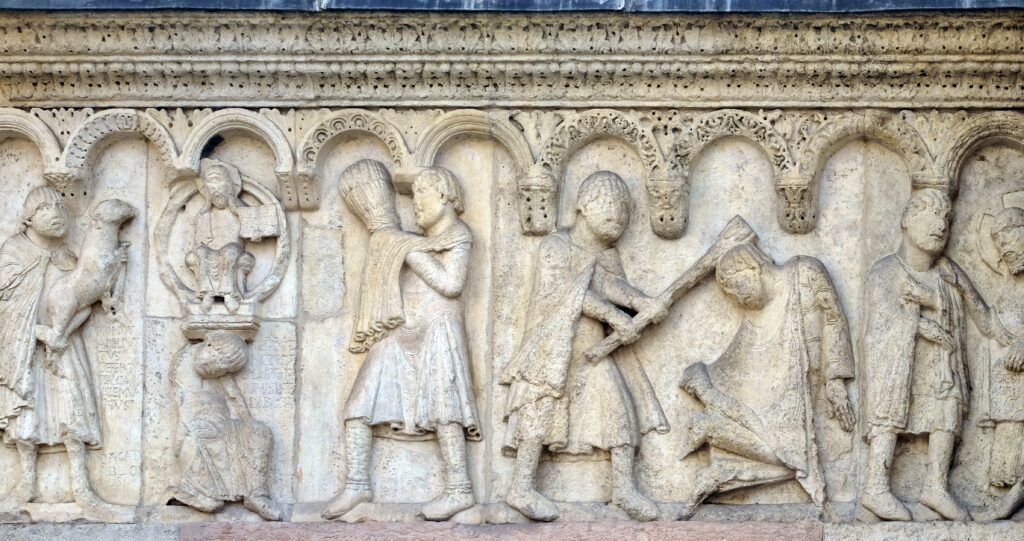
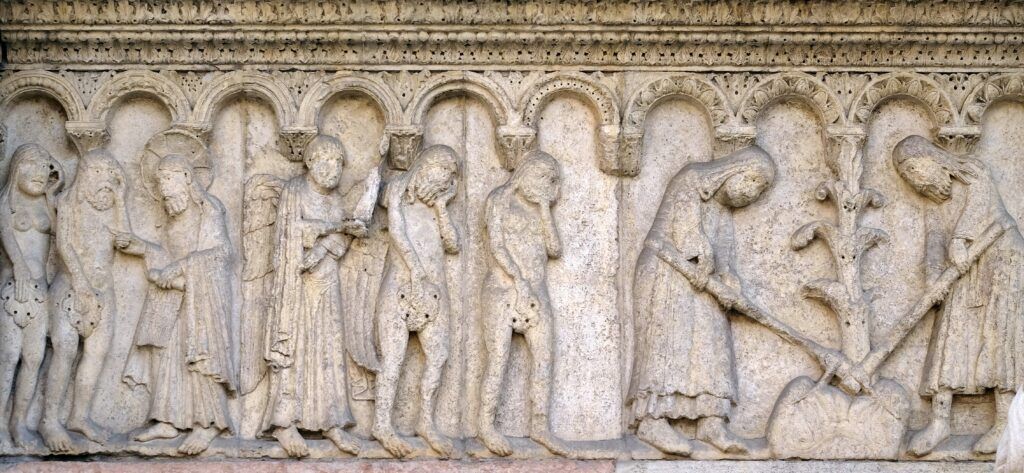
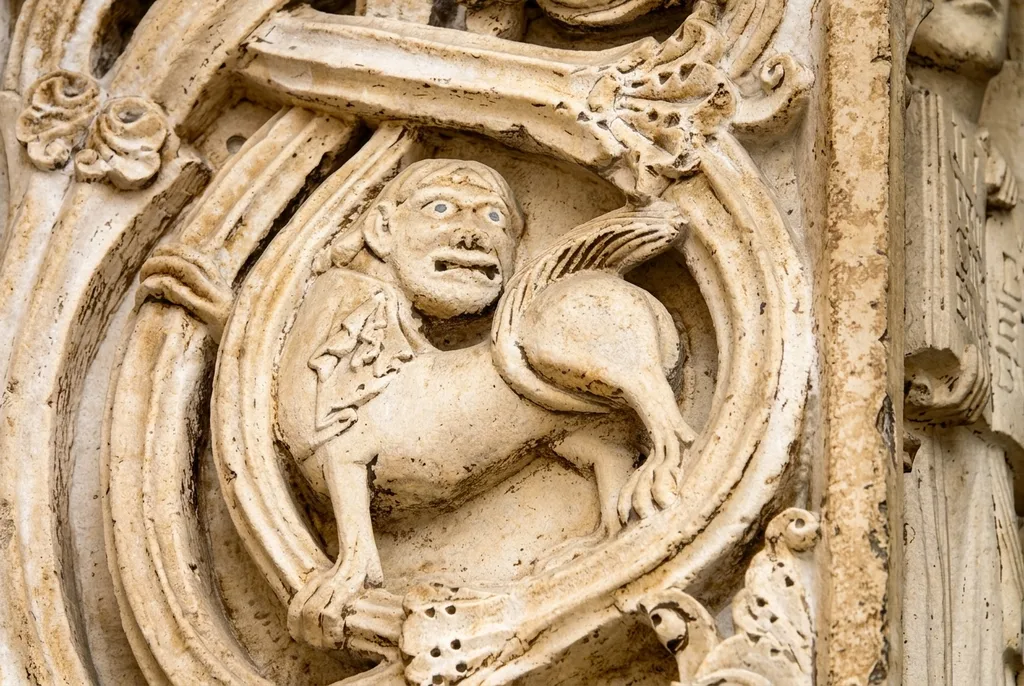
The story begins with the creation of Adam and Eve and continues through the Fall, Cain and Abel, and Noah’s Ark. The figures are wonderfully expressive, with chunky bodies, dramatic gestures, and faces that make these 900 year old stories surprisingly lively.
The Portale Maggiore is the original main entrance on the west facade and another showcase for Wiligelmo’s sculpture. Look for prophets, fantastic creatures, intertwined foliage, and two ancient Roman lions reused to support the porch columns.
Nearby are especially strange details, including an angel leaning on an inverted torch beside an ibis, two deer sharing a single head, and lions struggling against a serpent.
The figures are wonderfully expressive, with chunky bodies, dramatic gestures, and faces that make these 900 year old stories surprisingly lively.
South Facade & Apse
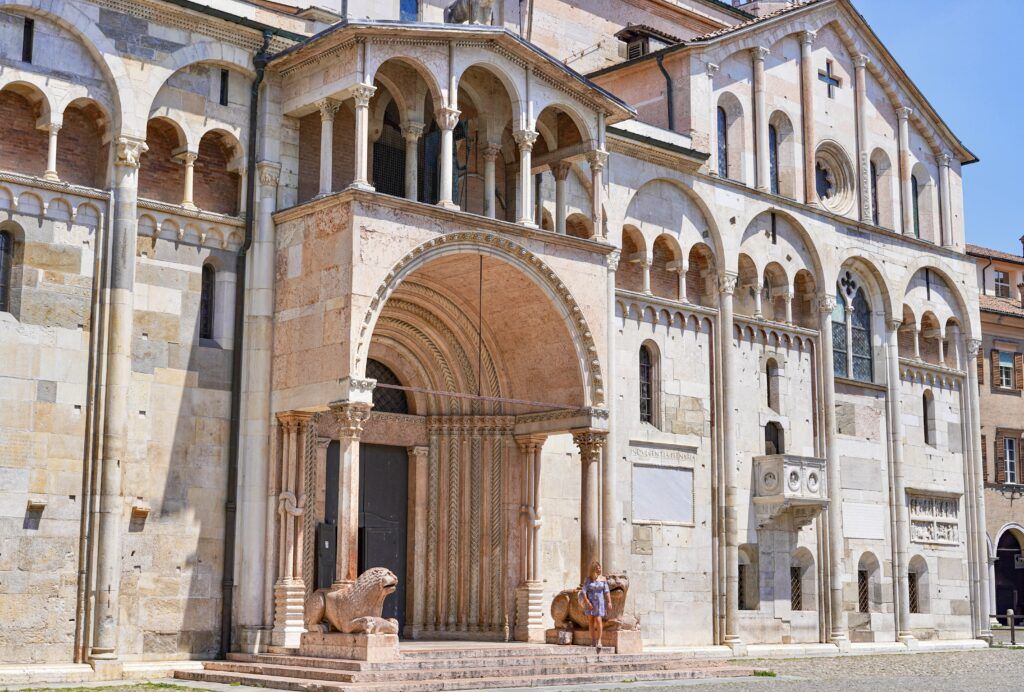
You’ll probably enter through the south facade, which faces Piazza Grande. This side has almost as much sculpture to admire as the west front.
There are two major portals. The older one is the Porta dei Principi, while the grander Porta Regia lies farther along the facade.
The Porta dei Principi dates to the early 12th century and was created by a sculptor from Wiligelmo’s circle. Its carvings were damaged during Allied bombing in 1944 and later restored.
On the lintel, six reliefs tell episodes from the life of San Geminiano, Modena’s patron saint. One particularly vivid scene shows him exorcising a demon from the daughter of Emperor Jovian. Around the doorway are apostles, curling vines, animals, and fantastic creatures.
The Porta Regia was added by the Campionese masters in the early 13th century, after the original cathedral was completed. Its pink-red Veronese marble makes it stand out dramatically from the pale stone of the church. Lions clutching prey support the columns of its monumental porch.
Above is an elegant two story loggia. A copper statue of San Geminiano was installed here in 1376, looking rather as though he’s about to address the piazza below. The original statue is now preserved in the Cathedral Museum and a copy stands outside.

Metopes & North Facade
The north wall has much less decoration than the main and south facades. But what it lacks in quantity, it makes up for in some wonderfully strange medieval sculpture.
Another anonymous sculptor associated with Wiligelmo’s workshop is known simply as the “Master of the Metopes.”
He carved a series of eight fascinating reliefs of monstrous and fantastic beings that were placed high along the roofline. They may represent creatures that medieval Europeans believed inhabited the unexplored regions at the ends of the earth. Appropriately enough, these strange outsiders were relegated to the most remote reaches of the cathedral.
The sculptures you see outside today are copies. The originals were removed for conservation and are displayed in the Cathedral Museum.
The Porta della Pescheria, or Fish Market Gate, is also on the north wall. It takes its name from a fish stall that once stood nearby.
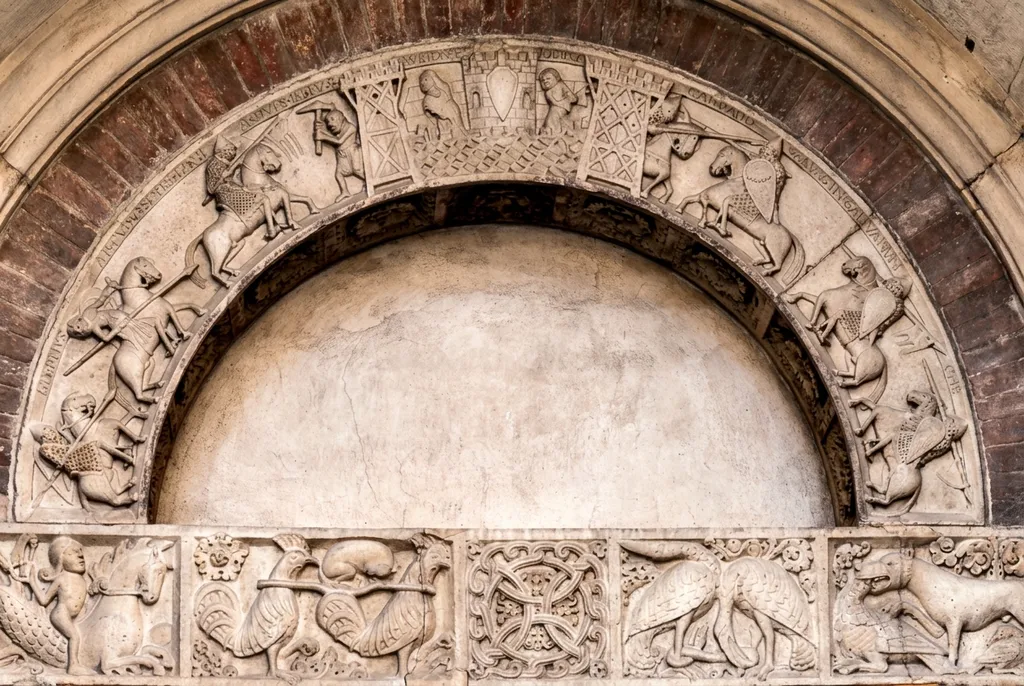
Don’t skip this portal. Its carvings are some of the most unusual on the cathedral because much of the imagery comes from secular stories rather than the Bible.
Along the door jambs is a medieval calendar showing the labors associated with the twelve months of the year. The lintel is filled with animals and episodes drawn from ancient fables.
But the real surprise is overhead. The archivolt depicts King Arthur and his knights attacking a castle where a woman named Winlogee is being held with a man named Mardoc. Winlogee is generally identified as Guinevere.
Arthur is actually identified by name in the carving as “Artus de Bretania.” You can also pick out figures thought to be Gawain and Kay.
Dating to the early 12th century, it’s one of the earliest surviving monumental images of the Arthurian legend anywhere in Europe. Even more intriguingly, it may date from before some of the great written Arthurian romances that later made these characters famous.

Interior
Inside, the cathedral feels considerably more austere. Rows of arches divide the nave, supported by alternating columns and massive brick piers.
The warm brick, pale stone, and dim light create a very different atmosphere from Modena’s more ornate Baroque churches.
The floor is arranged in the Lombard style, with the presbytery and choir raised above the nave.
High Altar & Apse
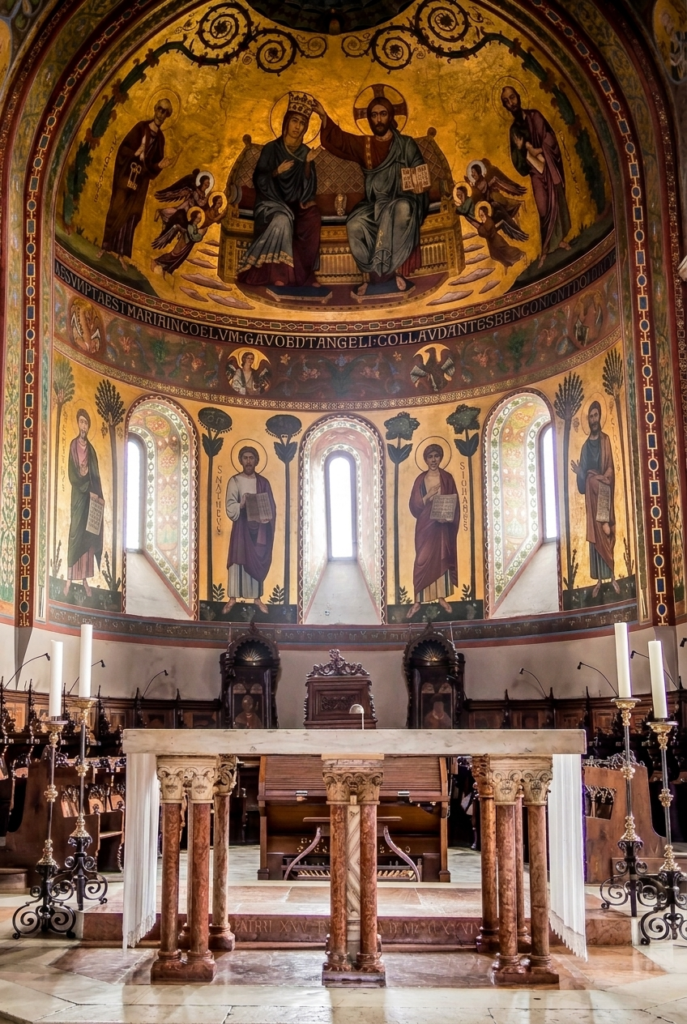
The high altar itself is surprisingly simple, especially compared with the richly decorated apse behind it. Its restrained stone design keeps the focus on the medieval architecture, choir, and glowing apse decoration
The apse decoration is a little deceptive. It looks medieval at first glance. But it’s actually a late 19th-century revival scheme, painted in 1888 by Fermo Forti and Giuseppe Migliorini to imitate the look of medieval Roman mosaics.
At the center is the Coronation of the Virgin, set against a shimmering gold ground, with saints and angels arranged around her. Below are more figures and decorative bands filled with vegetal motifs and symbols.

The whole thing was inspired especially by the great medieval mosaics of churches such as Santa Maria Maggiore in Rome.
Behind the high altar, take a look at the beautifully inlaid wooden choir stalls by Cristoforo and Lorenzo Canozi da Lendinara, created in the 1460s.
Their intricate wood inlay creates convincing images of books, objects, figures, and architectural spaces using perspective and different tones of wood.
Pontile & Ambon
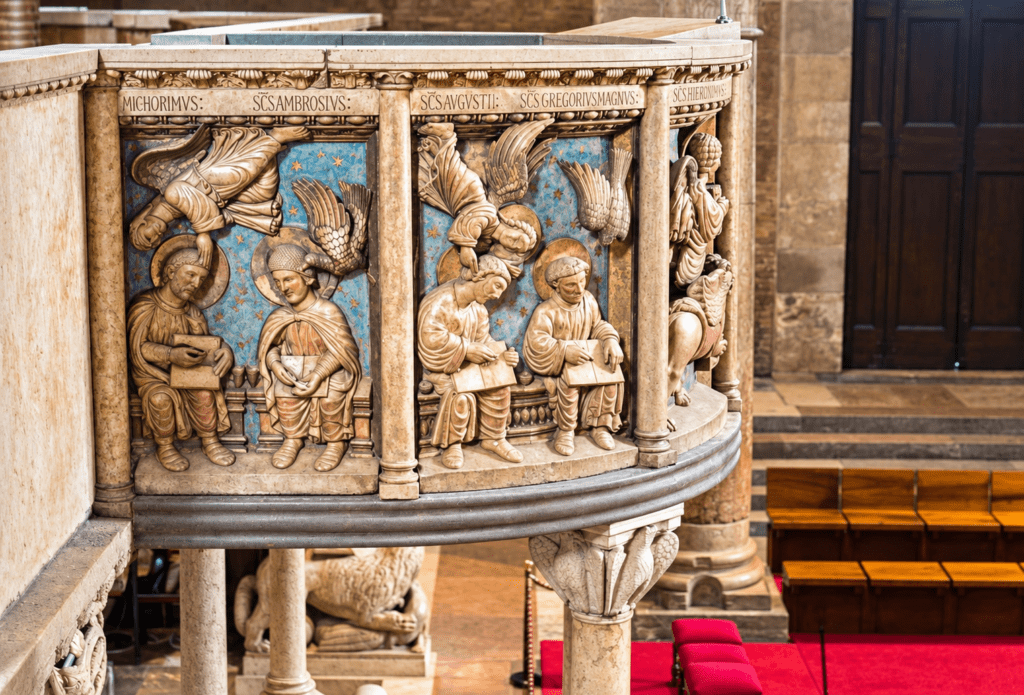
Your eye will be immediately drawn to the medieval pontile stretching across the church in front of the raised presbytery. Dating from roughly 1165–84, it rests on slender columns and is covered with sculpted scenes from the Passion of Christ.
Look closely and you can still see traces of the original paint. These reliefs would once have been far more colorful than they are today.
On the left side is the 13th century Ambon (or pulpit), a raised platform used for liturgical readings. Added by the Campionese masters, it rests on columns supported by wonderfully fierce stone lions and is covered with carved religious figures and scenes.
Capitals
Don’t rush past the capitals either. Many are carved with animals, foliage, biblical figures, and fantastical creatures. You’ll spot lions, monsters, and even a two tailed siren, a medieval cousin of the mermaid.
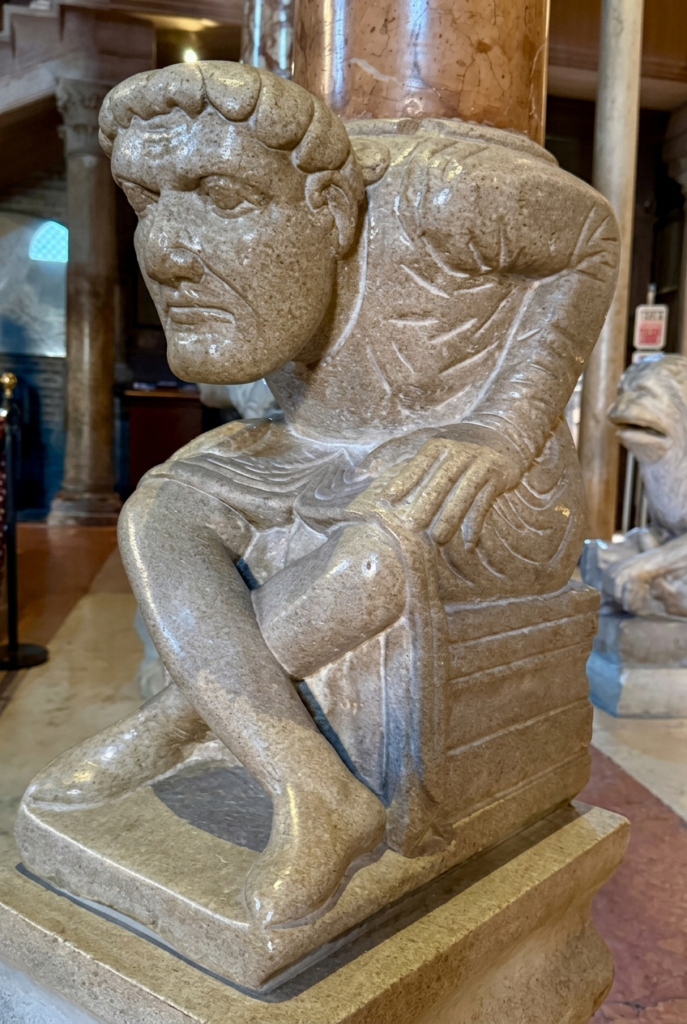
There are more strange creatures beneath the pontile. Look for the telamons, crouching human figures that appear to strain beneath the weight of the architecture.
These burdened figures were a common medieval motif and add a wonderfully odd touch to the otherwise solemn interior.
Bellincini Chapel
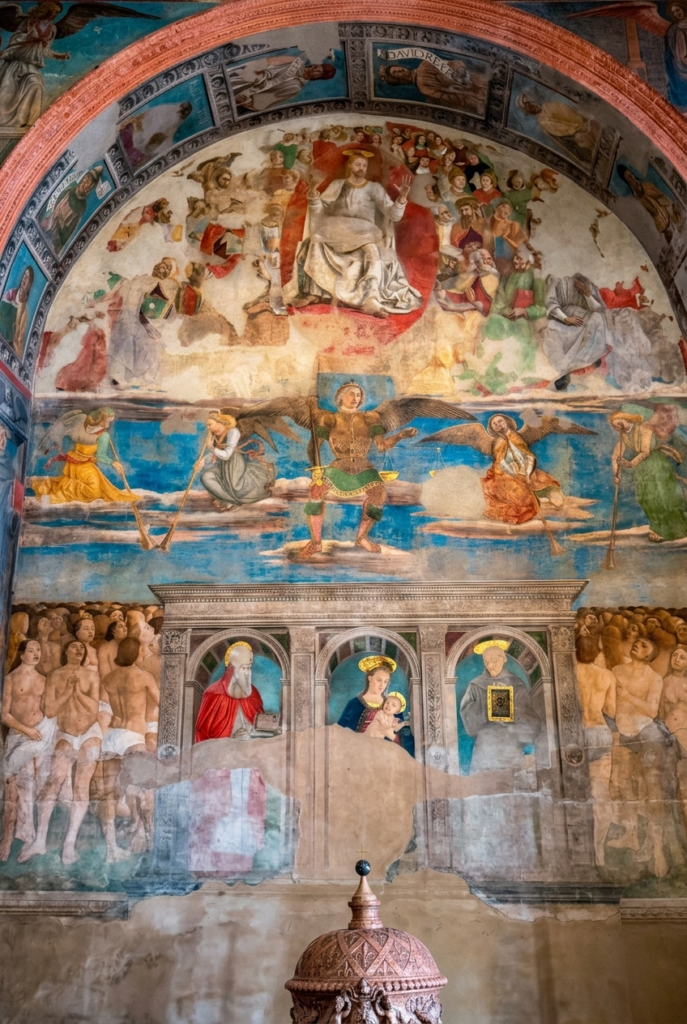
In the right aisle is the 15th century Bellincini Chapel.
Its enormous Last Judgment is packed with Renaissance drama. Christ presides above while angels sound trumpets, St. Michael weighs souls, and the dead rise from their graves.
Painted around 1475 and attributed to Cristoforo da Lendinara, the frescoes show the influence of Piero della Francesca.

Left Aisle
In the left aisle, stop at the enormous Altare delle Statuine, a terracotta altarpiece created by Michele da Firenze around 1440–41.
Originally made for the cathedral’s high altar, it’s packed with saints, apostles, biblical scenes, pinnacles, and tiny architectural details.
Traces of its original paint survive, although the whole thing was once much more colorful.

Upper Level
For a few euros, you can also access the cathedral’s upper areas.
But before you head up the stairs, be sure to stop and admire Dossi Dossi’s Pala di San Sebastiano, painted around 1518–21. It’s just to the left of the stairway.
It shows the Madonna and Child in glory with Saints Lawrence and Roch above, and Saints John the Baptist, Sebastian, and Jerome below.
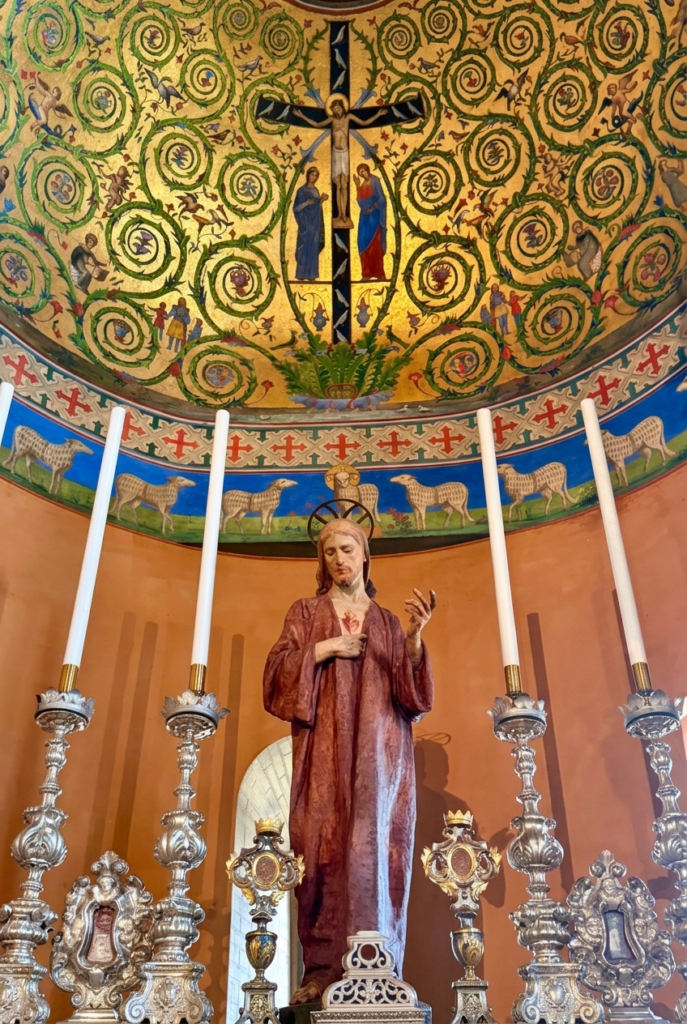

Once you climb the steps, you’ll find brilliantly colored, Byzantine-inspired mosaics. Their gold backgrounds, curling vines, animals, and religious figures provide a striking contrast to the much more restrained Romanesque nave below.
The paid upper-level route also leads into the cathedral’s monumental sacristy.
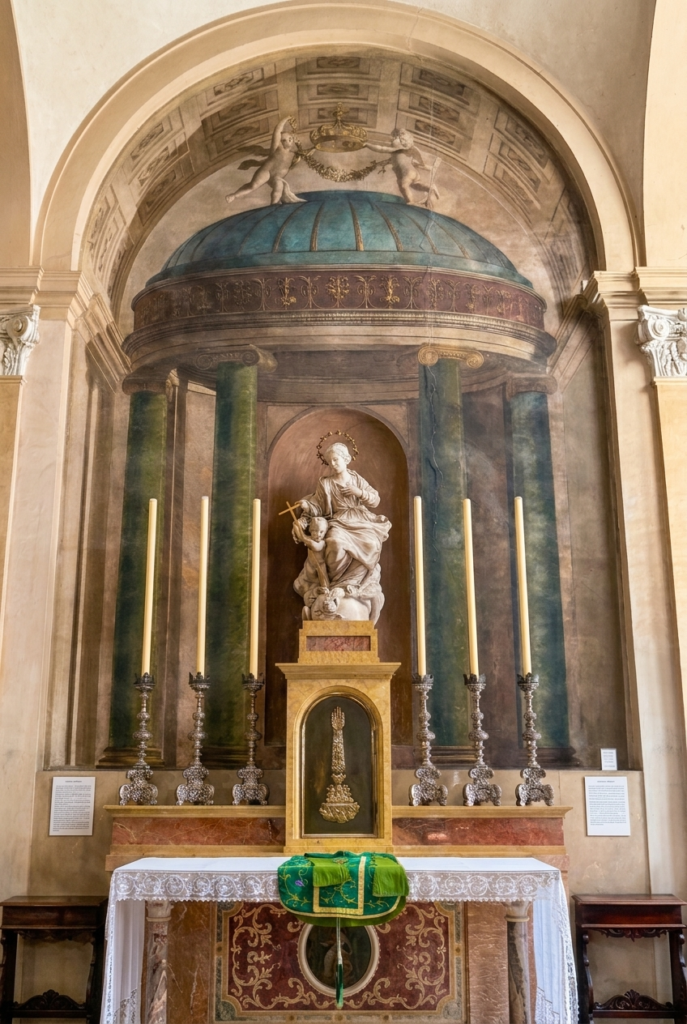
Its altar holds Honoré Pellé’s 17th century Immaculate Conception, while below it is the extraordinary silver reliquary containing part of the arm of San Geminiano.

Crypt
Then head down into the crypt, which spreads beneath the raised presbytery.
This is where the remains of San Geminiano, Modena’s patron saint, have rested since they were transferred here in 1106.
His stone tomb stands in the central apse, surrounded by a forest of slender columns. The saint’s burial place was so important that the medieval city itself essentially grew up around it.
Take a look at the carved capitals as you wander through. No two seem quite alike.
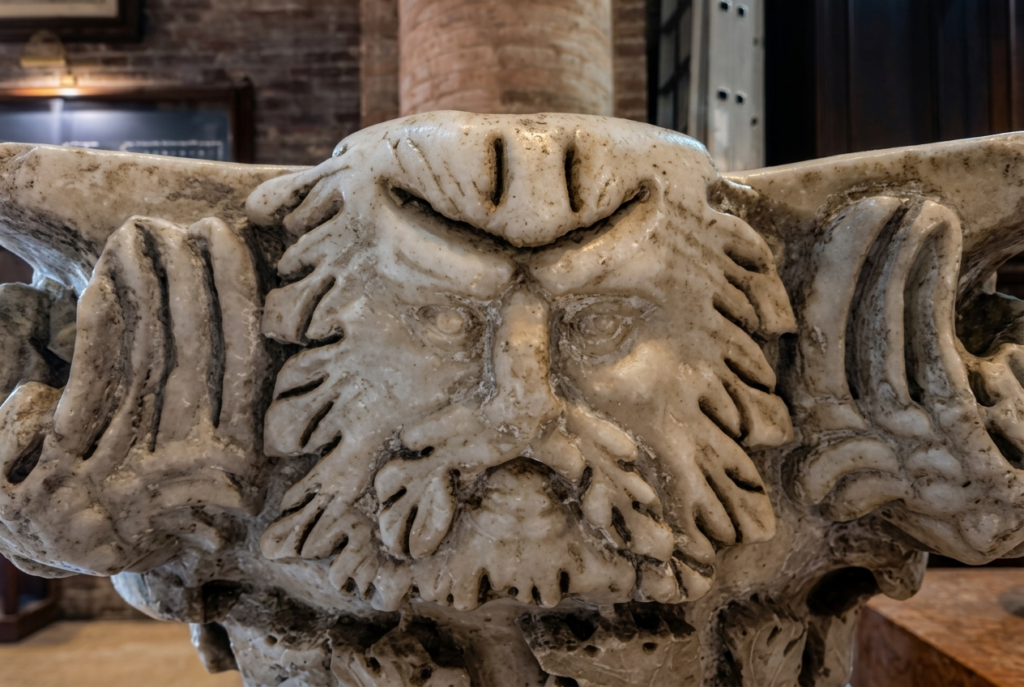
Some are decorated with foliage, while others sprout human faces, animals, and strange creatures. Several are older pieces reused in the Romanesque crypt.
The other highlight is Guido Mazzoni’s Madonna della Pappa, a wonderfully lifelike group of painted terracotta figures created around 1480–85.
Despite the rather grand setting, the scene is surprisingly domestic.
The Virgin holds the Christ Child while a woman traditionally known as “Suor Pappina” blows on a spoonful of food to cool it before feeding him. The child even clutches a little ring-shaped bread in his hand.

That tiny everyday gesture is what makes the sculpture so memorable.
Mazzoni was famous for giving religious figures the expressions and mannerisms of real people, and this group feels unusually intimate for a Renaissance religious work.
San Geminiano’s tomb is still opened for viewing on his feast day, January 31. Thus, it isn’t simply an archaeological crypt. It remains an active place of devotion for Modena.
La Ghirlandina
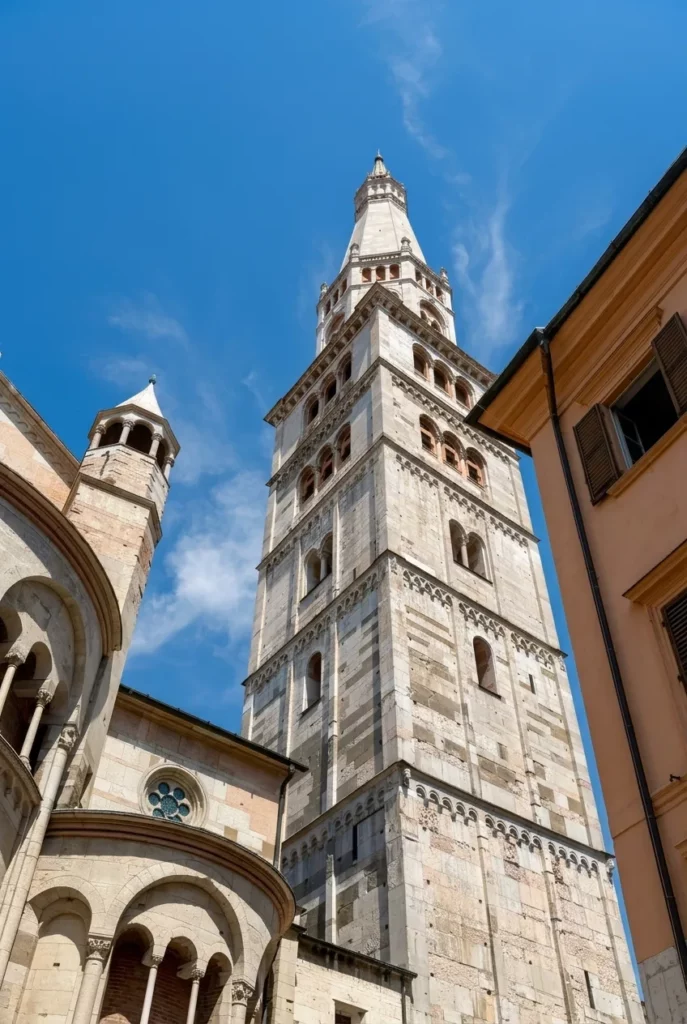
Beside the cathedral rises the slightly mismatched but rather fabulous Ghirlandina, Modena’s 293 foot bell tower. Together with the Duomo and Piazza Grande, it forms the city’s UNESCO-listed complex.
The tower was built in stages. By the late 12th century, it reached five stories. The Campionese masters later added the upper levels, and Enrico da Campione completed the Gothic octagonal spire in 1319.
Its nickname comes from the two rings of marble balustrades crowning the spire, which reminded the Modenese of garlands. The Ghirlandina also served an important civic role. Its bells announced everything from the opening of the city gates to emergencies, and the tower once safeguarded municipal documents and valuables.
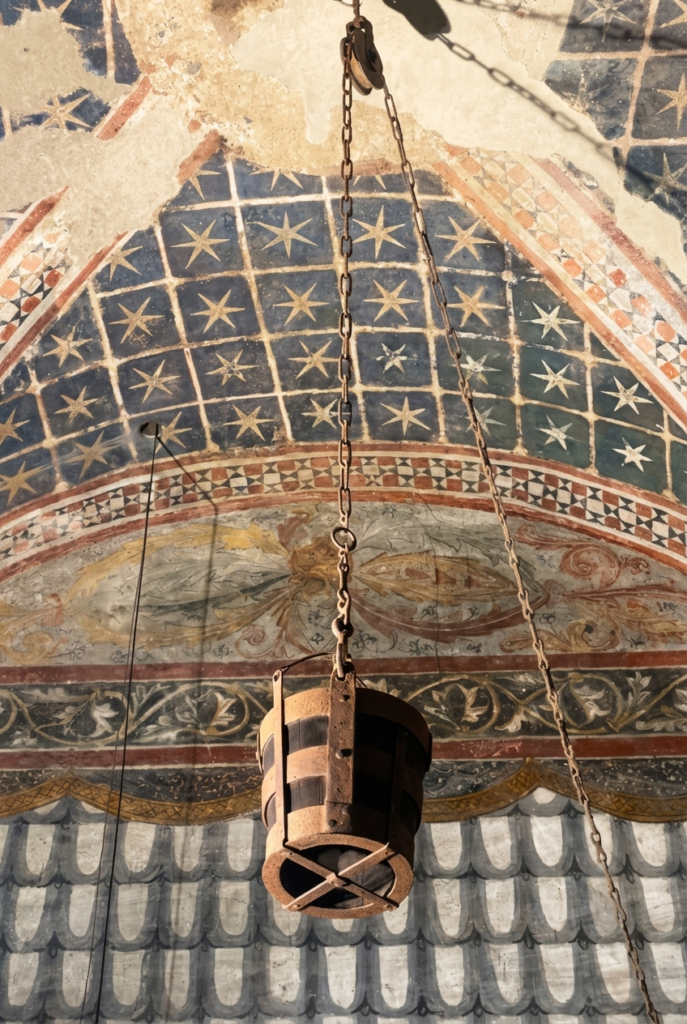
One of those valuables was Modena’s wonderfully ridiculous war trophy, the Secchia Rapita, or Stolen Bucket.
According to tradition, Modenese soldiers stole the ordinary wooden bucket from a public well in Bologna after the Battle of Zappolino in 1325 and carried it home as a trophy. It later inspired Alessandro Tassoni’s mock-heroic poem The Stolen Bucket.
The bucket displayed inside the Ghirlandina today is a copy. The original is kept safely in the Palazzo Comunale across Piazza Grande.
Duomo Museum
While it’s free to enter Modena Cathedral, I also recommend visiting the small Duomo Museum next door. Admission is currently €6, which includes access to the cathedral’s presbytery and sacristy.
The museum is divided between a Lapidary, filled with medieval sculpture and architectural fragments, and the Cathedral Treasury, where you’ll find paintings, manuscripts, reliquaries, textiles, and other objects associated with the church.
One of its oldest treasures is the small portable altar of San Geminiano, dating from the 11th or 12th century and covered in embossed and engraved silver. You can also see a richly bound medieval Gospel book and the Relatio, a 13th century copy of the text recording the construction of the cathedral.
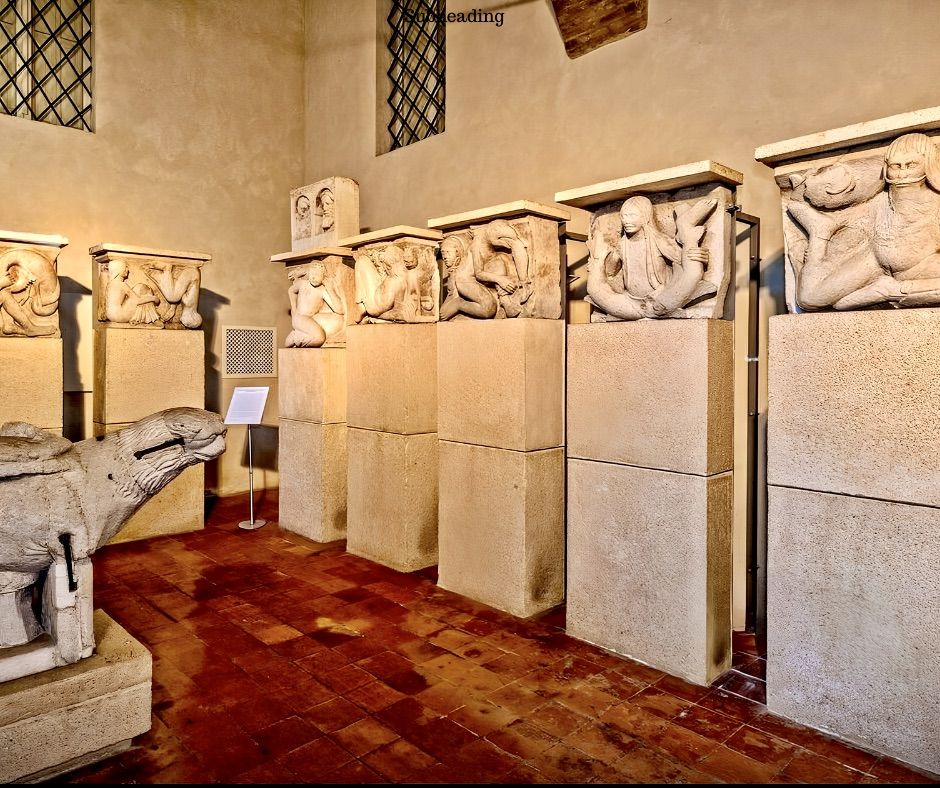
But for me, the highlight is the group of eight original metopes carved by the anonymous Master of the Metopes. They once decorated the cathedral high along its roofline, but were removed in the 1950s for conservation and replaced outside with copies.
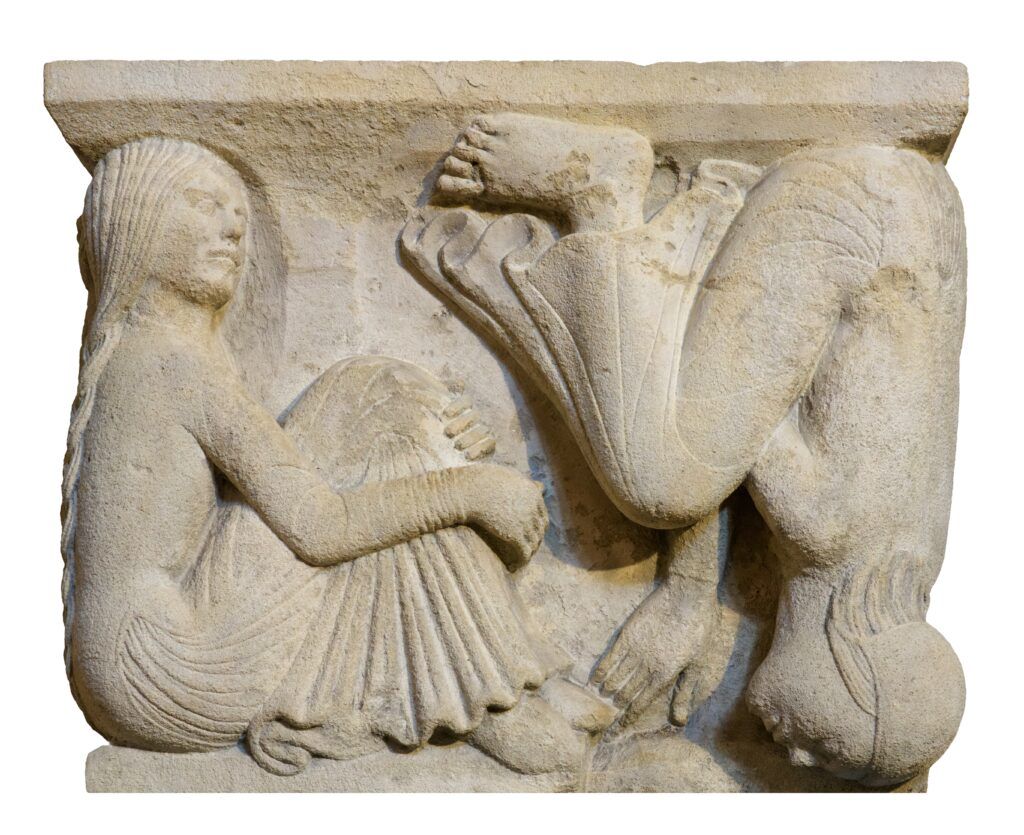
They’re wonderfully strange. You’ll see a two-tailed siren, an enigmatic long-haired man, a figure with three arms, a boy with a dragon, and a giant sleeping girl squeezed between an ibis and a sphinx.
At first they look like pure medieval fantasy.
But scholars think they may represent the bizarre creatures and distant peoples that medieval Europeans believed inhabited the unexplored edges of the earth. Their original position high on the cathedral may have reinforced that idea of a remote and unfamiliar world.
Also look for the enormous 16th century Flemish tapestries depicting scenes from Genesis. They belonged to a cycle of 20 tapestries and were used to decorate the cathedral until the late 1960s.

Practical Information
Hours:
Modena Cathedral is open Tuesday through Sunday from 7:00 am to 7:00 pm. On Monday, it’s open from 7:00 am to 12:30 pm and again from 3:30 to 7:00 pm.
However, tourist visits are restricted to certain hours:
- Tuesday through Saturday: 10:00 am to 5:00 pm
- Monday: 10:00 am to 12:30 pm and 3:30 to 5:00 pm
- Sundays and holidays: 1:30 to 4:30 pm
Sightseeing isn’t permitted during religious services, so don’t assume that because the doors are open you’ll be able to tour the church.
Tickets:
The cathedral itself is free, but I recommend buying the €6 full ticket for the Duomo Museum. It also includes access to the raised presbytery and sacristy. The presbytery and sacristy can also be visited separately for €3.
How Long?
Allow about 45–60 minutes for the cathedral itself, more if you like sculpture and want to examine the portals and capitals closely. Add another 30-45 minutes or so for the Duomo Museum.
Dress: Dress as you would for any active Italian cathedral. The official visitor information says no shorts or miniskirts, bare shoulders, or revealing tops.
I hope you’ve enjoyed my guide to Modena Cathedral. You may find these other Emilia-Romagna guides useful:
- Bologna’s Santo Stefano
- Bologna’s San Petronio
- Bologna’s National Gallery
- Bologna’s San Luca Portico & Sanctuary
- Bologna’s Anatomical Theater
- One day in Parma itinerary
- Things to do in Modena
- Guide to Parma’s Palazzo della Pilotta
Pin it for later.