
Few Roman women were damned as thoroughly as Messalina. Her very name became an insult. Messalina, guillotine … almost the same thing.
She was one of the most notorious empresses in Roman history, the third wife of Claudius, and portrayed by antiquity as a sex-crazed predator.
Like most powerful Roman women, she was slandered along the way, and some of the more lurid crimes attached to her were almost certainly embellished.
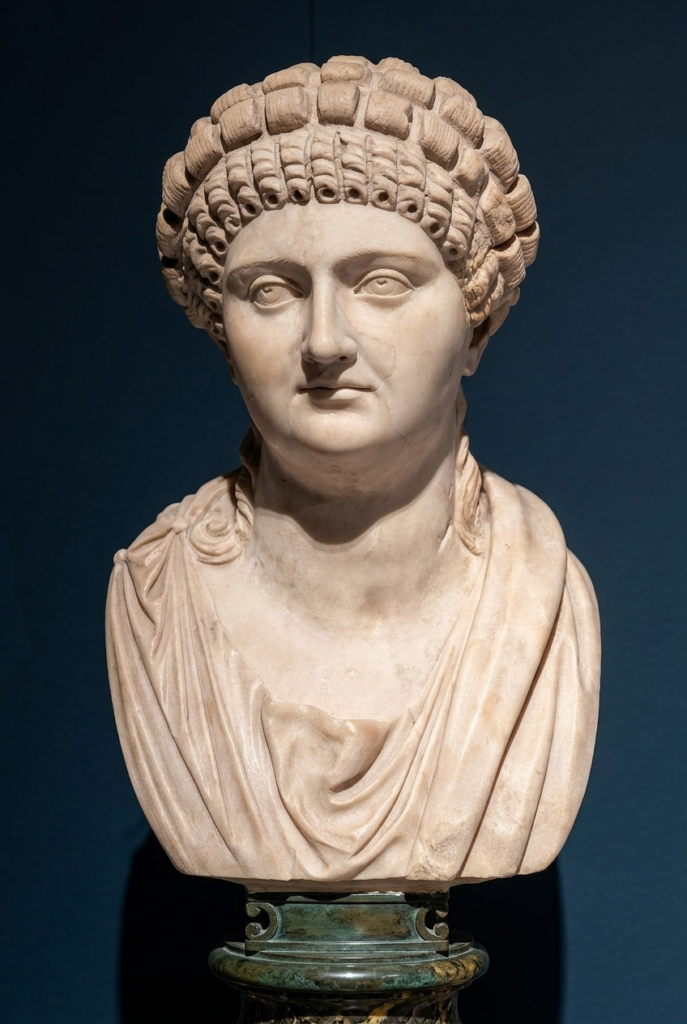
Some historians now argue that she was also a canny political operator, a woman trying to exercise power, specifically female power, inside a system built by and for men.
Her principal accusers were Tacitus, Rome’s greatest historian, and Juvenal, its most salacious satirist. Romans loved literary polish, moral outrage, and a good cautionary tale. Messalina gave them all three.
So was the “whore empress” really a whore? A woman of unflinching ambition who would stop at nothing?
Probably not. But let’s look at the evidence, at least the little there is.

Messalina Biography
How It Started
Messalina was born around 20–22 CE into an extremely well-connected aristocratic family. Her mother, Domitia Lepida Minor, descended from Mark Antony and Octavia, Augustus’ sister. So Messalina had excellent Julio-Claudian connections before marriage.
She married Claudius around 38 or 39 CE, while Claudius was still emperor.
Messalina and Claudius had two children, Octavia and Britannicus. Before the scandals exploded, she seems function as a proper dynastic wife and imperial partner.
She gave Claudius the male heir he badly wanted, strengthened the family line, and occupied the public role of empress.
Claudius appeared to have loved and trusted her. He dismissed many of the salacious rumors as court gossip.
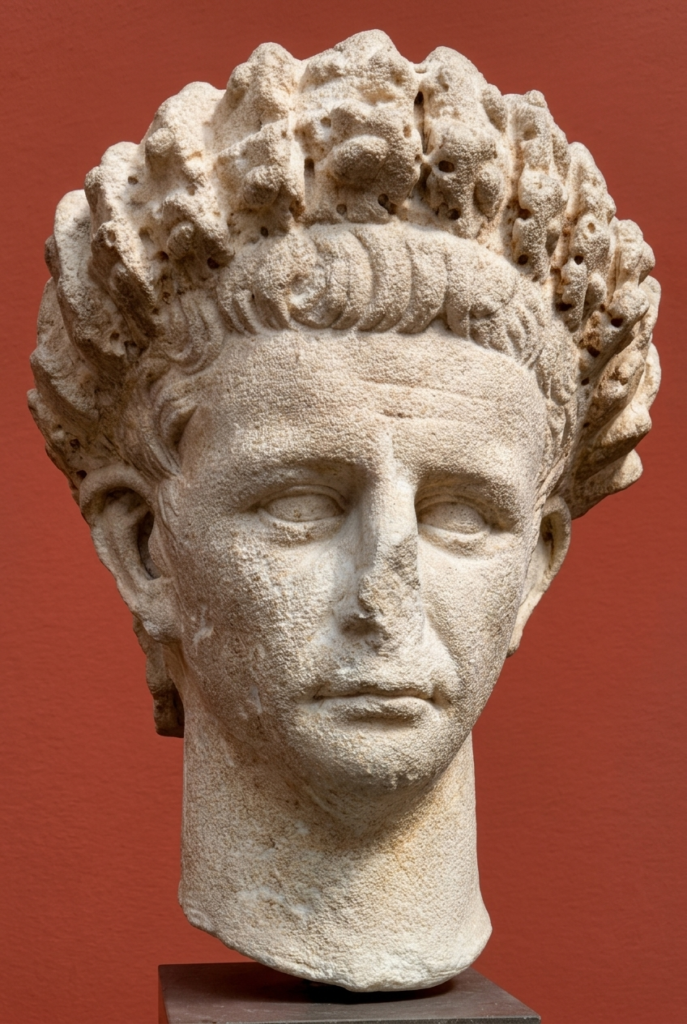
But Claudius had a longstanding vulnerability here: he tended to trust the people closest to him. That could make him politically effective when he chose capable advisers, but it also left him open to manipulation.
Still, the sources preserve the catastrophe of Messalina, not the ordinary years before it. What did she do?
Rivals at Court
There was no clearly defined role for an emperor’s wife. But Messalina seems to want influence nonetheless. Ancient writers portray her as aggressively removing people she regarded as rivals or threats.
One of the most famous cases involved Poppaea Sabina, a celebrated beauty and the mother of Nero’s future wife. Tacitus says Messalina became jealous of her and helped engineer accusations against her. Poppaea was driven to suicide.
A separate accusation concerns the senator Decimus Valerius Asiaticus. Tacitus claims Messalina coveted his magnificent Gardens of Lucullus and helped bring about his prosecution and execution so she could acquire them.
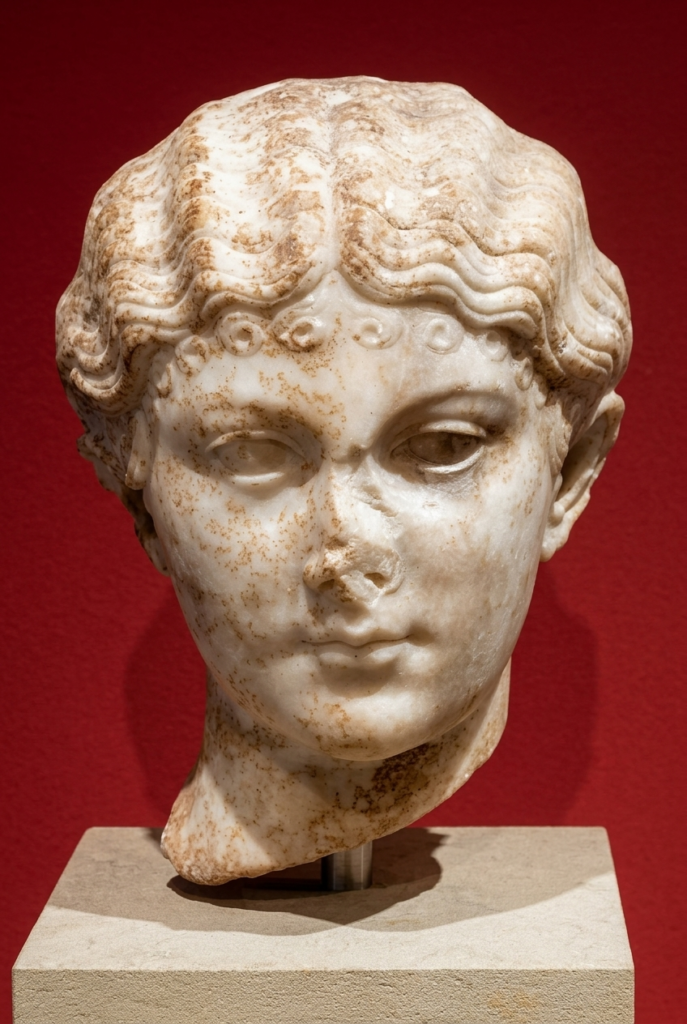
One of Messalina’s earliest alleged political victims was Julia Livilla, Caligula’s sister and Claudius’ niece.
Livilla had already been exiled once under Caligula and was recalled by Claudius after his accession. Not long afterward, she was accused of adultery with the philosopher Seneca and sent back into exile. She was eventually killed.
Ancient writers blamed Messalina, claiming she was jealous of Livilla’s beauty and irritated by her closeness to Claudius.
But jealousy may be too simple an explanation. Livilla was a Julio-Claudian princess with impeccable bloodlines and therefore a potentially dangerous figure at court.
Removing her eliminated someone with status, family connections, and access to the emperor.

Messalina was later accused of helping destroy several other aristocrats as well. The pattern, if the sources are even partly right, looks less like random derangement than hard-edged court politics.
The stories are revealing.
But they also fit the standard ancient portrait of Messalina almost too neatly: jealous of beautiful women, greedy for luxury, and willing to use imperial power to destroy anyone standing in her way.
Affairs
Did the woman Claudius married for dynastic respectability become an outrageous strumpet?

Suetonius and Tacitus accuse Messalina of repeated adultery.
Yet, they’re surprisingly vague about the number of affairs and, in many cases, the men involved. That rather undercuts the image of a woman rampaging through Rome as an insatiable nymphomaniac.
Messalina may well have had lovers. But that’s a long way from proving the grotesque sexual caricature handed down by later writers.
Of course, a proper Roman matron was supposed to be chaste, discreet, and largely invisible in public. Messalina was none of those things. And what young, beautiful woman with access to imperial power wants to be invisible?
Augustus had also made adultery a crime as part of his campaign to repair Rome’s morals. It was a bit rich. His own family was a moral disaster.
In any event, adultery accusations were politically useful weapons in imperial Rome. And they were weaponized repeatedly against Messalina.

Sex Competition
Of all the outrageous charges against Messalina, this may be the wildest.
Juvenal claims that she waited until Claudius was asleep, slipped out of the palace at night, covered her dark hair with a blonde wig, and went to work in a brothel under the name “Lycisca.”
To make the scene even more lurid, he describes her standing naked with gilded nipples, servicing customers until the brothel closed.
Then Pliny the Elder piles on. He claims Messalina once challenged a professional prostitute to a marathon sex contest and won after taking 25 partners in roughly 24 hours.
It’s spectacularly salacious. It’s also spectacularly difficult to believe and almost certainly false.

Neither Tacitus nor Suetonius includes the brothel story, despite having no obvious reluctance to repeat damaging material about Messalina.
Juvenal was a satirist, not an investigative reporter, and exaggeration was the whole point of his genre.
Pliny’s anecdote appears in a discussion of sexual behavior and reads more like an astonishing curiosity than sober political history.
Messalina may have been adulterous. She may even have been unusually sexually adventurous.
But the image of the Roman empress sneaking into a brothel in a blonde wig and winning sex marathons looks much more like the creation of a hostile literary tradition than something we can confidently treat as biography.

The Mock Wedding, the Big Mistake
Messalina’s most infamous act was her mock marriage to Gaius Silius. This was the clincher, and the real reason for her downfall, not the endless stories about her sex life.
This was a different level of danger. Tacitus, who was usually careful about weighing his sources, treats the episode as genuine.
While Claudius was still very much alive, Messalina staged a bigamous marriage ceremony with Silius, the consul-designate and one of Rome’s most prominent aristocrats.

That wasn’t merely adultery. If the ceremony was real, Messalina was either catastrophically reckless or involved in something that looked very much like a bid to replace Claudius. It looked like an alternative imperial household.
The stakes were enormous. The mock marriage made Claudius look weak, cuckolded, and politically vulnerable. It fed the old caricature that he was a fool controlled by those around him.
It was also baffling. How could Messalina possibly expect to get away with it?
She didn’t. Claudius concluded that Silius and Messalina posed a threat to his rule. Both were executed soon afterward.

Did She Try To Kill Nero?
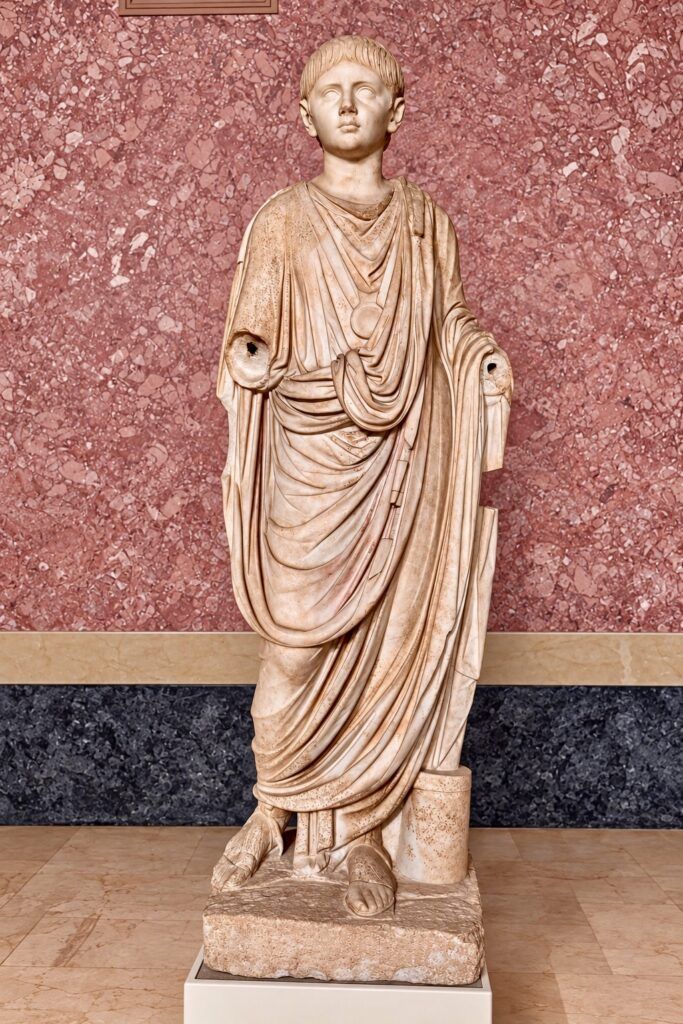
Suetonius also preserves a rumor that Messalina tried to have the young Nero killed after Agrippina the Younger returned from exile and Nero’s position began to strengthen.
According to the story, Messalina saw Nero as a potential rival to Britannicus and sent men to strangle him while he slept. The assassins supposedly fled when a snake appeared beneath his pillow.
Even Suetonius seems skeptical of that flourish. He suggests the snake story may have grown out of something much more ordinary: a shed snakeskin found near Nero’s bed.
Agrippina supposedly had the skin enclosed in a gold bracelet, which Nero then wore as a protective charm


Why Is Messalina So Damned?
Chance in Court Politics
For starters, Roman politics had changed. Once power was concentrated in one emperor, much of the real action moved behind palace doors.
That made court intrigue irresistible.
Messalina came of age after the reigns of Tiberius and Caligula, both of whom had already been turned into monsters of imperial depravity.
Tiberius was accused of wallowing in vice on Capri, with stories of sexual cruelty, pedophilia, and grotesque private amusements.

Then came Caligula, accused of incest with his sisters, sexual excess, sadistic humiliation, and the famous horse-as-consul episode.
By the time Claudius became emperor, Roman political storytelling had become intensely personal. Bad government was explained through bedrooms, banquets, marriages, favorites, and private vice.
Messalina was almost designed for that kind of history.
She was young, visible, politically active, sexually suspect, and married to an emperor already mocked as weak. Once scandal attached itself to her, every rumor fit the story.
Womens’ Limited Roles & Portrayals
Men could be colorful. Women were supposed to be bland.
That was the world Messalina inherited. Livia, Rome’s first great imperial matriarch, had perfected the approved image: modest, dignified, restrained, and above reproach.
Roman women could wield influence behind the scenes, especially inside the imperial family. But they couldn’t act like ment. They held no formal political office and were expected to project chastity, obedience, and public restraint.
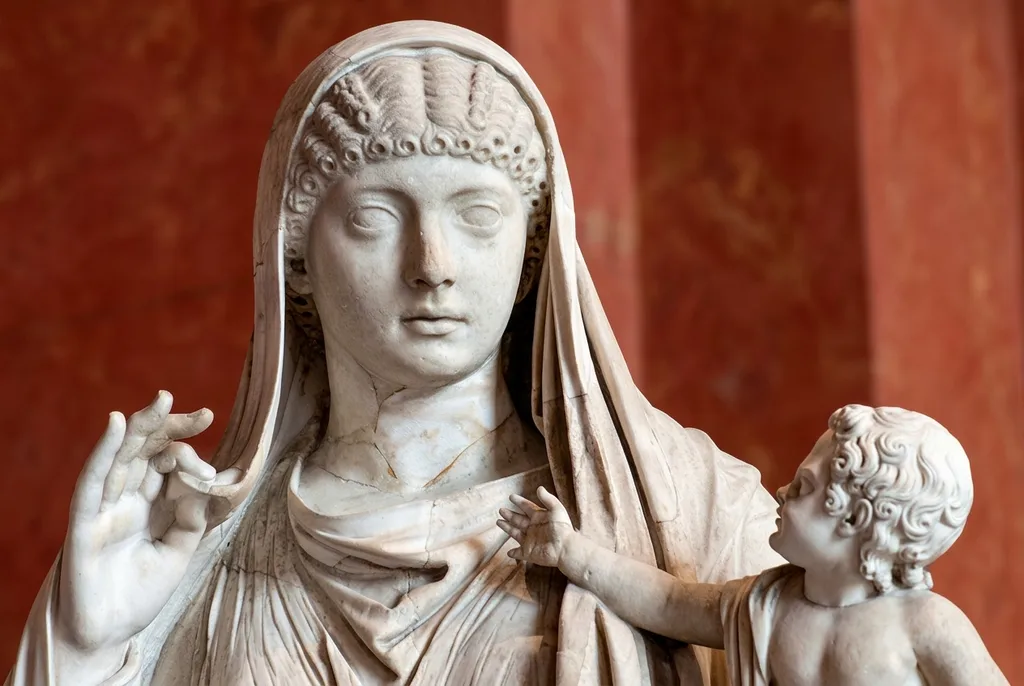
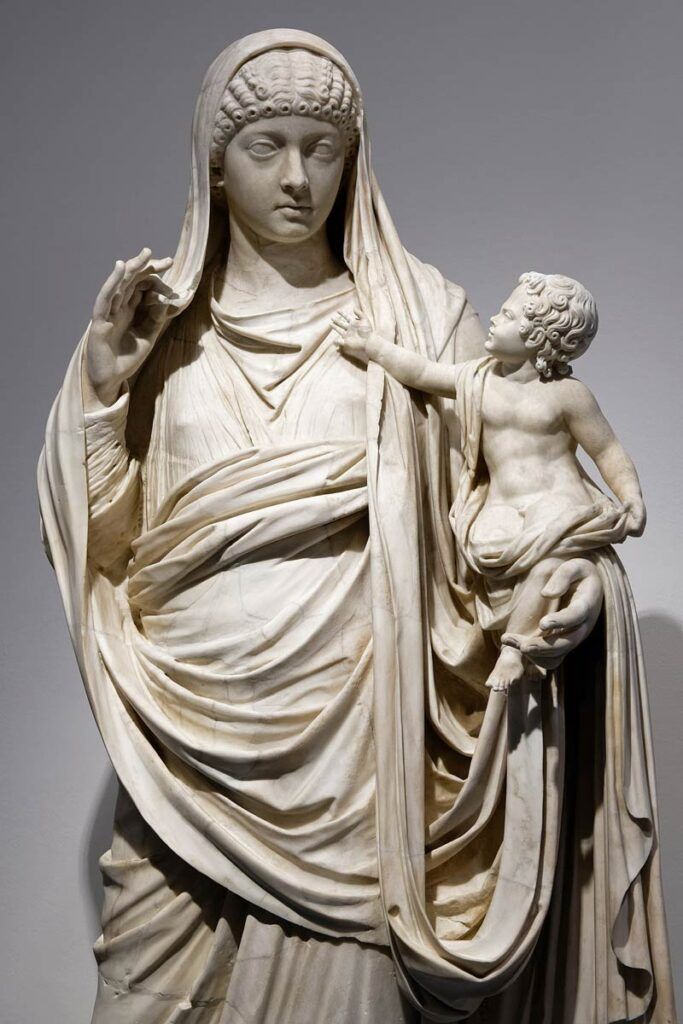
Even their official portraits were carefully controlled. Hairstyles changed with fashion, but the overall message was remarkably consistent: dignity, fertility, respectability, dynasty. Whatever the real woman was like, the marble version behaved herself.
Messalina’s surviving portraits are about as far as you can get from the later “empress-as-prostitute” trope. She looks composed, respectable, and thoroughly matronly.
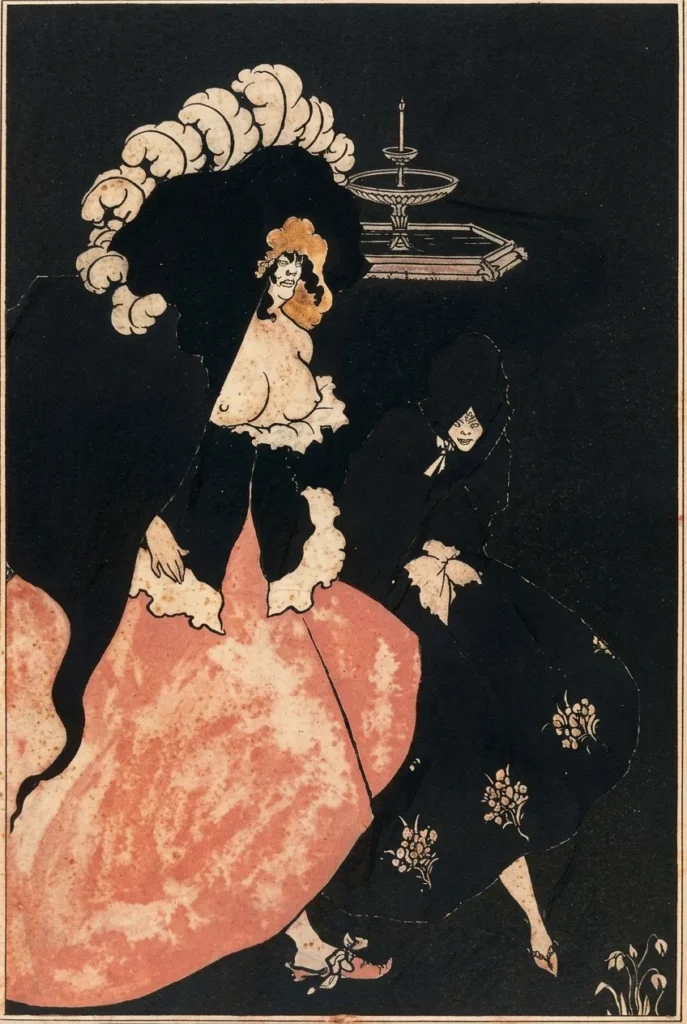
That image changed dramatically in later centuries.
By the late 19th century, artists had reinvented Messalina as a decadent femme fatale. Aubrey Beardsley pushed the image especially far: darkness, feathers, exaggerated sexuality, menace. The respectable Roman matron had become a vamp.
But the teenage empress herself may never have been interested in playing the role Rome assigned her.
She was young, beautiful, clever, ambitious, and self-interested. Sitting quietly at home embroidering while imperial politics happened around her must’ve seemed like a terrible waste.
Because of her lack of compliance, she was turned her into a monster.

Explaining Claudius
Messalina also became entangled in the ancient caricature of Claudius as a weak emperor dominated by his household. The more depraved and powerful she appeared, the more foolish he seemed for failing to control her.
At the same time, portraying her final actions as a genuine threat helped justify the brutal response that ended in her execution.
The Source Problem
The Messalina slander also had a major source problem.
Juvenal is satire, not courtroom testimony. Tacitus is much more serious, but he also writes with a strong moral framework and loves dramatic character types.
Messalina became the perfect stock villain: lustful, ambitious, deceitful, politically intrusive, and ultimately self-destructive.
After her execution, Messalina’s name and images were officially attacked or removed. Once the regime condemned her, there was little incentive for later writers to rehabilitate her.
Conclusion & Legacy
Messalina’s awful reputation needs an asterisk.
Yes, some of the charges against her are entirely plausible. She probably had affairs. She meddled in politics. And the Silius marriage was catastrophically reckless.
But the lurid tales of brothels, sexual contests, and bottomless appetite are likely moralizing fantasy than reliable history.
Messalina was punished in memory for wielding power at all, however awkwardly. Even into the 20th century, unruly women were still being diagnosed with a so-called “Messalina complex.”
What I see is something less monstrous and more human: a very young, selfish, ambitious woman trying to operate inside the viper pit of the Julio-Claudian court.

Messalina’s biggest mistake wasn’t immorality. She overreached. She didn’t need to gamble, and she did anyway.
She misjudged the danger and her own security. And she paid for it with her life.
I hope you’ve enjoyed my Messalina biography. You may find these other Roman histories interesting.
- History of the Rise and Fall of Rome
- History of the Roman Emperors
- Historical Facts about Rome
- Top 10 Worst Emperors Ranked
- History of Nero
- History of Julius Caesar
- History of Hadrian
Pin it for later.

