Love a good mystery? I know I do.
And medieval England had plenty. Suspicious deaths, royal scandals, whispers of witchcraft, and illicit love affairs that would make a modern tabloid blush.
Of course, medieval chroniclers weren’t exactly impartial detectives. They had grudges, political loyalties, and occasionally very lively imaginations. Which makes separating fact from fiction half the fun.
And yes, I know what you’re thinking. What about the Princes in the Tower? That particular whodunit is such a monster that I’ve devoted an entire article to it.
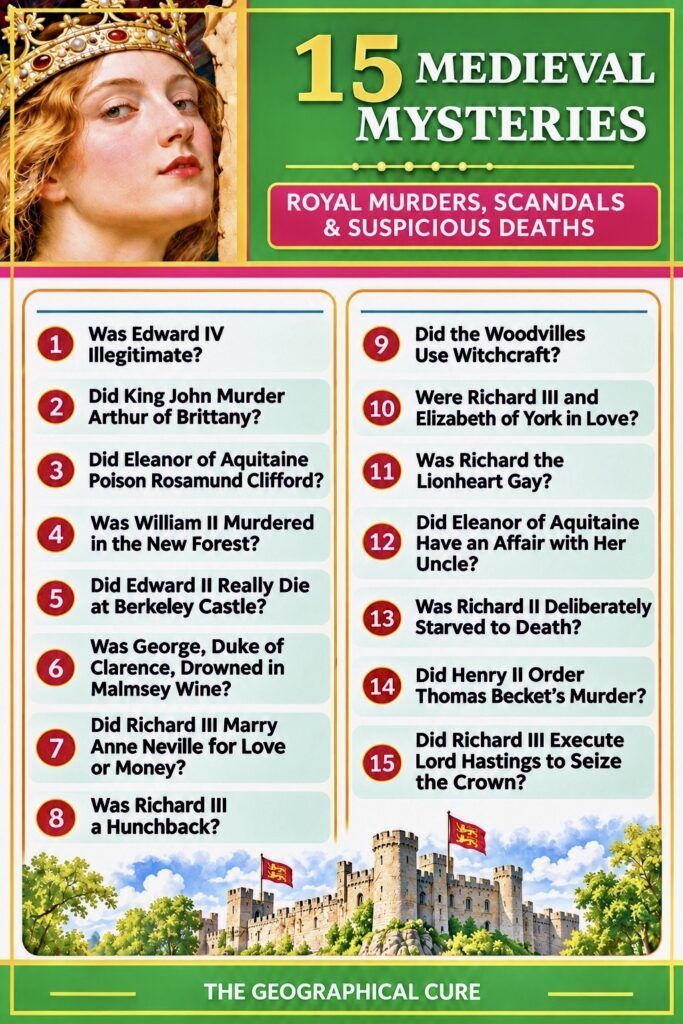
Here, I’m tackling 15 other medieval mysteries. Some have plausible answers. Others remain maddeningly murky.
I’ll sift through the rumors, weigh the evidence, and see what actually holds up. And I’ll give you my verdict on each.
Because medieval history was messy enough without everyone making things up. Though, of course, they did.

Medieval Mysteries of England
Did King John Murder His Nephew Arthur of Brittany?
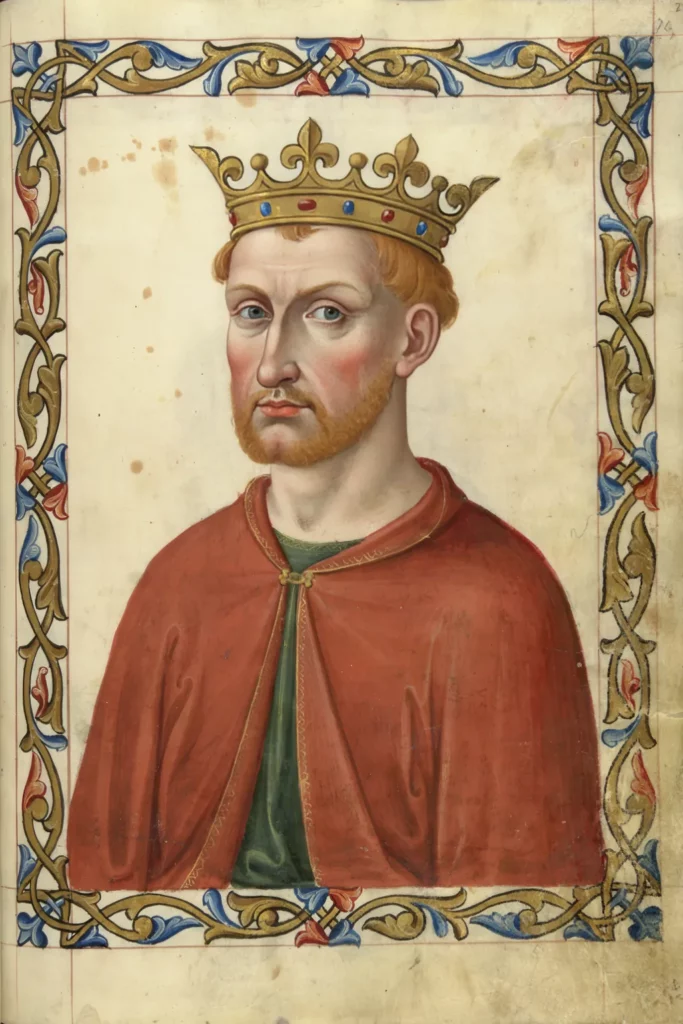
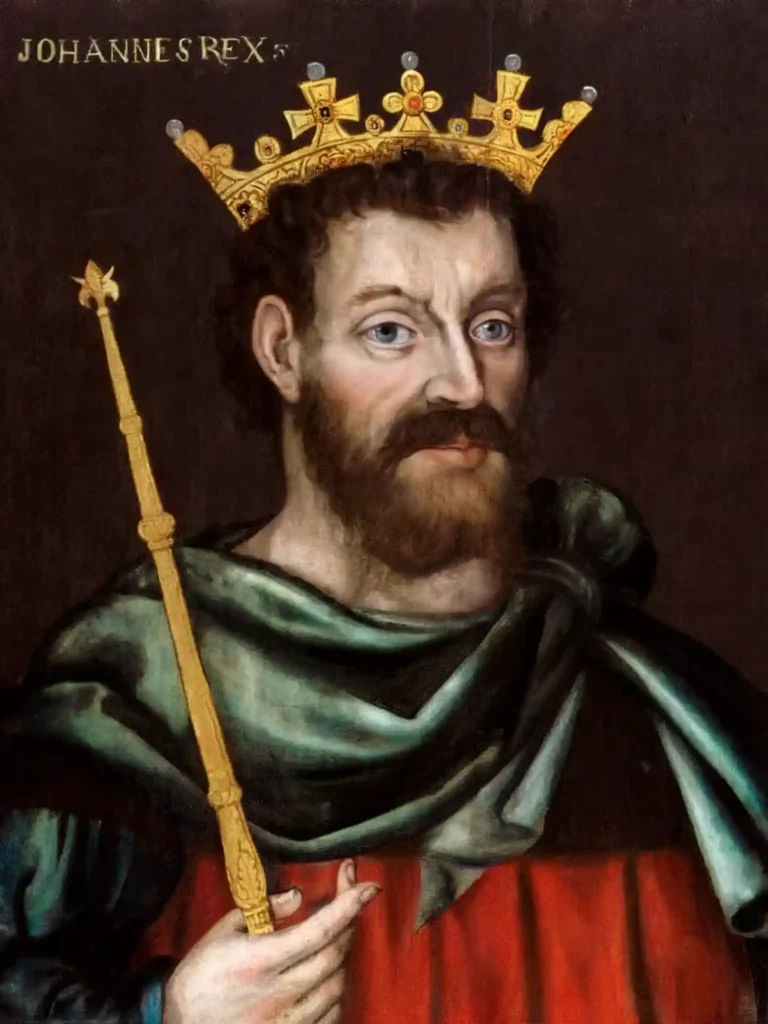
King John was one of England’s nastier monarchs. In 1202, he captured his teenage nephew Arthur of Brittany, a dangerous rival for the throne.
Arthur was imprisoned at Falaise Castle under Hubert de Burgh. According to a contemporary chronicler, John ordered Arthur blinded and castrated, but de Burgh refused. Shakespeare later dramatized the episode.
Arthur was then transferred to Rouen, where he disappeared in 1203.
The Margam Abbey chronicle claims John murdered him in a drunken rage and dumped his body in the Seine. Did he do it?
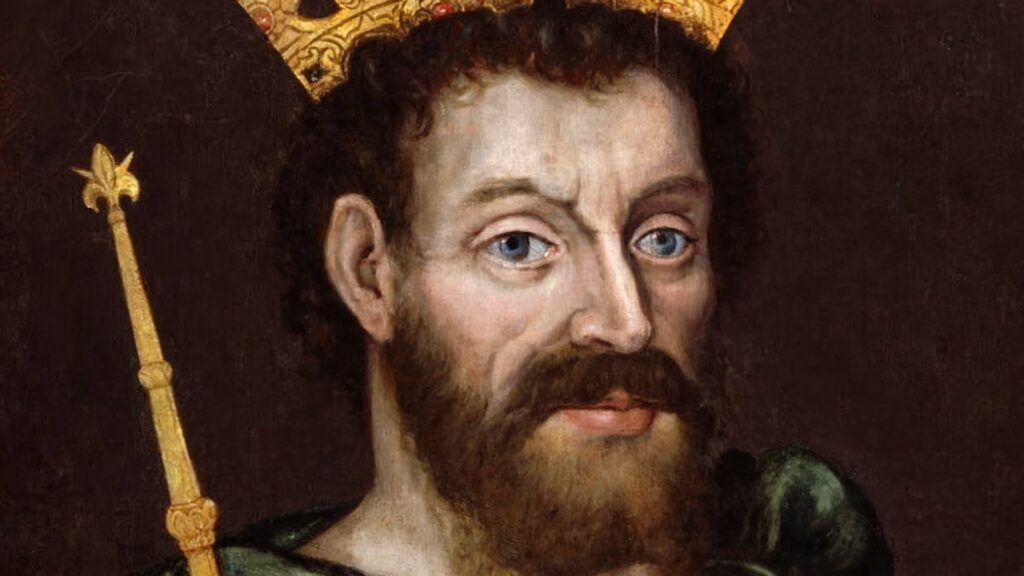
He certainly had a motive. Arthur was the son of John’s older brother Geoffrey and had a legitimate claim to the throne. And John was in Rouen at the time of the alleged murder.
Arthur’s disappearance also gave Philip II of France ammunition against John, although their war over Normandy was already underway.
There’s no body, no confession, and conflicting chronicles. But Arthur vanished in John’s custody, and John never produced him alive.
Verdict: Likely guilty, though it’s impossible to say whether John killed Arthur himself or ordered it done.
Was William II Murdered in the New Forest?
William II, son of William the Conqueror, was hardly a beloved monarch. On August 2, 1100, he was struck by an arrow during a hunt in the New Forest.
Accident or assassination?
The alleged archer, Walter Tirel, promptly fled to France, although he later denied responsibility. William’s companions scattered, leaving his body behind. According to tradition, a local charcoal burner eventually carted it to Winchester.
His younger brother Henry was even less sentimental. Rather than mourn, he raced to Winchester, seized the royal treasury, and crowned himself king just three days later, beating their elder brother Robert Curthose to the throne.
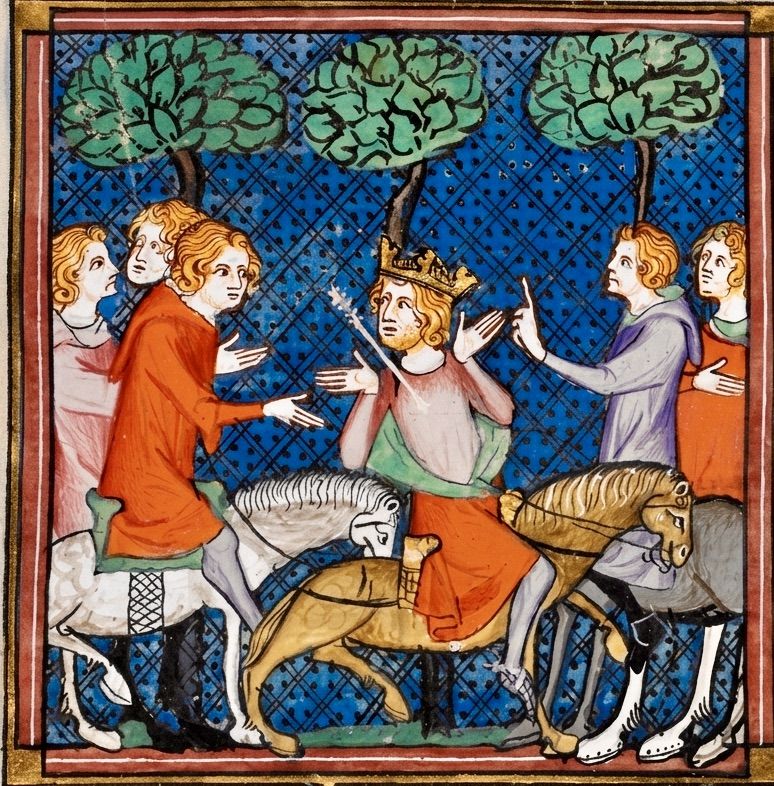
Suspicious? Certainly. Tirel loosed the arrow. Henry had everything to gain.
Some historians have suspected a conspiracy, perhaps involving nobles and churchmen eager to be rid of William.
But Tirel might simply have fled in terror after accidentally killing a king. And Henry had every reason to move quickly once the throne was vacant.
There’s no convincing evidence that the killing was orchestrated. Still, Henry’s behavior hardly screams grieving brother.
Verdict: Probably a hunting accident. But Henry certainly made the most of it.

Did Eleanor of Aquitaine Murder Henry II’s Mistress?
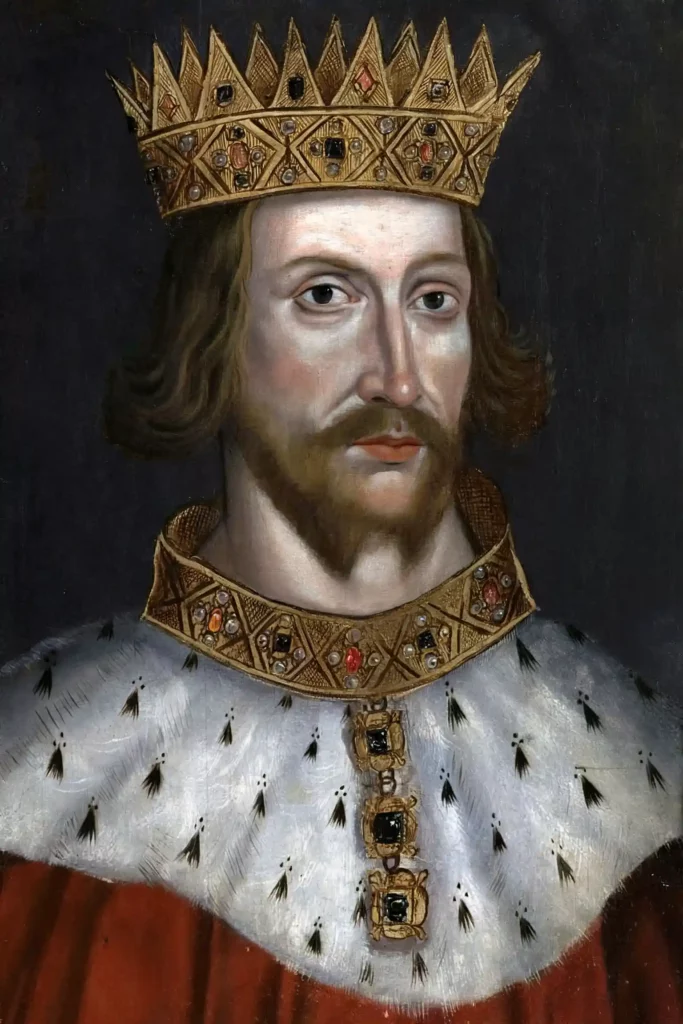
Being married to Henry II was no picnic. The king was a chronic womanizer, and his most famous mistress was Rosamund Clifford, known as “Fair Rosamund.”
Henry reportedly kept Rosamund at Woodstock Palace, in what is now the grounds of Blenheim Palace. Legend claims he even built a maze to conceal her from his wife.
But Eleanor of Aquitaine supposedly found her way through the maze, confronted her rival, and offered her a choice: a dagger or poison. Rosamund chose poison.
Juicy story. But the evidence is nonexistent.

Rosamund died around 1176 and was buried at Godstow Abbey. The murder accusation didn’t surface until the 14th century, and the poisoning detail was a later embellishment.
More importantly, Eleanor was under guard at the time. Henry had imprisoned her after she supported their sons’ rebellion in 1173.
It’s hard to imagine her sneaking off to Woodstock from prison to dispatch her husband’s mistress.
Verdict: A wonderfully malicious legend, but no credible evidence.
Did Henry II Order Thomas Becket’s Murder?
Few medieval murders were as scandalous as the assassination of Thomas Becket in Canterbury Cathedral.
Becket had been Henry II’s close friend and trusted chancellor. Henry appointed him Archbishop of Canterbury, expecting a useful ally.
Instead, Becket found God. Really found him.
The moment he put on the mitre, he became a different creature, defending church autonomy with the fervor of a man auditioning for sainthood.
Henry felt betrayed. After years of bitter feuding, the king finally exploded when Becket excommunicated several bishops who’d defied him.

Henry allegedly railed against the useless cowards surrounding him who allowed a low-born cleric to humiliate their king. The famous line, “Will no one rid me of this turbulent priest?” is a later embellishment.
Four royal knights took the hint like good careerists. On December 29, 1170, they cornered Becket in Canterbury Cathedral and murdered him.
But had Henry actually ordered the killing?
There’s no convincing evidence of an explicit command. The knights may simply have mistaken a spectacular royal tantrum for instructions.

Henry later swore that he hadn’t ordered or desired Becket’s death. He submitted to public penance and even endured a whipping at Becket’s tomb.
Genuine remorse? Political damage control? Probably some of both.
After all, Henry knew perfectly well that his words carried weight. And the knights knew which way their bread was buttered.
Verdict: Probably not a premeditated royal assassination. But Henry’s reckless fury helped set the murder in motion. He may not have ordered it, but he certainly bears responsibility.
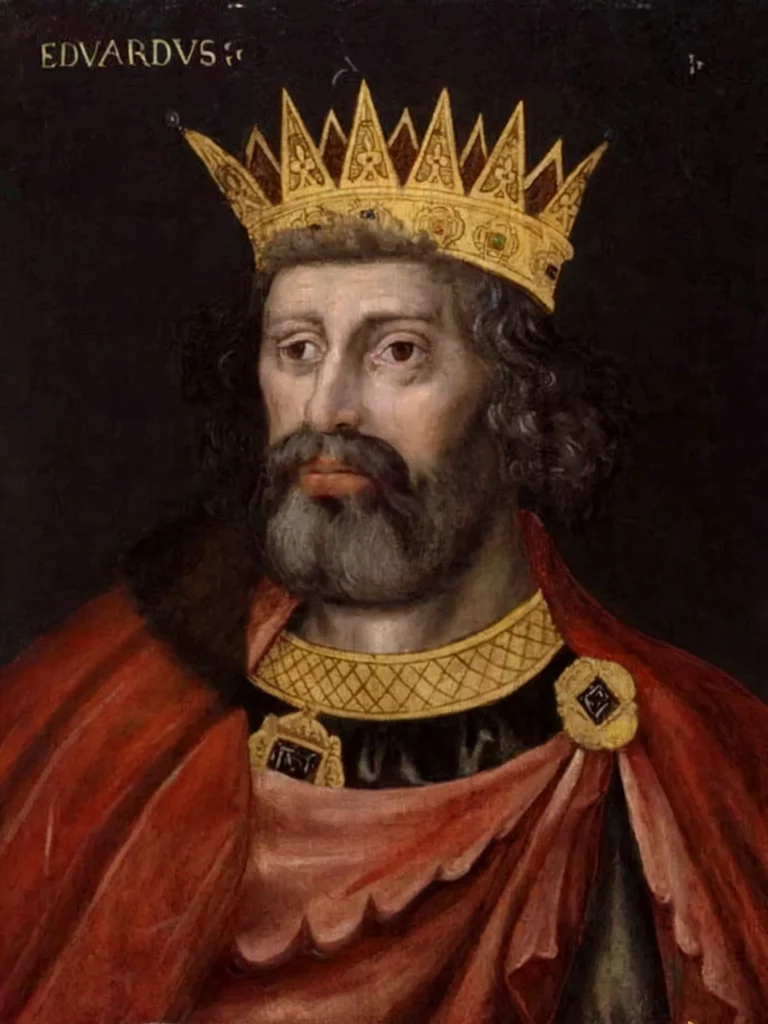
Did Edward II Really Die in Berkeley Castle?
Edward II inherited his formidable father’s crown, but precious little of his political talent.
In 1327, his estranged wife, Isabella of France, and her lover, Roger Mortimer, forced him from the throne and imprisoned him at Berkeley Castle.
That September, Edward was reportedly murdered with a red-hot poker. A particularly gruesome end, even by medieval standards.
But did it actually happen?
Isabella and Mortimer had ample motive to eliminate the deposed king. A living Edward could become a rallying point for rebellion. Yet the infamous poker story appeared in later chronicles and is widely doubted.
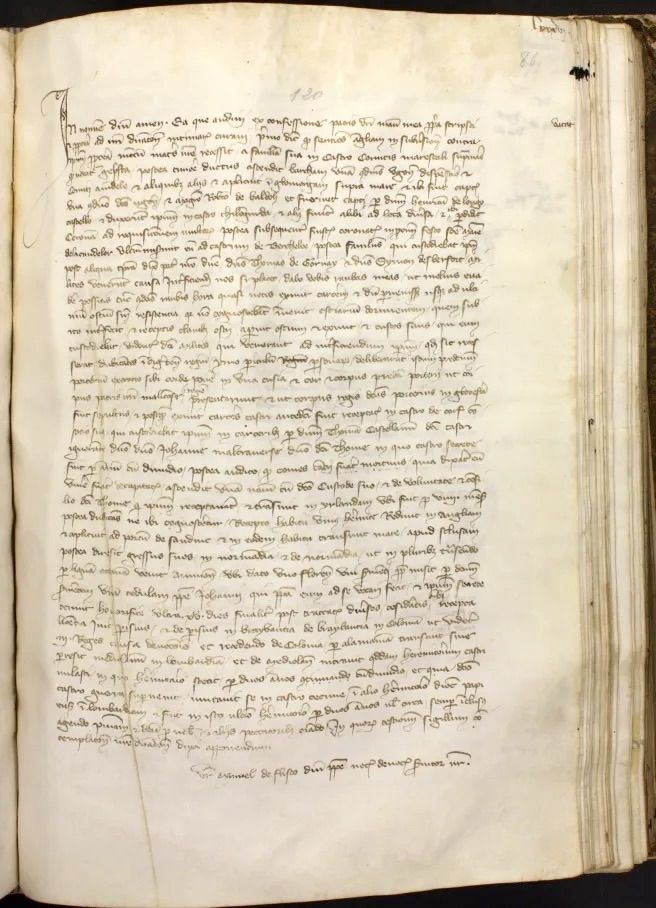
Then there’s the mysterious Fieschi Letter. It claims Edward escaped, fled across Europe, and lived as a hermit in Italy.
Even stranger, Edward’s own half-brother, the Earl of Kent, believed he was alive and became involved in a plot to rescue him in 1330.
Was the king murdered, or did someone stage his death?
Most historians favor the traditional account, though the exact circumstances remain uncertain.
Verdict: Edward probably died at Berkeley Castle, quite possibly murdered on Mortimer’s orders. But the red-hot poker belongs in the medieval rumor mill.
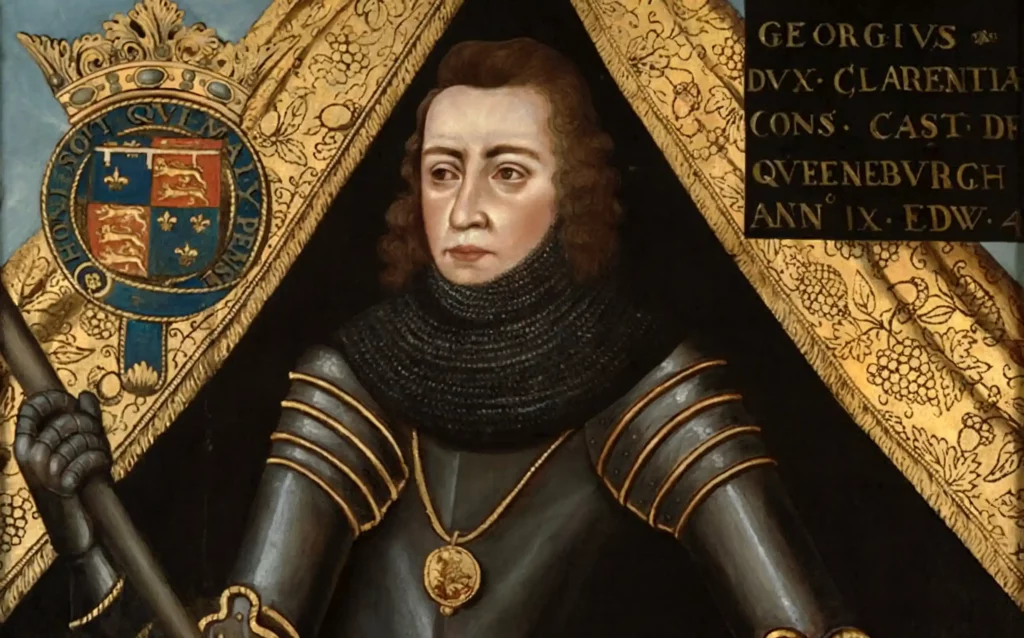
Was George, Duke of Clarence, Drowned in Malmsey Wine?
George, Duke of Clarence, was Edward IV’s spectacularly disloyal younger brother.
He repeatedly betrayed Edward, joined Warwick the Kingmaker in rebellion, and generally made himself a royal nuisance during the Wars of the Roses.
Edward eventually had enough. In 1478, George was convicted of treason and secretly executed in the Tower of London.
But how did he die?
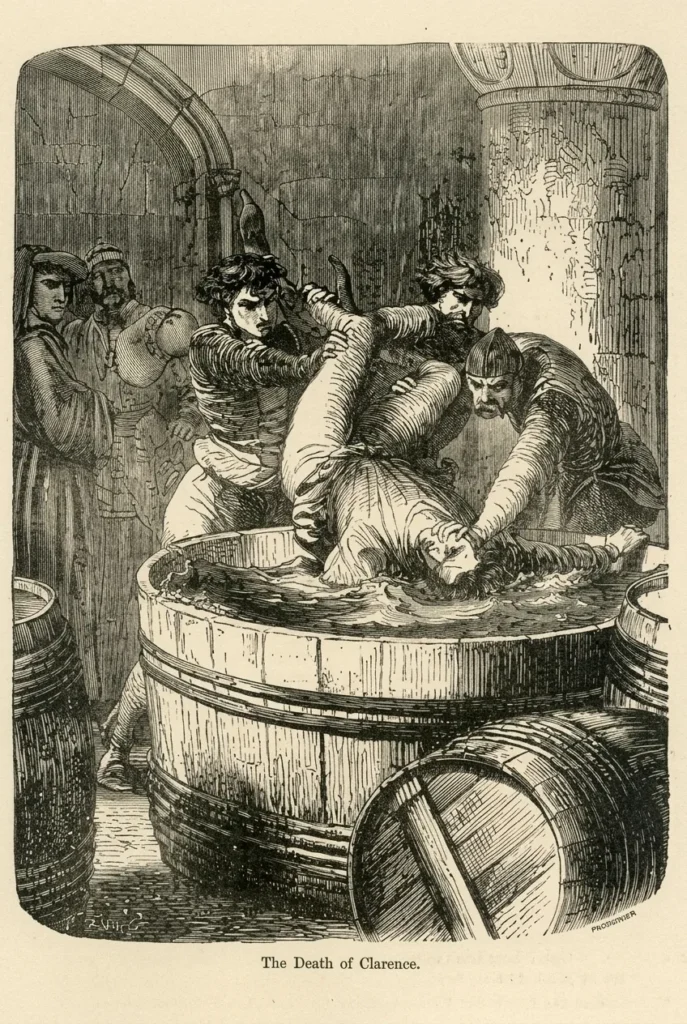
According to legend, Clarence was drowned in a barrel of Malmsey, a sweet fortified wine. One chronicler even claimed George requested this peculiar method of execution himself.
It sounds like something Shakespeare invented. But the story was circulating within years of Clarence’s death. Mancini and several French chroniclers reported it.
The problem? Nobody left a definitive account of the execution. Even the well-informed Crowland chronicler declined to specify how George died.
Still, the early reports make the wine story harder to dismiss than you might think.
Verdict: Executed, certainly. Drowned in Malmsey? Quite possibly. George was always one for making a dramatic exit.

Was Edward IV Illegitimate?
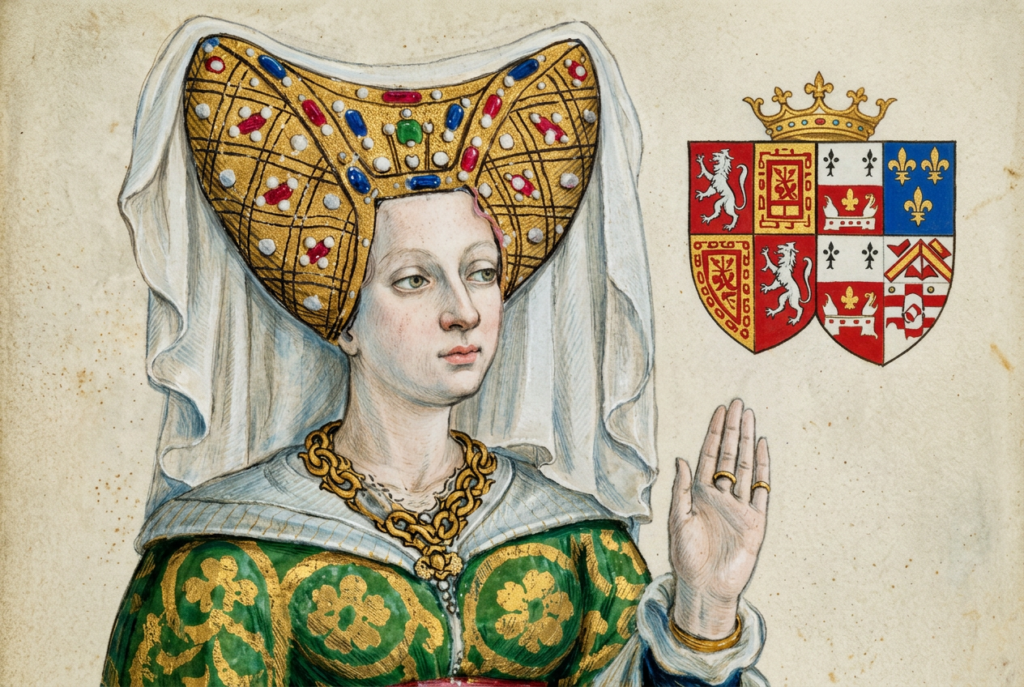
When Warwick the Kingmaker and George, Duke of Clarence, turned against Edward IV, they spread a nasty rumor: Edward was illegitimate.
Their goal? To undermine his reign and put George on the throne instead.
The accusation gained new life when historians examined Edward’s birth date, April 28, 1442. Counting backward suggested conception around August 1441, when Richard, Duke of York, was campaigning in France and Cecily Neville was in Rouen.
Some versions of the story even claimed Cecily had an affair with an archer.
Could it be true? I doubt it.
For one thing, a closer examination of the records places Richard back in Rouen by August 1, right around the possible conception date.
Then, there’s Edward’s surprisingly modest baptism compared with his younger brother Edmund’s lavish christening. Perhaps Edward was born prematurely and the ceremony was hurried.
More importantly, Richard never disowned Edward. He treated him as his legitimate son and heir. And Cecily herself called Edward her husband’s son in her will.
To me, this looks much more like a convenient political smear than a genuine royal scandal.
Verdict: Edward IV was almost certainly legitimate.
Was Richard II Deliberately Starved To Death?
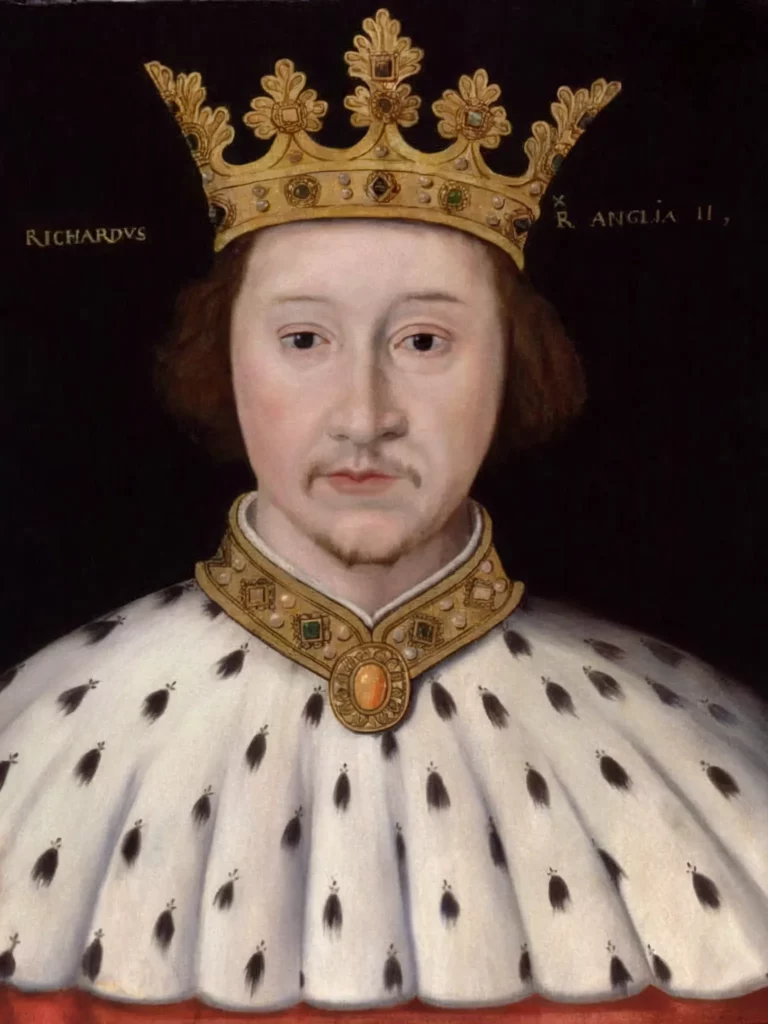
Richard II was one of England’s more unfortunate kings. He was intelligent but vain, thin-skinned, and autocratic. He alienated the nobility, took revenge on his enemies, and governed with a flair for melodrama.
His final blunder was confiscating the inheritance of his cousin, Henry Bolingbroke. Henry returned, deposed him, and locked him away in Pontefract Castle.
In February 1400, Richard died, supposedly after refusing food. The medieval equivalent of a very bad exit interview.
But did he really starve himself?

Henry’s supporters claimed Richard was so distraught after a failed rebellion to restore him that he simply stopped eating.
How convenient. Richard dies of a broken heart, and Henry gets to keep his stolen throne.
Other contemporary chroniclers told a less sentimental story. Richard was deliberately starved by his jailers.
And Henry certainly had motive. As long as Richard lived, he was a potential rallying point for rebellion. The failed uprising in January 1400 had just proved it.
There are no surviving orders from Henry to kill him. But the official story strikes me as suspiciously convenient.
Verdict: Probably murdered by deliberate starvation. We can’t prove Henry ordered it, but he was certainly the beneficiary.

Did Eleanor of Aquitaine Have an Affair with Her Uncle?
Before Henry II, Eleanor of Aquitaine had the misfortune of being married to Louis VII of France. Their marriage was already strained when they arrived in Antioch during the Second Crusade in 1148.
There, Eleanor sided with her uncle, Raymond of Poitiers, in a military dispute. Raymond wanted to attack Muslim strongholds in Syria. Louis was fixated on reaching Jerusalem.
Raymond also paid Eleanor considerable attention. Louis grew jealous and suspicious. Naturally, rumors of an incestuous affair followed.
But was there actually anything going on?

The chronicler John of Salisbury described Louis’s suspicions without establishing adultery. William of Tyre, writing decades later, was considerably more accusatory.
The gossip only got more ridiculous. Later storytellers claimed Eleanor had an affair with the Muslim leader Saladin. One small problem: Saladin was a child at the time.
What we actually know is that Eleanor challenged her husband’s judgment, supported her uncle, and wanted to remain in Antioch. Louis was furious and forced her to leave.
Apparently, a queen disagreeing with her husband wasn’t explanation enough. Medieval chroniclers needed a sex scandal.
Verdict: No convincing evidence of incest. Eleanor’s political independence was scandalous enough without inventing a lover.

Was Richard the Lionhearted Gay?
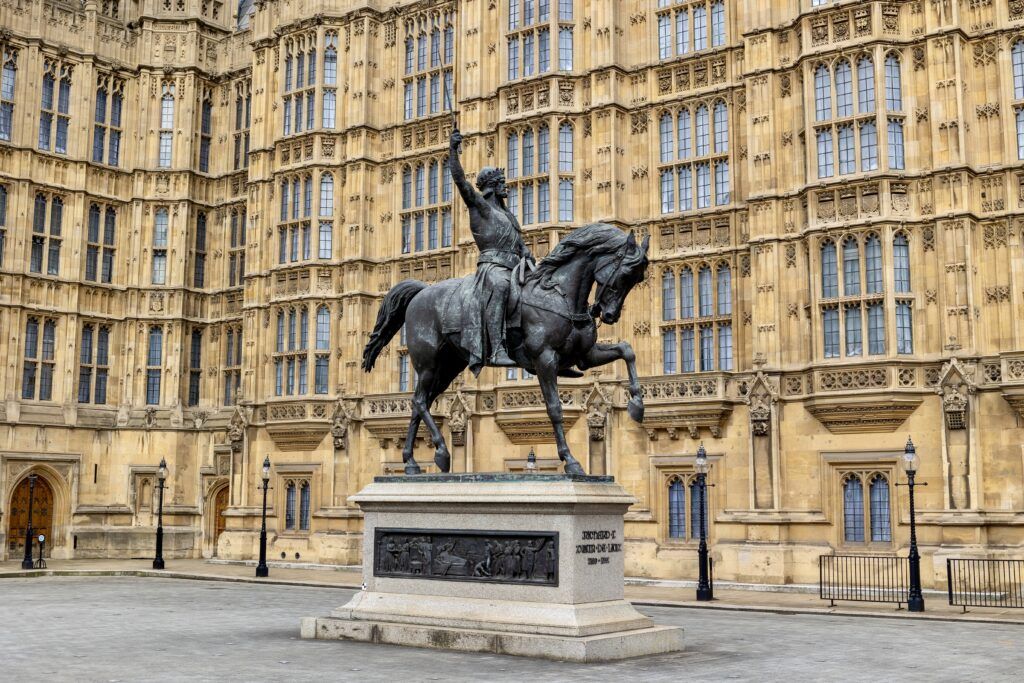
Richard the Lionheart was a formidable warrior, but his private life has kept historians arguing for centuries.
The most intriguing evidence concerns his relationship with Philip II of France. The chronicler Roger of Howden described the two men eating from the same dish, sharing a bed, and displaying extraordinary affection.
Sounds rather intimate, doesn’t it?
But medieval kings sometimes shared beds as a gesture of political friendship and trust. It wasn’t necessarily a royal sleepover with benefits.
Then there’s Richard’s public penance for sexual sins. Historian Jean Flori interpreted these episodes as possible evidence of sexual relations with men.
Richard also had an illegitimate son, Philip of Cognac, and contemporary accounts describe his sexual involvement with women. That doesn’t rule out bisexuality, of course.
Historians remain divided. John Gillingham considered the evidence for homosexuality unconvincing, while Flori thought Richard may have had relationships with both sexes.
And neither interpretation can be conclusively proved.
Verdict: Possibly gay or bisexual. But sharing a bed with another king isn’t proof of a sexual relationship, and medieval chroniclers weren’t exactly reliable bedroom witnesses.
Was Richard III a Hunchback?
After Henry VII defeated Richard III at the Battle of Bosworth in 1485, the Tudors had every incentive to blacken his reputation. The more monstrous Richard appeared, the more legitimate the new dynasty looked.
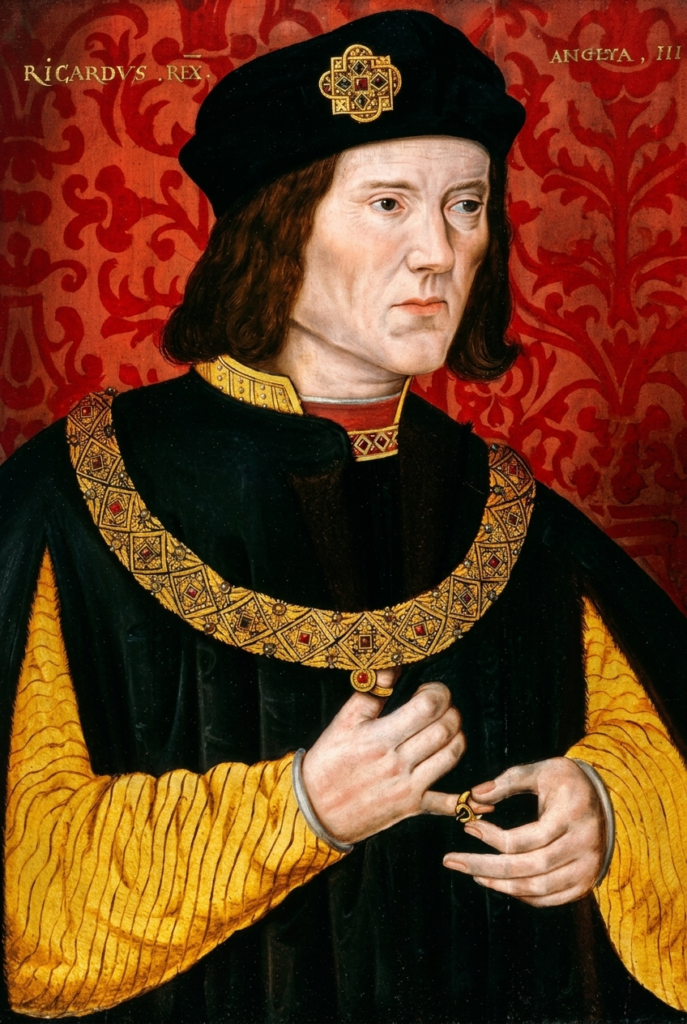
Tudor writers portrayed him as a scheming villain with a hunched back, withered arm, and limp. Thomas More helped cement the image, and Shakespeare turned it into theatrical legend.
Even Richard’s portraits weren’t safe. X-rays have revealed that his shoulder was deliberately altered in at least one painting to exaggerate his supposed deformity.
But was he really a hunchback?

When Richard’s skeleton was unearthed in Leicester in 2012, researchers found severe scoliosis, a sideways curvature of the spine.
His right shoulder probably sat higher than his left, and his torso was unusually short. But clothing and custom-made armor would have concealed much of the asymmetry.
There was no skeletal evidence of a withered arm or limp. And Richard was an accomplished warrior who fought on horseback.
Verdict: Richard had scoliosis, but he was no Shakespearean hunchback. The Tudors turned a genuine physical condition into a symbol of supposed moral corruption.

Did Richard III Marry Anne Neville For Love or Money?
Anne Neville was the younger daughter of Warwick the Kingmaker and one of the greatest marital prizes in England.
Richard and Anne had known each other since childhood, when Richard spent time in Warwick’s household at Middleham Castle. Perhaps there was genuine affection between them.
But Richard had an enormous financial incentive to marry her.
After Warwick’s death in 1471, Richard fought bitterly with his brother George, Duke of Clarence, over the Neville inheritance. The dispute became so fierce that Parliament effectively treated Anne’s still-living mother as dead so the brothers could divide her estates.

Hardly the stuff of romantic fairy tales.
Richard and Anne remained married for roughly 13 years and had a son together. Richard reportedly grieved when she died in 1485. But no surviving love letters tell us what they really felt about each other.
I wouldn’t buy the romanticized childhood sweetheart story without better evidence. Still, affection and ambition aren’t mutually exclusive.
Verdict: Almost certainly a marriage driven by wealth and dynastic advantage. But genuine affection may well have developed.
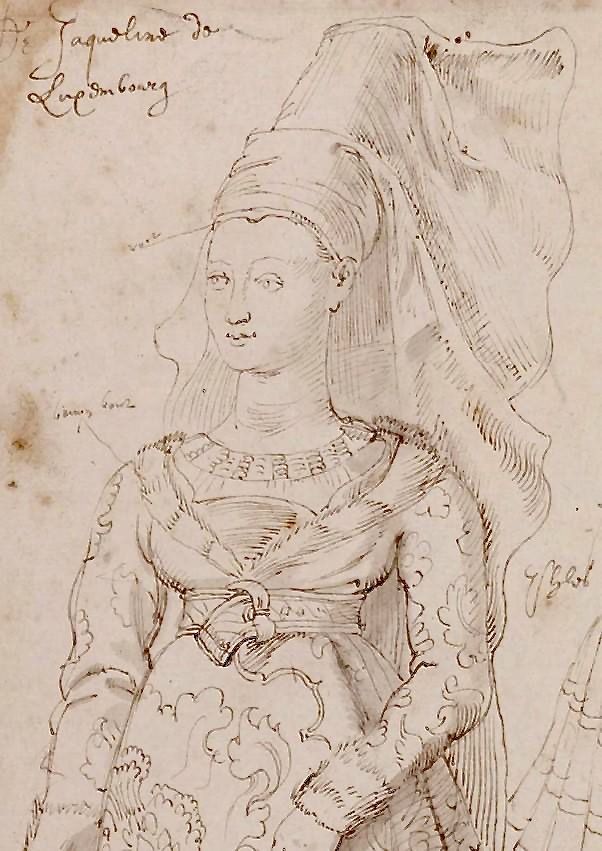
Did the Woodville Women Use Witchcraft?
Elizabeth Woodville must have had extraordinary powers. How else could a widowed gentlewoman persuade Edward IV to marry her in 1464? At least, that was the convenient theory of her enemies.
In 1469, Warwick’s supporter Thomas Wake accused Elizabeth’s mother, Jacquetta, of making little lead figures for sorcery. The allegations collapsed under examination, and Jacquetta was formally cleared in 1470.
You’d think that would be the end of it. Not a chance.
When Richard III claimed the throne in 1483, the accusations resurfaced. The petition later incorporated into Titulus Regius alleged that Elizabeth and Jacquetta had used witchcraft to induce Edward to marry Elizabeth.
Jacquetta had been dead for eleven years. No proof was ever produced.
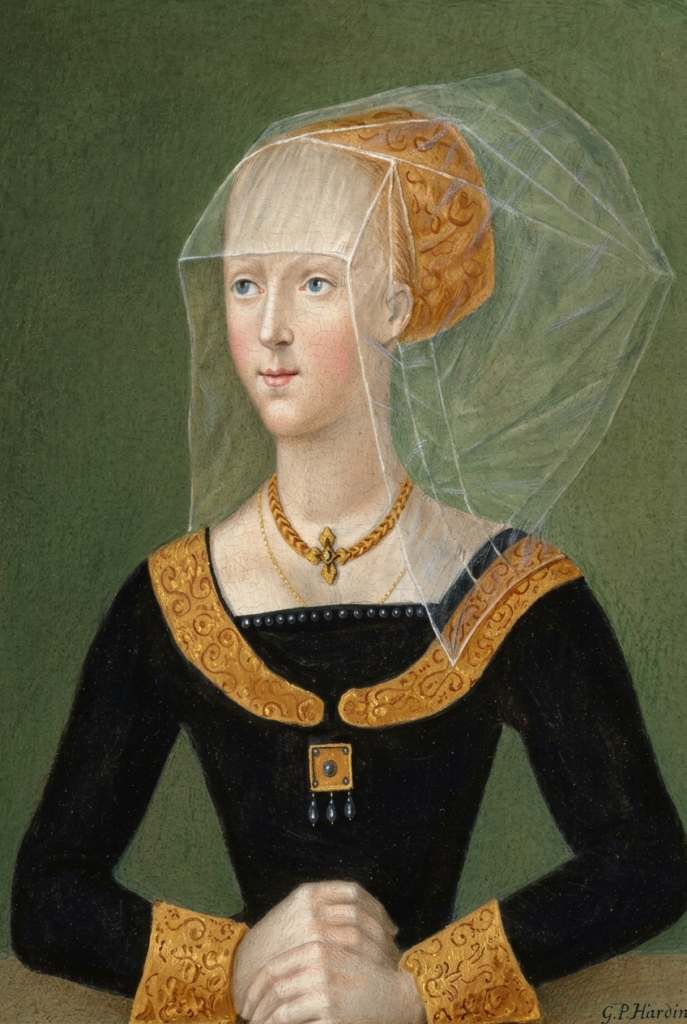
For added intrigue, Jacquetta’s Luxembourg family claimed descent from Melusine, a mythical water spirit. But medieval aristocrats loved fanciful ancestors. That hardly made them witches.
So what was really going on?
Edward’s secret marriage had infuriated powerful nobles, and the Woodvilles’ rapid rise only made matters worse. Witchcraft offered a convenient explanation for the king’s supposedly inexplicable choice.
Better yet, it could be used to discredit his marriage and undermine his children’s claim to the throne.
Verdict: No evidence of sorcery. Plenty of evidence of political malice.

Did Elizabeth of York Have an Affair With Her Uncle Richard III?
Did Richard III have a secret romance with his niece, Elizabeth of York, before she married Henry VII?
There’s no reliable evidence of a love affair. But there was plenty of gossip about Richard wanting to marry her, even while his wife, Anne Neville, was still alive.
The Crowland Chronicle reports that at Christmas 1484, Elizabeth appeared at court wearing clothes similar to Queen Anne’s. Apparently, matching outfits were enough to set the royal rumor mill spinning.
Courtiers whispered that Richard planned to marry Elizabeth once Anne was out of the picture.
Then there’s the mysterious letter.

In the 17th century, historian Sir George Buc claimed to have seen a letter suggesting Elizabeth herself was eager to marry Richard. Unfortunately, the original has vanished, and what it actually said remains disputed.
When Anne died in March 1485, the gossip reached fever pitch. Richard publicly denied any intention of marrying his niece.
But the idea wasn’t entirely absurd politically. A marriage could have undermined Henry Tudor’s plan to marry Elizabeth and strengthen his own claim to the throne.
Still, Richard had already declared Elizabeth illegitimate. Marrying her would have made for some rather awkward legal gymnastics.
And there was the small matter of their being uncle and niece. Even by medieval standards, that was pushing it.
Richard also pursued marriage negotiations with Portugal, including a proposed Portuguese husband for Elizabeth. Hardly the behavior of a man hopelessly besotted with his niece.
Verdict: No convincing evidence of a romance. A politically motivated marriage scheme is more plausible, but even that remains unproved. Love seems the least likely explanation.
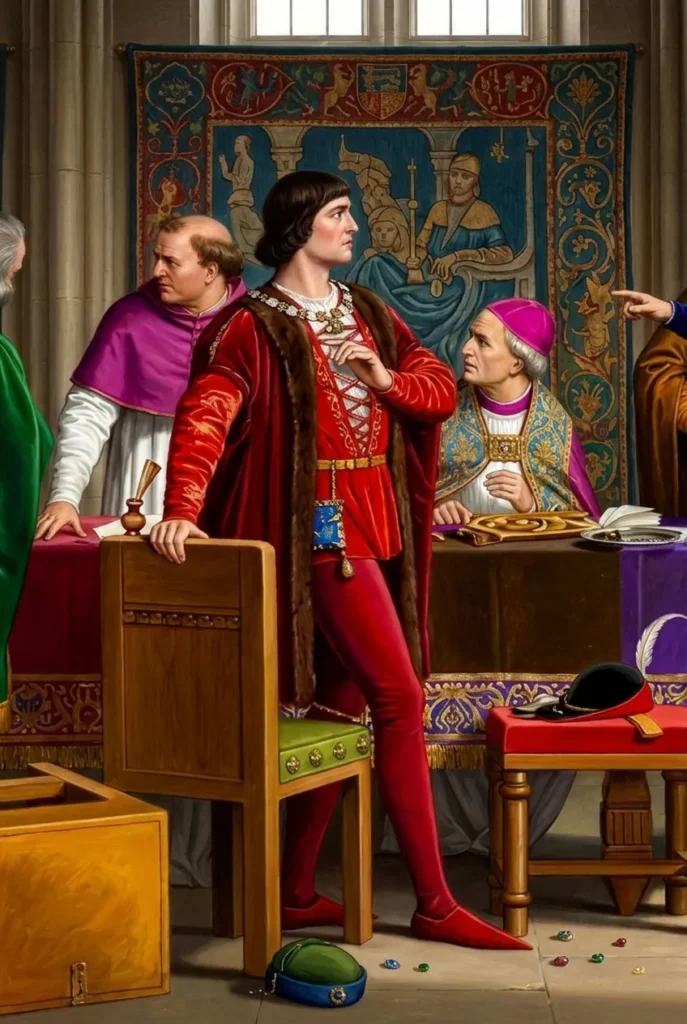
Did Richard III Execute Lord Hastings to Seize the Crown?
On June 13, 1483, Lord Hastings attended a council meeting at the Tower of London. Hours later, he was executed for alleged treason on Richard’s orders.
The timing was suspicious. Hastings was fiercely loyal to Edward IV and his young heir, Edward V. If Richard intended to seize the crown, Hastings would have been a formidable obstacle.
Less than two weeks later, Richard was king.
But Richard had served Edward IV loyally for years. He also faced a genuine political crisis. The Woodvilles threatened his authority as Protector, and Hastings was reportedly meeting privately with Richard’s opponents.
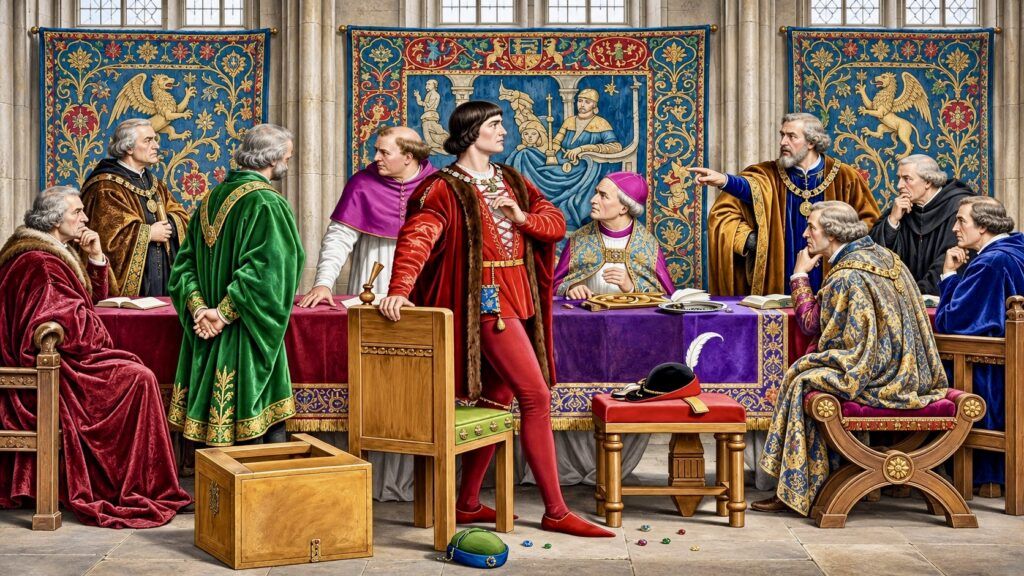
Perhaps Richard feared a conspiracy and struck first.
Still, why execute Hastings when other alleged conspirators were merely imprisoned? Was he eliminating a dangerous opponent, making an example of him, or clearing his path to the throne?
I tend to sympathize with Richard, but this execution gives me pause.
Was Hastings the victim of a calculated usurpation or a frightened Protector determined to survive?
Verdict: I don’t buy the theory that Richard set out with a master plan to steal the crown and purge his way to power. I suspect fear was a stronger motive than ambition, though the two may have become intertwined.
I hope you’ve enjoyed my little medieval mysteries of England. You may find these other English histories interesting:
- English myths
- History of Medieval and Tudor England
- Tudor queens of England
- Power Women of Medieval & Tudor England
- Historical Mistresses and Favorites
- Wives of Henry VIII
- Worst kings of England
- Anglo-Saxon kings of England
Pin it for later.