At first glance, Parma’s Palazzo della Pilotta doesn’t look especially inviting. The vast brick complex is austere, unfinished in places, and even bears the scars of war.
Step inside, however, and you’ll discover one of Italy’s greatest cultural treasures.
The sprawling palace is home to an extraordinary collection of museums and historic monuments, all gathered under one roof.
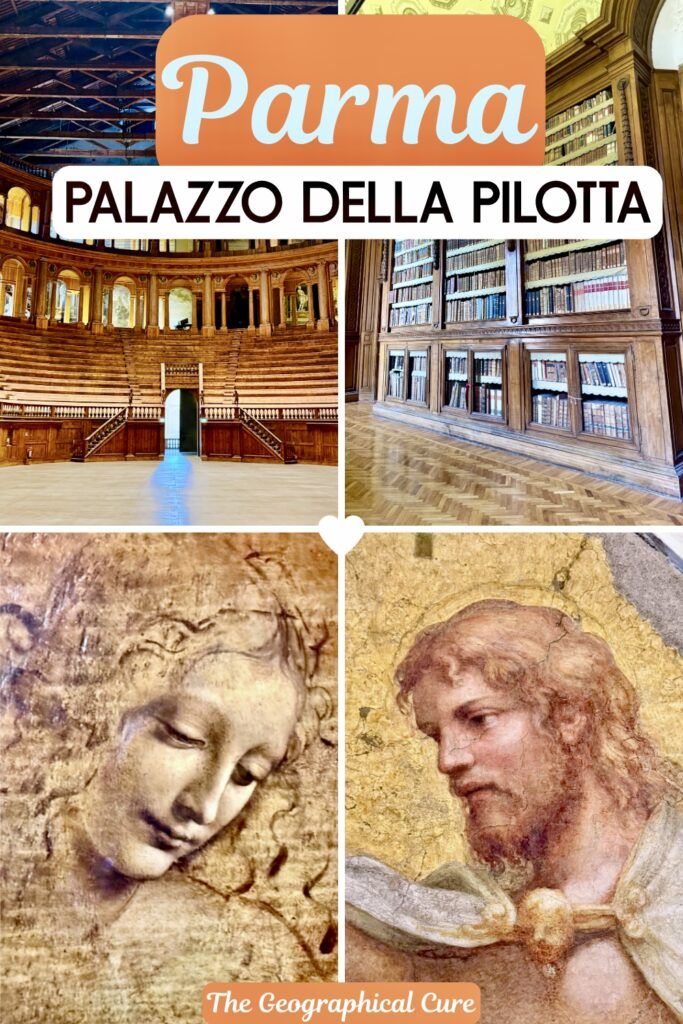
You can admire Leonardo da Vinci’s mysterious La Scapigliata, stand beneath the soaring timber vaults of the Farnese Theatre, explore one of Italy’s oldest archaeological museums, and wander through an elegant Enlightenment library.

The Palazzo della Pilotta is an entire world of art, history, architecture, and culture. If you have even a passing interest in the Renaissance or ancient Rome, it’s the one place in Parma you absolutely shouldn’t miss.
Mini History of Palazzo della Pilotta
Construction of the Palazzo della Pilotta began around 1580 under Duke Ottavio Farnese, after the Farnese court moved its capital from Piacenza to Parma.
Rather than serving as the family’s residence, the immense brick complex was conceived as a collection of service buildings supporting the ducal palace across the River Parma. It housed everything from stables and workshops to administrative offices and armories.
After Ottavio’s death, his son Ranuccio I Farnese expanded the project. He favored monumental, austere architecture that projected strength and authority.
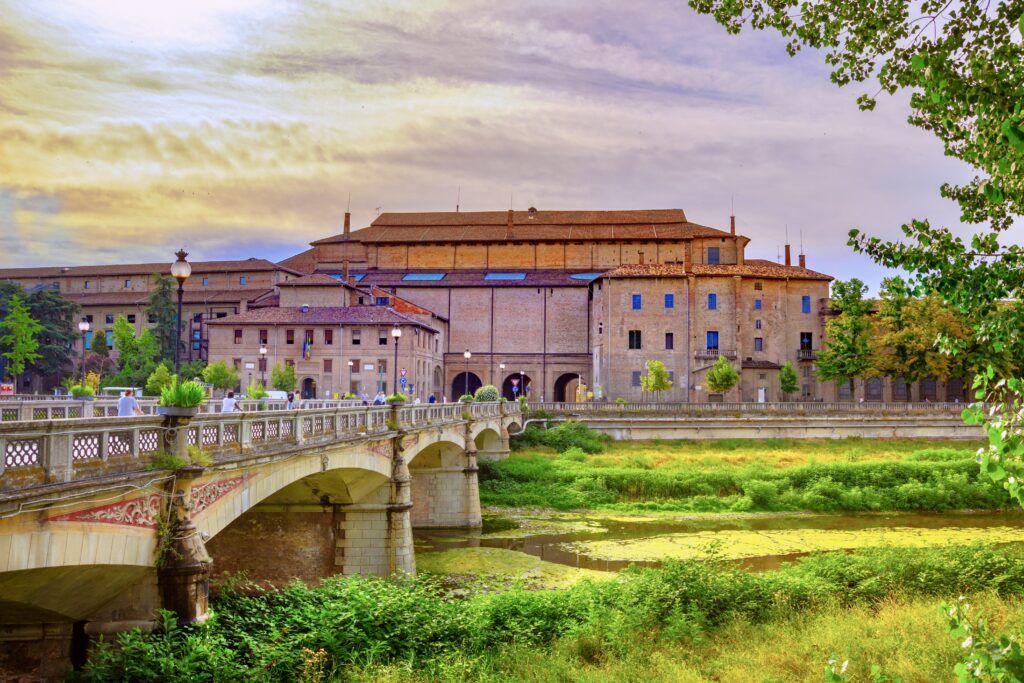
But the ambitious complex was never fully completed, leaving it with the rugged, fortress-like appearance you see today.
By the 17th century, the Pilotta had become much more than a service complex. It housed the Farnese Theater, the ducal library, scientific collections, and the celebrated Farnese art collection.
When the Farnese dynasty came to an end in 1731, however, its greatest treasures were inherited by Charles of Bourbon and transferred to Naples, leaving the palace largely stripped of its artistic riches.
The Bourbon dukes gradually transformed the Pilotta into a center of culture once again, founding new museums, a public library, and other institutions. Although the complex suffered extensive damage during Allied bombing in 1944, it was meticulously restored in the decades that followed.
Today, the Palazzo della Pilotta is one of Italy’s premier museum complexes. What began as a utilitarian extension of the Farnese court has evolved into the cultural heart of Parma.
Palazzo della Pilotta: What To See
National Gallery of Parma
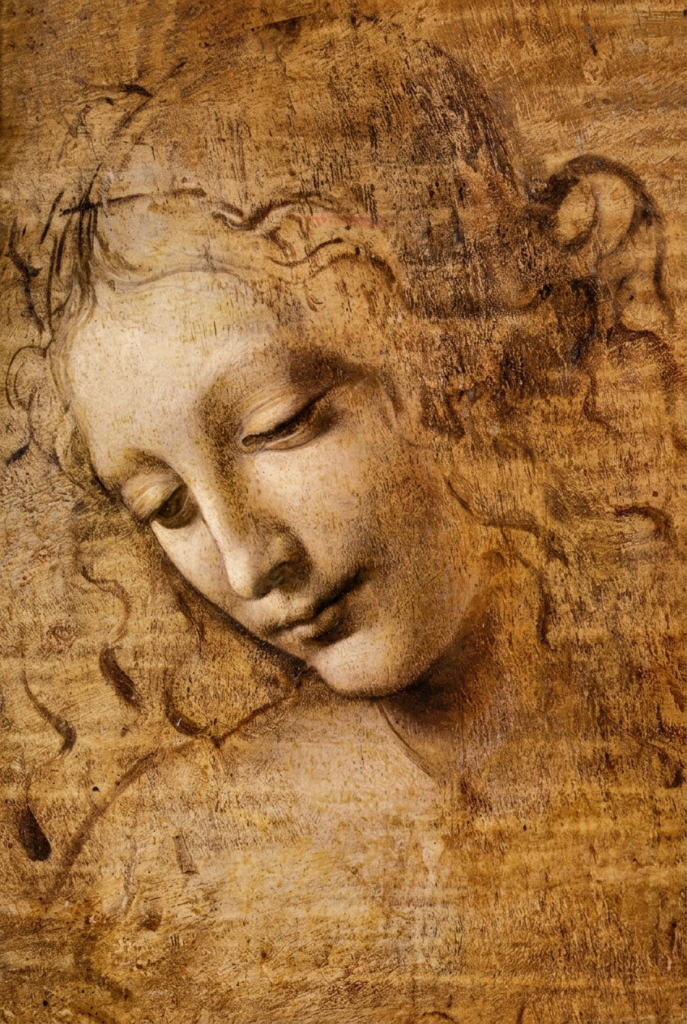
The National Gallery of Parma is the crown jewel of the Palazzo della Pilotta. One of its biggest draws is Leonardo da Vinci’s La Scapigliata, a mesmerizing sketch of a young woman with softly tousled hair.
It’s one of the few works by Leonardo in Italy outside Florence and Milan. Best of all, you can often admire it without battling crowds.
The museum wasn’t always destined to house such treasures. It was originally created to display the celebrated Farnese Collection.
But in 1734, when the Bourbon dynasty inherited the Farnese masterpieces, the entire collection was transferred to Naples. Today, those works are divided between the Capodimonte Museum and the National Archaeological Museum.
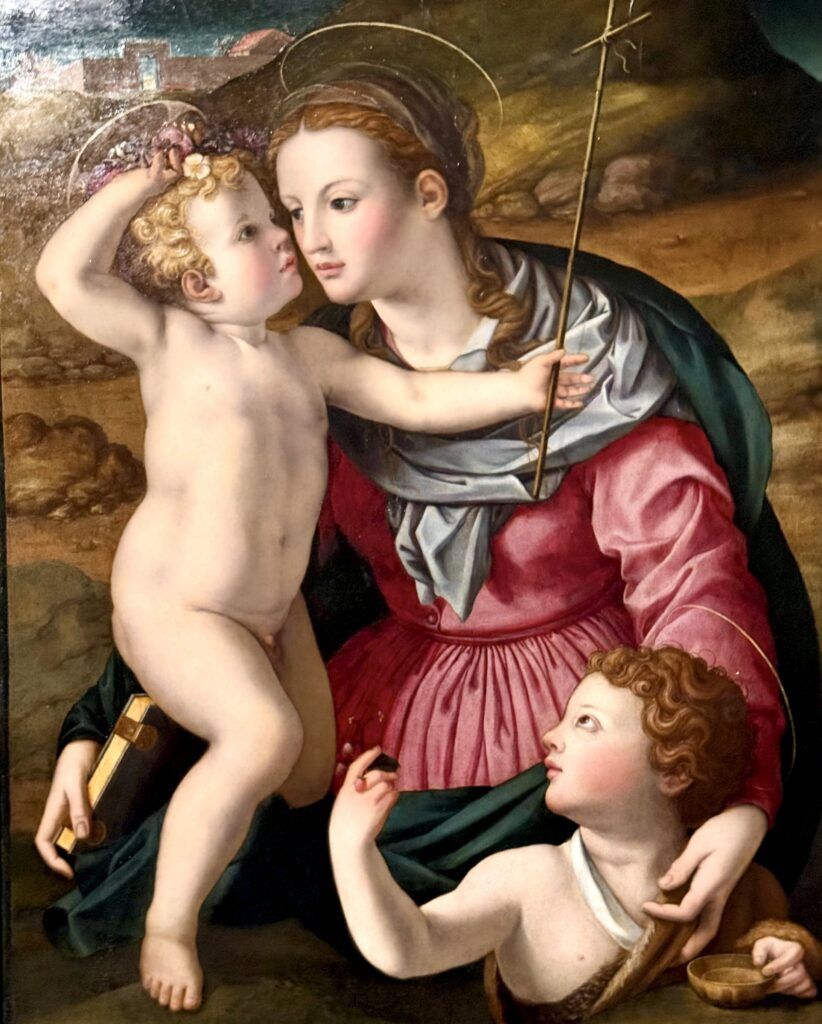
Parma soon rebuilt its artistic legacy. Beginning in 1748, Duke Philip of Bourbon and his wife, Louise Élisabeth of France, assembled an outstanding new collection. It was later enriched when several Correggio altarpieces, looted by Napoleon during his Italian campaigns, were finally returned to the city.
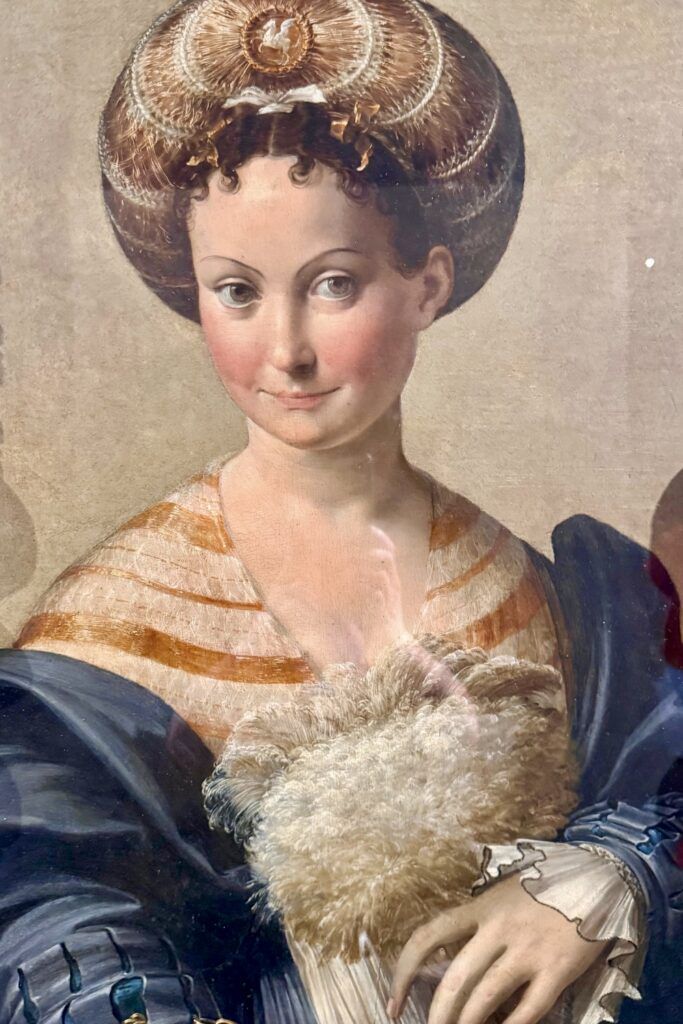
Today, the museum takes visitors on a journey through Italian art from the Middle Ages to the 19th century. Along the way, you’ll encounter gilded medieval altarpieces, Florentine Renaissance masterpieces, luminous Venetian views by Canaletto, refined portraits by Parmigianino, and one of Italy’s finest collections of works by Correggio.
Several rooms are devoted to Parma’s hometown genius. Don’t miss the haunting Lamentation of Christ, the radiant Coronation of the Virgin, and other paintings that reveal Correggio’s remarkable command of light, color, and illusion.
The museum also has an excellent sculpture collection, highlighted by Canova’s graceful Maria Luigia, the monumental Hercules Colossi, and two portrait busts by Bernini.
Farnese Theater
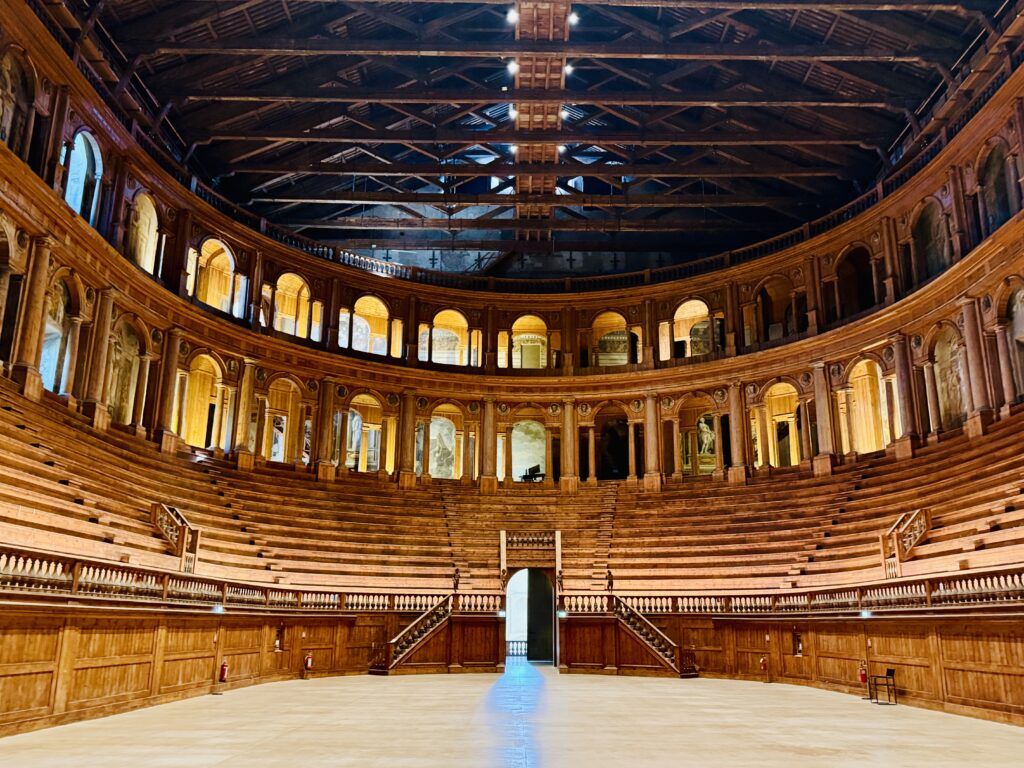
Another highlight of the Palazzo della Pilotta is the magnificent Farnese Theatre, one of the most extraordinary historic theaters in Europe. It’s something of a miracle that it exists at all.
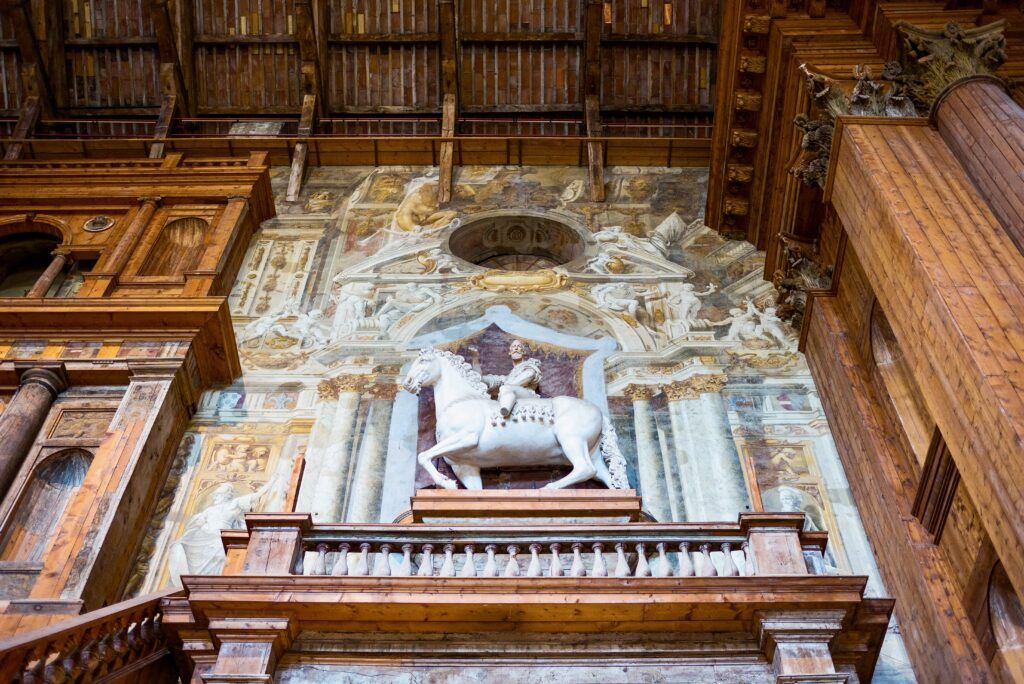
Completed in 1618, the vast Renaissance-Baroque theater was designed by Giovanni Battista Aleotti almost entirely from wood, with stucco painted to resemble marble.
It was commissioned by Duke Ranuccio I Farnese to dazzle the visiting Cosimo II de’ Medici on his journey to Milan. Ironically, the grand performance never took place because Cosimo canceled his visit.
The theater was a marvel of 17th century engineering. Its horseshoe-shaped auditorium could seat around 3,000 spectators. And an ingenious stage machinery system allowed scenery to be changed with remarkable speed.
The stage could even be flooded to stage elaborate mock naval battles, one of the period’s most spectacular forms of entertainment.
Tragically, the theater was almost completely destroyed during an Allied bombing raid in 1944.
What you see today is the result of a painstaking reconstruction completed in 1962, using surviving drawings, photographs, and original fragments to recreate one of Italy’s greatest theatrical spaces.
Although it’s now used only occasionally for concerts, operas, and special performances, simply standing inside the enormous timber auditorium is still unforgettable. Even empty, the theater conveys the ambition, extravagance, and theatrical flair of the Farnese court.
Palatine Library
The Palatine Library was founded in 1761 by Philip of Bourbon, Duke of Parma, after the city’s original ducal library was transferred to Naples following the Bourbon succession.
Determined that Parma should once again become a center of learning, the duke created a new public library to serve scholars and the wider community.
The task of building the collection from the ground up fell to the scholar Paolo Maria Paciaudi, the library’s first director. Over the following decades, he assembled one of Italy’s most important research libraries, acquiring books, manuscripts, maps, prints, and rare editions from across Europe.
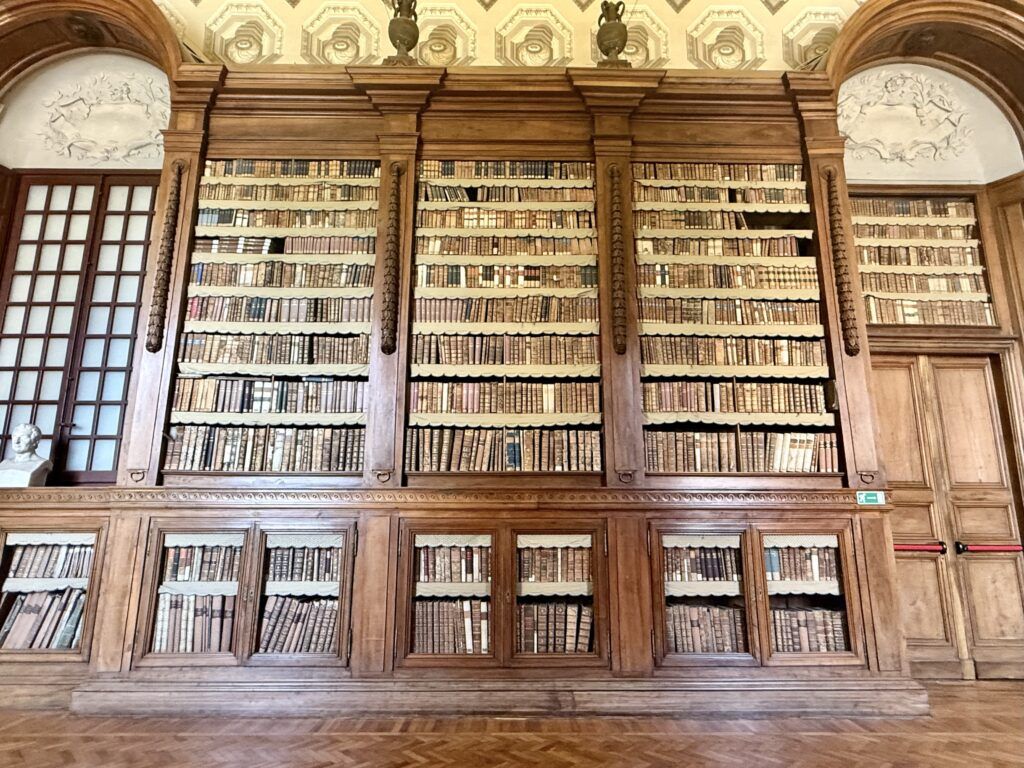
Today, the library holds more than 700,000 volumes, along with illuminated manuscripts, incunabula, rare maps, and the largest collection of Hebrew manuscripts in Italy. It’s still an active research library, though visitors come just as much to admire its beautiful historic interiors.


The library is divided into three principal spaces: the Maria Luigia Hall, the Dante Hall, and the magnificent Petitot Gallery. The latter is the undeniable showstopper.
Designed in the elegant Neoclassical style, the long gallery is lined with graceful white bookcases, gilded details, and soaring shelves that seem to stretch endlessly into the distance.
It was created to house the library’s earliest collections and remains one of the most beautiful library interiors in Europe.
Even if you’re not a bibliophile, it’s worth stepping inside. The Palatine Library offers a glimpse into the Age of Enlightenment, when rulers viewed libraries not merely as repositories of books, but as monuments to knowledge itself.

Parma Archaeological Museum
The Archaeological Museum is one of the oldest in Italy. Founded in 1760, it originally displayed discoveries from the nearby Roman city of Veleia.
Since then, the collection has grown to include Egyptian, Etruscan, and Roman antiquities, along with artifacts unearthed in and around Parma over the centuries.
As you wander through the galleries, you’ll encounter everything from mosaics, pottery, and jewelry to ancient weapons, tools, funerary objects, and even a remarkably preserved skeleton.
It’s an excellent introduction to the region’s long history before the Renaissance transformed Parma into an artistic powerhouse.
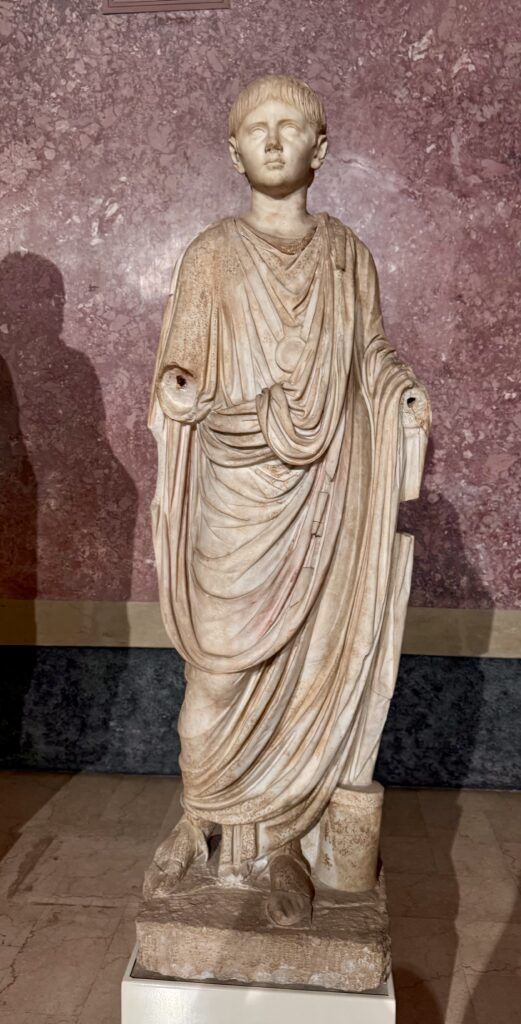
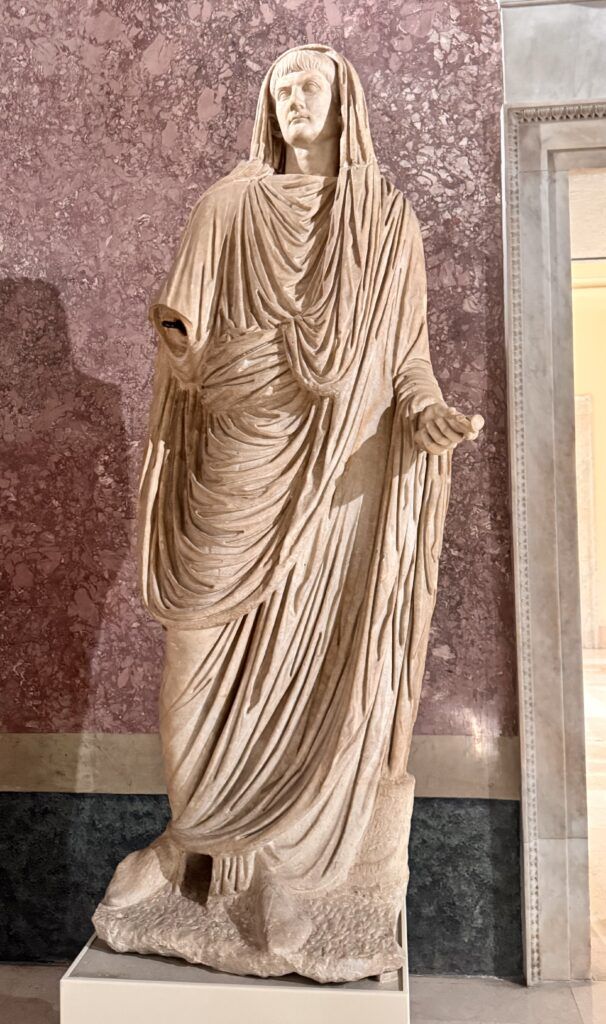
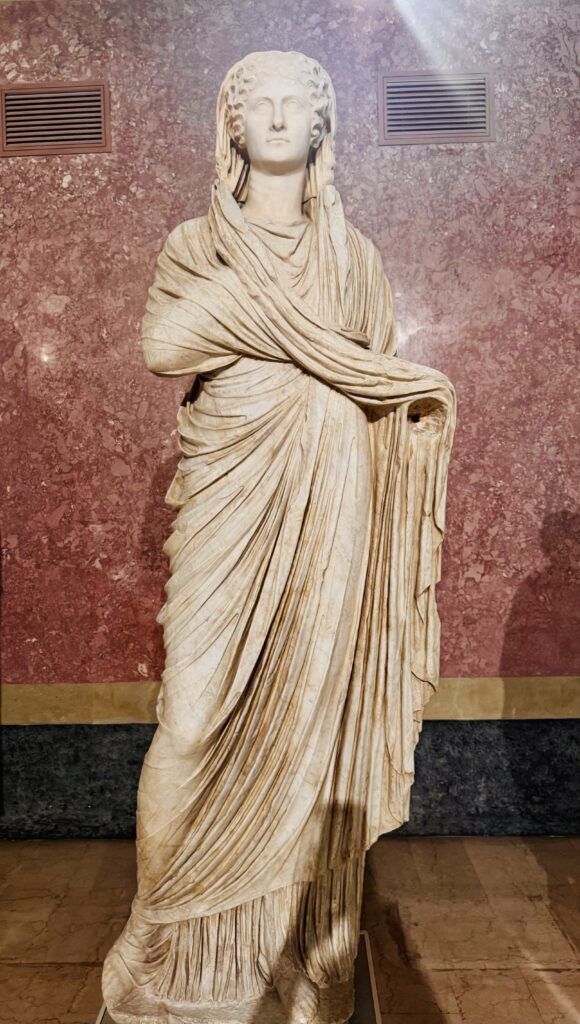
The museum’s undeniable highlight is the Hall of the Veleia Statues. It’s an unforgettable sight.
Larger-than-life marble portraits of the Julio-Claudian dynasty stand together in a single room, including Augustus, Tiberius, Nero, Livia, Germanicus, Agrippina Major, and Drusus Minor.
Discovered during excavations at Veleia, the statues once adorned the basilica of the Roman town.
Seeing the imperial family assembled in one place drives home the carefully crafted image of power, continuity, and legitimacy that Ancient Rome wanted to project during the empire’s earliest years.
Bodoni Museum
Ever used the Bodoni font? If so, you’ve already encountered one of Parma’s greatest artistic exports.
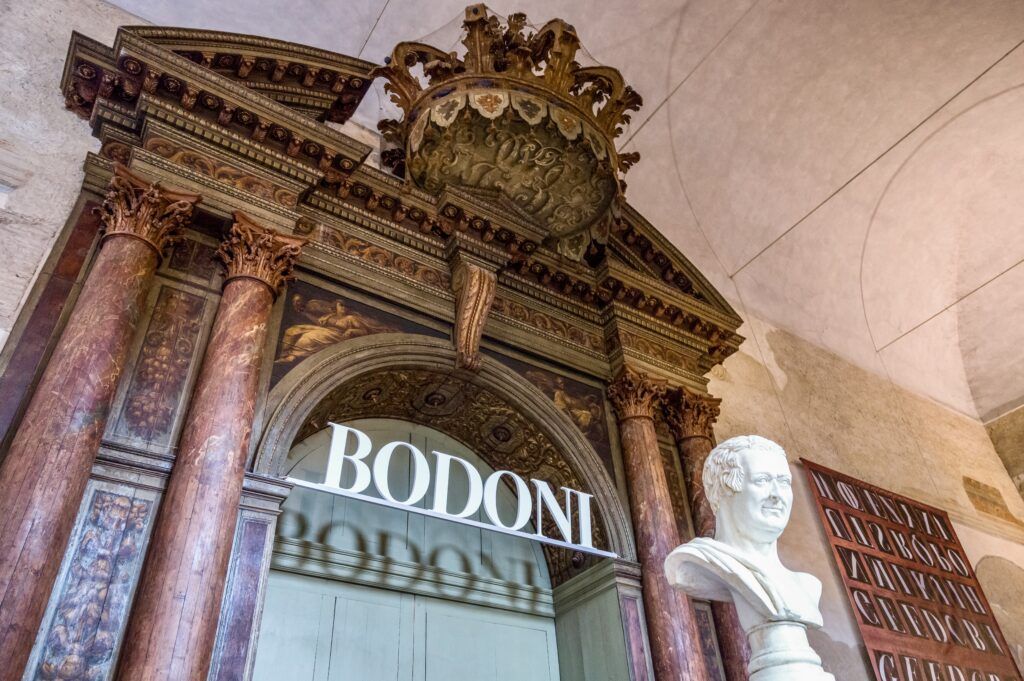
The Bodoni Museum is the oldest museum in Italy devoted to the history of printing. It’s dedicated to Giambattista Bodoni, the master printer who turned Parma into one of Europe’s leading publishing centers after becoming director of the Royal Printing House in 1768.
The museum offers a unique glimpse into the craft behind beautiful books. Its collections include original printing presses, punches, matrices, hand-set type, printing tools, personal correspondence, and rare editions produced by Bodoni and his workshop.
Together, they trace the painstaking process of creating books long before the digital age.
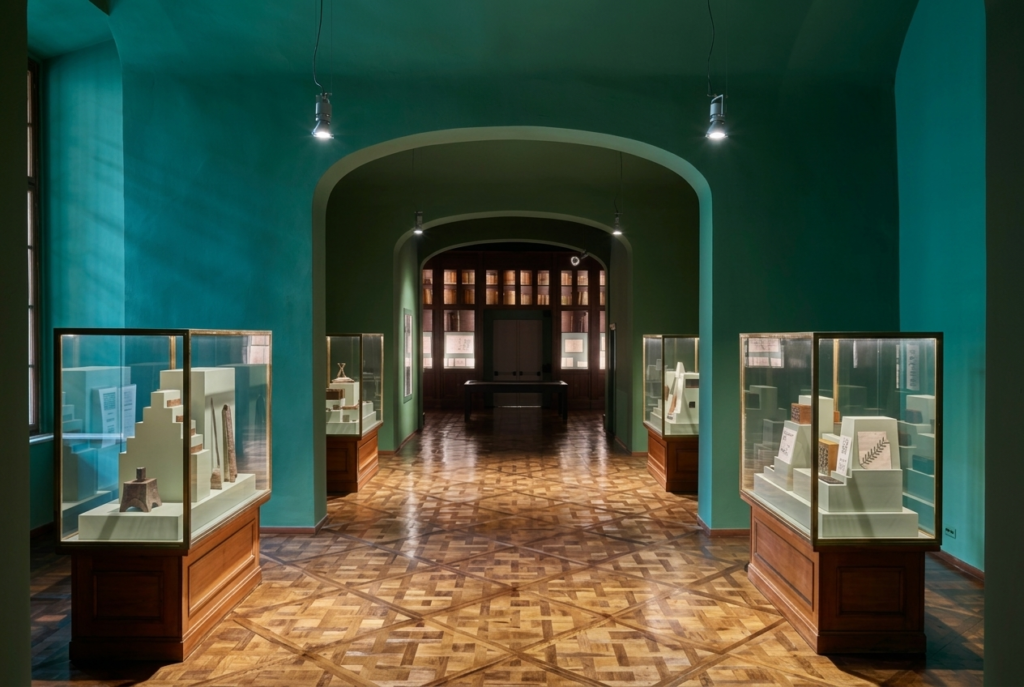
One of the museum’s prized possessions is a first edition of the Manuale Tipografico, published posthumously in 1818. The monumental volume presents hundreds of typefaces and ornamental designs and is still regarded as one of the landmark achievements in the history of typography.
Even if you’re not a typography buff, the museum offers a fresh perspective on Parma’s cultural legacy.
Bodoni’s elegant typeface is still used around the world in books, magazines, luxury branding, and fashion, making his influence surprisingly familiar to modern visitors.
I hope you’ve enjoyed my guide to Palazzo della Pilotta. You may enjoy these other Italy guides:
- Historic Landmarks in Italy
- Most Beautiful Towns in Italy
- 101+ Epic Experiences To Have in Italy
- 10 Day Itinerary for Italy
- 10 Day Itinerary for Tuscany
- 12 ways to spend 1 week in Italy
- 5 ways to spend 1 week in Sicily
Pin it for later.