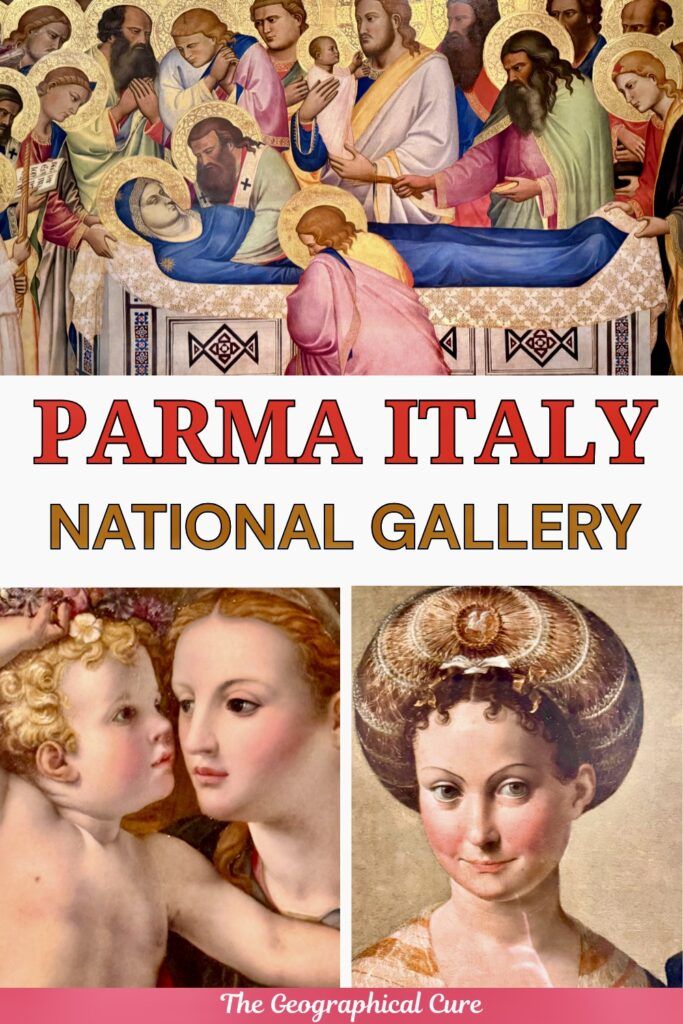
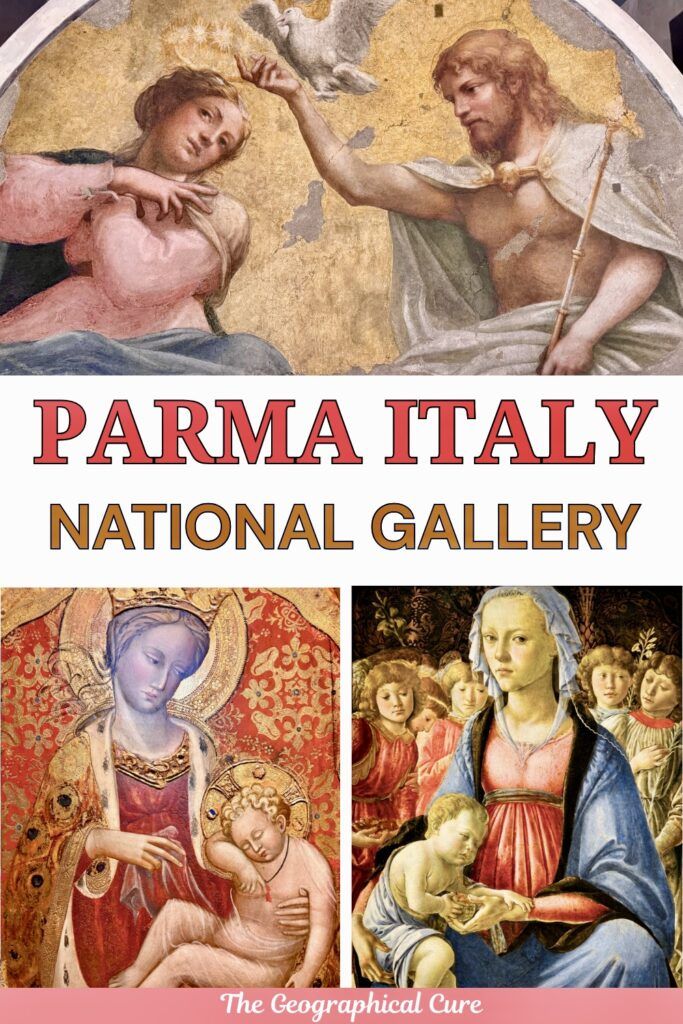
The National Gallery of Parma is housed in the sprawling 16th century Palazzo della Pilotta, once the grand residence of the Farnese dukes who ruled Parma during the Renaissance.
Most visitors know Parma for its world famous Parmigiano Reggiano cheese and prosciutto. But the city is also home to one of Italy’s finest collections of Renaissance art.
The National Gallery may not have the fame of the Uffizi or the Vatican Museums. But the quality of its collection is fairly astonishing.
Where else can you see works by Leonardo da Vinci, Correggio, Parmigianino, Venetian masters, El Greco, and Holbein all under one roof?
Quick Facts
Here are some quick tips for visiting:
- The museum is located in the Palazzo del Pilotta in the center of town.
- The ticket area is one side after you enter. The entrance is opposite that.
- You have to buy a ticket to the entire Pilotta complex to visit. There’s no separate ticket just for the National Gallery. Admission covers the whole complex: the National Gallery, the Farnese Theater, the Palatine Library, the Bodoni Museum, and the archaeological areas.
- The ticket price is €18.
- You can hoof it up the grand Farnese staircase to enter. But there are also elevators and lifts.
Masterpieces in Parma National Gallery
Here are the museum’s greatest hits.
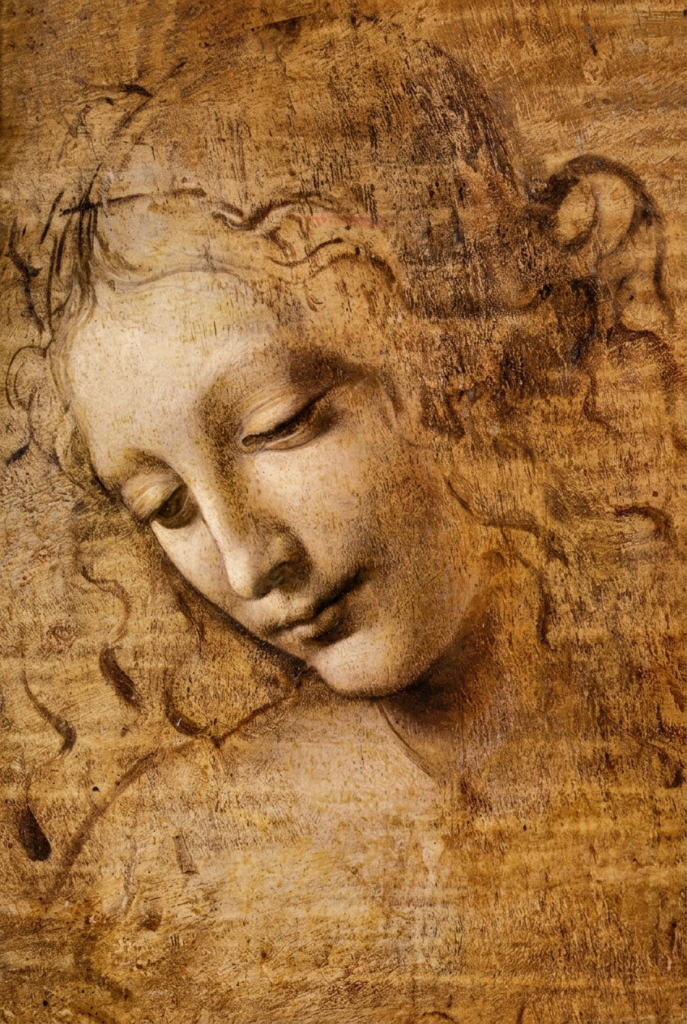
Leonardo da Vinci, La Scapigliata
The most surprising work in the museum is by Leonardo da Vinci. There are only about 15 paintings by Leonardo in existence, and La Scapigliata is on the list.
The title translates as “the woman with disheveled hair.” It’s rendered in brown paint and white wash. At first glance, it looks like a preparatory drawing. But it’s not. It’s a painting.
It’s quite small, about 10 inches tall and 8 inches wide. Yet it exerts an extraordinary pull.
The woman is shown in Leonardo’s typical androgynous style. Her face is delicate and highly finished, while her hair is depicted with loose, almost wild brushstrokes. The contrast between the carefully modeled face and the unfinished hair gives the work a dreamlike quality.
No one knows for certain who the woman is. Some scholars believe the painting was never completed.
Somehow, that only adds to its appeal. The work feels intimate, as if viewers are catching a glimpse of Leonardo’s creative process.
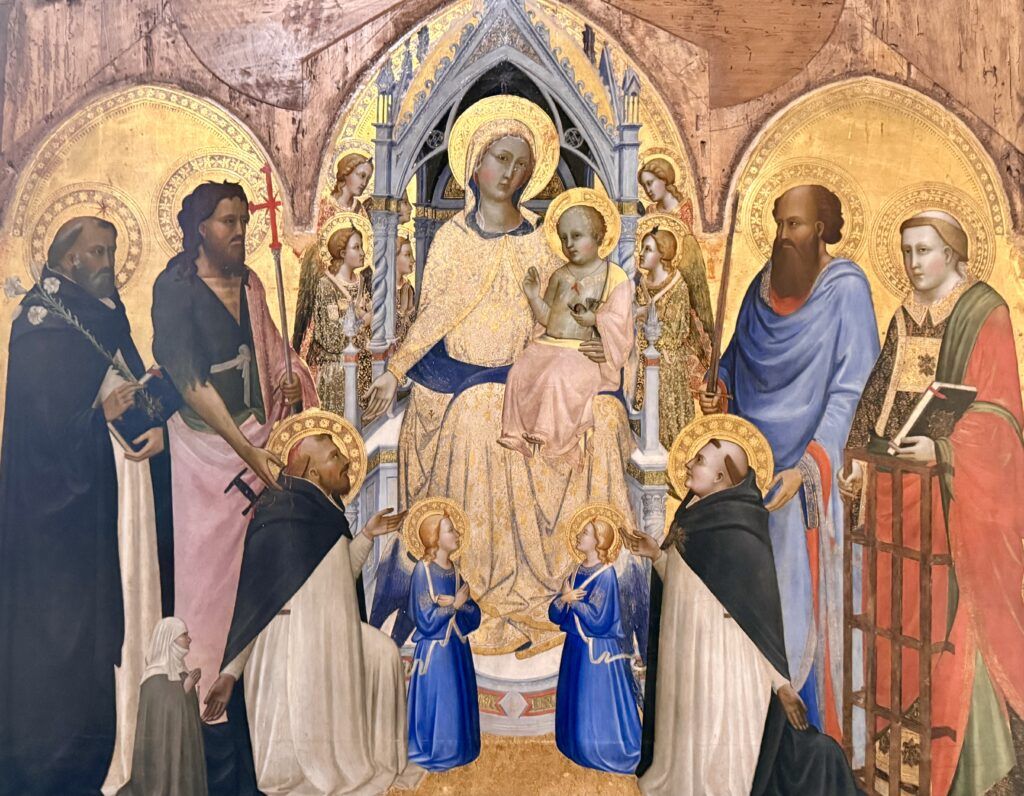
Paolo Veneziano, Madonna and Child Triptych
Veneziano was the first famous Renaissance painter from Venice. He’s credited with founding the Venetian school, helping Venetian painting find its own voice before Bellini, Giorgione, and Titian arrive on the scene.
One thing I love about Paolo Veneziano is that he’s standing at an interesting crossroads. You still have the Byzantine influence and gold ground tradition, but there’s a growing interest in elegance, color, and narrative detail.
In this work, there are three paintings. Two of them open up on hinges, with the madonna and child in the center.
It has a lavish gold background and Gothic elegance. There’s a highly formal, hieratic composition.
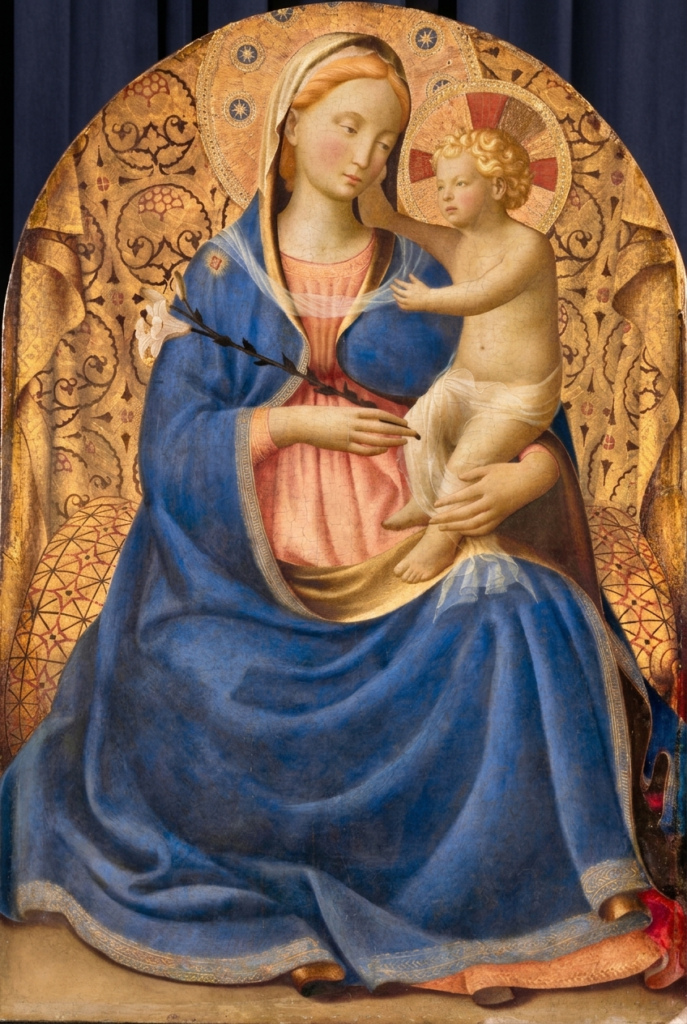
Fra Angelico, The Madonna of Humility
This Fra Angelico painting is an image of the madonna and child on a large scale above a group of four saints.
Mary doesn’t sit on a throne. The painting suggests that she’s sitting on the ground, which looks like a giant golden mound.
It’s a gorgeous early piece by the artist. And true to his ethos, it’s a tender image of Mary and an adorable Christ child standing on her lap.
Below, Saint Dominic and Francis hold hands. It’s a beautiful example of brotherhood.
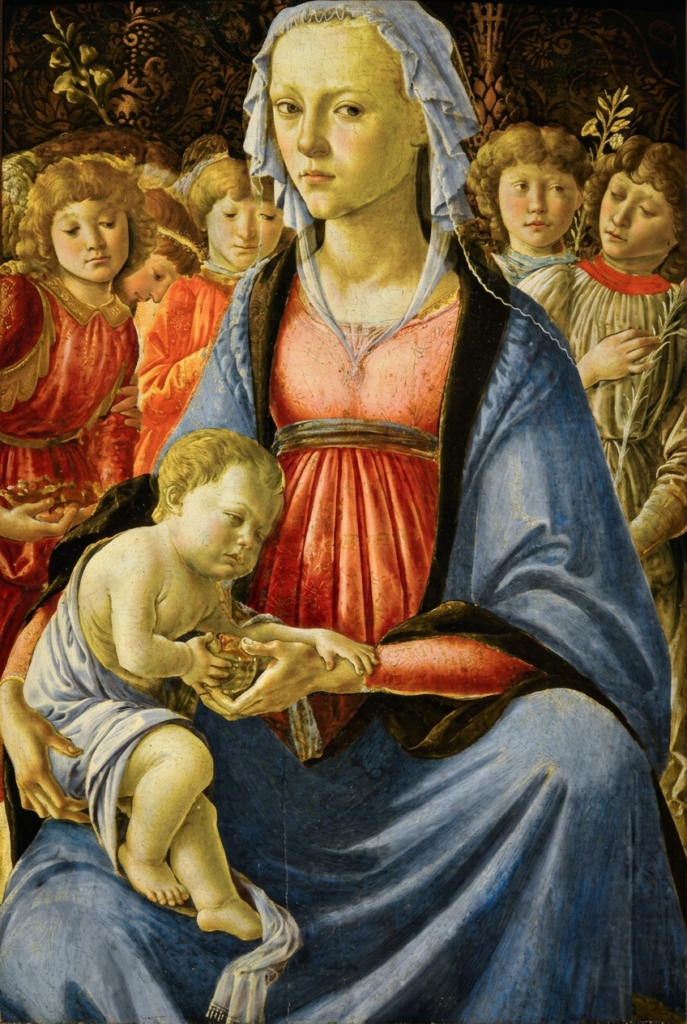
Sandro Botticelli, Madonna and Child
In this Botticelli painting, Mary looks rather stern.
In fact, that’s one reason many people don’t immediately recognize it as a Botticelli piece. When people think of Botticelli, they think of the graceful beauty of Venus, Primavera, or those sweet-faced Madonnas with delicate melancholy. This Madonna has a very different mood.
Mary is looking directly out at the viewer with a cool, almost challenging gaze. There’s very little overt tenderness between mother and child.
She’s wearing a red dress covered with a white cap with flowers. The colors are glowing.
The Christ Child holds a pomegranate, a common Renaissance symbol of Christ’s future Passion and Resurrection. So the painting isn’t really meant to be a cozy domestic scene. It’s already foreshadowing sacrifice and redemption.
It’s not a masterpiece, but it’s still a Botticelli or Botticelli workshop piece.
Correggio Paintings
After La Scapigliata, the Correggio paintings are the museum’s big draw.
Correggio was active in the first quarter of the 16th century. He’s an extraordinary talent, who was influenced by Leonardo. But he added a bit of Barqoue theatricality to his works.
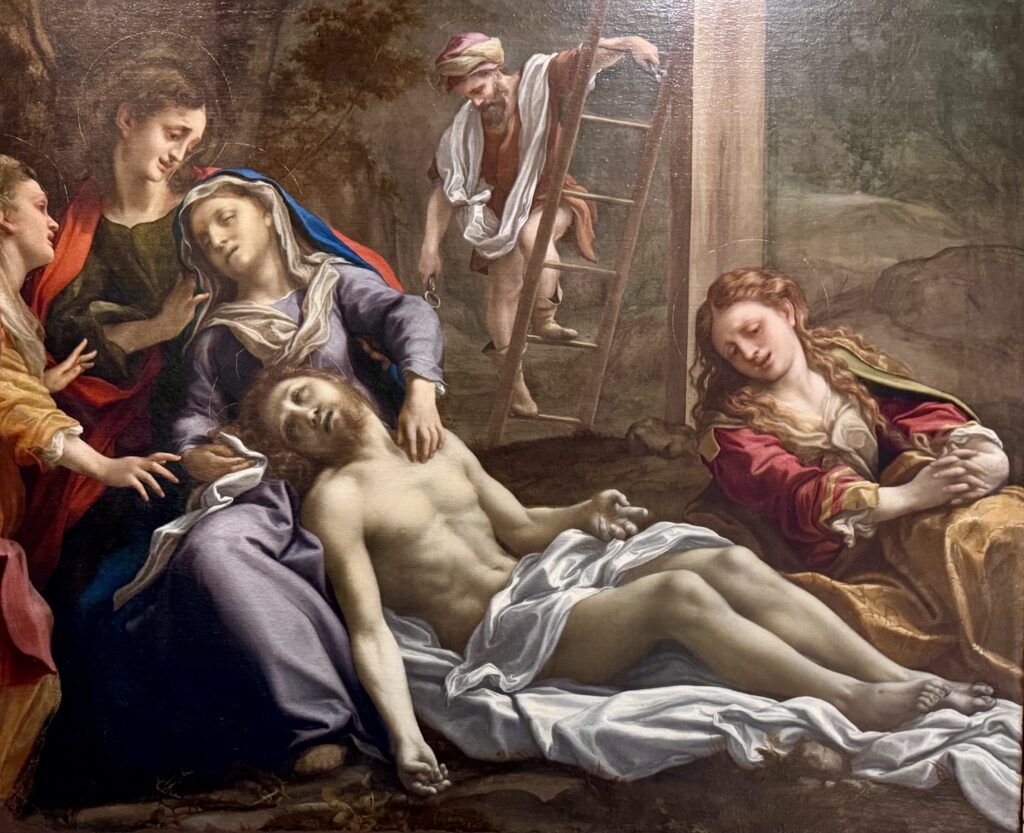
Lamentation (or Pieta) and the Martyrdom of Four Saints are in the same room. They were both painted for the Del Bono Chapel in San Giovanni Evangelista.
The Lamentation is beautiful, shimmering in color and shaking with emotion. A gentlemen descends on a ladder to remove the nails in Christ. Mary Magdalene frets and a solemn Mary holds up his torso.
In contrast, the Martyrdom is rather dark and disturbing. It’s not the idealized Correggio’s you might be used to. The painting is chaotic and full of tension.
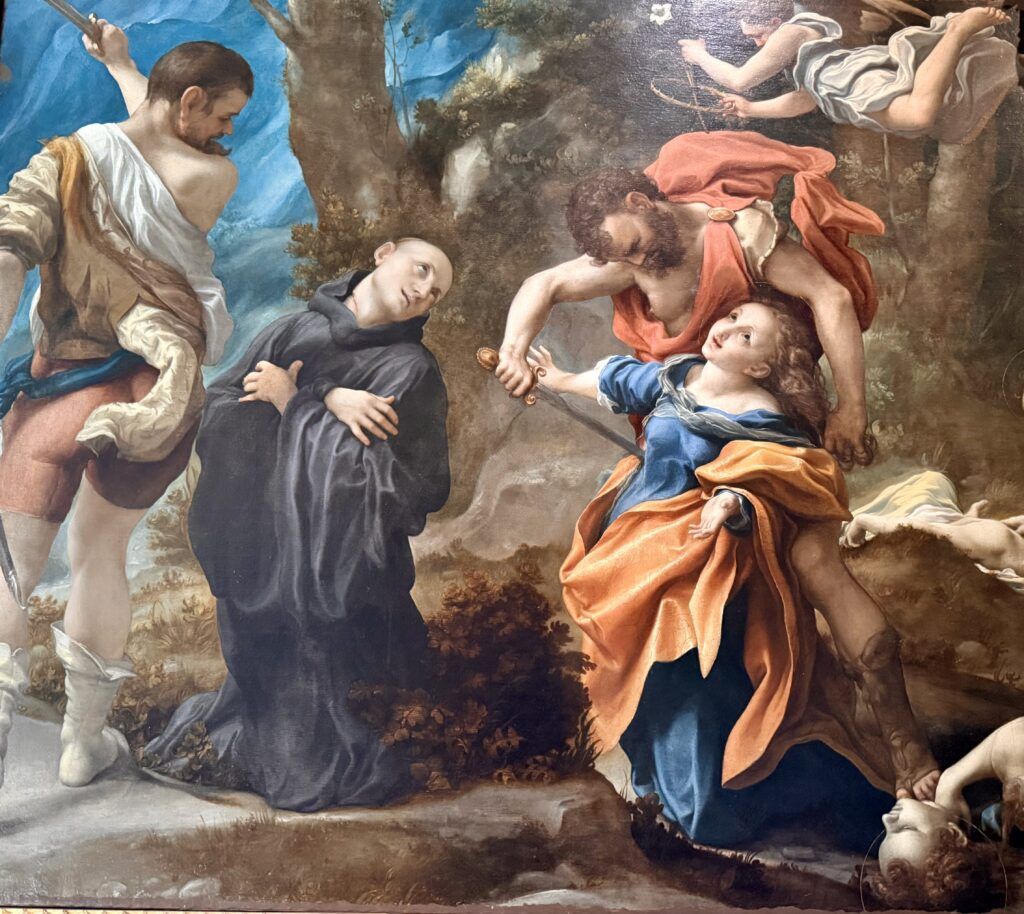
In the foreground, there’s a man who’s about to be decapitated. Next to him is a woman in yellow and blue who’s being stabbed.
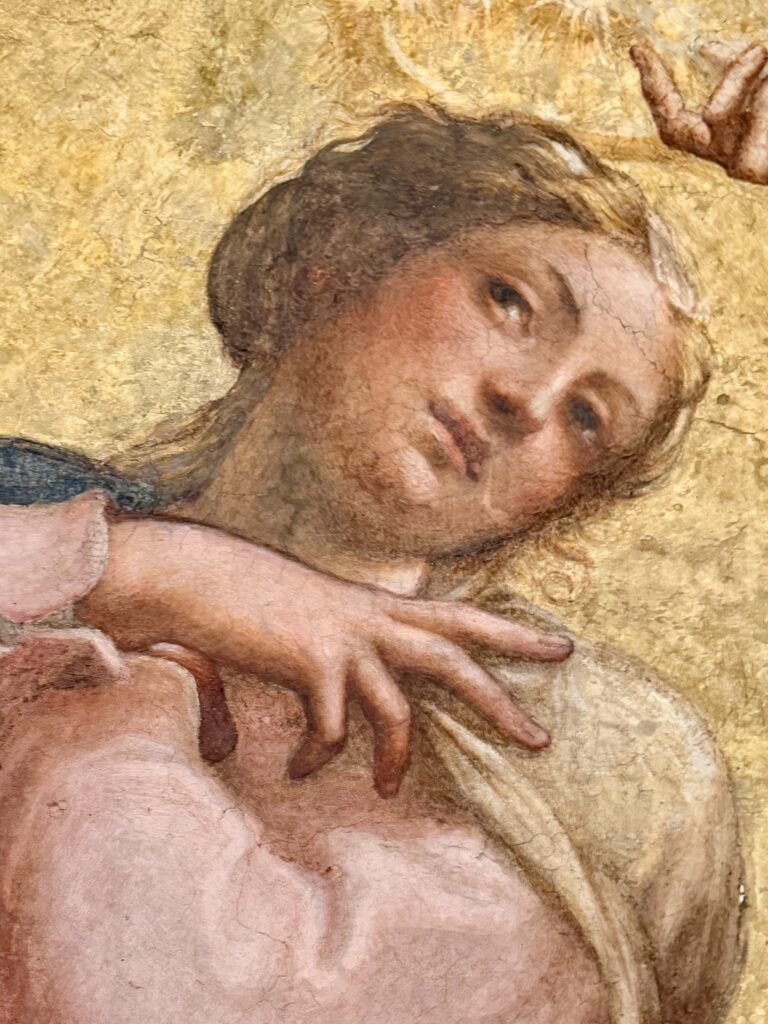
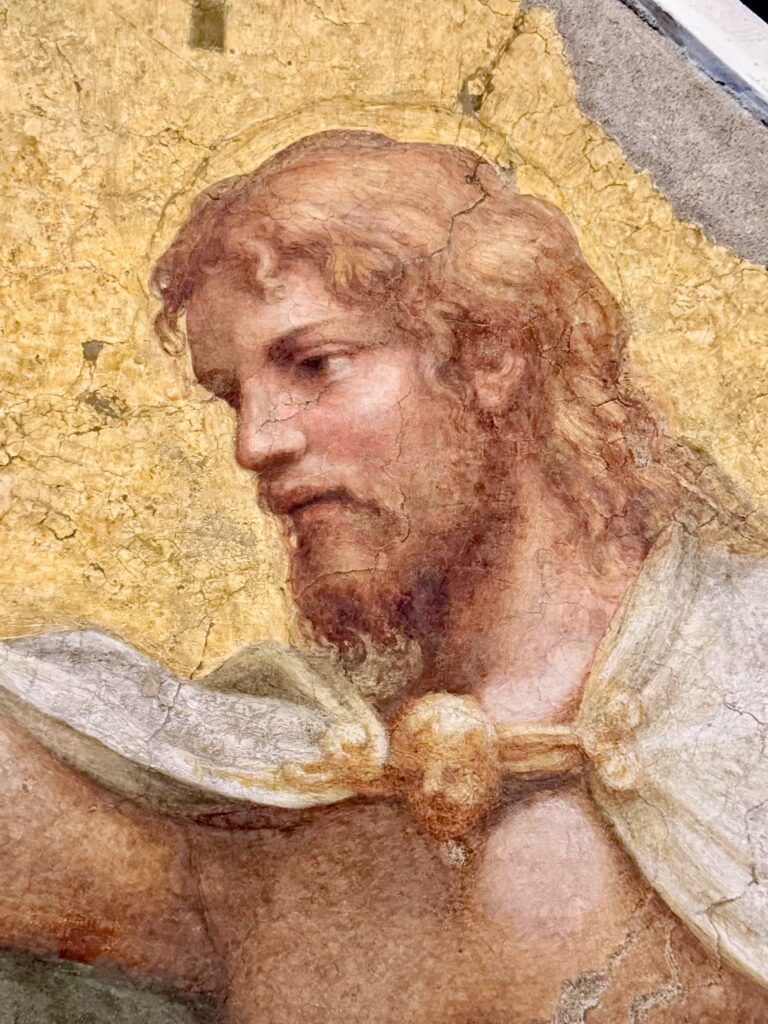
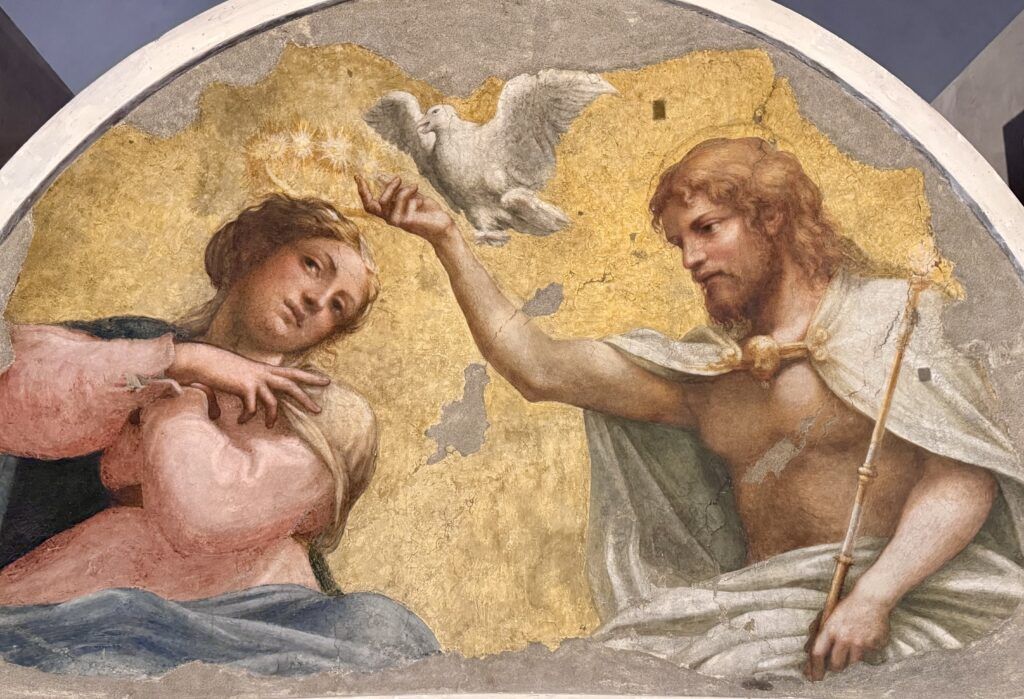
The Coronation of the Virgin, by contrast, is a beautiful piece. It’s located in a gallery off a hallway of the Farnese Theater.
It’s a detached fresco that was showing some water damage and thus was moved into the museum for preservation. In it, Christ lowers the crown onto Mary’s head as a dove flutter above.
Another Correggio artwork to see is the Madonna of the Scodella. The title means “Madonna of the Bowl.”
The bowl (scodella) is the silver dish in the foreground that gives the painting its nickname. The scene depicts the Holy Family resting during the Flight into Egypt, based on an apocryphal gospel account.
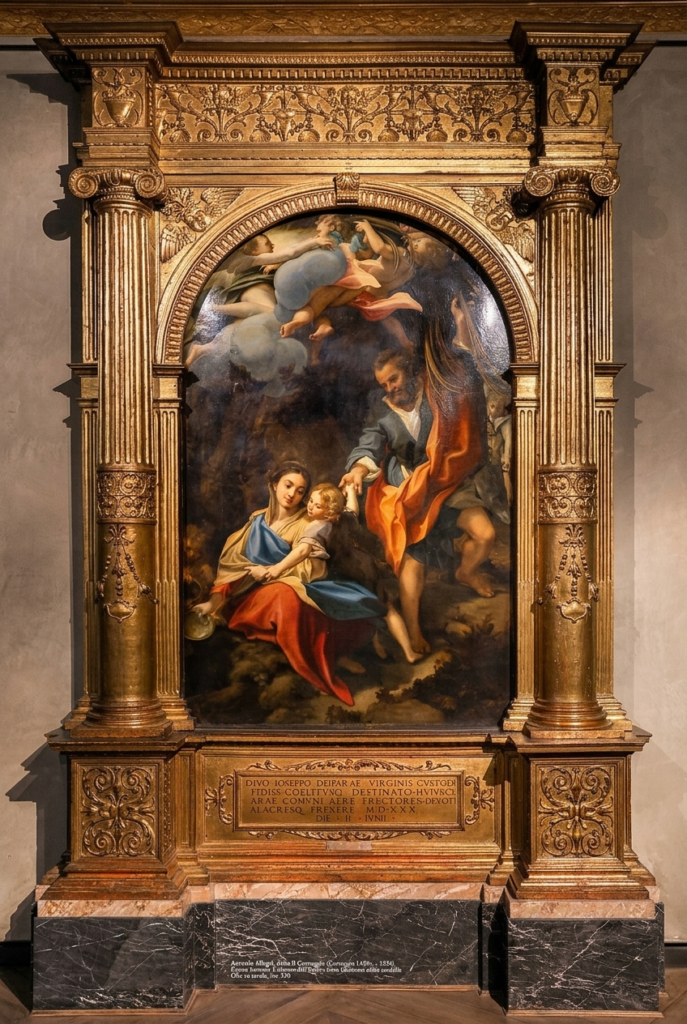
It’s one of Correggio’s last great altarpieces for Parma and was originally painted for the Church of San Sepolcro before eventually entering the National Gallery.
The composition is incredibly dynamic. Everything swirls diagonally through the canvas.
Joseph is unusually prominent, the angels tumble through the sky, and the whole thing feels much more alive and spontaneous than many High Renaissance altarpieces.
You’ll also find Correggio’s masterpiece The Madonna of St. Jerome in the museum. It’s a sacred conversation in a rather ambiguous setting.
Your eyes are drawn to the red curtain, which may make you think of Caravaggio, who also used this device. Madonna and child are in the center. Christ is being shown a book by St. Jerome, who can be identified by the lion near him.
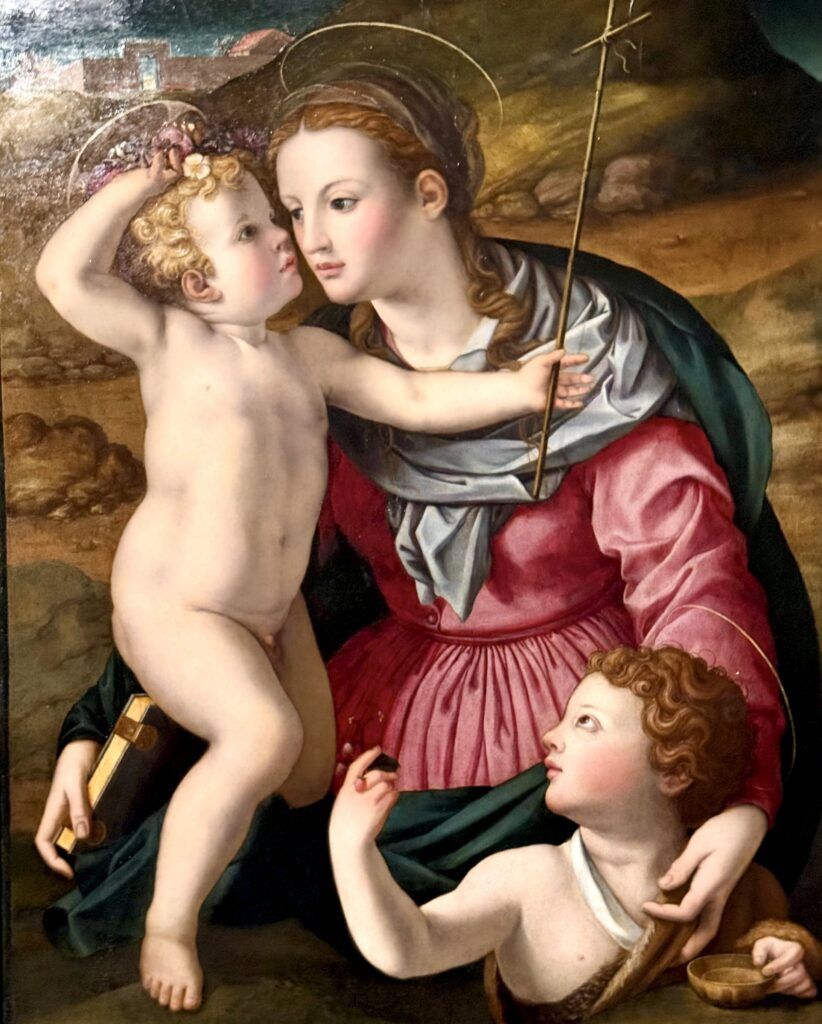
Bronzino, Madonna and Child with the Infant Saint John the Baptist
Bronzino was a Mannerist artist who became famous as a portraitist of the Medici duke and duchess.
In this painting, the child on the right is the infant John the Baptist, while the Christ Child climbs onto Mary’s lap. Mary herself has that unmistakable Bronzino look: impossibly elegant, perfectly composed, and just a touch aloof.
She displays all the hallmarks of Mannerism: porcelain-smooth skin, an exquisitely polished surface with almost no visible brushwork, unusual colors in the drapery, and elongated, graceful features.
It’s a good example of why people either love or dislike Mannerist art. Compared to Correggio’s warm, affectionate Madonnas, Bronzino’s figures feel more aristocratic and emotionally reserved. Everything is refined, controlled, and idealized.
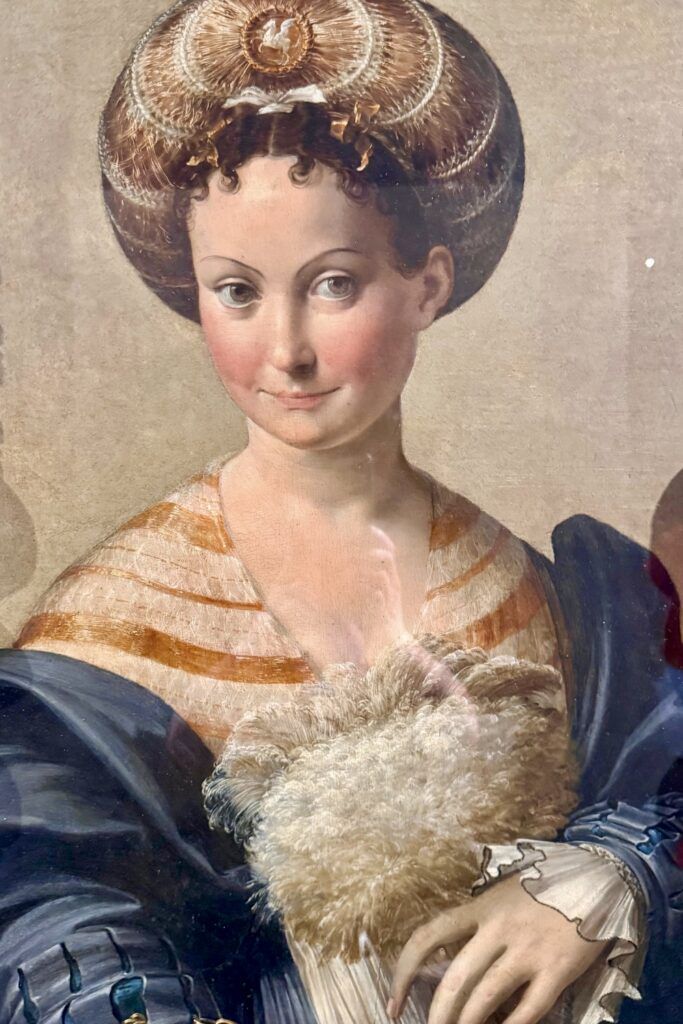
Parmigianino, Turkish Slave
This is another important painter of the late Renaissance. When Parmigianino showed up n Rome, he was hailed as the next Raphael.
But he never quite lived up to that reputation and perhaps went a little crazy. Some historians think he had PTSD from the Sack of Rome of 1527, where he witnessed unspeakable horrors.
But this particular work shows his genius. The slave, a woman, wears a turban-like hat. She holds a feather fan and wears incredibly expensive clothing.
Despite the title, she probably wasn’t a slave at all. No one really knows who she was. The name comes from her unusual headdress, not her social status.
What struck me was how modern she feels. Her gaze is calm and confident, almost as if she’s posing for a fashion portrait. Five centuries later, she’s still one of the most intriguing faces in the museum.

El Greco, Christ Healing the Man Born Blind
Dominikos Theotokopoulos, better known as El Greco, was a remarkable painter of the Spanish Renaissance.
El Greco’s paintings are a unique blend of Byzantine, Venetian, and Spanish influences.
This piece was painted during the artist’s early Italian period. The work is packed with movement and vivid color. The dramatic composition hints at the distinctive style that would later make him one of Spain’s most celebrated painters.
Even before his figures become elongated and mystical in the Mannerist style, you can see his dramatic color contrasts and energetic composition.
In this painting, the checkerboard pavement pulls your eye into the scene. And the crowd isn’t just standing around. Everyone is reacting, pointing, arguing, or watching.
It tells a story instantly, which is helpful for readers who may not know much about El Greco.
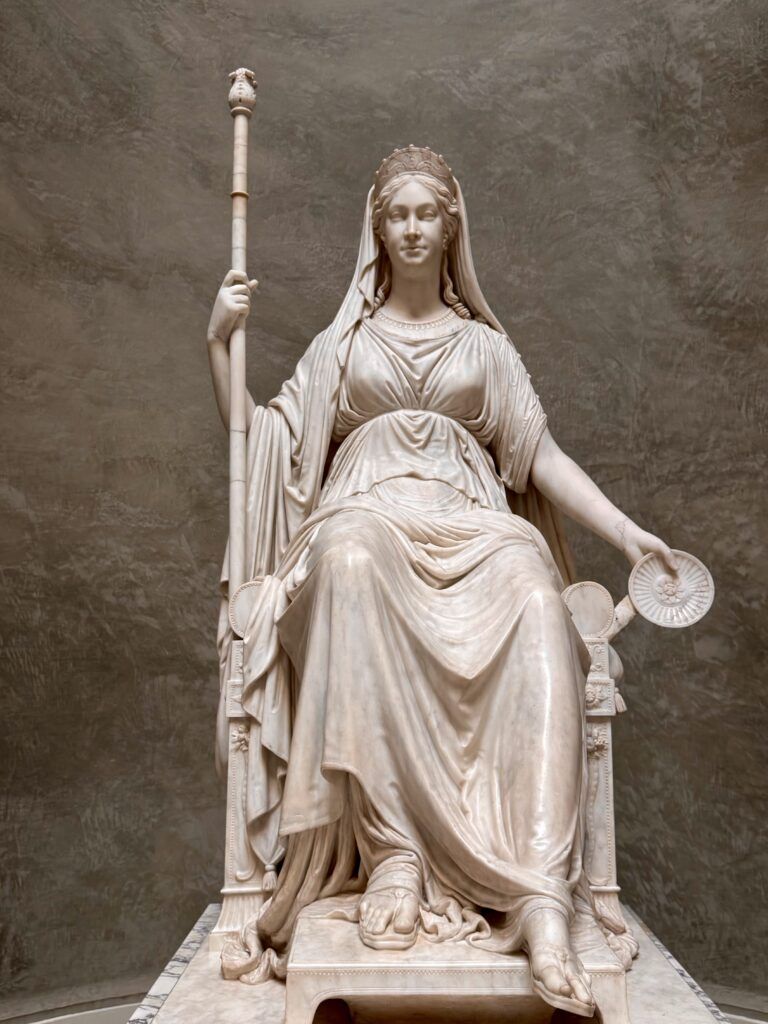
Sculptures
There are three key sculptures to see in the museum.
The first is Marie Louise, Duchess of Parma by Antonio Canova. It’s not my favorite piece by the artist. She almost looks like a wedding cake topper to me.
But it does have the usual graceful treatment of drapery and craftsmanship that Canova is known for.
Marie Louise was Napoleon’s second wife and the daughter of Emperor Francis I of Austria.She was enormously important to Parma’s cultural life and to the museum itself.
Another striking sculpture you’ll see en route is the Palatine Colossus of Hercules. Carved from dark basanite stone in the 1st century, the statue was originally displayed in the imperial palaces on Rome’s Palatine Hill before being brought to Parma in the 18th century.

What immediately caught my eye was Hercules himself. He’s not graceful or athletic. He’s massively built, with an oversized torso and thick limbs that emphasize brute strength over beauty.
Finally, you’ll find two busts of Ranuccio II by Bernini. At first glance, I was surprised that they were attributed to Bernini.
The gentleman looks almost cartoonishly severe. The bulging eyes, heavy lids, and enormous mustache make him seem more like a character from a Restoration comedy than a Bernini masterpiece.
But that’s actually one of the reasons Bernini was such a great portraitist. He wasn’t trying to flatter everyone into generic beauty. He often captured distinctive physical features with startling honesty.

But if you look closely, you can see the telltale signs of Bernini: corkscrew curls, the elegant cravat, the elaborate drapery, and the first rate craftsmanship.
I hope you’ve enjoyed my guide to the National Gallery of Parma. You may find these other Italy art guides interesting:
- Italy art bucket list
- Most famous Italian artists
- Best museums in Italy
- Masterpieces in Venice
- Masterpieces in Florence
- Caravaggio trail in Rome
- Bernini trail in Rome
- Michelangelo trail in Florence
- Raphael masterpieces
- Leonardo da Vinci masterpieces
Pin it for later.