The Galleria Estense is a small, niche museum. But the quality-to-size ratio is quite excellent.
The collection is particularly strong in northern Italian painting from the 14th through 18th centuries.
It’s essentially the collection of the Este family, the rulers of Modena, Reggio and Ferrara from 1289 to 1796.The Este dukes didn’t bother with anything before the 1400s. They considered them “primitives.”
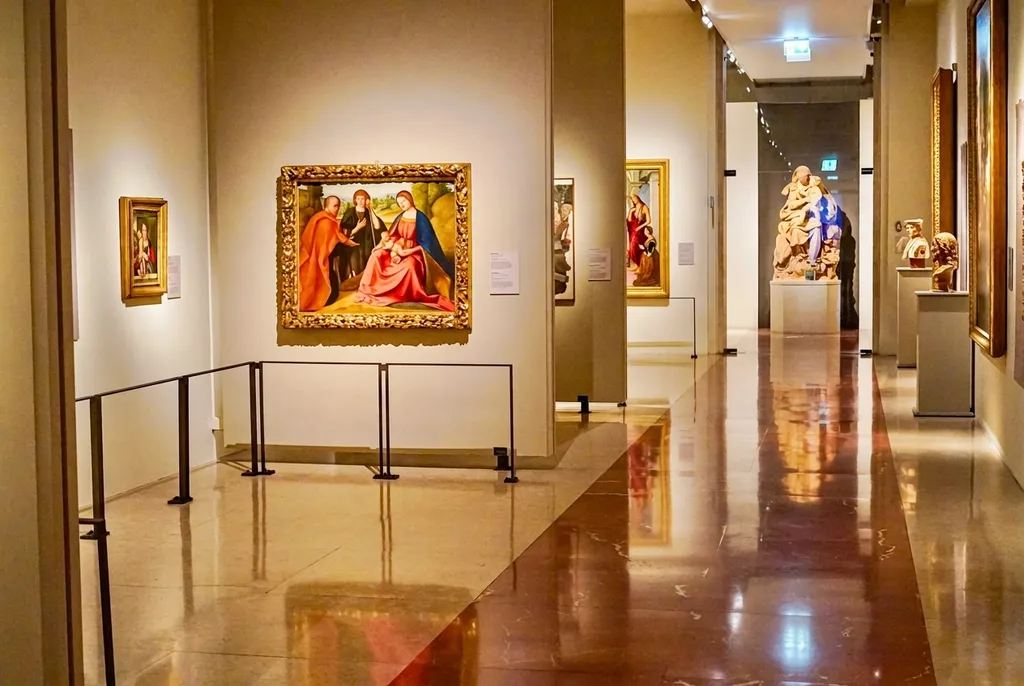
It feels like a real dynastic collection rather than a generic picture gallery.
There are paintings, but also sculpture, bronzes, ivories, maiolica, medals, musical instruments, and other things the Este actually accumulated.
And the paintings? You’ll find works by Correggio, Bernini, Velazquez, Guido Reni, Guercino, El Greco, and more.
In this guide, I’ll show you exactly what to look for inside and tell you which paintings you can’t miss.
Galleria Estense Guide
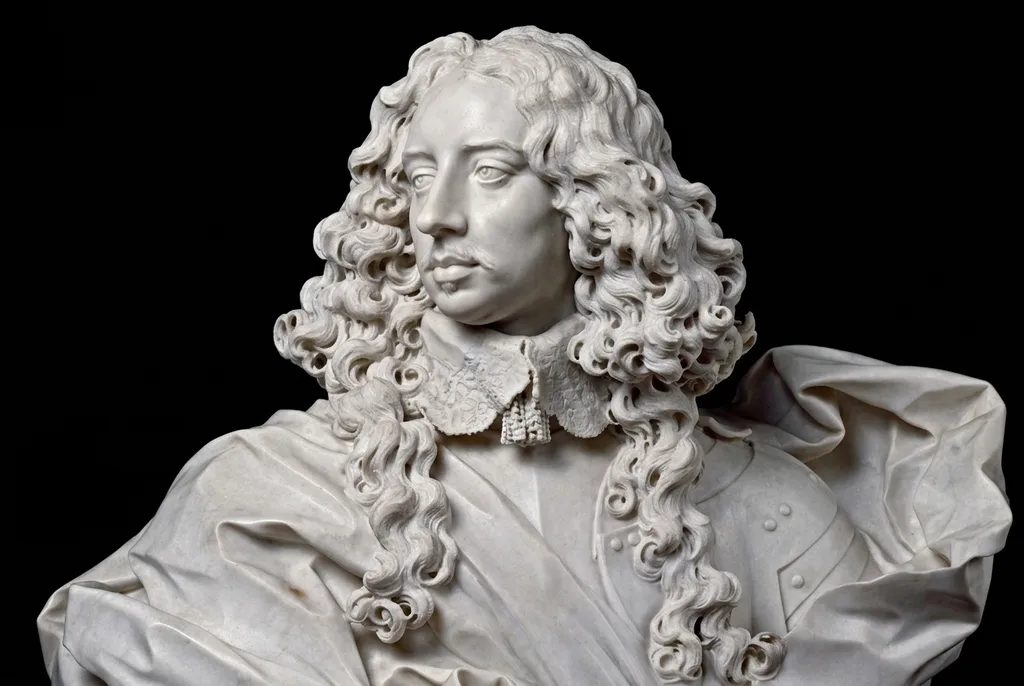
Bernini, Bust of Francesco I d’Este
With this bust, Bernini pulls off the rare trick of making Francesco feel alive. The first thing that got me is the movement.
Bernini doesn’t present him as a static court portrait. The head turns, the hair flies outward in thick curls, the lace collar seems to flutter, and the drapery swells around the shoulders. It has the energy of a person who has just turned toward you.
Then there’s the technical bravura. The contrast between the dense curls, soft flesh, crisp lace, and billowing fabric is astonishing. Bernini makes stone imitate completely different textures without the whole thing becoming fussy.
I also like the psychological effect. Francesco looks grand, vain, alert, and slightly theatrical, which is probably exactly what a duke commissioning Bernini wanted. It’s propaganda, but extraordinarily effective propaganda.
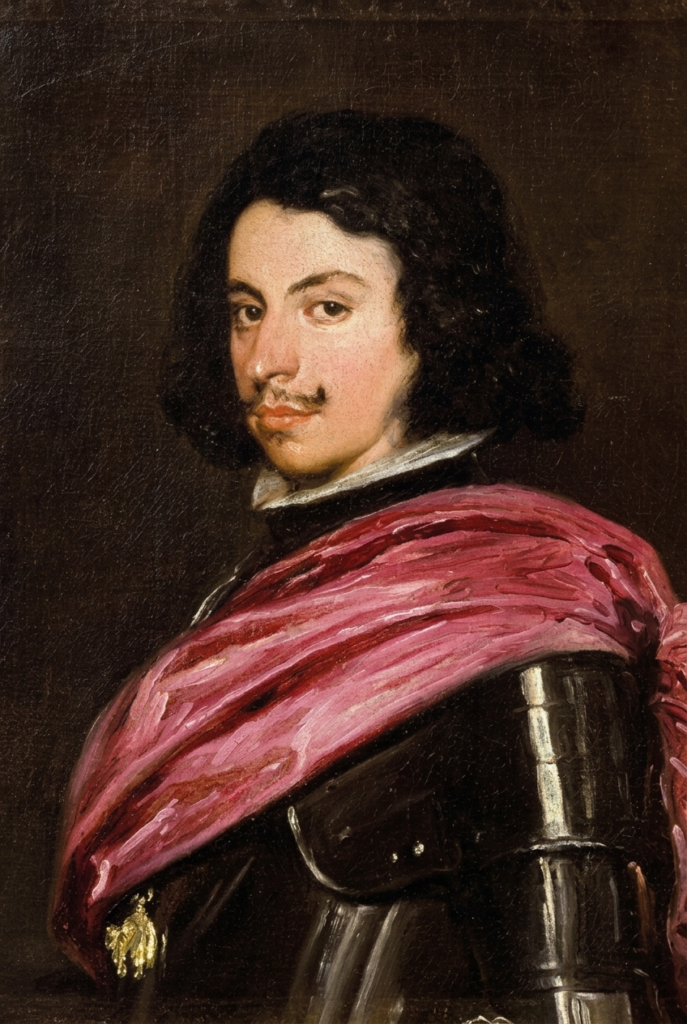
Velázquez, Portrait of Francesco I d’Este
This is probably the museum’s star master work. It was painted during the duke’s visit to the Spanish court.
It has all the classic Velazquez mastery — chiaroscuro, delicate brushwork, and subtle handling of paint. He captures the skin, the silk, the metal with remarkable precision.
The duke is shown in a 3/4 pose, his head turned toward the viewer, creating an engaging gaze. The dark background ensures all the attention is on the duke’s face.
He appears as both a cultivated warrior and a dignified noble.
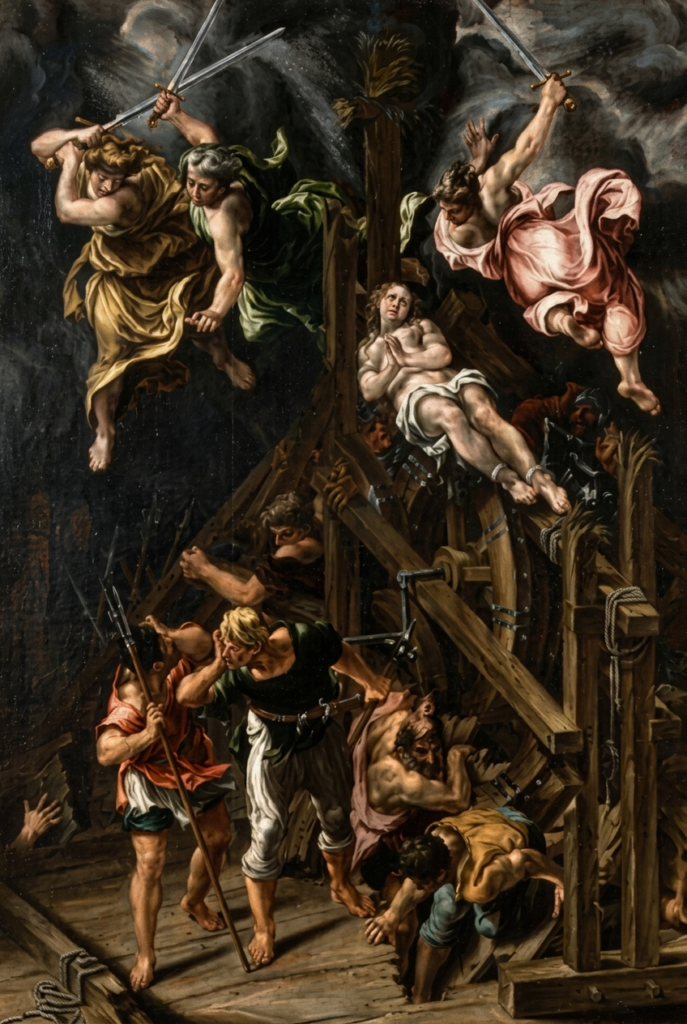
Orsi, Martyrdom of St. Catherine
Orsi was a Mannerist painter, and you can really feel it here. The composition is crowded and slightly unstable.
The figures twist into odd poses, and the machinery of a diabolical breaking wheel almost takes over the picture. Above, angels intervene with swords, while below everything feels chaotic and theatrical.
What I like about it is that it doesn’t read as pious and serene. It’s tense, complicated, almost bizarre.
The whole thing has that slightly unsettling Mannerist quality, but with some of Correggio’s softness mixed in.
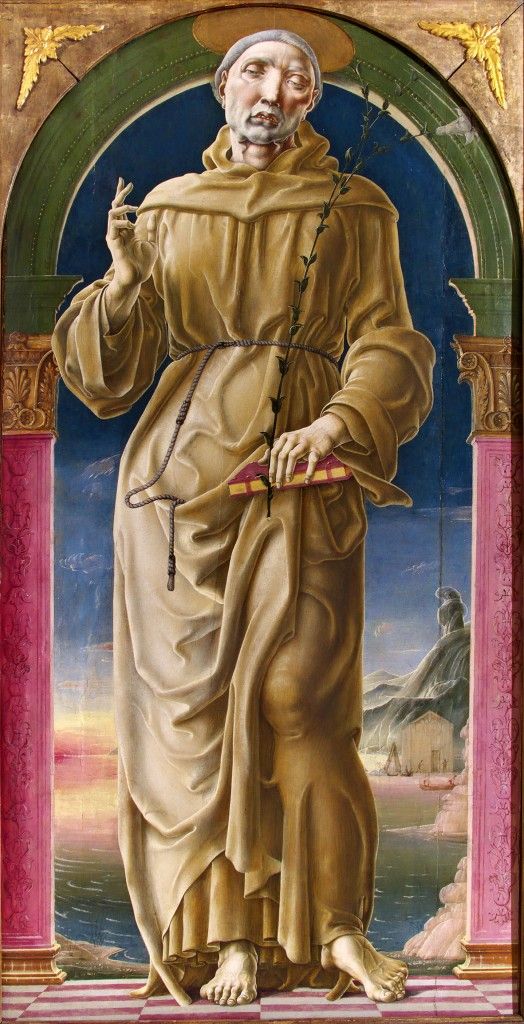
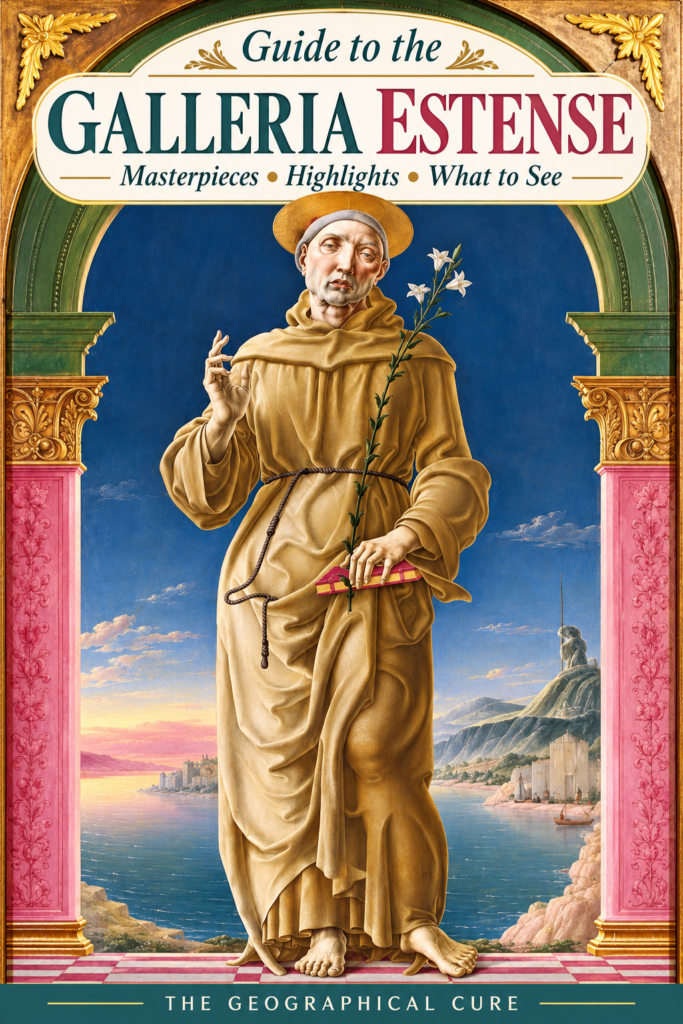
Cosmè Tura, St. Anthony of Padua
This painting is hard to stop looking at. Tura makes Anthony look almost physically ravaged. It’s a life size vision of spiritual and anatomical deformity.
His face is gaunt and hollow, his hands are bony and angular, and the folds of the habit are so hard-edged they almost look carved rather than painted.
But then he puts that severe figure against this lovely, spacious background with water and a soft golden evening light. The low horizon also makes Anthony loom enormously over the landscape. So you get this strange collision of ascetic suffering and real visual beauty.
It’s not a conventionally pretty Renaissance painting at all. Tura makes holiness look difficult and almost bodily painful, but the painting itself is gorgeous.

Correggio, Madonna and Child
Antonio Allegri, better known as Correggio, was one of the most inventive painters of the High Renaissance.
He worked primarily in and around Parma. And his innovative use of light, illusion, and perspective had a profound influence on later European art.
The Correggio Madonna and Child at the Estense is lovely and a prime example of devotional art. But I wouldn’t say it’s one of his knockout works.
It’s small, intimate, and very soft, with that characteristic Correggio tenderness and slightly dreamy handling. It has the warmth of an Emilian painting and the sfumato that Leonardo invented.
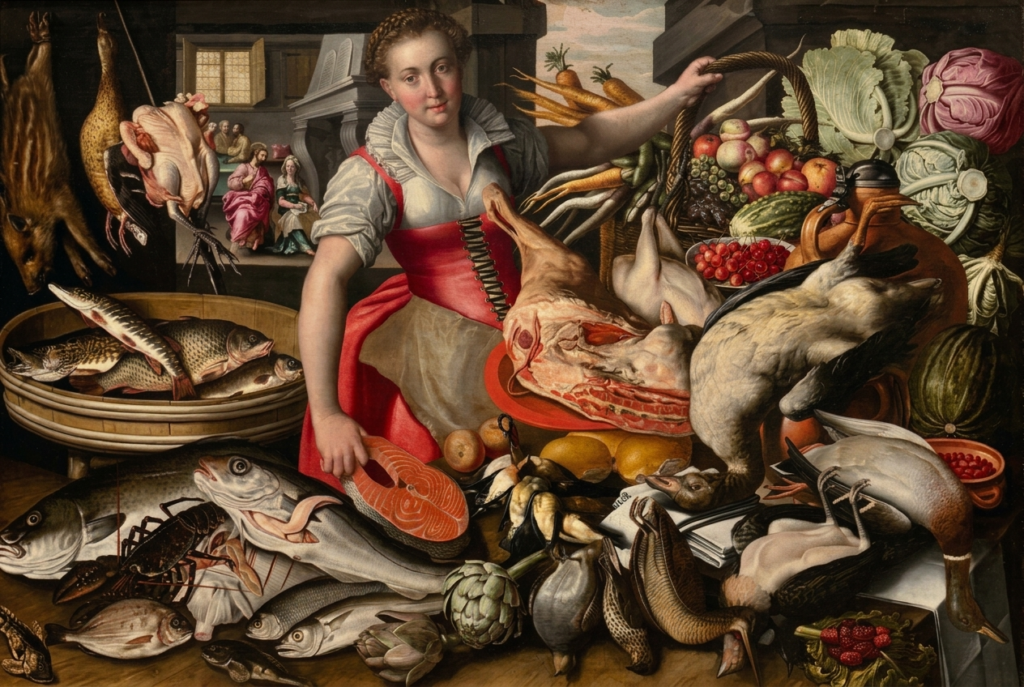
Joachim Beuckelaer, Christ in the House of Martha and Mary
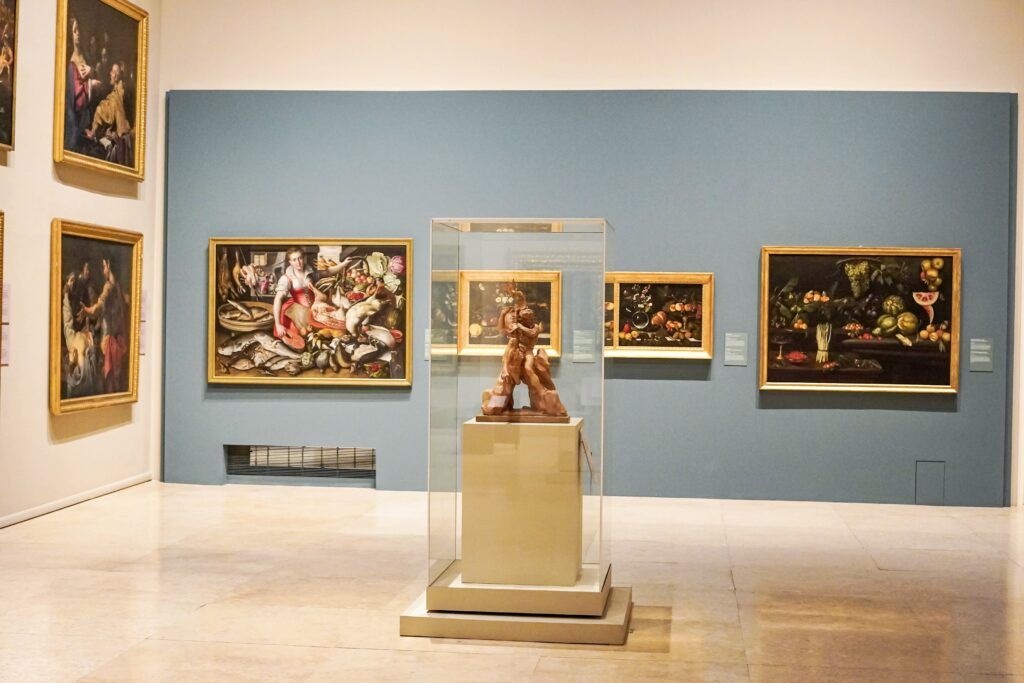
This painting is simply bonkers, and rather subversive. The actual subject is easy to miss because the foreground is dominated by this avalanche of food and kitchenware.
The actual biblical scene is tiny, in the background over the woman’s left shoulder: Christ seated with Martha and Mary. It’s buried under material abundance, which is very much the point.
The eye barely knows where to go: fish, lobsters, gutted meat, birds, vegetables, fruit, cookware, and then this relatively tiny sacred episode pushed into the background.
It feels almost like a kitchen inventory exploded across the canvas. It’s the sort of painting that makes the museum memorable because it breaks up all the court portraiture and religious altarpieces so dramatically.
El Greco, Modena Triptych
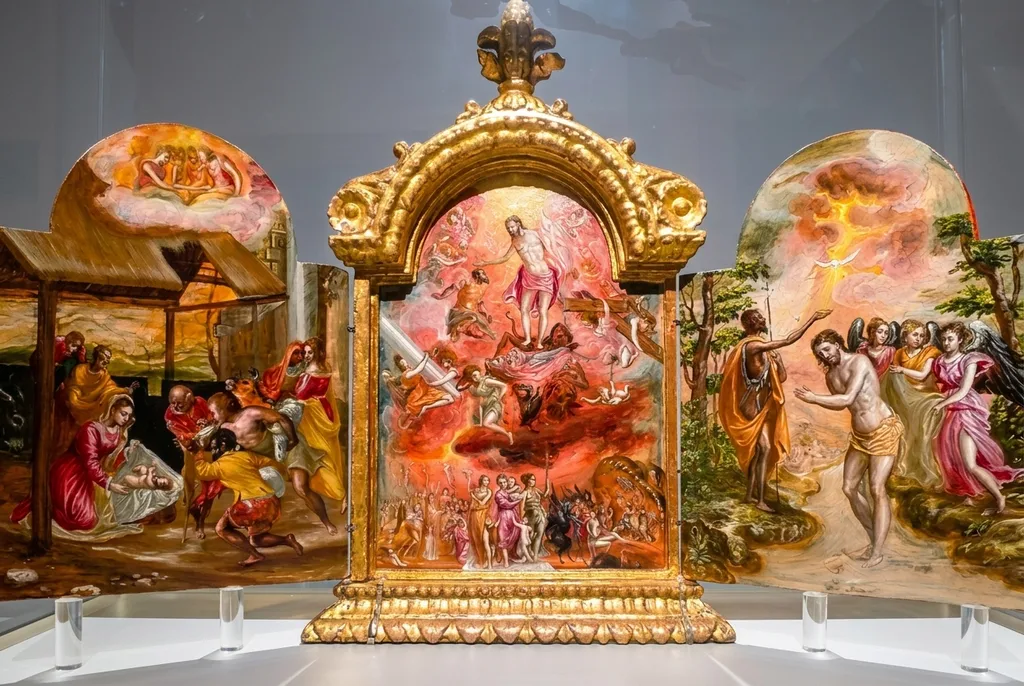
The famous El Greco at the Estense is the small portable altarpiece usually called the Modena Triptych, or Altarolo portatile. It dates to about 1567–68, very early in El Greco’s career, during his Venetian period.
It’s tiny, only about 37 x 24 cm when closed, and painted on both sides. The six scenes include the Adoration of the Shepherds, Baptism of Christ, Annunciation, Mount Sinai, Adam and Eve before God, and an Allegory of the Christian Knight.
What makes it especially interesting is that you can see El Greco in transition: still carrying Byzantine/Cretan icon traditions with him, but absorbing Venetian color and movement.
That’s why it looks so different from the elongated, almost hallucinatory El Greco paintings you associate with his later Spanish years.
Quattrocento Works
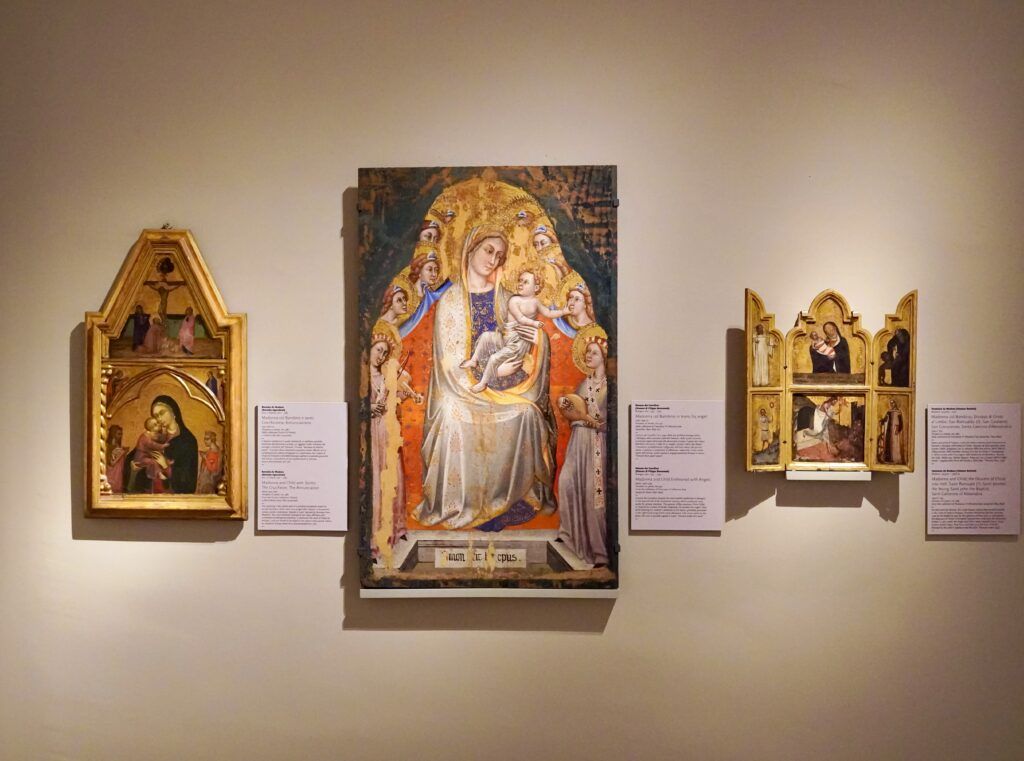
A room of quattrocento paintings proves that, in the Renaissance, Modena could play too.
There’s a scene from the Aeneid by Nicole dell’Abae, the obscure Baratolomeo Bonascia’s Pieta with Symbols of the Passion, and an animated Crucifixion by Francesco Bianchi Ferrari, a pupil of Tura.
Still, the Florentines steal the show. You’ll find works by Francesco Botticini, Botticelli, and Andre del Sarto.
Emilian Works
Naturally, the museum is especially rich in Emilian art.
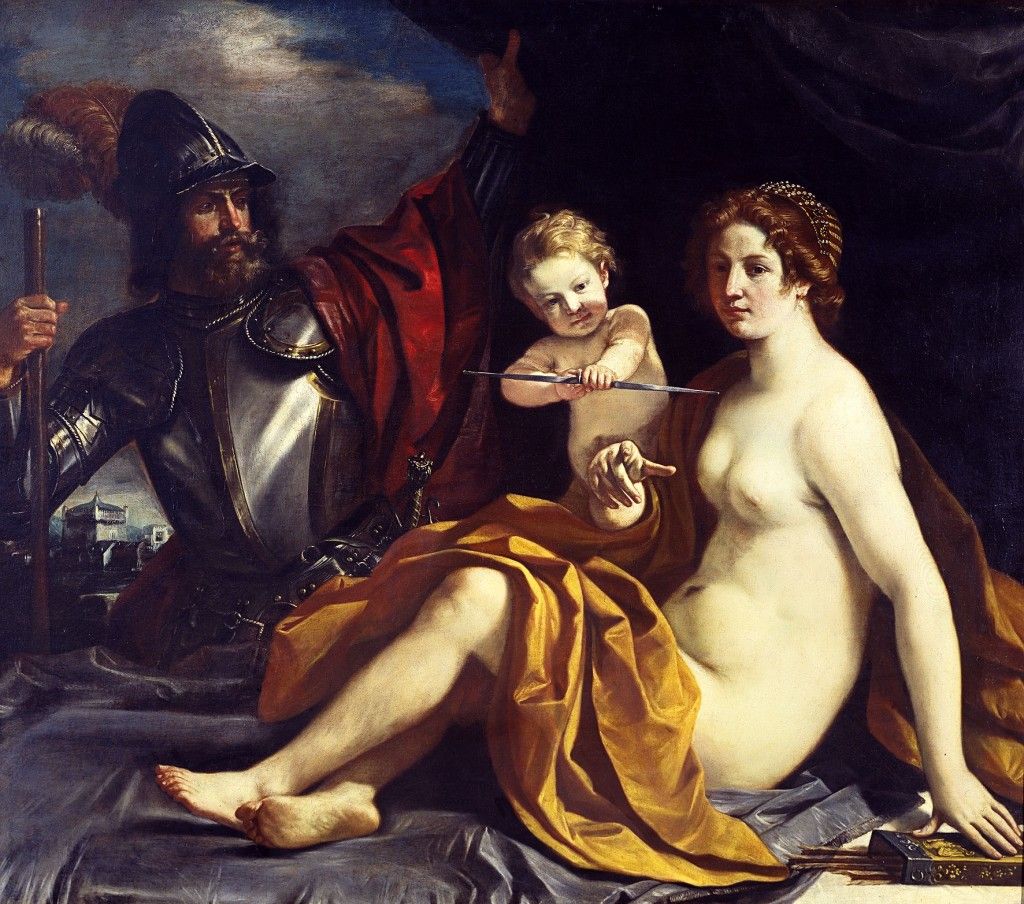
There are two notable canvases by Guercino: a Martyrdom of St. Peter and Venus, Cupid, and Mars.
I was taken by the latter. What makes the picture fun is the setup. Venus isn’t pointing Cupid toward Mars. She’s pointing him toward us. Cupid is literally aiming his arrow out of the picture at the viewer.
Mars, meanwhile, pulls back the dark curtain and looks in on the scene almost like he has just walked into something he wasn’t expecting. That theatrical reveal is very Guercino. It turns the painting into a little drama instead of a static mythological tableau.
You’ll also find paintings by Il Garofalo, Guido Reni, Annibale and Ludovico Carracci, and Carlo Bonone.

Camera delle Meraviglie
If you like cabinets of curiosities, visit the Camera of the later Este dukes. Like the later Medici in Florence, the Este cared less bout serious art than exotic knick knacks.
Francesco II d’Este had a “room of wonders” arranged in the Ducal Palace in the late 17th century. It’s filled with precious objects, exotic materials, natural curiosities, ceramics, drawings, sculpture, coins, medals, and other oddities.
It’s a real departure from the surrounding picture galleries. It reflects an older idea of collecting. The point was partly rarity and surprise.
A beautiful object, an exotic material, a strange natural specimen, and an elaborate piece of craftsmanship could all sit together because each inspired wonder. You’ll see coins, ceramics, pistols, ostrich eggs, the Estense harp, and carved ships.
Practical Information
Location: The museum is on the fourth floor of the Palazzo dei Musei. There’s an elevator, so you don’t have to climb four floors.
Hours: Tuesday through Saturday, 8:30 am–7:15 pm, and Sunday/holidays, 10:00 am–6:00 pm. Last admission is 30 minutes before closing.
Tickets: €8 full price, €2 for ages 18–25, and free for visitors under 18. There’s also a €10 combined ticket with the Palazzo Ducale di Sassuolo.
How Long? Budget about 1.5 hours.
I hope you’ve enjoyed my guide to the Galleria Estense. You may find these other Emilia-Romagna guides useful:
- Bologna’s Santo Stefano
- Bologna’s San Petronio
- Bologna’s National Gallery
- Bologna’s San Luca Portico & Sanctuary
- Bologna’s Anatomical Theater
- One day in Parma itinerary
- Things to do in Modena
- Guide to Parma’s Palazzo della Pilotta
Pin it for later.