
There’s something irresistible about seeing where a great writer actually lived and worked. Suddenly, Dickens, Austen, Kafka, or Twain isn’t just a famous name on the spine of a book.
That’s why I especially like writers’ house museums. They shrink these larger-than-life figures back down to human size. You see the desk where a novel was written, the chair where someone read, the art they chose for their walls, and all the odd little possessions they accumulated.
Some of these museums preserve the rooms almost exactly as the writer knew them. Others are packed with manuscripts, letters, first editions, and wonderfully personal mementos.
And the settings range from Georgian London townhouses and extravagant French châteaux to a tiny apartment overlooking Rome’s Spanish Steps.
Here are 17 fascinating literary museums where you can get closer to the writers behind some of the world’s greatest books.

Museums Dedicated To History’s Greatest Authors
Charles Dickens Museum
📍London UK
If you care about literary London, the Charles Dickens Museum is an easy addition to your itinerary. It occupies the Georgian townhouse at 48 Doughty Street where Charles Dickens lived with his young family from 1837 to 1839.
It was a remarkably productive period. Dickens finished The Pickwick Papers here and wrote Oliver Twist and Nicholas Nickleby. He was still in his 20s and rapidly becoming one of the most famous writers in England.
The museum feels more like a house than an institution, which is part of its appeal.

You can wander through Dickens’ study, dining room, bedrooms, drawing room, and other family spaces. His desk and chair are here, along with manuscripts, letters, first editions, portraits, and plenty of personal possessions.
There are some wonderfully specific objects too, including Dickens’ elaborate writing box and the little window bars from Marshalsea Prison, where his father was imprisoned for debt. That unhappy episode had a lasting effect on Dickens and later surfaced in Little Dorrit.
The museum also has temporary exhibitions, so there’s usually something beyond the permanent collection.
>>> Click here to book a Dickens tour of London
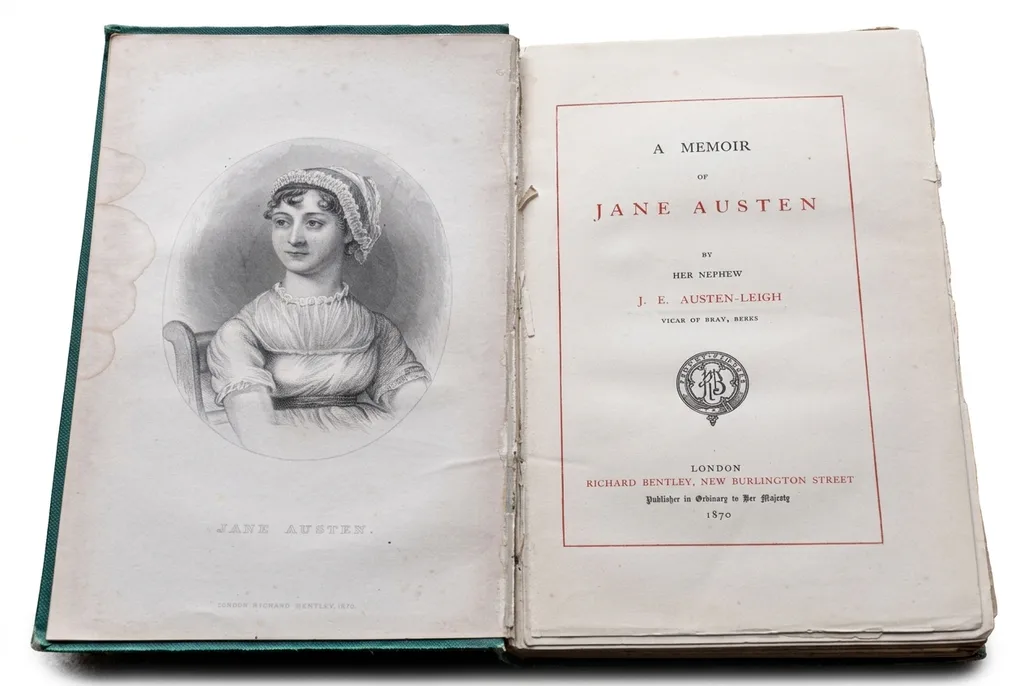
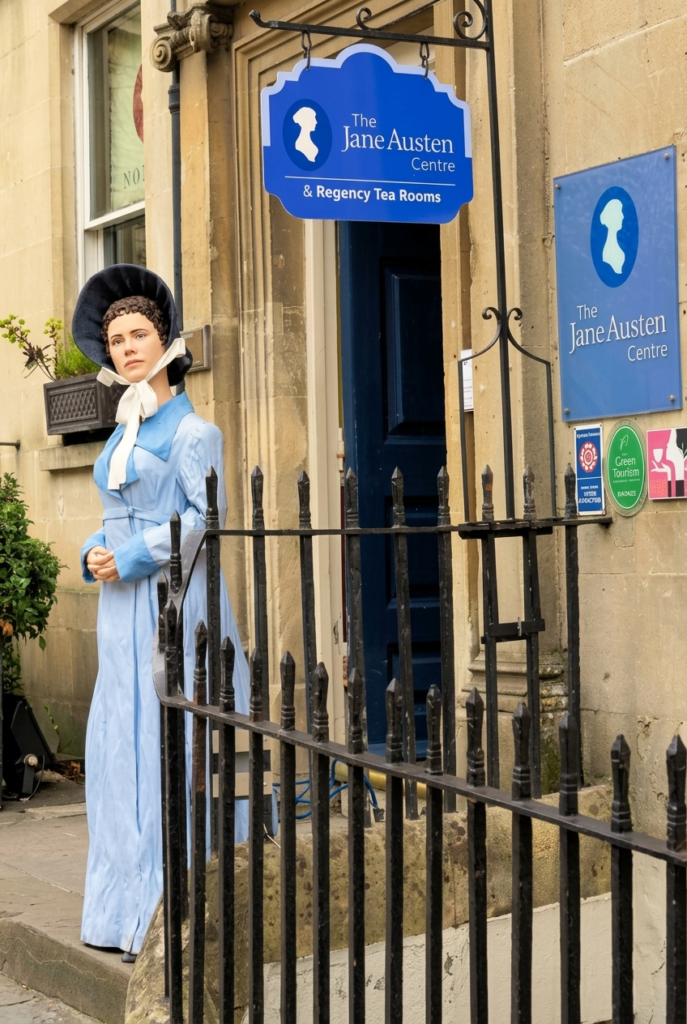
Jane Austin Heritage Center
📍Bath, UK
Housed in a handsome Georgian townhouse, the Jane Austen Centre is one of most popular attractions in Bath. Austen never lived in this particular house, but she did live at several addresses around the city from 1801 to 1806.
Bath also turns up repeatedly in her novels. She knew its fashionable world of balls, promenades, gossip, matchmaking, and social maneuvering firsthand. Northanger Abbey is largely set here, while Bath plays an important role in Persuasion.
The museum explores Austen’s life in Bath and the Regency society she observed so closely. Exhibits cover her family, writing, clothes, entertainment, and the complicated social rules governing women of her class.
Costumed guides help bring the period to life and are impressively knowledgeable about Austen and her work. There’s also a short film about her time in Bath and displays of Regency clothing and everyday objects.
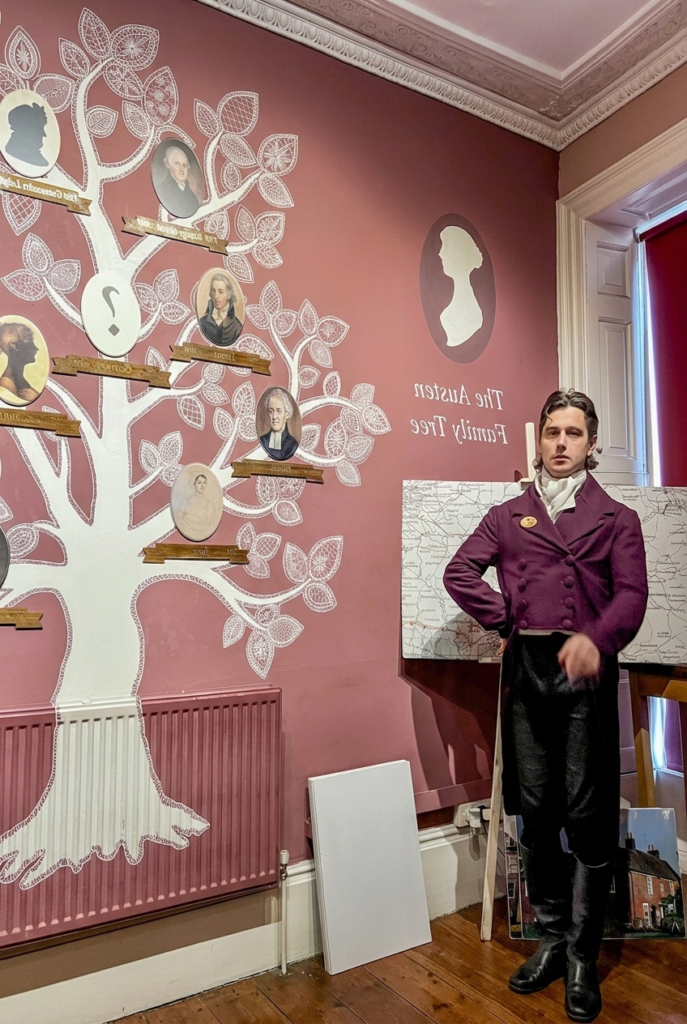
One exhibit concerns Austen’s appearance. Only one authenticated portrait made during her lifetime survives, a small and rather unflattering sketch in the London’s National Portrait Gallery. The center displays a modern waxwork created using that portrait along with contemporary descriptions of Austen from family and friends.
You can also dress up in Regency clothes and pose for photographs, if you’ve ever felt an inexplicable need to put on a bonnet.
The museum isn’t a preserved Austen home and doesn’t have the intimacy of somewhere like the Charles Dickens Museum or Keats-Shelley House.
Think of it instead as an introduction to Austen, her books, and the particular social world she encountered in Bath.
>>> Click here to book an Austen tour in Bath
Shakespeare’s Birthplace
📍Stratford-upon-Avon
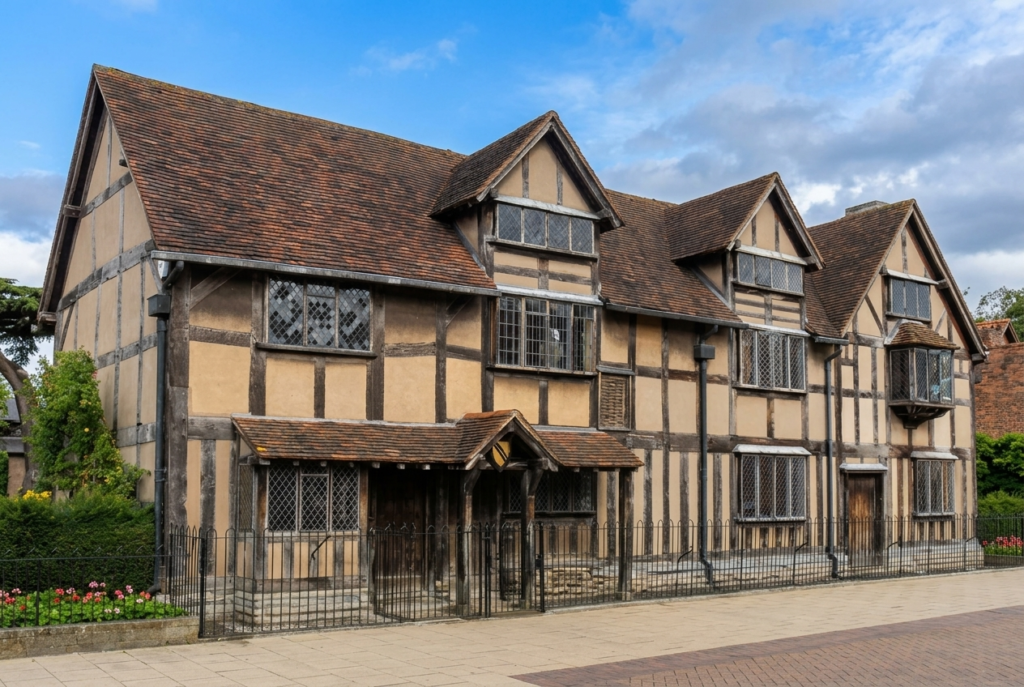
The essential Shakespeare stop in Stratford-upon-Avon is Shakespeare’s Birthplace on Henley Street. The playwright was born here in 1564 and spent his childhood in this surprisingly substantial Tudor house.
Shakespeare’s father, John, bought the property in the 1550s. The house doubled as the family home and John’s place of business. Shakespeare probably lived here for a time after marrying Anne Hathaway in 1582.
The half-timbered house is much larger than it first appears. Inside, the rooms are furnished to suggest how a successful Tudor family like the Shakespeares might have lived.
On the ground floor, you can see the family hall, parlor, and John Shakespeare’s workshop. The hall was the center of domestic life, with a large fireplace and trestle table. The more formal parlor was used for entertaining visitors.


Rather oddly, there’s a bed in the parlor. But beds were extremely expensive possessions in Tudor England, and putting your best one where visitors could admire it was a perfectly reasonable bit of showing off.
Upstairs are the family bedrooms, including the room traditionally identified as the one where Shakespeare was born.
There’s no way to prove he arrived in that particular room, of course, but it has been the focus of Shakespeare pilgrimages for centuries.
The house became a tourist attraction long before literary tourism was really a thing. Visitors included Charles Dickens, John Keats, Sir Walter Scott, and Thomas Hardy. Some early pilgrims even scratched their names into a window in the Birth Room.
It’s inevitably touristy. But there’s still something rather extraordinary about walking through the house where Shakespeare grew up, surrounded by the rooms, streets, and people that formed his earliest world.

Victor Hugo Museum
📍Paris, France
If you’re a Victor Hugo devotee, the obvious first stop in Paris is his former apartment on the elegant Place des Vosges in the Marais. Hugo lived here with his family from 1832 to 1848, during one of the most productive periods of his career.
He was already famous when he moved in, but his reputation soared during these years. He wrote much of Les Misérableshere, along with plays, poetry, and political works. The apartment also became a gathering place for writers, artists, and other members of Parisian society.
Today, the apartment is preserved as the Maison de Victor Hugo. The rooms aren’t an exact snapshot of the house as Hugo knew it.
Instead, they’re arranged chronologically around different periods of his life, with furniture and objects gathered from several of his homes. There are also paintings, drawings, manuscripts, first editions, and plenty of Hugo memorabilia.

But the museum’s biggest surprise is Hugo himself. He wasn’t just a writer. He had a serious passion for interiors and decorative arts and spent plenty of time combing antique markets for furniture, tapestries, ceramics, and odd objects he could repurpose.
Some of the most striking rooms recreate interiors Hugo designed during his long exile on Guernsey. They’re wonderfully eccentric, packed with carved wood, Gothic details, Chinese porcelain, tapestries, mirrors, and furniture that Hugo sometimes designed or altered himself.
The result is a house museum with far more personality than you might expect. You get Hugo the novelist and public figure, but also Hugo the obsessive collector, decorator, and inveterate tinkerer. It’s a much more intimate introduction to the man who gave the world Les Misérables and The Hunchback of Notre-Dame.

James Joyce Museum
📍Dublin, Ireland
The James Joyce Centre is a natural stop for fans of “The Master.” It’s housed in a handsome Georgian townhouse on North Great George’s Street, an area of Dublin that Joyce knew well and worked into his fiction.
Joyce never actually lived in the house, but there’s a nice literary connection. Denis J. Maginni, a flamboyant Dublin dancing instructor who appears in Ulysses, once ran his dance academy here.
The museum traces Joyce’s life and work through photographs, letters, personal possessions, exhibits, and documentary material. There’s plenty on Ulysses, Dubliners, A Portrait of the Artist as a Young Man, and the notoriously difficult Finnegans Wake.

One of the best things to see is the original front door from 7 Eccles Street, the fictional home of Leopold and Molly Bloom in Ulysses. The real house was demolished in the 1960s, but the door survived.
The center also does a good job of putting Joyce back into the Dublin that inspired him. You’ll learn about the people, streets, pubs, and incidents he gleefully recycled in his writing.
It’s not a grand literary museum packed with priceless manuscripts. But for Joyce fans, that hardly matters.
The appeal is the connection between the writer and the city he spent much of his adult life trying to escape, but never really stopped writing about.

Keats-Shelley Memorial House
📍Rome, Italy
Set at the foot of the Spanish Steps, the Keats-Shelley House is one of Rome’s most moving little museums. It’s dedicated to the English Romantic poets, with a particular focus on John Keats, Percy Bysshe Shelley, and Lord Byron.
The setting is significant. John Keats came to Rome in 1820 hoping that the warmer climate might improve his rapidly deteriorating health.
He rented rooms here with his friend, the artist Joseph Severn. Keats died in the apartment from tuberculosis in February 1821. He was only 25.
Almost none of the furniture you see belonged to Keats. After his death, health regulations required that his belongings be burned to prevent the spread of disease.
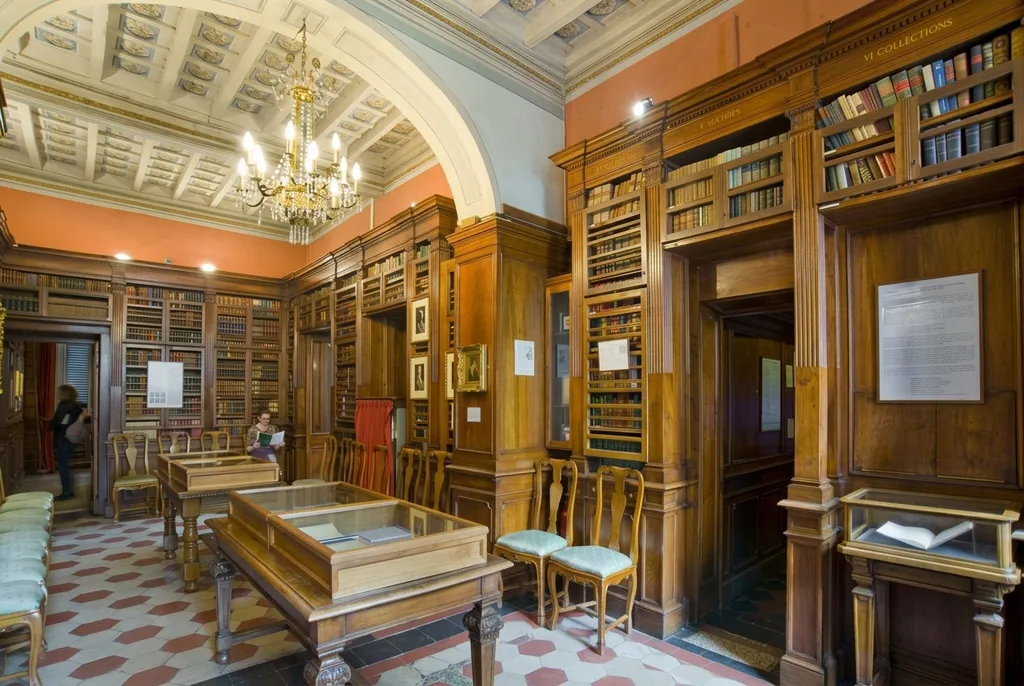
But the room itself survives, including the original fireplace and the pretty floral decoration on the ceiling. Knowing that Keats spent his final months here makes the small bedroom surprisingly poignant.
The museum has built an impressive collection around the Romantic poets. You’ll find manuscripts, letters, first editions, portraits, paintings, and personal objects connected to Keats, Shelley, Byron, and their circle. Among the more intimate pieces are locks of Keats’ and Shelley’s hair.
There’s also an excellent library devoted to Romantic literature, with thousands of books and archival materials used by scholars.
The museum is small, so you don’t need long to visit. But the combination of Keats’ tragic story, the preserved apartment, and that extraordinary location overlooking the Spanish Steps makes it one of the most memorable secret museums in Rome.

The Franz Kafka Museum
📍Prague, Czech Republic
The Franz Kafka Museum is one of Prague’s strangest literary museums, which seems entirely appropriate for Kafka.
Kafka was born in Prague in 1883 and spent most of his life in the city. Prague seeps into his writing even though he rarely identifies it by name.
The museum explores both Kafka’s life and his complicated relationship with Prague. There are first editions, letters, photographs, diaries, manuscripts, and drawings, including correspondence with his lovers and his famously difficult father.

But this isn’t a conventional display-case museum. It’s deliberately dark, theatrical, and a little disorienting.
Video installations, sound effects, dim lighting, projections, and strange displays are used to create something resembling Kafka’s unsettling fictional world.
The exhibition is divided into sections examining Prague as both a real place in Kafka’s life and an imaginary city transformed by his writing. You’ll learn about his family, his job at an insurance company, his relationships, and the frustrations and anxieties that fed into his work.
There’s also plenty about Max Brod, Kafka’s friend and literary executor. Kafka instructed Brod to burn his unpublished manuscripts after his death in 1924. Brod ignored him, which is why we have The Trial, The Castle, and much of Kafka’s other work today.

Outside the museum is David Černý’s wonderfully irreverent Piss sculpture, with two mechanical male figures urinating into a pool shaped like the Czech Republic.
It isn’t actually part of the Kafka Museum, but it certainly prevents the courtyard from becoming too solemn.
The museum may be slightly overdramatic, but in this case that works. You leave knowing more about Kafka, while also feeling as though you’ve spent an hour wandering around inside his rather peculiar head.
>>> Click here to pre-book a ticket

Maison de Balzac
📍Paris, France
In the 16th arrondissement, just off the wonderfully atmospheric Rue Berton, you’ll find the Maison de Balzac. The small museum occupies the only one of Balzac’s many Paris residences that still survives.
Honoré de Balzac lived here from 1840 to 1847, during an extraordinarily productive period. He moved into the house under the name of his housekeeper, apparently hoping to stay one step ahead of his many creditors.
Balzac worked punishing hours here, fueled by ridiculous quantities of coffee. In his study, he edited and expanded La Comédie Humaine, his enormous interconnected series of novels and stories about French society. He would write through the night, obsessively revising proofs and driving his publishers slightly mad.

Most of Balzac’s original furniture disappeared during his subsequent moves, so this isn’t a perfectly preserved writer’s house. But his study is wonderfully evocative, with a carved writing desk where you can picture him hunched over making another round of corrections.
The collection includes manuscripts, first editions, paintings, engravings, illustrations, and documents connected with Balzac and the people in his life. You can also see his famous jeweled cane, an extravagant accessory that became almost as recognizable in 19th century Paris as the writer himself.
The museum does a good job of explaining Balzac’s complicated fictional universe as well. Characters wander in and out of different novels in La Comédie Humaine, an innovative device that helped make his fictional Paris feel like an entire parallel society.

Chateau Monte Cristo
📍Le-Port-Marley, France
Just outside Paris in Le Port-Marly is one of the most entertaining author museums I’ve visited: Alexandre Dumas’ Château de Monte-Cristo.
Dumas built the estate in 1847, at the height of his fame after the spectacular success of The Three Musketeers and The Count of Monte Cristo.
Calling it a house is something of an understatement. Dumas built himself a miniature Renaissance château surrounded by an English garden, grottos, waterfalls, and an equally fanciful Gothic writing retreat.
Naturally, he named the main house after The Count of Monte Cristo and his writing studio Château d’If, after the prison fortress in the novel.
The château is covered with elaborate carvings, including portraits of writers Dumas admired. Inside, the museum explores his novels, plays, journalism, family, many mistresses, and generally outsized life. One of the highlights is the wonderfully over-the-top Moorish Salon, created by artisans Dumas brought back from Tunisia.

But my favorite part is Château d’If. The tiny Gothic pavilion sits on its own little island surrounded by water. Dumas could retreat there to write, presumably escaping the steady parade of friends, admirers, hangers-on, and mistresses occupying the main house.
Dumas lived much the way he wrote: extravagantly and with little interest in moderation. He celebrated his new château with a dinner for 600 people, many of whom he didn’t even know. His spending eventually caught up with him. By 1850, he was drowning in debt and had to sell the estate.
The château was nearly demolished in the 1960s before Dumas devotees stepped in to save it. It’s hard to imagine a house that better matches its owner. Château de Monte-Cristo is theatrical, excessive, charming, slightly ridiculous, and impossible to forget. It’s essentially Alexandre Dumas in architectural form.

Brontë Parsonage Museum
📍Haworth, UK
Love Wuthering Heights or Jane Eyre?
Get thee to the Bronte Parsonage in the windswept Yorkshire moors. This is the very place where the two sisters lived and wrote in the 19th century — long before working at home entered our vocabulary.
From their home, they produced tiny magazines with elaborate worlds, books of rhymes, captured the natural environment in their poems, and created some of the most famous and enduring works of literature.
The museums brings to life the siblings’ creativity and the social restrictions that they lived under. Each room has a story to tell.


The rooms are arranged to reflect how the sister lived. There are period furnishing, personal belongings, and details interpretive exhibits.
The museum also has the world’s largest collection of Bronte artifacts and personal memorabilia. You’ll see combs, bonnets, paint boxes, clothing, notebooks, and letters
One highlight is the Bronte family dining table. This is where the sister wrote their novels. And you can see the actual ink stains and candle burns. It’s one of the most important literary artists of the 19th century.
Guides and docents are on hand and happy to answer questions.
>>> Click here to book a Bronte tour around Yorkshire

MarkTwain House and Museum
📍Hartford, Connecticut, US
Samuel Langhorne Clemens, better known as Mark Twain, lived in his Hartford home with his wife Olivia and their daughters from 1874 to 1891. These were some of the happiest and most productive years of his life.
And what a house it is. The Mark Twain House is a wonderfully eccentric Victorian Gothic confection, designed by New York architect Edward Tuckerman Potter. Twain reportedly called it part steamboat, part medieval fortress, and part cuckoo clock, which isn’t a bad description.
The interiors are even better. In 1881, Twain hired Louis Comfort Tiffany’s firm, Associated Artists, to redecorate the main rooms. The result is a glorious mix of elaborate stenciling, rich colors, carved wood, decorative tiles, and exotic motifs. It’s about as far from a tasteful beige writer’s retreat as you can get.
Twain did some of his greatest work here, including The Adventures of Huckleberry Finn, The Adventures of Tom Sawyer, The Prince and the Pauper, and A Connecticut Yankee in King Arthur’s Court.
His favorite room was the billiard room on the top floor, which doubled as his study. He wrote at a large table tucked into a corner, surrounded by books, papers, tobacco smoke, and the occasional game of billiards.

The rest of the house gives you a good sense of the Clemens family’s rather cushy life. You can see the library, drawing room, dining room, bedrooms, and conservatory, filled with period furnishings and objects connected to the family. Twain was a famously entertaining host, and the house attracted a steady stream of writers, politicians, actors, and other prominent visitors.
The happy years didn’t last though. Financial problems and the death of the Clemenses’ daughter Susy eventually made the house too painful to return to, and Twain never lived there again after 1891.
Even without the literary connection, the house would be worth seeing for its architecture and fabulous interiors. But knowing that Twain wrote some of the defining works of American literature upstairs makes it one of the country’s great author museums.

Wordsworth’s Dove Cottage
📍Grasmere, Lake District UK
Dove Cottage in Grasmere was William Wordsworth’s home from 1799 to 1808, and it’s difficult to imagine a setting better suited to a Romantic poet.
Wordsworth moved into the little whitewashed cottage with his sister Dorothy. His wife Mary later joined them, and the house became the center of Wordsworth’s domestic and literary life.
These were some of his most productive years. Wordsworth wrote or revised much of his greatest poetry here, including parts of The Prelude.
The cottage itself is wonderfully modest. Built in the early 17th century from local stone, it had previously been an inn called the Dove and Olive Bough.

Don’t expect the grand surroundings of Mark Twain or Alexandre Dumas. Rooms are small, ceilings are low, and the furnishings reflect the Wordsworths’ preference for “plain living and high thinking.”
A tour takes you through the kitchen, sitting rooms, bedrooms, and Wordsworth’s study. The house has been furnished to resemble the home the family knew, with books, household objects, portraits, and personal possessions helping to fill in the story.
Don’t skip the garden behind the cottage. Wordsworth and Dorothy deliberately kept it informal, allowing flowers and plants to grow in a more natural fashion rather than imposing a formal design.
The neighboring Wordsworth Museum adds manuscripts, books, portraits, and other material relating to Wordsworth and the Romantic movement.

Anne Frank House
📍Amsterdam, Netherlands
The Anne Frank House in Amsterdam is more than an author museum. It preserves the Secret Annex where Anne Frank wrote much of the diary that would become one of the most widely read books of the 20th century.
In July 1942, the Frank family went into hiding behind Otto Frank’s business on Prinsengracht to escape the Nazi persecution of Jews. They were eventually joined by four others. Eight people lived in the cramped rooms for 25 months.
The museum begins with galleries explaining the Nazi occupation of the Netherlands, the persecution of Jews, and the Frank family’s life before they disappeared into hiding. Then, you pass through the movable bookcase and enter the Secret Annex.
The rooms are deliberately empty. After the Nazis arrested the occupants, their belongings were removed, and Otto Frank later asked that the Annex never be refurnished.
Small details make the story suddenly real. You can see the bathroom all eight people shared, the pencil marks recording Anne and Margot’s growth, and the photographs of movie stars, artworks, and members of the Dutch royal family that Anne pasted onto the walls of her bedroom.

The museum also displays Anne’s original red plaid diary and pages from the notebooks she filled while in hiding. In 1944, after hearing a radio broadcast calling for wartime diaries to be preserved, Anne began revising her writing with the hope of publishing it after the war.
She never got the chance.
The Annex was raided on August 4, 1944. Anne and her sister Margot eventually ended up at Bergen-Belsen, where both died in early 1945. Otto Frank was the only one of the eight people in hiding to survive the Holocaust.
I found the Secret Annex profoundly moving, though I was less convinced by some of the museum’s interpretation. At times, it leans heavily into Anne as a universal symbol of hope and resilience.
Still, standing in the rooms where she lived and wrote is unforgettable. The Anne Frank House is part literary museum, part Holocaust memorial, and part preserved historical site.

The Mount
📍Lenox, Massaschusetts
In 1902, Edith Wharton built The Mount in Lenox, Massachusetts, as a country retreat for herself and her husband, Teddy. Wharton wasn’t simply its famous resident. She helped design the house, gardens, and interiors, making The Mount an unusually personal expression of the woman who would become the first female winner of the Pulitzer Prize for Fiction.
Wharton knew quite a lot about design. Before The House of Mirth made her famous as a novelist, she co-wrote The Decoration of Houses, a rather opinionated attack on the excesses of Victorian interiors. At The Mount, she put those ideas into practice.
The result is grand but remarkably restrained for a Gilded Age mansion. Wharton had no interest in enormous entrance halls or showy grand staircases. Instead, she borrowed ideas from Italian villas, French country houses, and English estates.
The interiors are beautiful. There’s a pale pink dining room, an elegant library, formal drawing rooms, and windows positioned to take advantage of the surrounding Berkshire scenery. Wharton had style, and you may find yourself coveting quite a lot of her house.

She also did some serious writing here. Wharton usually wrote in bed in her third floor bedroom, dropping completed pages onto the floor for her secretary to collect and type. During her years at The Mount, she wrote The House of Mirth and Ethan Frome, among other works.
Her library is particularly worth seeing. Wharton’s own collection of books, dispersed after her death, was returned to The Mount and includes volumes filled with her annotations as well as first editions of her work.
Outside, don’t skip the formal gardens. Wharton considered gardens an extension of a house and designed them as a series of outdoor rooms. The Italian garden, French flower garden, terraces, and surrounding woods are an important part of the estate.
Wharton’s years here weren’t entirely idyllic. Her marriage deteriorated as her husband’s mental health and financial problems worsened, and she sold The Mount in 1911 before permanently settling in France.

Musée de la Vie Romantique & George Sand
📍Paris, France
The Musée de la Vie Romantique has perhaps the swooniest museum name in Paris. Hidden down a cobbled lane in the Nouvelle Athènes neighborhood, it occupies the former home and studio of Dutch-French painter Ary Scheffer.
George Sand never actually lived here. But she was a friend of Scheffer and a regular at the Friday evening salons and the museum is partly dedicated to her.
Born Aurore Dupin in 1804, she adopted a male pen name, wore men’s clothing when it suited her, smoked cigars, and generally ignored the behavioral rules imposed on respectable women of her era.
She was also ferociously productive. Sand routinely wrote from midnight until dawn and produced dozens of novels, plays, essays, and other works. Her private life was equally eventful, with a succession of complicated love affairs, most famously her nine year relationship with Frédéric Chopin.

The museum has a wonderfully personal collection of Sand memorabilia, including portraits, letters, photographs, jewelry, furniture, and even watercolors she painted herself.
Then things get slightly weird.
One of the museum’s most memorable displays pairs a plaster cast of Sand’s arm with a cast of Chopin’s hand. There’s also a locket containing a lock of Sand’s hair. Apparently, the Romantics took their mementos very seriously.
The rest of the museum focuses on Scheffer and the wider Romantic movement. His former home still has creaky floors, intimate rooms, and a winding staircase, making it easy to imagine Sand, Chopin, and Delacroix turning up for one of those Friday night soirées.
And don’t skip the garden. Filled with roses, lilacs, and wisteria, it’s one of the prettiest little museum gardens in Paris.

Oscar Wilde House
📍Dublin, Ireland
The Oscar Wilde House sits on Merrion Square in the heart of Georgian Dublin. Wilde spent much of his childhood here, long before he became famous for The Picture of Dorian Gray, The Importance of Being Earnest, and some of the best one-liners in the English language.
The handsome Georgian townhouse was the family home of Wilde’s rather extraordinary parents. His father, Sir William Wilde, was a prominent eye and ear surgeon, antiquarian, and author. His mother, Jane Wilde, was a poet and ardent Irish nationalist who wrote under the wonderfully dramatic pen name “Speranza.”
Their house became a gathering place for Dublin’s intellectual and artistic elite. Writers, doctors, politicians, artists, and academics crowded around the Wilde dinner table, where apparently no subject was off limits.
Wilde later remembered that he “heard every subject discussed and every creed defended and demolished at his parents’ table.” Given the adult Oscar’s fondness for argument, paradox, and verbal combat, you can see where some of it came from.

The restored interiors help fill in the story of Wilde before Oxford, London society, literary fame, scandal, prison, and exile. You can see the elegant drawing rooms where his parents entertained as well as the nursery and other family spaces.
Guided tours focus on Wilde’s childhood, his formidable parents, and the unusual household in which he grew up. I think that’s what makes the house particularly interesting. Here, you meet him before he became Oscar Wilde.
And when you leave, walk across Merrion Square to see Danny Osborne’s wonderfully colorful Oscar Wilde Memorial. Wilde lounges on a rock in a smoking jacket, wearing the faintly amused expression of a man who has already thought of a better comeback than yours.

Museum Of Literature Ireland
📍Dublin, Ireland
The Museum of Literature Ireland, better known as MoLI, is one of Dublin’s newer museums. It opened in 2019 in Newman House, a handsome collection of Georgian buildings overlooking St. Stephen’s Green.
The location has serious literary credentials of its own. James Joyce studied at University College Dublin when it occupied Newman House, graduating in 1902. Poet Gerard Manley Hopkins also taught here in the 19th century.
Unlike other literary museums, MoLI isn’t devoted to a single writer. It tackles the much larger story of Irish literature, from early storytelling traditions to Joyce, W.B. Yeats, Samuel Beckett, Seamus Heaney, and contemporary writers.
The heavyweight object is Joyce’s “Copy No. 1” of Ulysses. It’s the first copy of the novel’s first edition, published in Paris in 1922, and Joyce inscribed it to Harriet Shaw Weaver, his longtime friend, editor, and financial supporter.
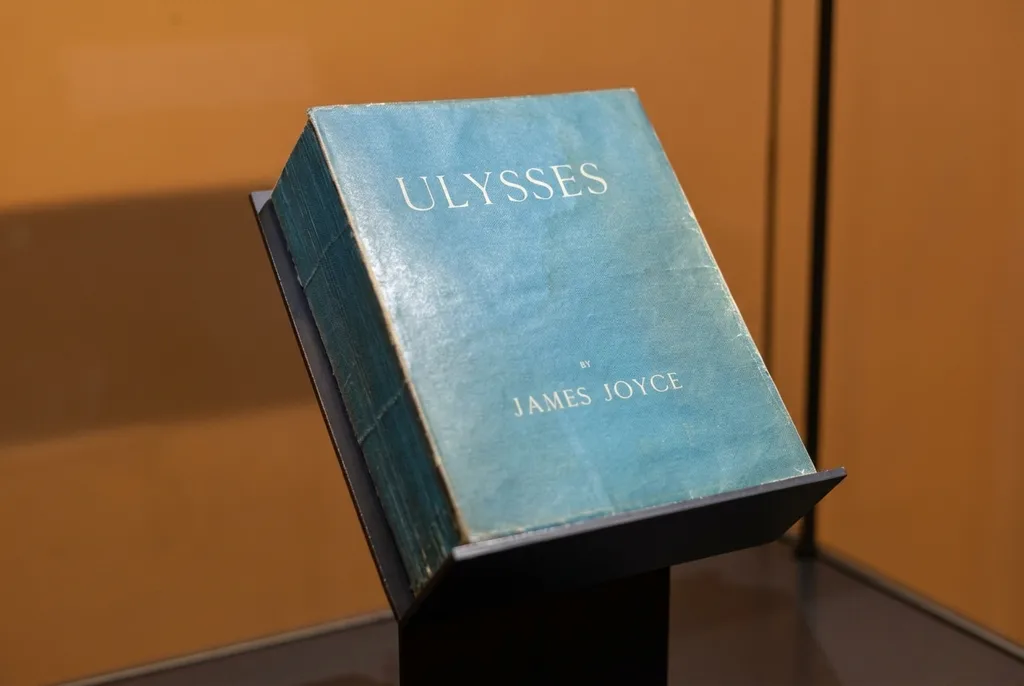
MoLI is also much more interactive than the traditional writer’s house. There are manuscripts, books, films, sound installations, listening stations, and changing exhibitions. A Riverrun of Language explores the relationship between language and Irish writing, while other exhibits look at the writing process itself.
Some of the objects are irresistible. There’s a first edition of Bram Stoker’s Dracula, Brendan Behan’s typewriter, and Samuel Beckett’s telephone, complete with a button that allowed him to block incoming calls. A telephone specifically designed to prevent people from talking to you seems almost too perfect for Beckett.
There’s also the death mask of poet Patrick Kavanagh, along with letters, portraits, photographs, first editions, and personal possessions connected with generations of Irish writers.
Before leaving, head out to the lovely Readers Garden behind the museum. There’s also a cafe and an unusually good bookshop.
I hope you’ve enjoyed my guide to the best house museum of literary figures. Pin it for later.

