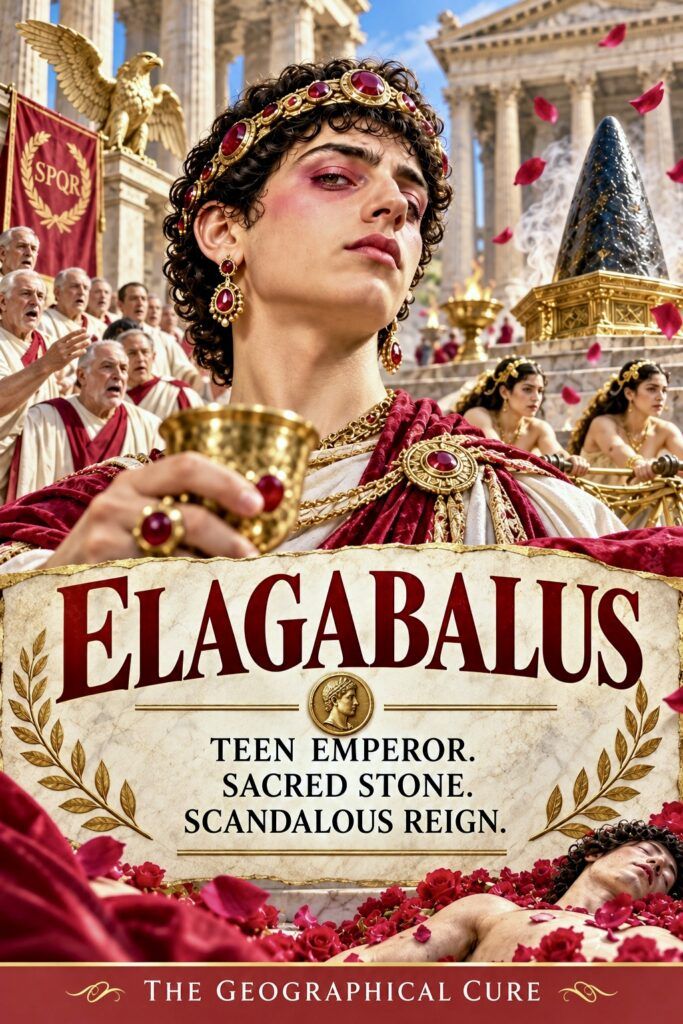
Falling rose petals. Extravagant banquets. An oversexed teenage emperor who was determined to shock Rome at every turn.
Almost overnight, Elagabalus upended religious convention. Temples were stripped of sacred relics. Purges and executions became the norm.
Meanwhile, he cultivated an image that confounded Romans.
He openly challenged expectations surrounding gender and masculinity in a society obsessed with martial virtue and traditional roles.

He would do nothing to honor his illustrious Severan predecessors. in fact, he would disgrace all of them, the empire, and Roman institutions.
Or at least, that’s how the ancient writers wanted us to remember him.
What to make of this unconventional teen?
Elagabalus Biography: The Teenage Emperor Who Shocked Rome
Family & Early Life
Elagabalus was born around 203 or 204 CE, probably at Emesa in Syria, into a very well-connected Severan dynasty. His birth name was Varius Avitus Bassianus. He’s known to history as Elagabalus.
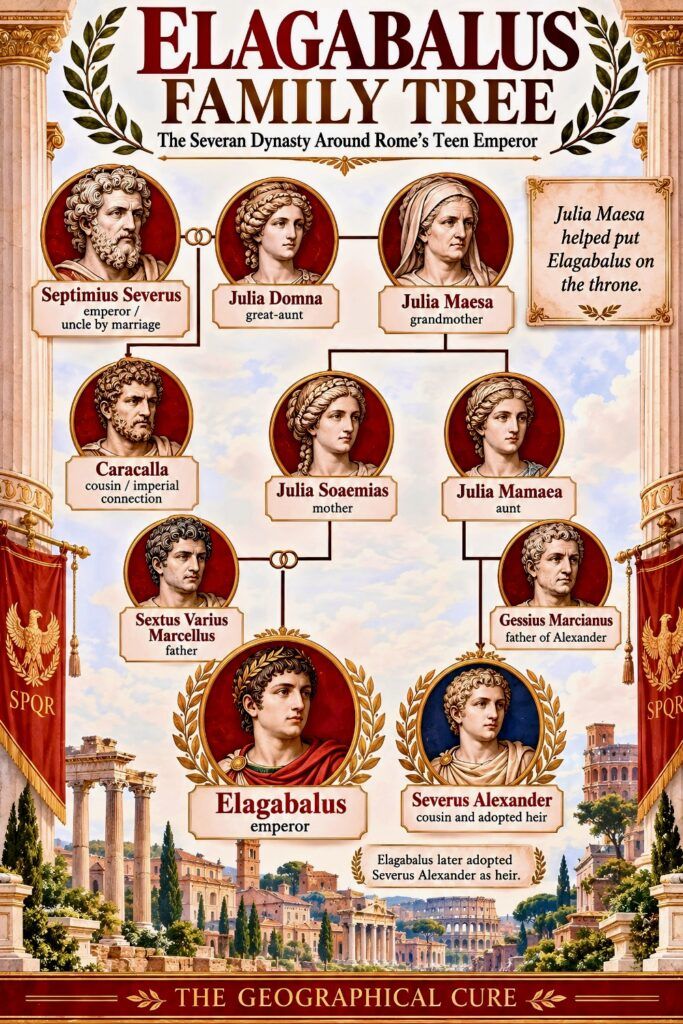
His mother was Julia Soaemias, the daughter of Julia Maesa. His father was Sextus Varius Marcellus, a Syrian aristocrat and Roman official who served under Septimius Severus and Caracalla.
The vital family connection came through his mother. Julia Maesa was the sister of Julia Domna, wife of Septimius Severus and mother of Caracalla.
As a teenager, Elagabalus served as hereditary high priest of the Syrian sun god Elagabal at Emesa. That priestly identity mattered enormously.
He wasn’t just some random adolescent prince. He was charismatic, visually striking in ceremonial dress, and popular with soldiers stationed nearby.

Elagabalus Becomes Emperor
After Caracalla was murdered in 217, his Praetorian prefect Macrinus became emperor.
However, Elagabalus’ grandmother, Julia Maesa, had no intention of letting the Severan dynasty disappear quietly.
She returned to Emesa with enormous wealth and began plotting a comeback around her teenage grandson. The scheme involved propaganda and cash.
First, Maesa spread the claim that Elagabalus was actually Caracalla’s illegitimate son. He apparently looked like the late emperor, which helped the subterfuge.

Caracalla was popular with the eastern troops, and the supposed blood connection made Elagabalus more politically appealing. The story, however, was almost certainly convenient fiction.
Maesa then used her money and influence to win over soldiers of Legio III Gallica stationed near Emesa.
On May 16, 218, the legion proclaimed the 14 year old Elagabalus emperor.
Macrinus initially underestimated the legion’s revolt. He sent troops against the rebels, but some defected. Then, on June 8, came the decisive Battle of Antioch.
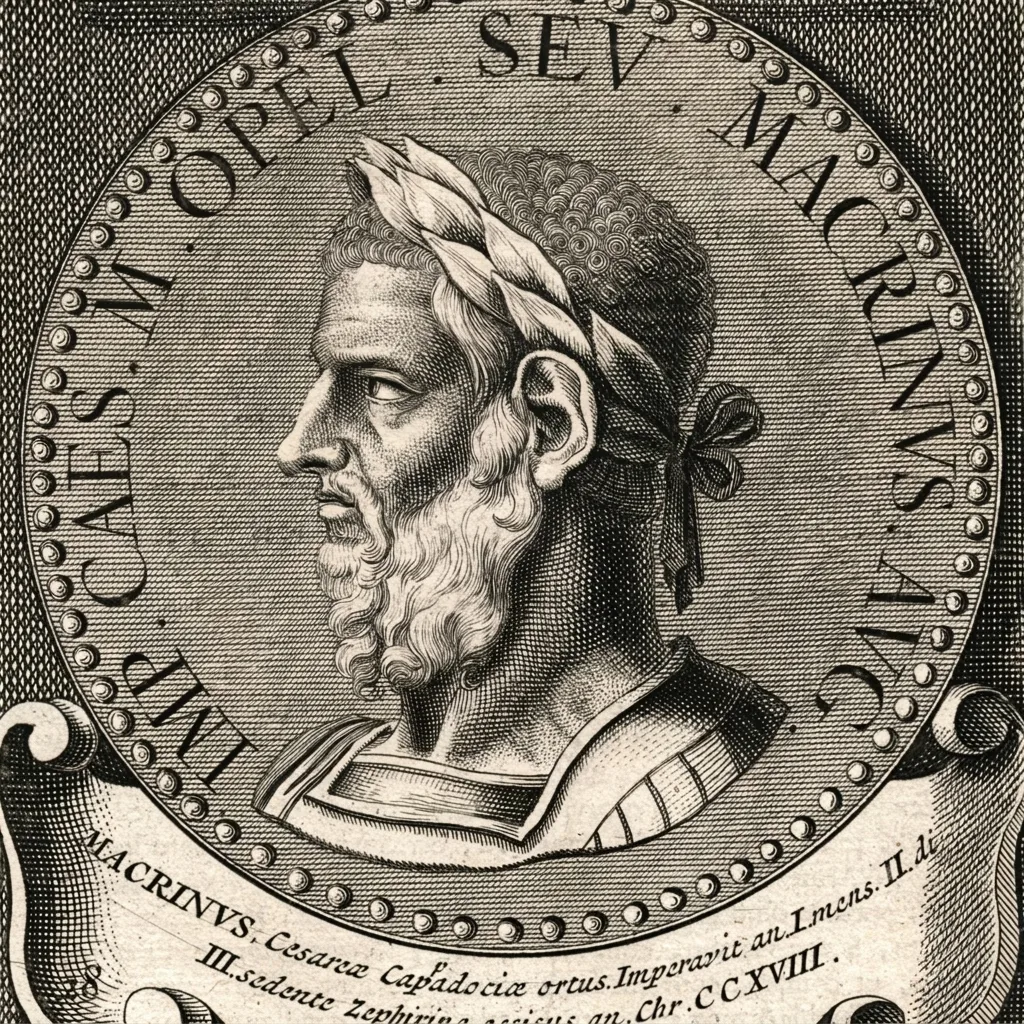
Macrinus’ forces collapsed. He fled, was captured, and executed.
At that point, the Senate had little choice but to accept the fait accompli. Elagabalus was now emperor.
He took the imperial name Marcus Aurelius Antoninus, deliberately linking himself to Caracalla and the Severan dynasty.
He was only about 14, which was not a promising fact.
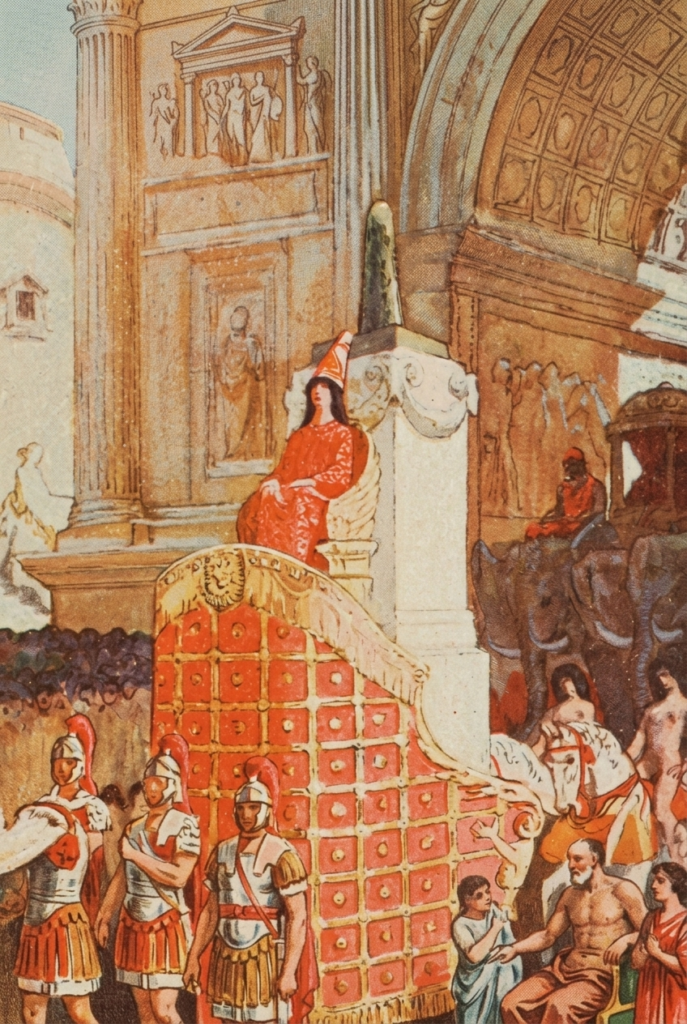
The Grand Introduction: The Emperor Arrives in Rome
Before Elagabalus even reached Rome, he gave the capital a preview of what was coming.
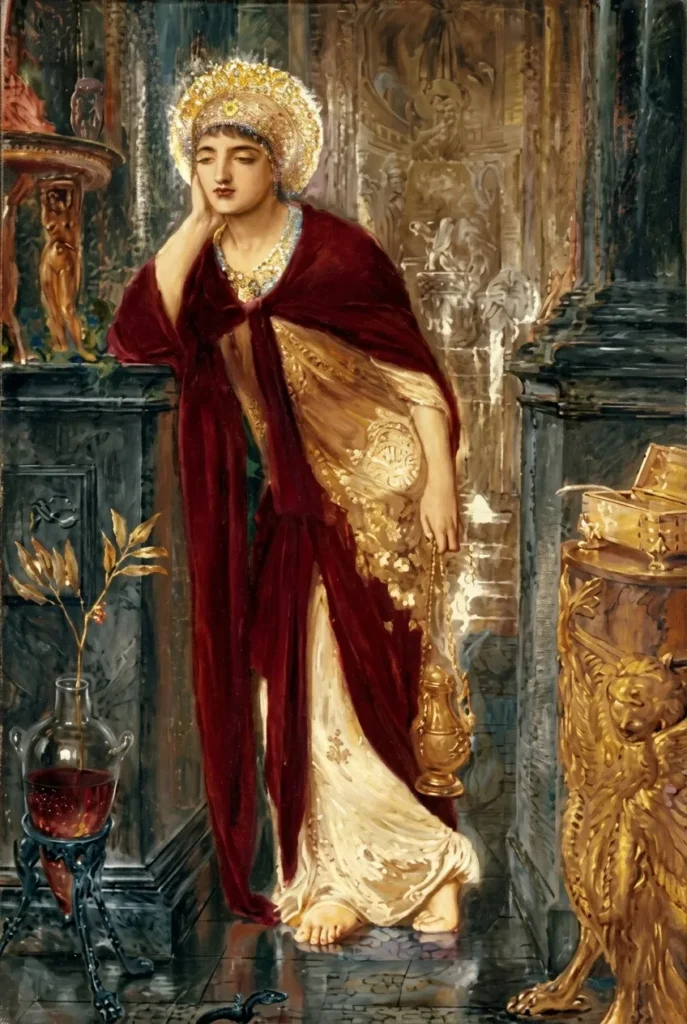
Still in the East, he had an enormous full-length portrait painted of himself performing his priestly duties to the Syrian sun god Elagabal.
In it, he wore flowing, richly embroidered robes, necklaces, bracelets, and a jeweled tiara. Decidedly not the standard image of a Roman emperor as soldier and conqueror.

Elagabalus sent his portrait ahead to Rome and ordered it hung in the Senate house, above the traditional statue of Victory. The symbolism was impossible to miss: even Victory now stood beneath him.
His grandmother Julia Maesa begged him to dispense with his Eastern glitz before entering Rome. Don the familiar guise of a Roman emperor with toga and laurel wreath, she pleaded. He refused.
By the time he arrived in the city in 219, the senators were already introduced to their new ruler via portrait. Still, what they saw in front of them left them flummoxed.
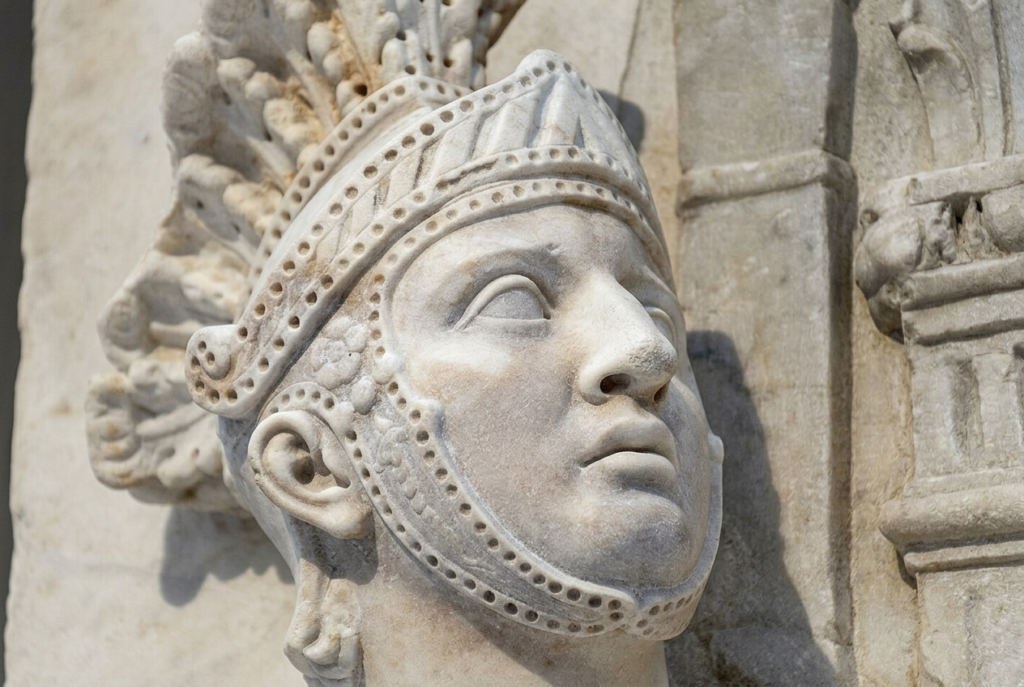
Cleaning House
After giving the Senators a taster of exoticism, Elagabalus’ next order of business was to consolidate power.
Macrinus was dead, but that didn’t mean everyone connected to the old regime was safe. Macrinus’ young son Diadumenian was hunted down and killed. Other political enemies were removed as Elagabalus secured the throne.
The new emperor also developed a nasty intolerance for criticism.
Herodian says he executed prominent and wealthy men who mocked his behavior or condemned the way he lived and dressed. In other words, ridicule itself became dangerous.
Competent generals were dangerous too. In imperial Rome, being good at your job could get you killed.
A commander with loyal troops, military prestige, and a decent reputation didn’t even need to be plotting rebellion. He only needed to look like someone who could.
That was the vicious logic of the system. Loyalty today meant nothing if the emperor thought you might become useful to his enemies tomorrow.
Intent barely mattered. Potential was enough.
And behind the teenage emperor stood Julia Maesa, the grandmother who had engineered his rise and understood how quickly emperors could fall.
The Cult: The Sun God Takes Over Rome
Having secured the throne with blood, Elagabalus turned to remaking Rome’s religion in his own image. It didn’t go well.
Romans took religion very seriously. The city was packed with temples, priesthoods, sacred objects, and an almost dizzying number of gods.
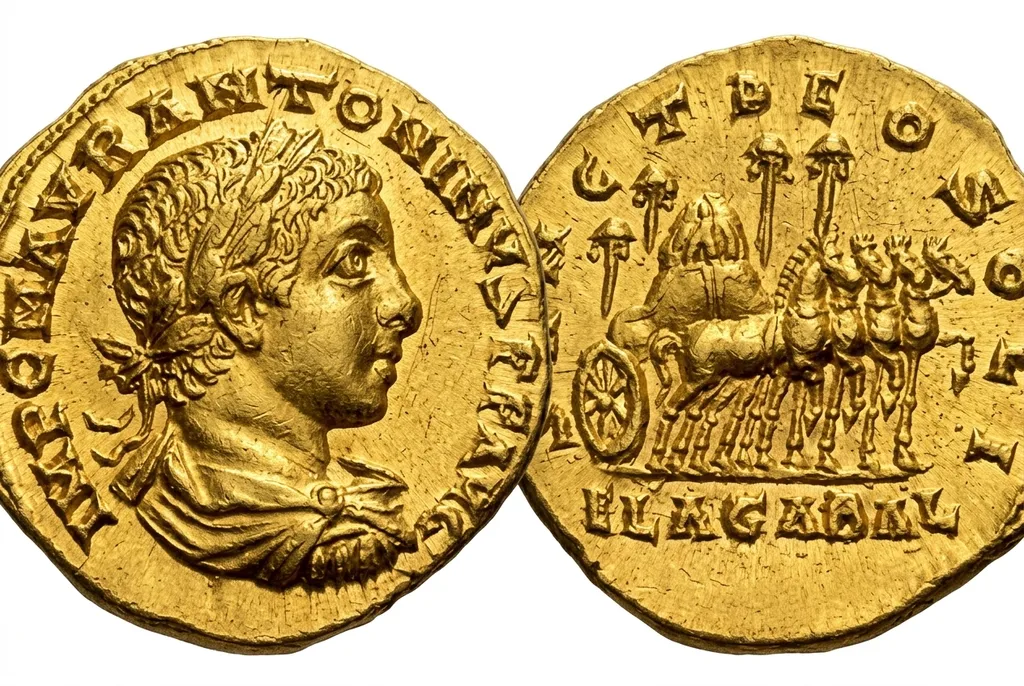
Elagabalus showed up with a black stone.
It was a large, cone-shaped sacred object that his Syrian worshippers believed had fallen from heaven. To them, it embodied the sun god Elagabal.

The emperor gave his god a prime piece of Roman real estate. The sacred stone was installed in a temple on the Palatine Hill, right at the center of imperial power.
Then Elagabalus went further.
He didn’t simply add his Syrian god to Rome’s already crowded pantheon. He shoved the traditional gods down the pecking order and put Elagabal at the top.
That was the provocation. Rome could absorb almost any god. What it couldn’t stand was being told which god now ruled the roost.
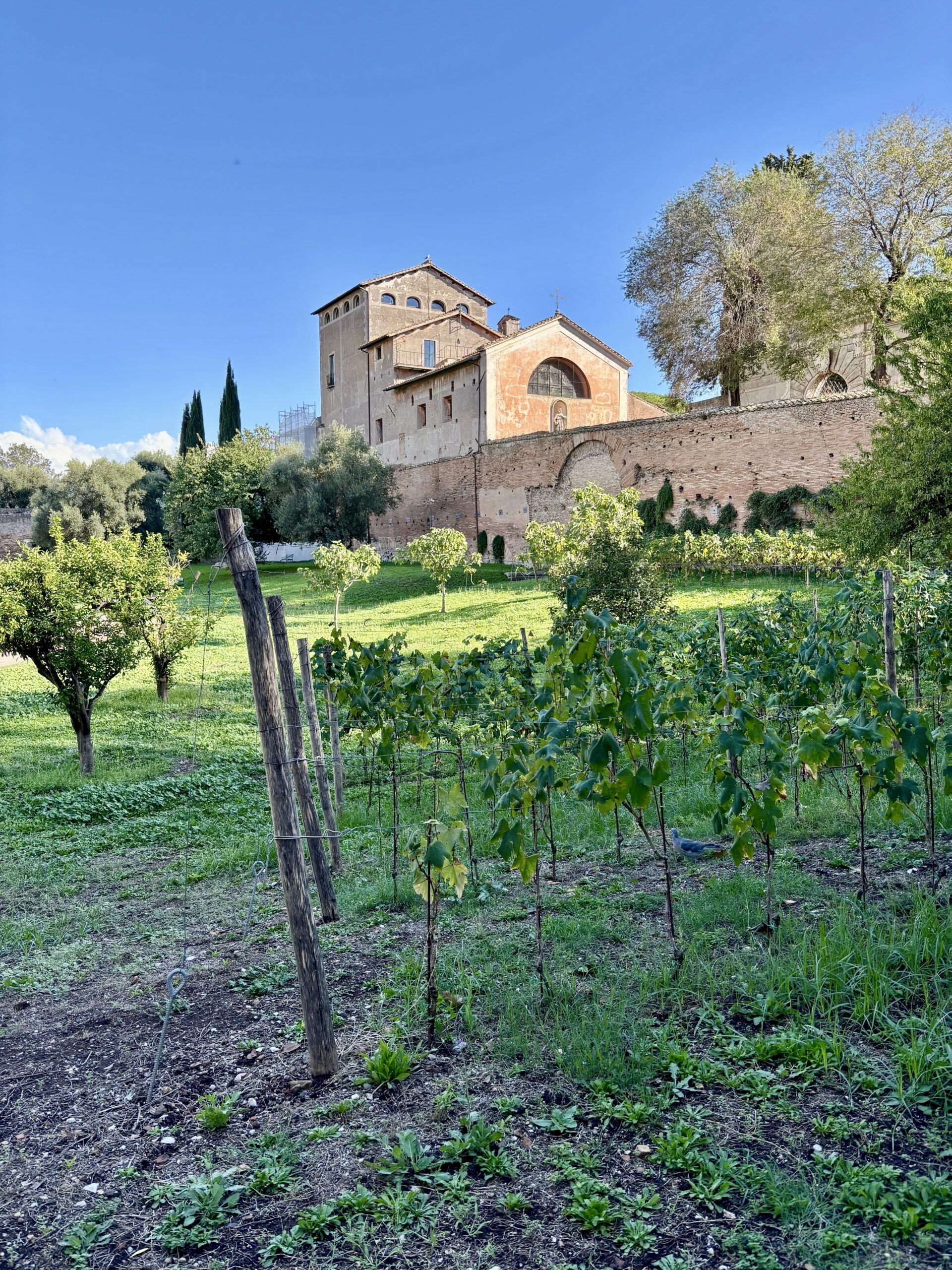
His devotion was intensely personal. Cassius Dio says Elagabalus circumcised himself as part of his priestly duties. He even contemplated castrating himself entirely.
Then came the divine matchmaking. Supreme gods needed spouses too.
Elagabalus paired Elagabal with the Carthaginian goddess Urania, associated with the moon and heavens. He commanded that her image be brought to Rome with a lavish dowry. That didn’t come cheap.
Nor did the emperor’s other religious rites. He staged elaborate sacrifices, processions, festivals, and divine “marriages” around his cult.
Even worse, Roman officials were expected to participate in his rituals. Obediently too.
Open ridicule was dangerous. According to Herodian, prominent men were executed for less.
This transformed the mood in Rome. What began as a strange foreign cult at the imperial court now felt like a challenge to the traditional religious order.
For conservative Romans, especially the senators who guarded ancestral customs, Elagabalus wasn’t simply unusual. He was erasing the very traditions that defined Roman identity.
A Taste for Absurd Luxury
To make matters worse, Elagabalus had absurdly expensive taste.
The ancient sources describe a teenager obsessed with gold, jewels, perfume, silk, exotic animals, elaborate vehicles, and costly spectacle.
He supposedly wore jewel-studded shoes and dressed in cloth of gold. He surrounded himself with objects whose chief purpose was to show that money meant nothing to him.
Even his baths were excessive. The Historia Augusta claims that he swam in pools scented with roses, spices, and expensive perfumes.
His vehicles were equally ridiculous. Some were plated in gold and studded with jewels. One particularly lurid story has him being pulled around by teams of beautiful women, sometimes while both emperor and attendants were naked.
How did he pay for all this?
Partly by treating imperial office as something that could be bought. The Historia Augusta accuses him of selling honors, governorships, military posts, and even seats in the Senate.
That was more than decadence. It was dangerous government.
A Roman office was supposed to confer prestige and responsibility. Under Elagabalus, at least according to his enemies, it was just another luxury item for sale.
Dining With Elagabalus
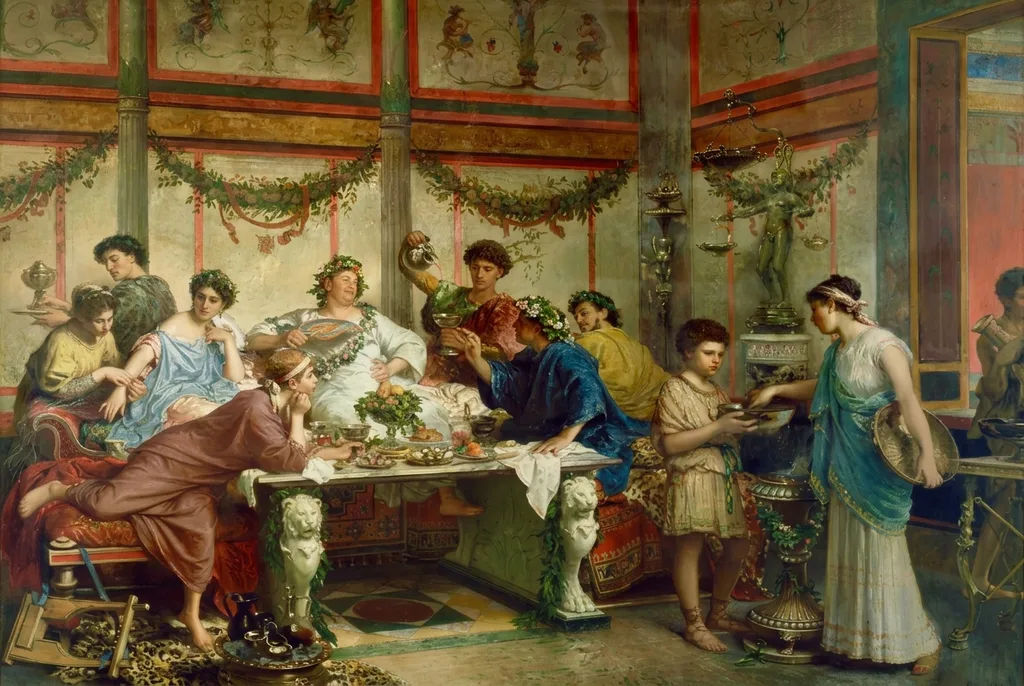
Given his taste for luxury, it’s hardly surprising that Elagabalus’ banquets were over-the-top spectacles.
Ancient writers describe rare meats, wine, incense, music, dancing, and theatrical entertainments.
Elagabalus supposedly liked his meals color-coded. He ate delicacies such as peacock tongues and camel heels. Sometimes he mixed pearls or precious stones into the food, apparently just because he could.
The Historia Augusta says he loved culinary absurdity for its own sake. One day everything might be pheasant. Another day, only chicken, fish, pork, ostrich, vegetables, fruit, or sweets.
His cooks had to keep up. If a new sauce failed, they were supposedly forced to eat the disaster until they came up with something better.
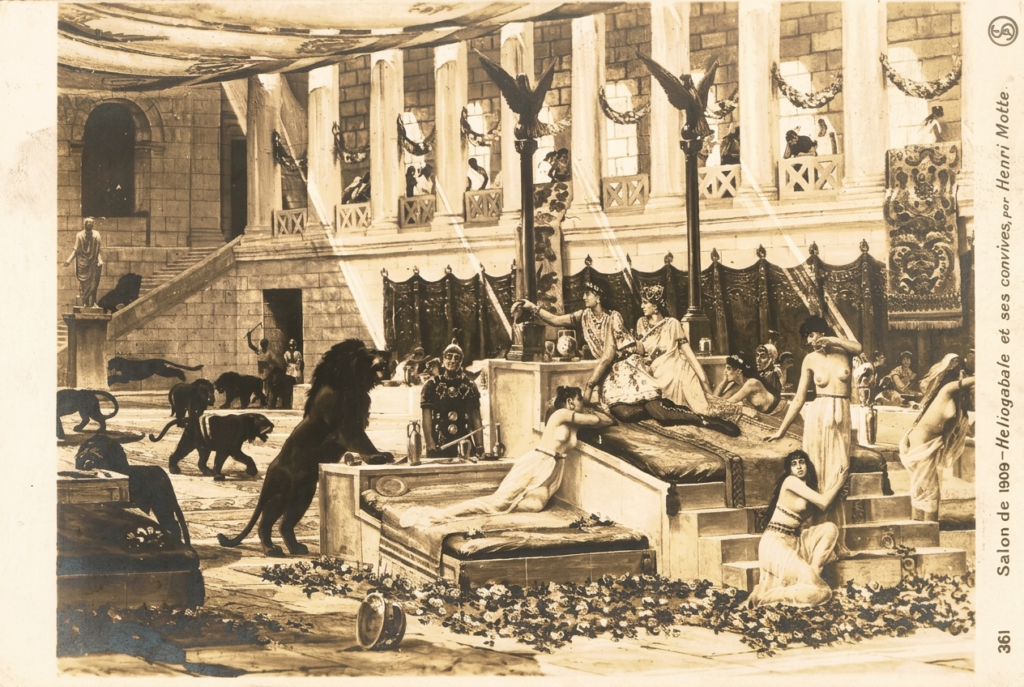
To dine with Elagabalus meant court theater. Guests might be mocked, humiliated, questioned about sex, scared with lions, or forced into bizarre entertainments.
And then there is the most famous dinner story of all.
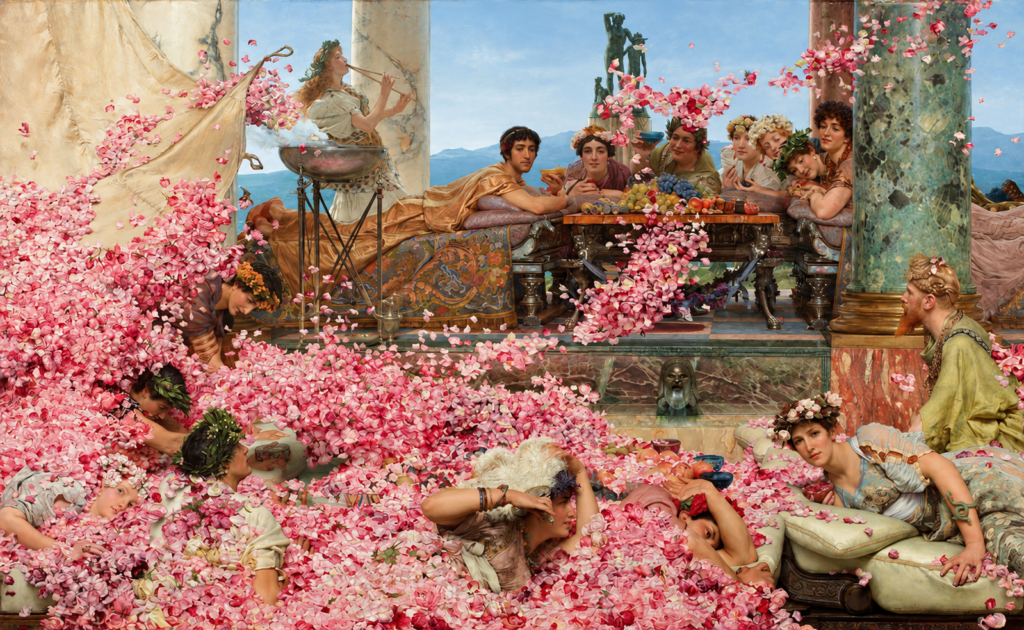
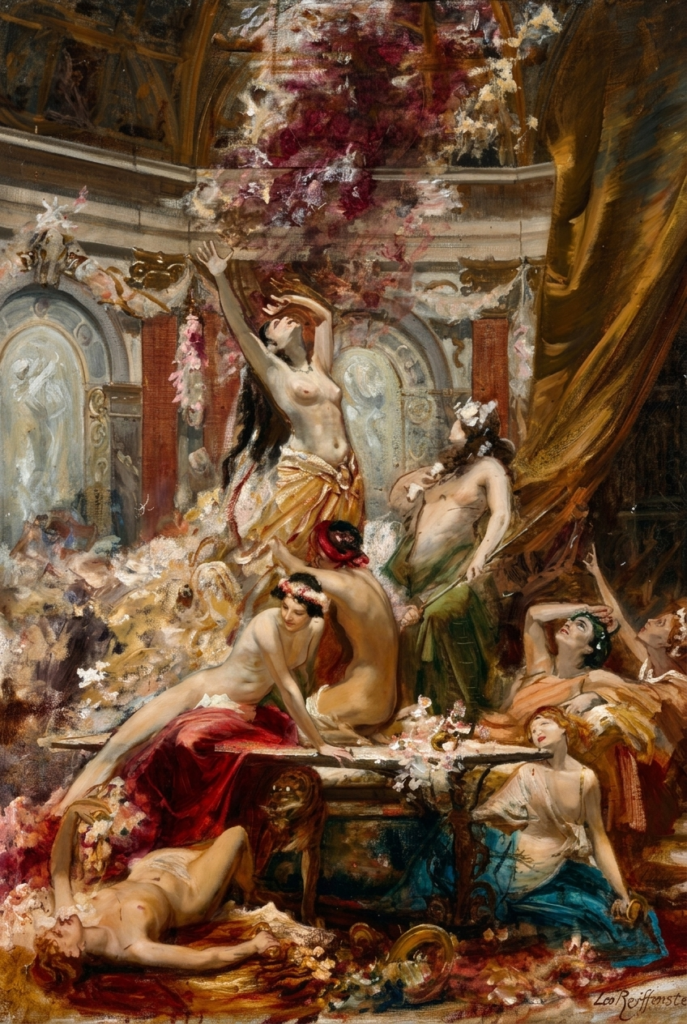
Elagabalus once released such an enormous shower of violets and other flowers from a revolving ceiling. Some guests couldn’t escape and were smothered beneath them.
Did it literally happen? Maybe not. But the fact that later writers thought the story perfectly suited him tells you something about the racy reputation he left behind.
Sex, Gender & Scandal
As Elagabalus waged war on Rome’s religious conventions, he also collided with Roman ideas about sex and masculinity.
Ancient writers accused him of sleeping with men and women, surrounding himself with lovers, seeking out exceptionally well-endowed men, frequenting prostitutes, and turning sex into another form of spectacle.
He married several women in rapid succession. One was Julia Aquilia Severa, a Vestal Virgin who had taken a sacred vow of chastity. The marriage horrified Rome.

His relationship with the charioteer Hierocles caused even more scandal.
Cassius Dio says the emperor called him his “husband” and adopted the female role in their relationship. Hierocles’ influence was so great that Romans feared he might take over the government.
Other accounts describe Elagabalus wearing female clothing and makeup, preferring feminine forms of address, and even seeking a physician who could give him female genitalia.
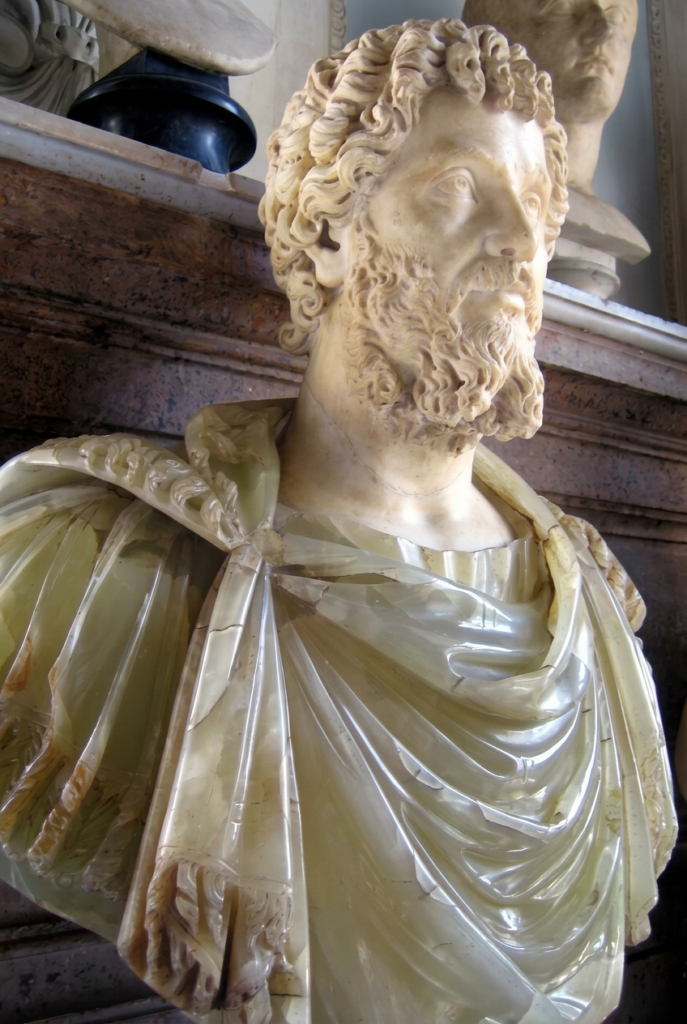
To Roman eyes, this was not progressive experimentation. It was a direct challenge to the emperor’s expected masculinity.
Those stories inevitably prompt a modern question: was Elagabalus transgender or gender fluid?
We can’t neatly impose a modern identity on a teenager who lived 1,800 years ago, especially with hostile writers. But there’s enough in the ancient accounts that the question is hardly frivolous.
Maesa Changes Sides
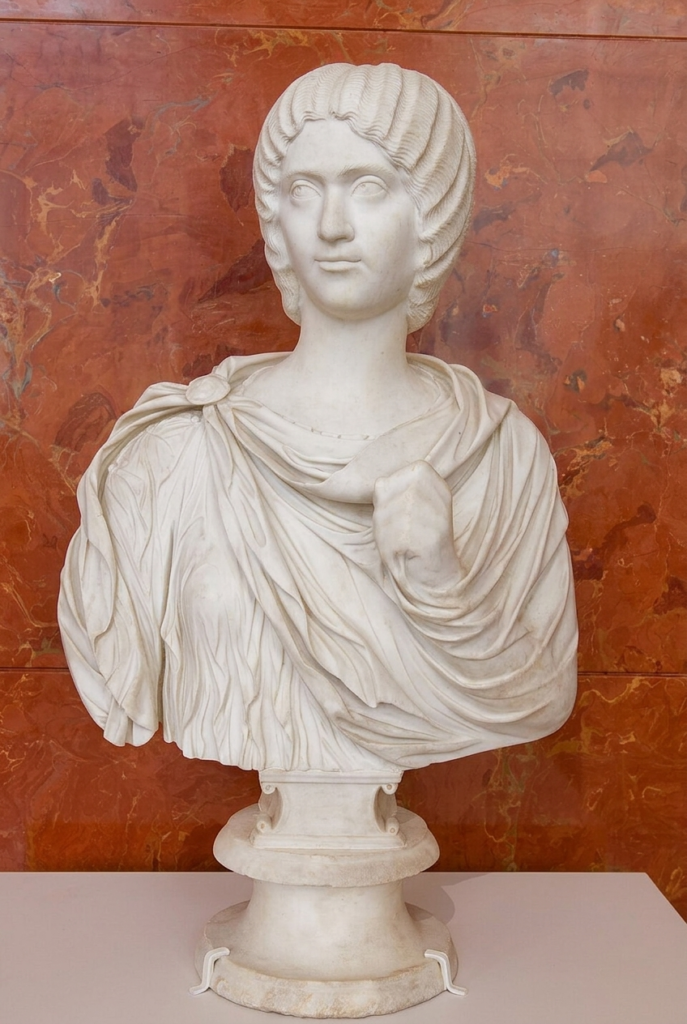
By now, Elagabalus’ grandmother Julia Maesa was watching the situation with increasing alarm.
She’d engineered his rise to power, but she wasn’t sentimental about it. Maesa cared about preserving the Severan dynasty, and Elagabalus looked like a real liability.
Most worryingly, he’d lost the support of the soldiers, who were disgusted at his femininity.
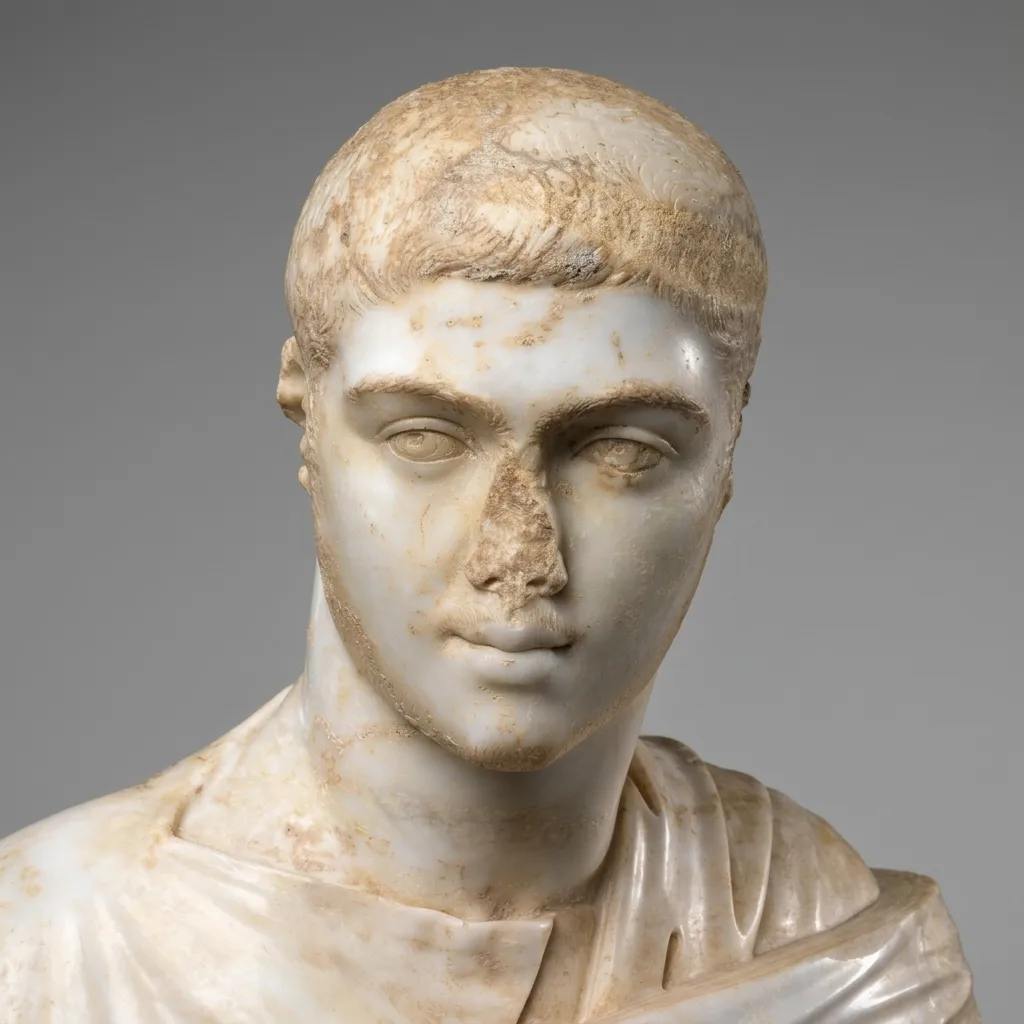
So Maesa hedged her bets and once again turned king-maker.
She persuaded Elagabalus to adopt her other grandson, his cousin Alexianus, the future Severus Alexander, and name him Caesar.
The appointment was meant to reassure a nervous Rome. Alexander represented a more conventional Roman future. Instead, it created a rival at the very heart of the imperial family.
Alexander was only about 13, but he could hardly have been more different from Elagabalus. He was serious, studious, restrained, and carefully presented as the respectable alternative.
The soldiers loved him. That became a problem.
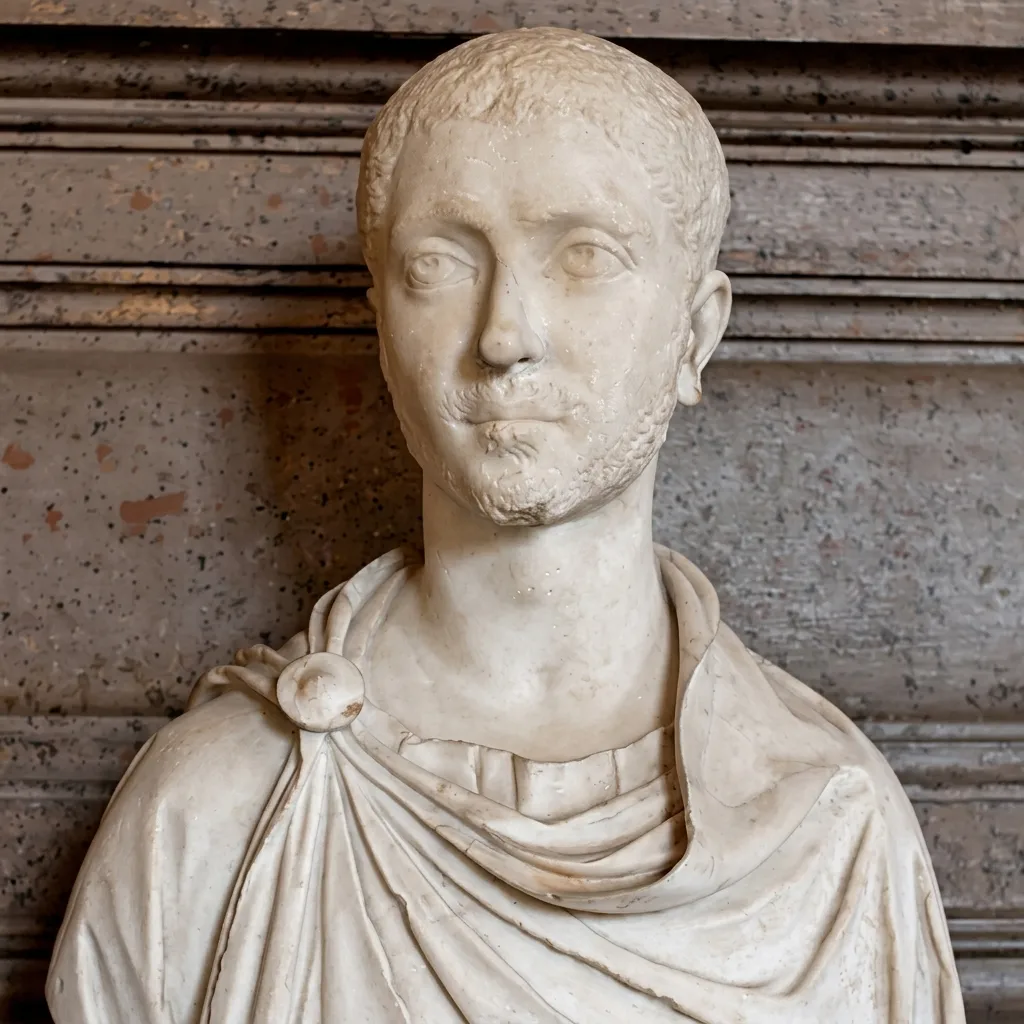
Elagabalus soon realized that his adopted son was more popular than he was. Naturally, he took this badly.
He tried to undermine Alexander and plotted to get rid of him altogether. But Elagabalus had a fatal inability to keep his mouth shut. Rumors of his intentions spread.
That had three effects.
Alexander knew he was in danger. Rome knew Elagabalus wanted him gone.
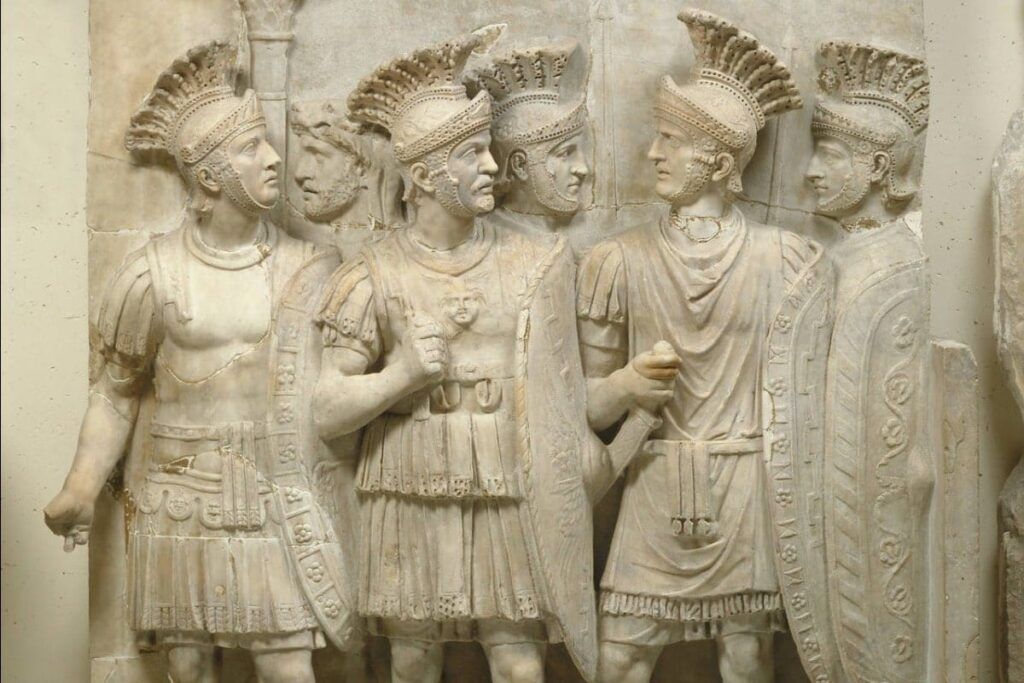
And, worst of all, the Praetorian Guard knew it too. Those were the guys with the pointy sticks.
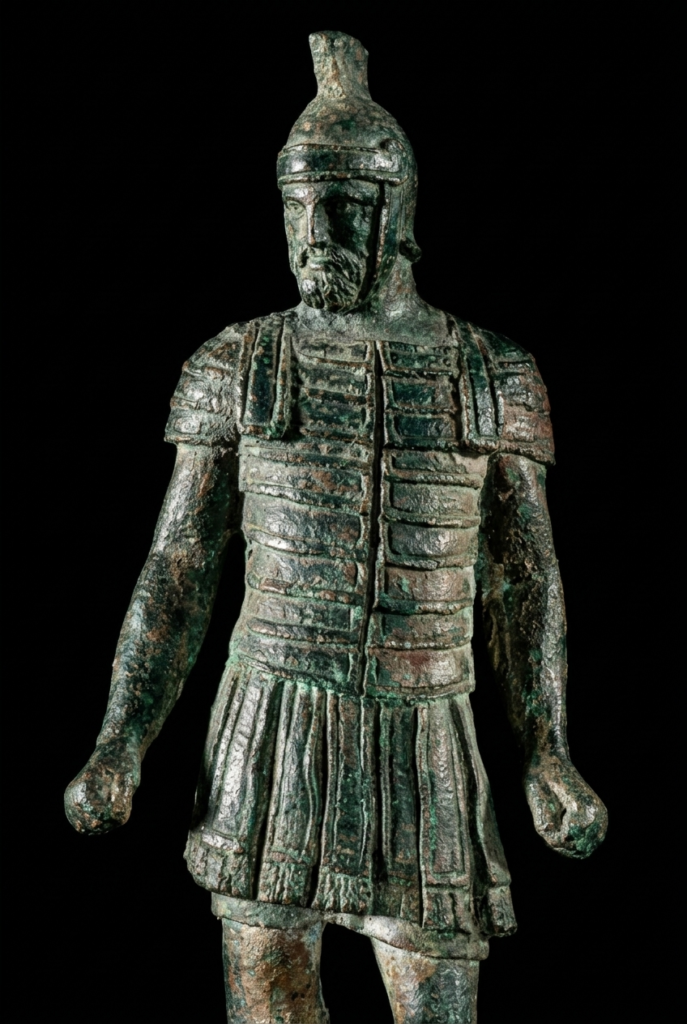
And by then, they liked Alexander better.
The Praetorians Turn on Him
By 222, relations had completely collapsed. Elagabalus tried to reassert control over the Praetorian Guard and push Alexander aside.
It failed spectacularly. The soldiers openly sided with Alexander. Elagabalus panicked and tried to flee.
Ancient accounts differ on the exact details of his final moments, but the basic picture is ugly. The Praetorians found him with his mother, Julia Soaemias, and killed them both.
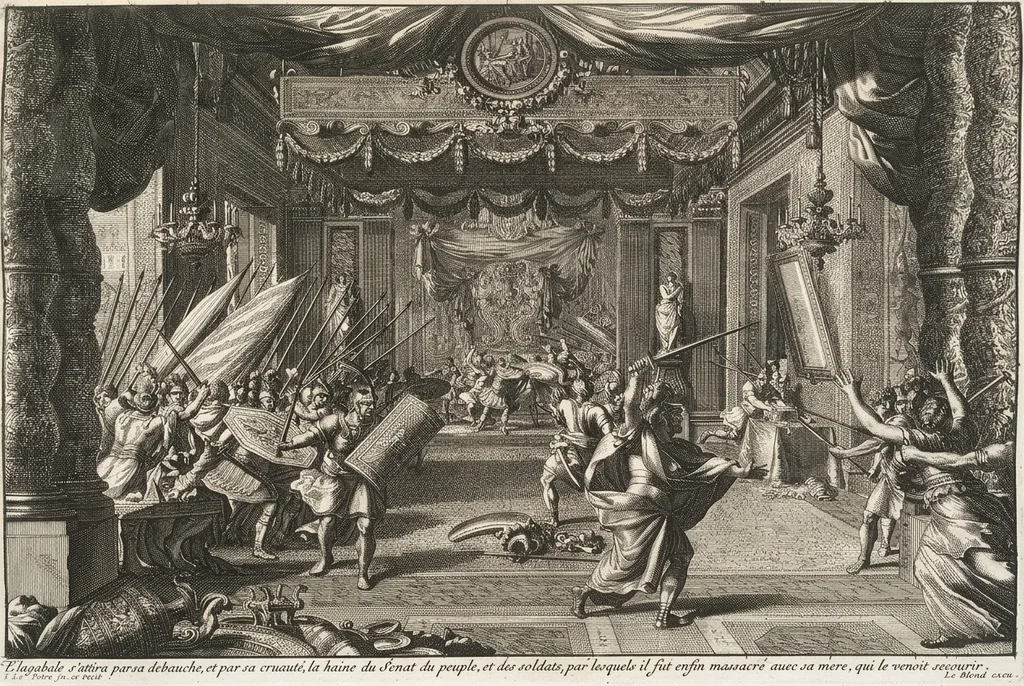
One lurid version says Elagabalus was discovered hiding in a latrine.
The soldiers then vented their rage on the corpses. Elagabalus’ body was stripped, mutilated, dragged through the streets, and finally dumped into the Tiber.
He was only 18.
Almost immediately, the soldiers rallied around Alexander and proclaimed him emperor.
Maesa had saved the dynasty. She had also, in effect, sacrificed one grandson for another.
Elagabalus: Monster or Literary Creation?
How much of this is true? That’s the problem with Elagabalus.
It’s true that he was one of Rome’s worst emperors. The broad outlines are clear enough to support that claim, but the exact details are murkier.
Cassius Dio and Herodian are hostile. But they’re contemporary or near-contemporary, and therefore quite relevant.
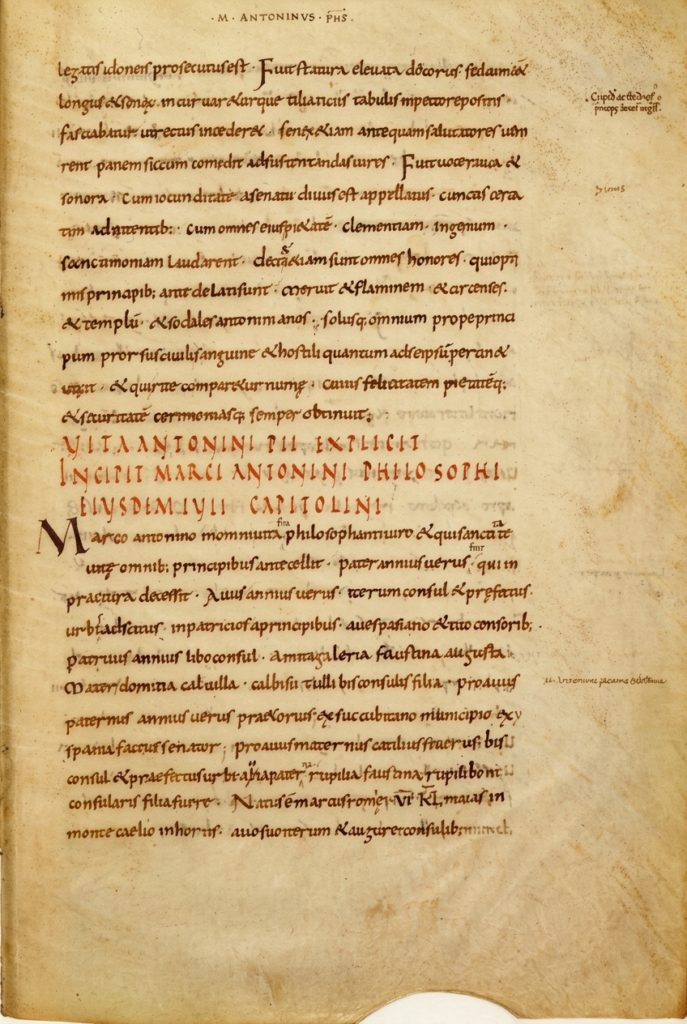
The Historia Augusta is far more problematic. It was written much later and features a notorious appetite for scandal, invention, sexual gossip, and colorful anecdotes. That matters because the wildest stories come from precisely that source.
Elagabalus was almost certainly unconventional enough to horrify conservative Romans. He inverted nearly everything they’d known. He was a chaotic tornado in a silk robe.
So the safest conclusion is probably this: Elagabalus was genuinely radical, reckless, and politically disastrous. The lurid details may contain truth, exaggeration, or outright invention.
That uncertainty is part of the story. If only he’d worn the toga.
I hope you’ve enjoyed my Elagabalus biography. You may find these other Roman histories interesting:
- History of the Rise and Fall of Rome
- History of the Roman Emperors
- Historical Facts about Rome
- History of Nero
- History of Julius Caesar
- History of Augustus
- History of Caligula
- History of Hadrian
- History of Claudius
- History of Tiberius
Pin it for later.