Dunstable Priory doesn’t get nearly the attention it deserves. For a medieval church, it has quite the royal resume.
Founded by Henry I in the 12th century, the Priory Church of St. Peter witnessed two very different royal marital dramas.
In 1290, Edward I accompanied the body of his beloved wife, Eleanor of Castile, to the priory. In 1533, Thomas Cranmer used its Lady Chapel to declare Henry VIII’s nearly 24 year marriage to Katherine of Aragon invalid.

Seven years later, Henry dissolved the priory itself. So much for gratitude.
Much of the medieval complex is gone, but its magnificent Norman church survives.
Three kings, centuries of history, and one extraordinary building. Here’s the story and what you can still see today.
History of Dunstable Priory
Henry I founded Dunstable’s Augustinian priory in the early 12th century, endowing it with land and property. Its founding is traditionally dated to 1131, though records suggest it already existed by 1125.
The church was an enormous undertaking, taking roughly 70 to 80 years to build. In 1213, Hugh of Wells, Bishop of Lincoln, finally consecrated it.
The celebrations were a bit premature.
Just nine years later, in June 1222, the roof of the presbytery collapsed.
That December, a violent storm brought down both western towers. One smashed part of the west front, while the other crashed into the prior’s residence.
Not exactly a glowing report card for the medieval builders.
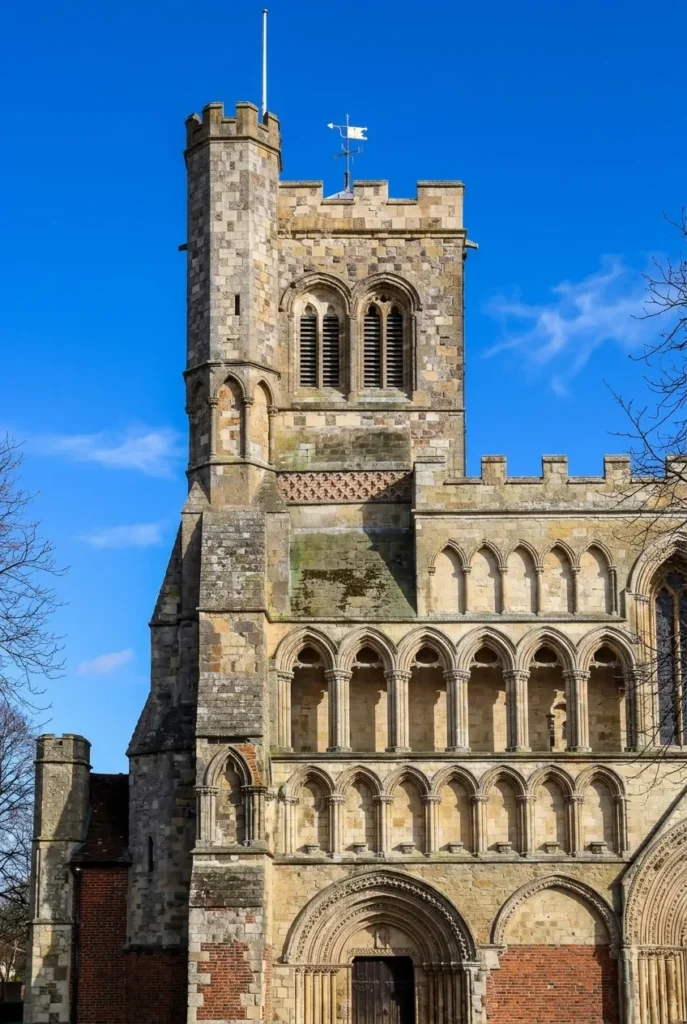
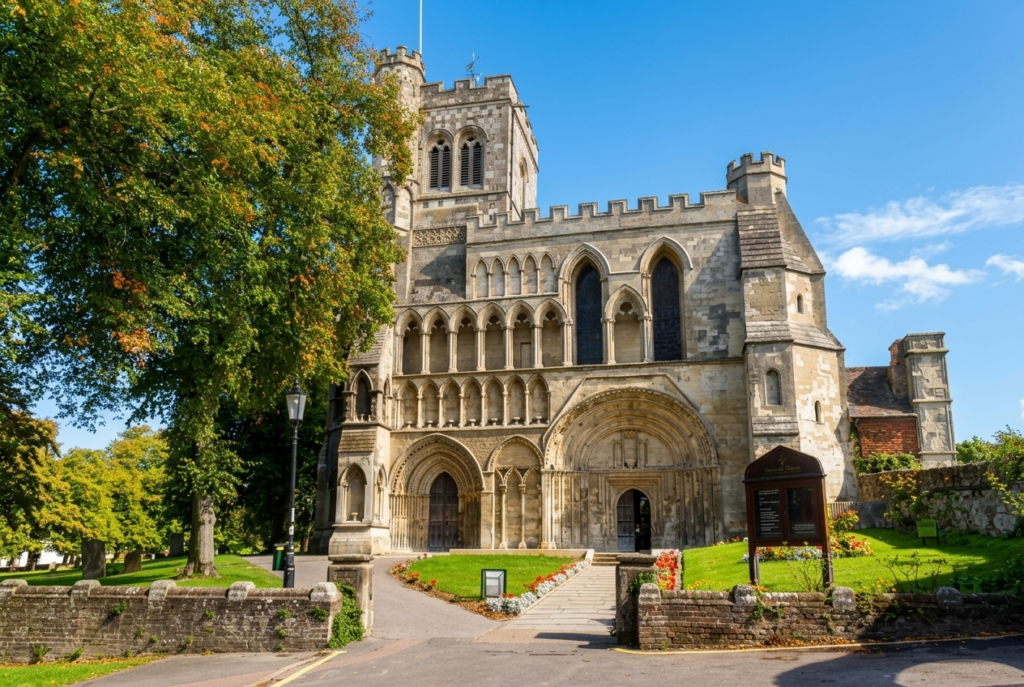
The damaged facade was reconstructed, but the original Norman doorway survived. You can still admire it today.
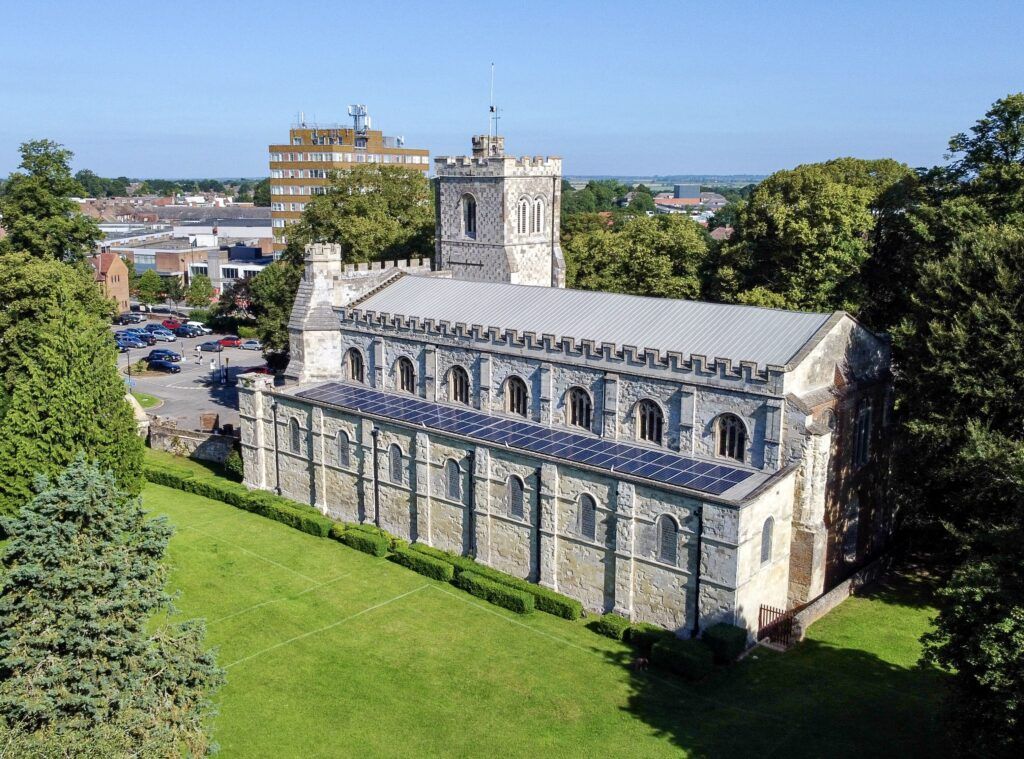
In its heyday, Dunstable was a cathedral-sized church, more than twice the length of the building standing today.
The Eleanor Cross at Dunstable
Edward I, the “Hammer of the Scots,” wasn’t exactly known for his soft side. Formidable, methodical, and often ruthless, he was a king who liked getting his way.
But he apparently had one great soft spot: his wife, Eleanor of Castile.
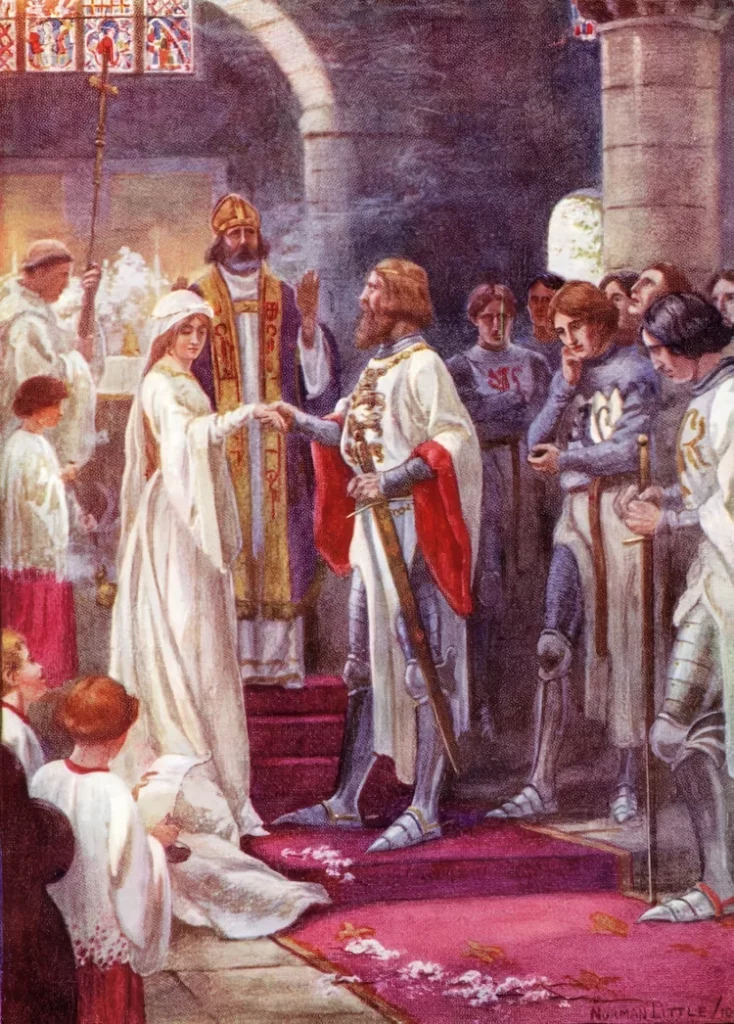
The couple married in 1254 and remained together for 36 years. They were unusually devoted for a medieval royal couple, frequently traveling together and producing at least 16 children.
When Eleanor died in November 1290, Edward was devastated. He later wrote that he had dearly cherished her in life and could not cease to love her in death.
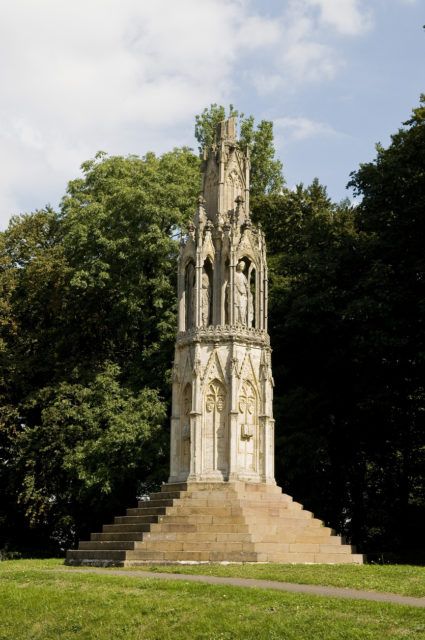
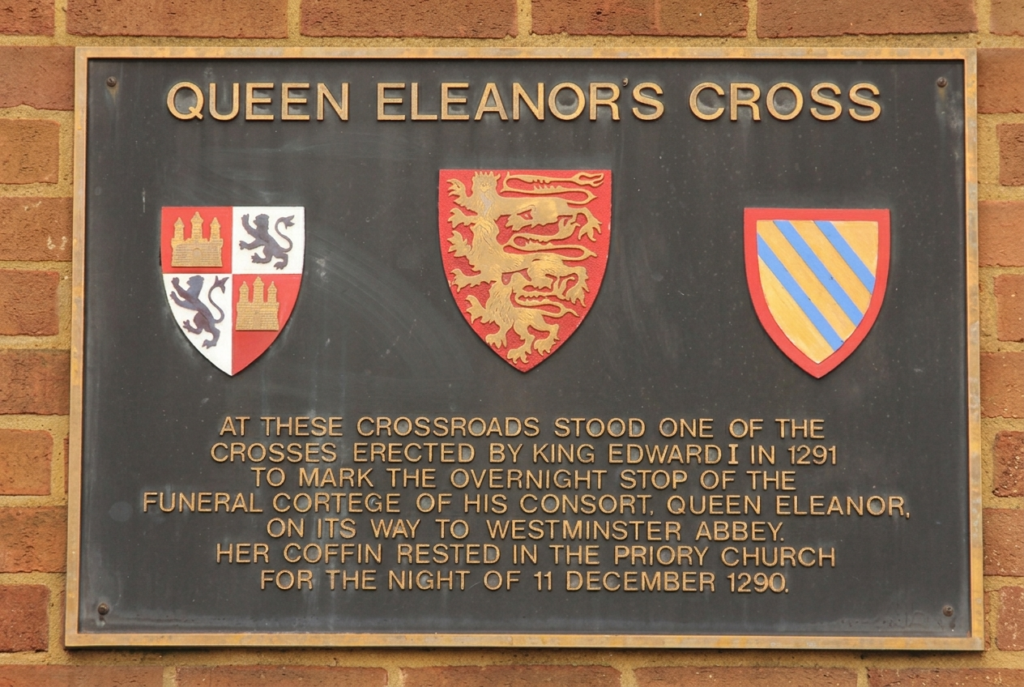
That December, Eleanor’s funeral procession passed through Dunstable on its way to Westminster Abbey. Her coffin rested overnight before the high altar of the priory church, with Edward accompanying the procession.
The grieving king subsequently commissioned twelve elaborate stone crosses to mark the stops along her funeral route. One rose at Dunstable’s busy crossroads.
It stood for more than 350 years before Parliamentarian soldiers destroyed it in 1643 during the English Civil War. Apparently, royal grief wasn’t worth preserving.
Nothing of the original cross survives above ground. Today, a commemorative plaque marks its former location, and a modern sculpture of Eleanor stands elsewhere in Dunstable.
Only three of Edward’s twelve original memorial crosses survive in England.

The Great Matter at Dunstable
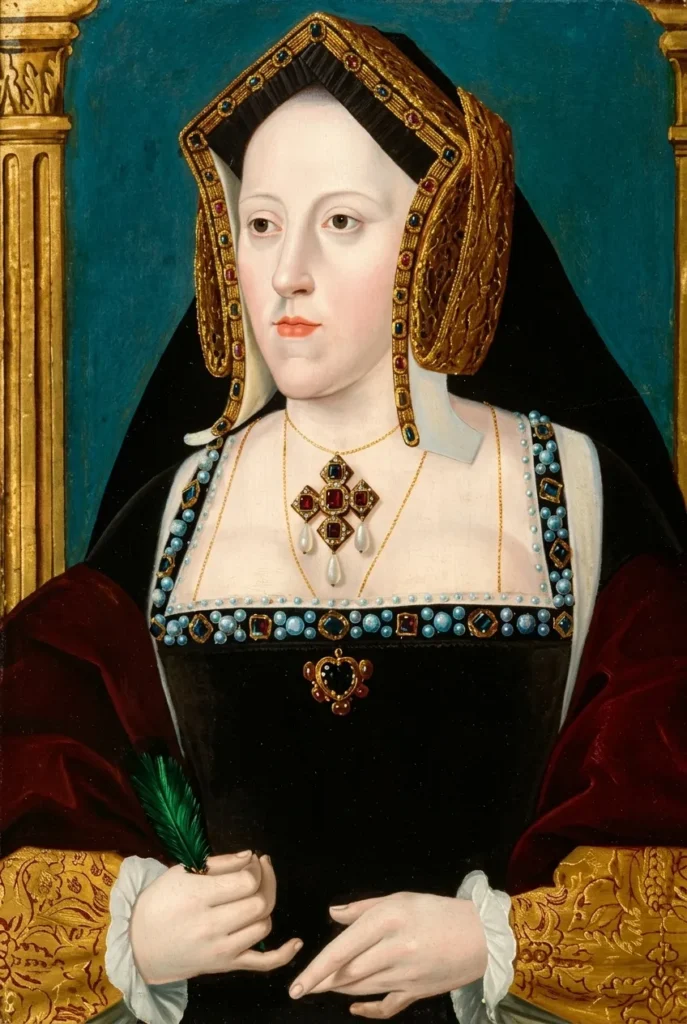
Dunstable Priory had its moment in the Tudor spotlight in May 1533. It had the dubious honor of hosting the ecclesiastical court that finally put an end to Henry VIII’s marriage to Katherine of Aragon.
The man in charge was Thomas Cranmer, the newly appointed Archbishop of Canterbury.
Cranmer helped Henry VIII out of his matrimonial predicament by suggesting that he consult Europe’s leading universities about the legality of his marriage, rather than simply relying on the pope.
It was an inspired bit of legal maneuvering. But academic opinions weren’t enough. Henry still needed an official judgment.
Enter Dunstable.
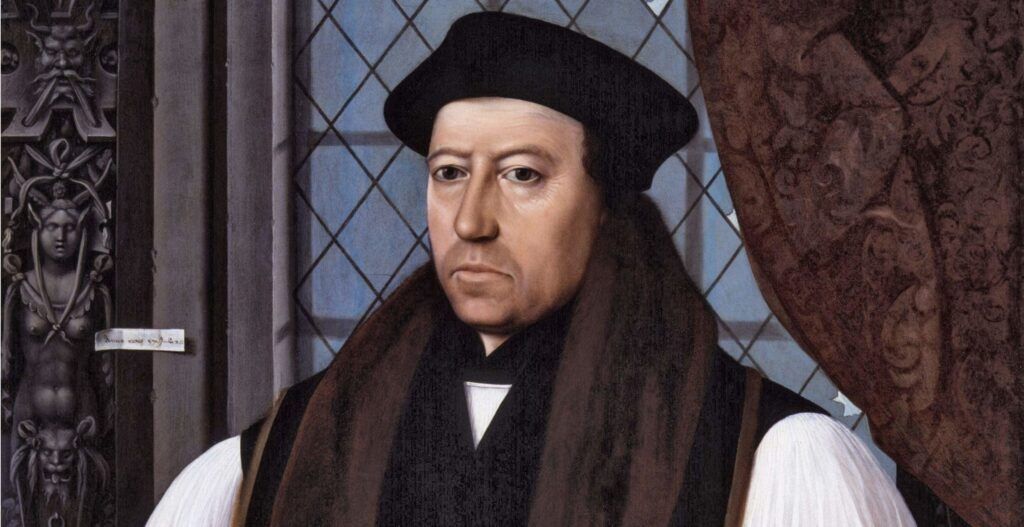
On May 10, 1533, Cranmer convened his ecclesiastical court in the priory’s Lady Chapel, assisted by bishops, theologians, and canon lawyers.
Katherine was staying at Ampthill Castle, just a few miles away. Indeed, her proximity was precisely why Dunstable was chosen.
She was summoned to appear but refused. Katherine maintained that only the pope had jurisdiction over her marriage. She wasn’t about to recognize a kangaroo court assembled by her husband to get rid of her.
The proceedings continued without her. The court held several sessions, heard evidence, and considered the legal arguments. But let’s not pretend the verdict was ever seriously in doubt.
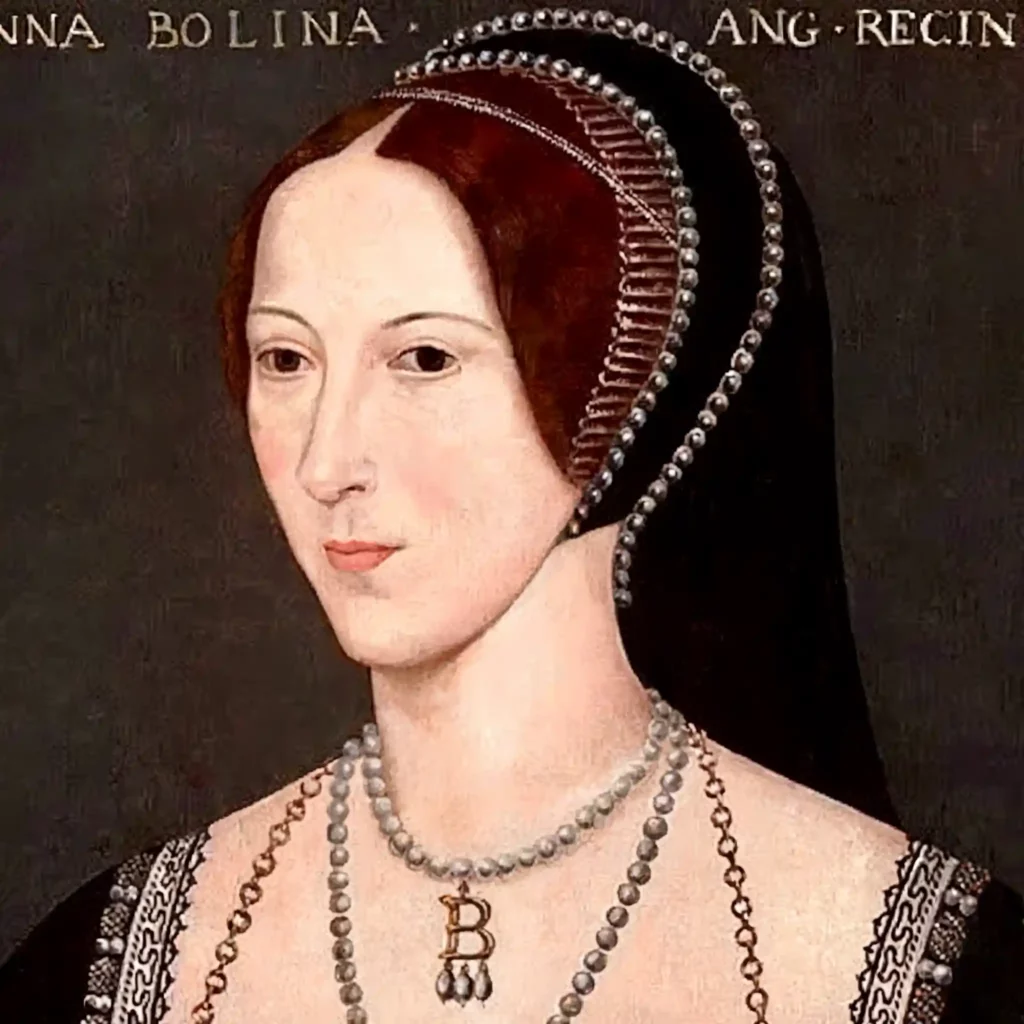
Henry had already married Anne Boleyn in January. A rather awkward detail, considering he was still legally married to Katherine.
On May 23, Cranmer delivered the inevitable judgment. Henry’s marriage to Katherine was declared “null and void.” Nearly 24 years of marriage, legally erased.
The whole business was wrapped up in the language of ecclesiastical law and divine authority. But Henry had finally gotten the answer he’d been demanding for six long years.
According to local tradition, the judgment was nailed to the church door. It’s a colorful detail, but there’s no convincing contemporary evidence that it happened.
The Dissolution of Dunstable
Dunstable Priory’s royal connections didn’t save it from Henry VIII’s next grand project: dismantling England’s monasteries.
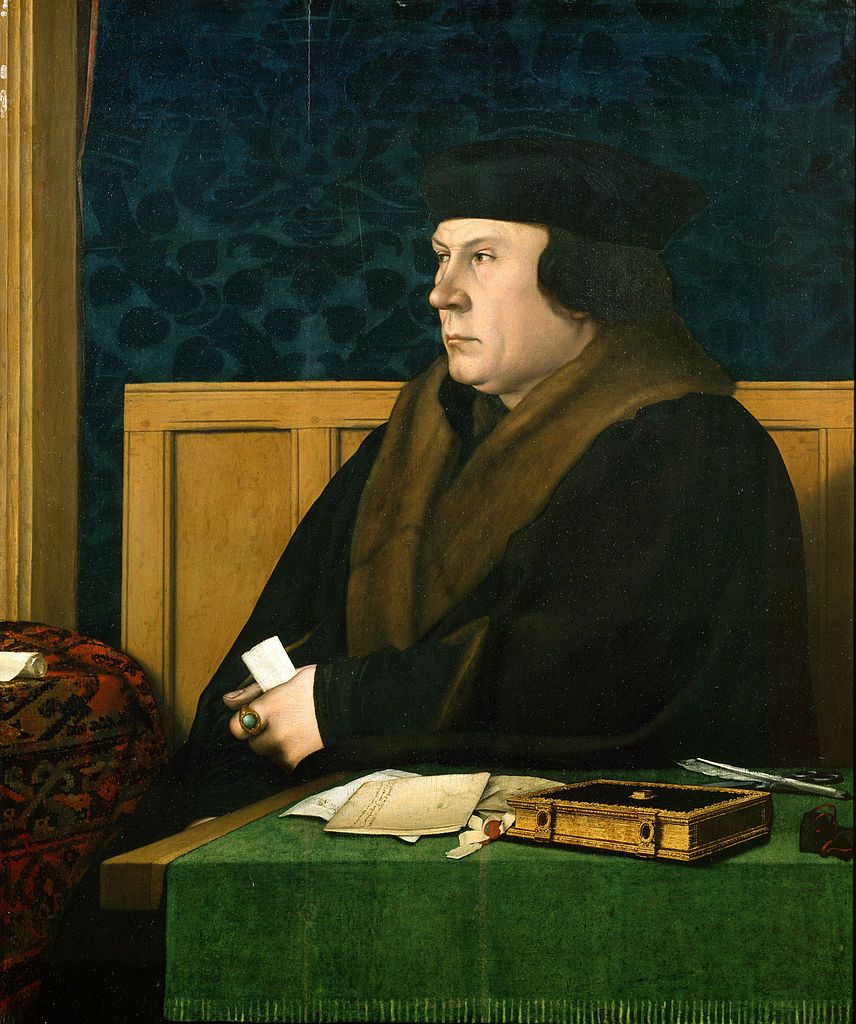
With Thomas Cromwell masterminding the operation, Henry accused religious houses of corruption and helped himself to their wealth, land, and valuables. A convenient combination of religious reform and royal enrichment.
Dunstable surrendered to the Crown on December 31, 1539, and was formally dissolved in January 1540.
So much for helping Henry get rid of Katherine.
For a time, the priory was spared. Henry even considered turning it into a cathedral. But the scheme went nowhere, and much of the complex was eventually stripped and dismantled.
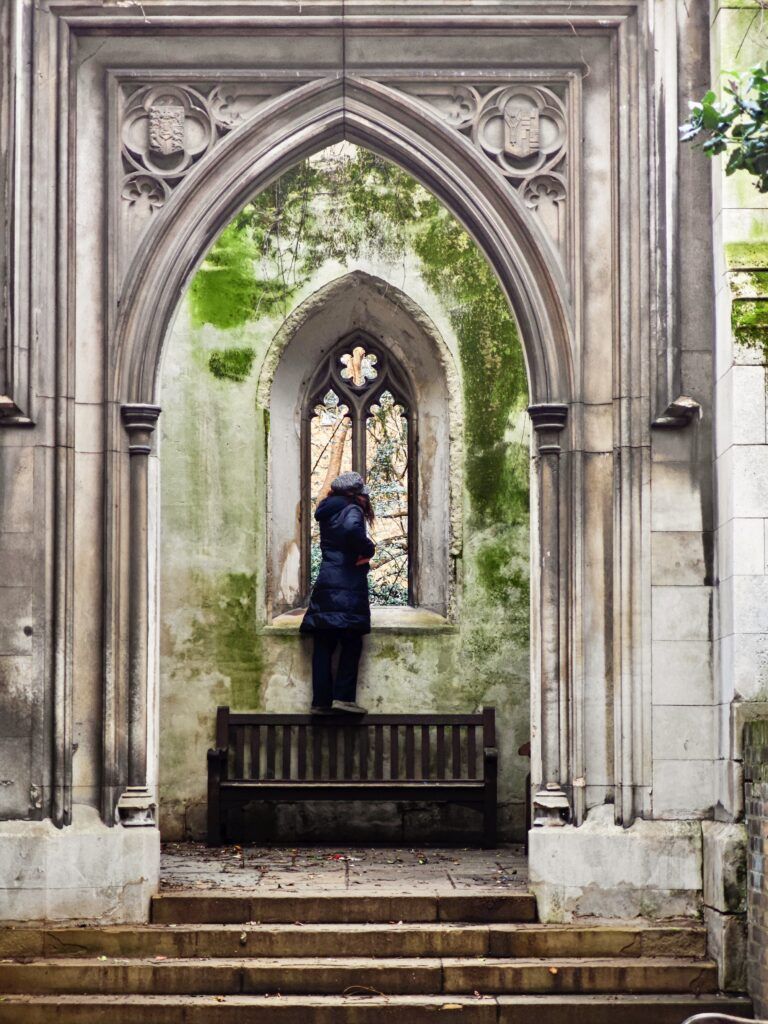
Lead was removed from the roofs, valuables confiscated, and stone carted away for other buildings.
Fortunately, the townspeople weren’t about to lose their parish church. They preserved the nave and aisles, which had long served the local congregation, and eventually sealed them off from the ruined eastern end.
That’s the magnificent Norman church you can still visit today.
Another survivor is Priory House, believed to have served as the monastery’s guesthouse. The building has been extensively altered over the centuries, but it retains a beautiful 13th century vaulted undercroft beneath its later Georgian facade.
Today, it’s a heritage attraction undergoing a major restoration, with a full reopening planned for 2027.
Priory Church of St. Peter
So what’s left of Dunstable Priory? Quite a lot, actually.
The first thing that grabs your attention is the extraordinary west facade. It’s a glorious jumble of medieval architecture, with grand Romanesque doorways, tiers of decorative arcading, intricate stone carvings, and a 15th century bell tower.
Step inside and the Norman architecture is even more impressive.
The surviving church is essentially the original 12th century nave, though it’s been altered and restored over the centuries.
Seven bays of massive stone piers support rounded Romanesque arches decorated with zigzag carvings and cushion capitals. It’s an imposing sight, and a reminder of just how enormous the original priory church must have been.

Another treasure is the elaborate wooden rood screen separating the nave from the chancel. Dating to around 1392, it’s a rare survivor from before the Reformation.
Don’t miss the stained glass either. Two windows are particularly interesting for history buffs.
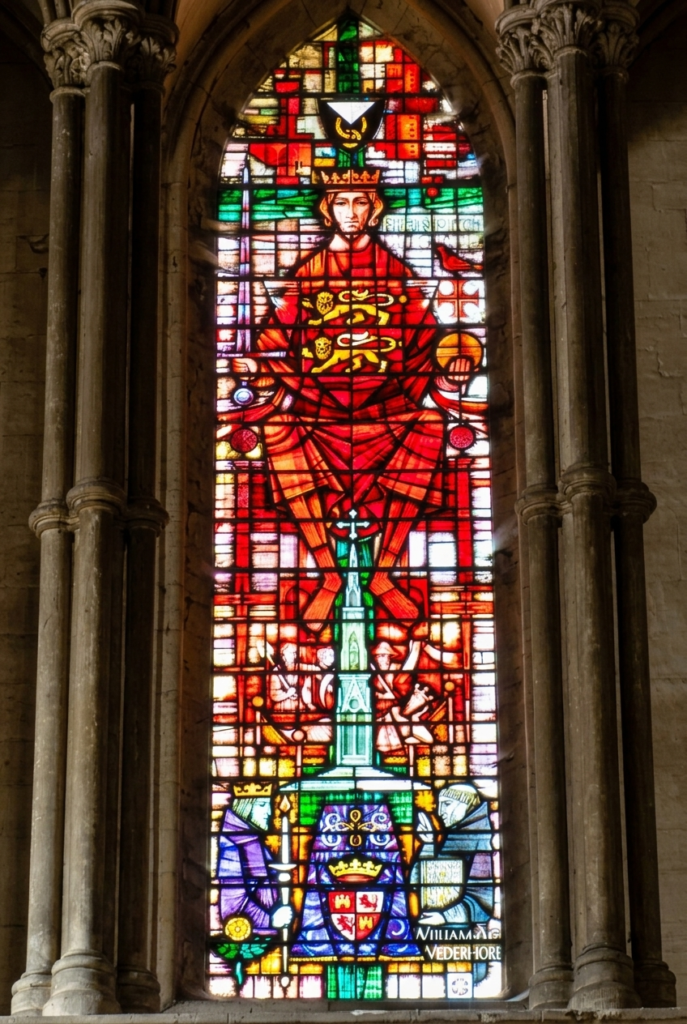
The Royal Window celebrates Henry I, the priory’s founder, and commemorates Edward I and Eleanor of Castile. It depicts Eleanor’s funeral bier, the Eleanor Cross, and the grieving king.
The Prior’s Window tells more of the priory’s story. At its base, the last prior, Gervase Markham, holds a model of the lost Lady Chapel where Cranmer’s court sat in 1533.
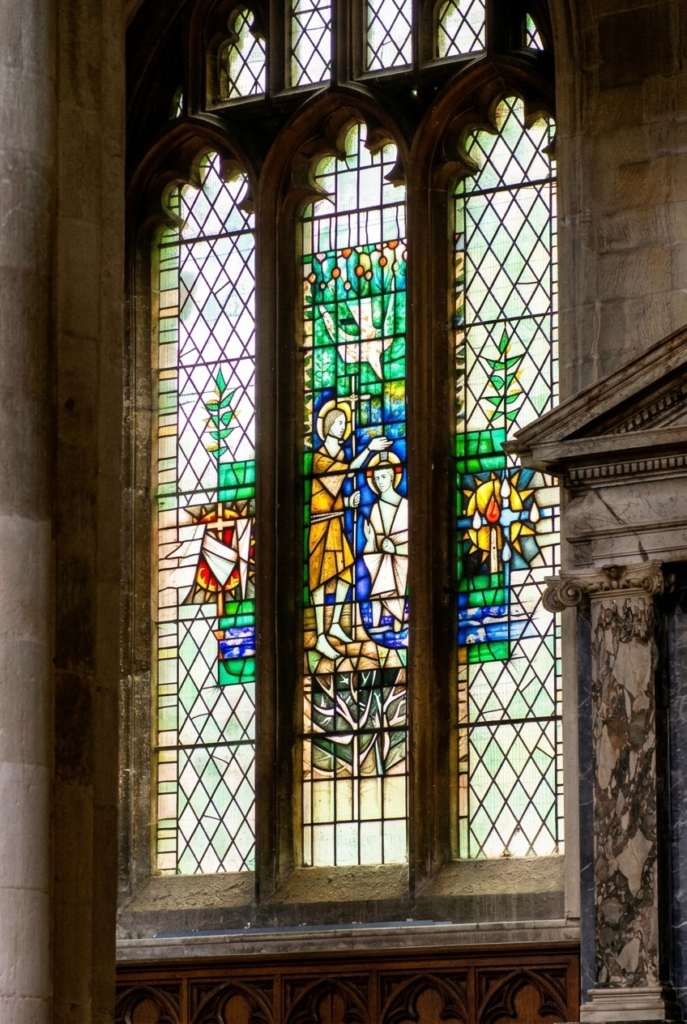
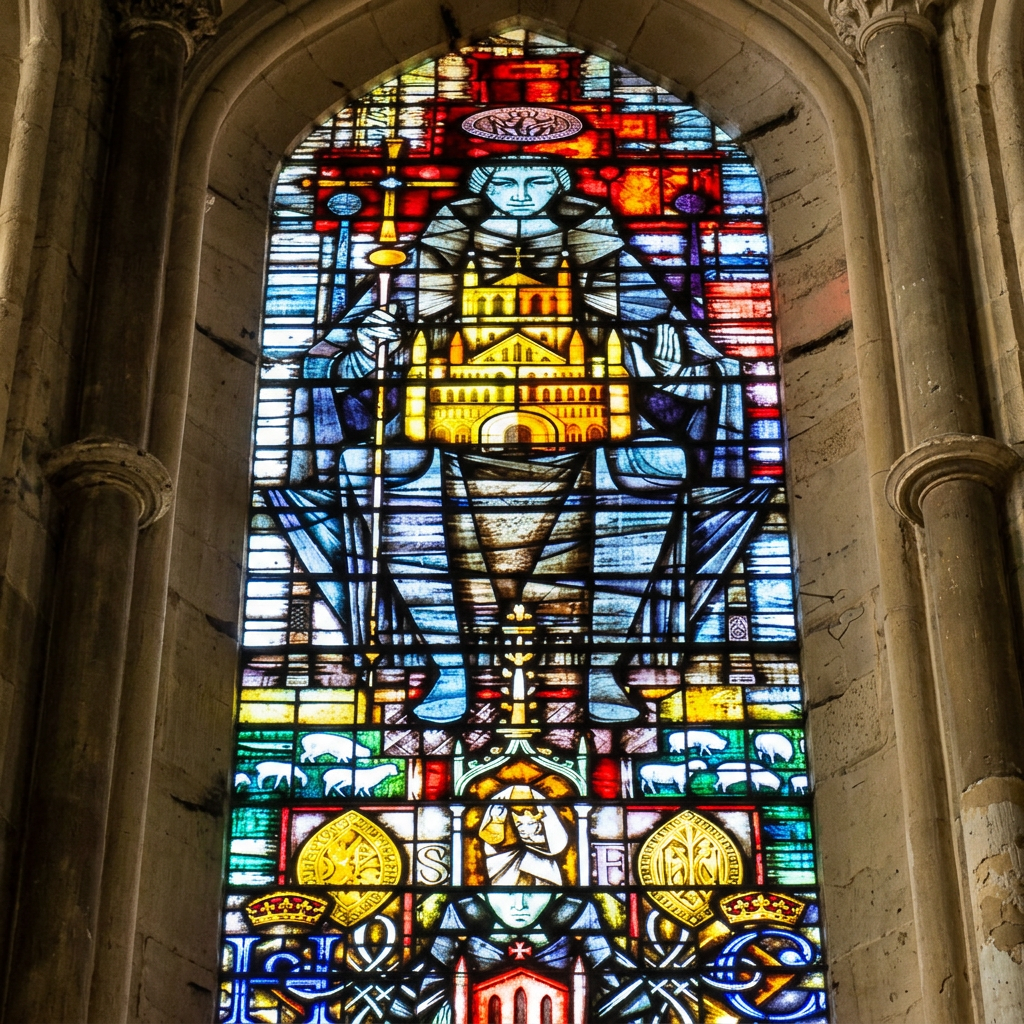
There’s even a broken lovers’ knot symbolizing the annulment of Henry VIII’s marriage to Katherine of Aragon. A rather pointed bit of stained-glass storytelling.
Another curiosity is the ten carved wooden posts known as the Marian Pillars.
Dating from Mary I’s reign, they feature religious symbols and the royal badges of England and Spain. A fitting reminder of Katherine’s daughter, who had very different ideas about England’s religion.
You’ll also find a reconstructed Norman-style baptismal font, assembled from fragments uncovered during Victorian restoration.
Lady Chapel
The most historically significant part of Dunstable Priory is the one you can’t see.
At the eastern end of the medieval church stood the Lady Chapel, built in 1228 and rebuilt in 1324. Here, in May 1533, Cranmer’s court declared Henry VIII’s marriage to Katherine of Aragon invalid.
Seven years later, Henry dissolved the priory. The chapel was eventually dismantled along with much of the eastern church. So much for gratitude.
But it hasn’t entirely disappeared.
Recent ground-penetrating radar investigations have identified its buried foundations beneath the Priory Gardens. Even portions of the medieval floor may survive.
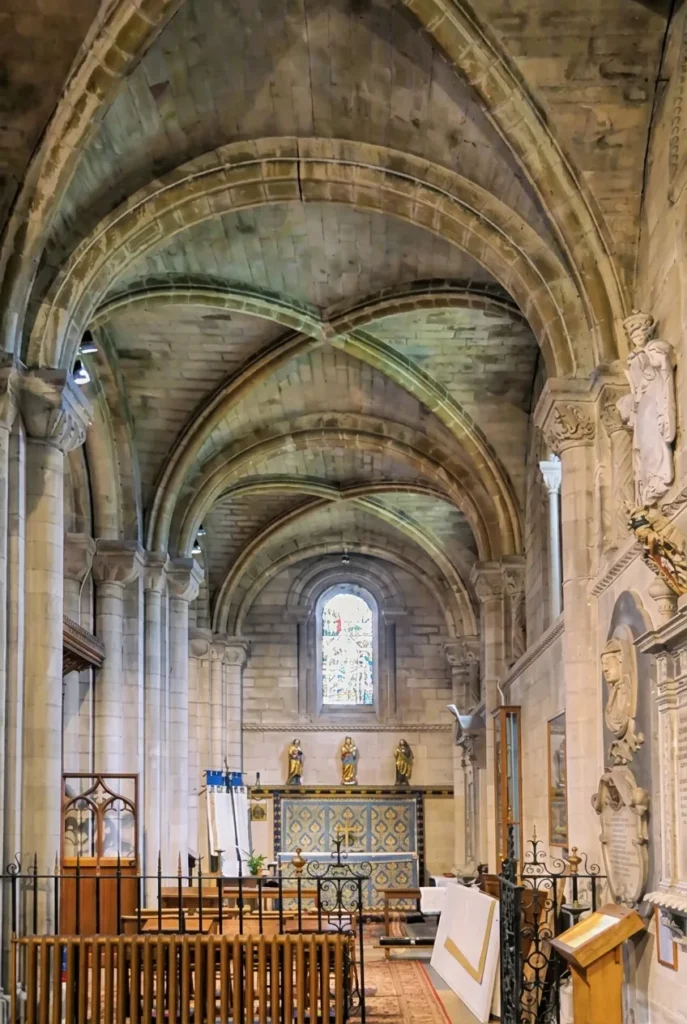
Don’t confuse it with the Lady Chapel inside today’s church, in the south aisle. That isn’t where Cranmer’s famous hearing took place. It’s a small, intimate space with pale stone walls, slender clustered columns, and beautiful Romanesque-style ribbed vaulting overhead.
Practical Information for Visiting Dunstable Priory
The Priory Church of St. Peter is on Church Street in the center of Dunstable, Bedfordshire, about five miles west of Luton.
The church isn’t open every day. It’s normally open to visitors on Wednesdays from 10:00 am to 2:00 pm and Thursdays from 11:00 am to 2:00 pm.
Admission is free, though donations are welcome. Check the official website before visiting, as hours may change.
Allow about 30 to 45 minutes to explore the church. Then wander through the adjacent Priory Gardens, where markings indicate the footprint of the demolished medieval buildings.

There’s public parking nearby. Priory House is also next door, although its historic rooms and tea rooms are currently closed for restoration.
I hope you’ve enjoyed my guide to Dunstable Abbey and the Priory Church of St. Peter. You may find these other English history guides interesting:
- Royal Whodunits
- English myths
- History of Medieval and Tudor England
- Tudor queens of England
- Power Women of Medieval & Tudor England
- Historical Mistresses and Favorites
- Wives of Henry VIII
- Worst kings of England
- Anglo-Saxon kings of England
Pin it for later.