“I am a god incarnate” said young Nero. Did that mean he thought he could do anything? Even commit murder?
Nero came to the throne at 16. He was an exceedingly popular teenager who reveled in the applause of the crowds. But there was a darkness there too, and absolute power would make it considerably worse.
Within months of becoming emperor, his 14 year old stepbrother collapsed and died at a palace dinner.
Did Nero poison the obvious rival to his throne? Very possibly.
Let’s look at the evidence, such as it is.
The Murder Mystery: Did Nero Poison Brittanicus?
The Players
Britannicus was the son of Emperor Claudius and his third wife, Messalina. The young boy was given the name Britannicus to celebrate Claudius’ conquest of Britain.
While Messalina was alive, Claudius reportedly doted on his son. In the years following his birth, the emperor minted coins with his image.
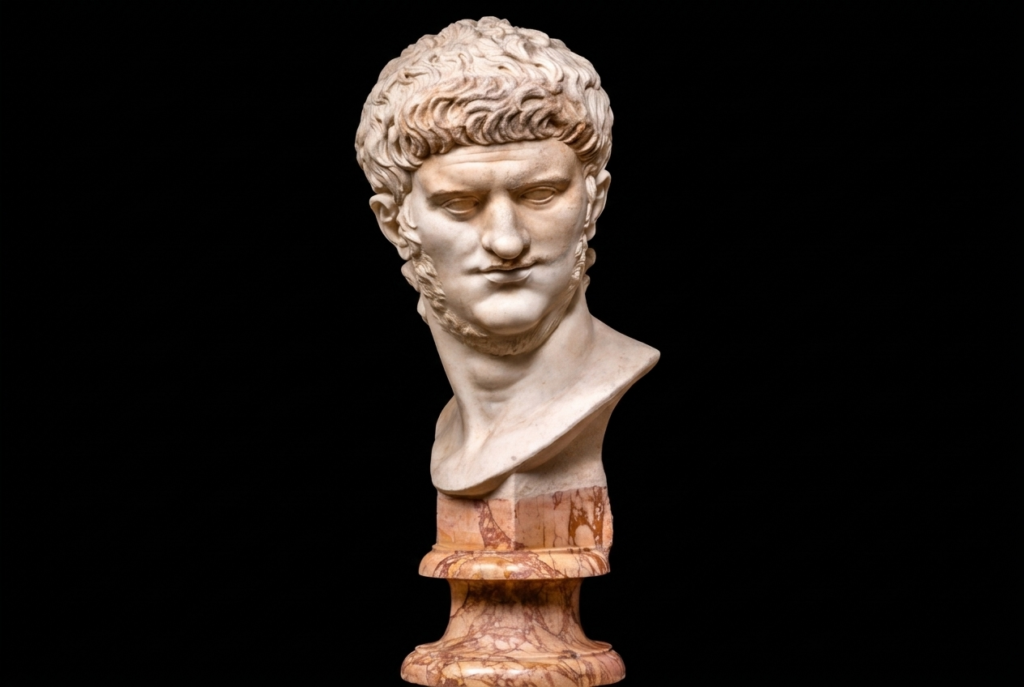
Nero was the son of Agrippina the Younger and Gnaeus Domitius Ahenobarbus. Ahenobarbus came from an ancient and prestigious family, though the clan had an appalling reputation for brutality.
The couple had one child, Lucius Domitius Ahenobarbus, born in 37 CE.
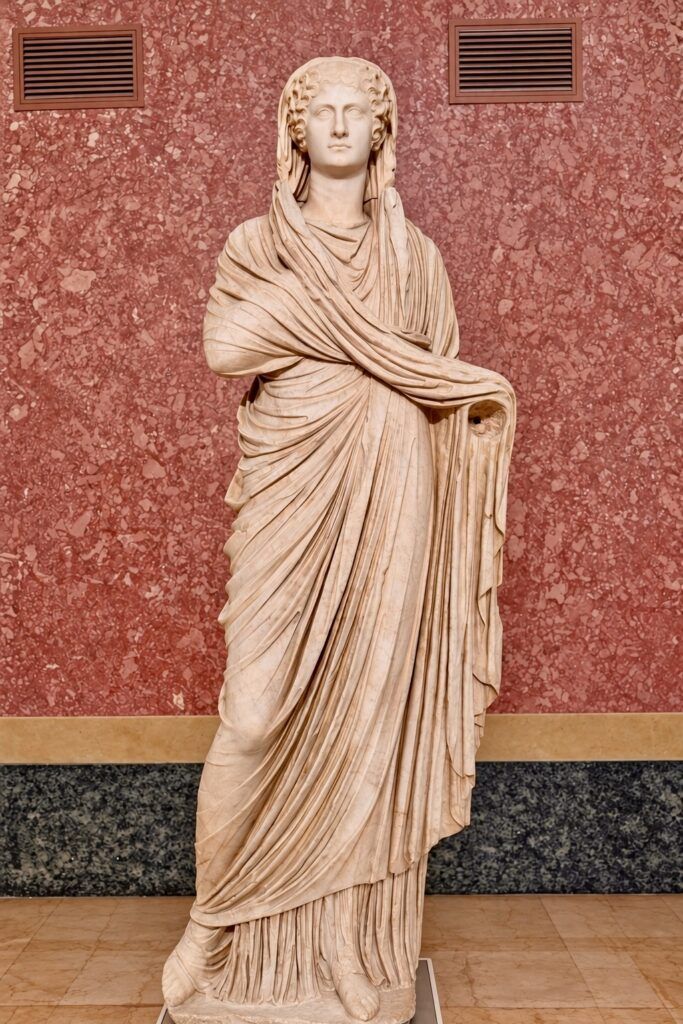
When Empress Messalina was executed after her spectacular fall from grace, Claudius married Agrippina.
Her son Lucius came with the package. Agrippina persuaded Claudius to adopt him and he was renamed Nero. This was a big deal in Roman culture. An adopted son was, legally and dynastically, the equivalent of a biological son.
And Agrippina had very big ambitions for his future.
After the adoption, and with Agrippina pushing hard behind the scenes, Nero’s rise accelerated. He received public honors, appeared prominently beside Claudius, and was given the toga virilis early.
More and more, he was presented to Rome as the obvious successor. Britannicus was four years younger, and Nero simply looked like the more practical candidate given Claudius’ age.

Nero’s Motive
By the end of Claudius’ reign, Agrippina’s carefully built succession plan was starting to wobble.
Claudius was in his 60s by then, and ancient writers say he began second-guessing the succession. He showed renewed favor toward Britannicus.
Perhaps he regretted advancing Nero so far. Maybe he wanted the two boys to rule as co-heirs. Or perhaps he was considering restoring his biological son to first place.
That was dangerous for Nero, and for his interfering mother. Nero’s position depended on Claudius continuing to back him.
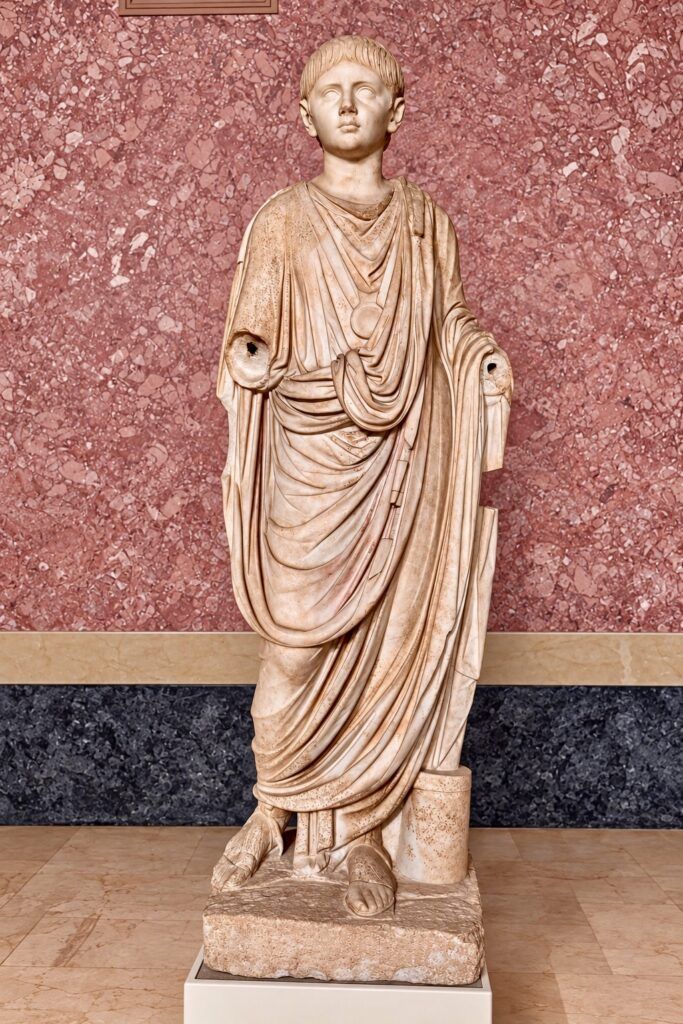
Claudius died before he could change course or make his intentions clear. Nero and Agrippina moved fast. Nero was taken to the Praetorian camp and acclaimed emperor, much as Claudius himself had been.
But Britannicus was still there. And that was a problem.
He was approaching adulthood and the traditional assumption of the toga virilis. That mattered politically because he was about to emerge from childhood and become a more visible adult dynastic figure.
He was also Claudius’ biological son, with an impeccable dynastic claim to the throne. If Nero faltered or fell out of favor, Britannicus offered Rome an obvious alternative.
Worse, Britannicus’ connection to Claudius could conceivably make him more popular than Nero.
For a 16 year old emperor with a shaky grip on power, that was dangerous.

Increasing Paranoia
Because of all this political friction, Nero and Britannicus didn’t get along.
Britannicus pointedly continued to call him Ahenobarbus rather than Nero, a reminder that Nero hadn’t been born Claudius’ son. Nero retaliated by mocking and humiliating him. Suetonius says Nero even tried to persuade Claudius that Britannicus was a changeling.
At the Saturnalia, probably late in 54 CE, Nero tried to embarrass Britannicus by ordering him to stand up and sing in front of the room.
It backfired spectacularly.
Britannicus sang beautifully, a song alluding to his displacement from his father’s house and throne. Instead of laughing, the guests felt sorry for him. Tacitus says Nero saw the sympathy Britannicus had generated and “redoubled his hatred.”
So what could Nero do next?
He couldn’t simply trump up charges and publicly prosecute Claudius’ 13 year old son. Tacitus says he had no grounds for a criminal accusation and didn’t dare order Britannicus’ execution openly.
So he turned to poison. Poison, conveniently enough, already had quite a reputation in Julio-Claudian Rome.

The Fateful Dinner
The first attempt to poison Britannicus failed.
According to Tacitus, the initial dose was given to Britannicus by his own tutors. It was too weak and merely upset his stomach.
Suetonius gives a more dramatic version, claiming Nero was so furious that he had Locusta flogged for producing a weak concoction.
Nero demanded something stronger.
Suetonius says Locusta prepared a new batch in Nero’s presence. They tested it first on a kid, which took hours to die, and then strengthened it until a pig dropped dead almost immediately. Only then was Nero satisfied.
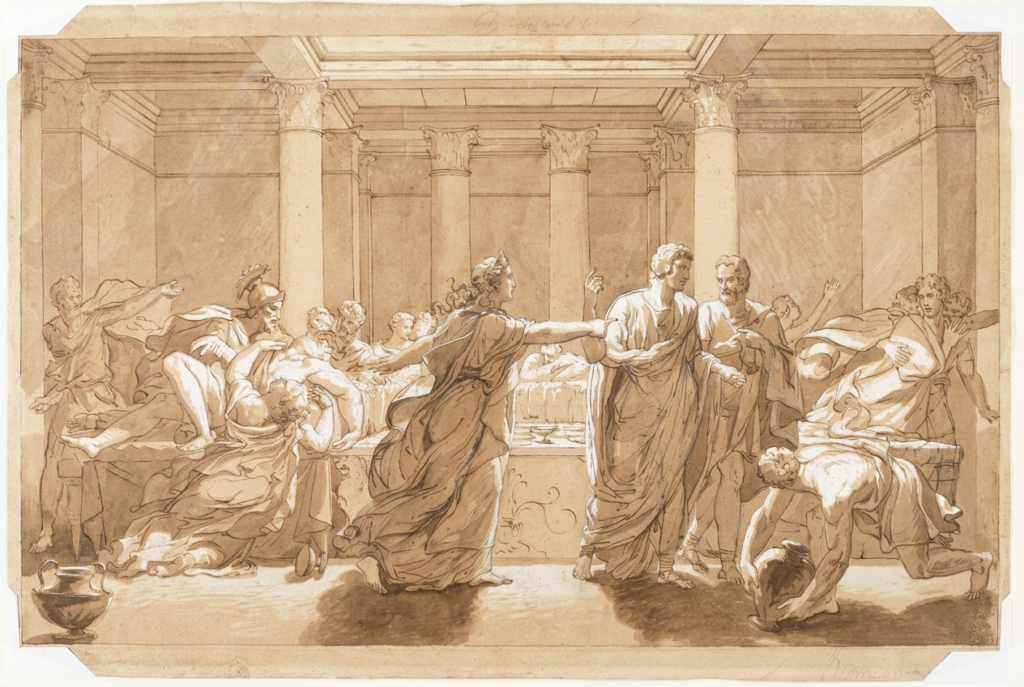
The poison was ready. Now he needed a way to get it past Britannicus’ food taster.
At dinner, Britannicus was handed a drink that had already been tasted and was perfectly safe. It was too hot, so cold water was added.
That, Tacitus says, contained the poison.
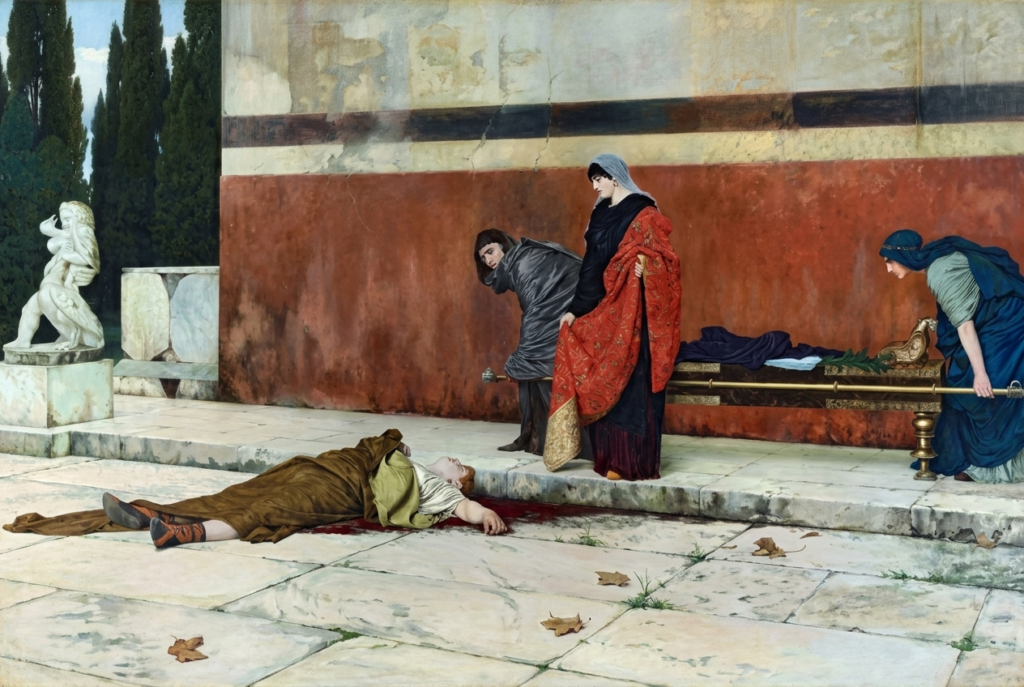
Britannicus took a drink and almost immediately lost his voice and breath. He collapsed at the table.
Tacitus says Agrippina looked genuinely shocked when Britannicus collapsed. By this point she was already losing influence over Nero. So Britannicus might have been useful leverage against her increasingly independent son.
Nero, meanwhile, barely reacted. He calmly told the guests that Britannicus was simply having one of his epileptic attacks and would recover soon enough. That became the official explanation.
The most damning detail?
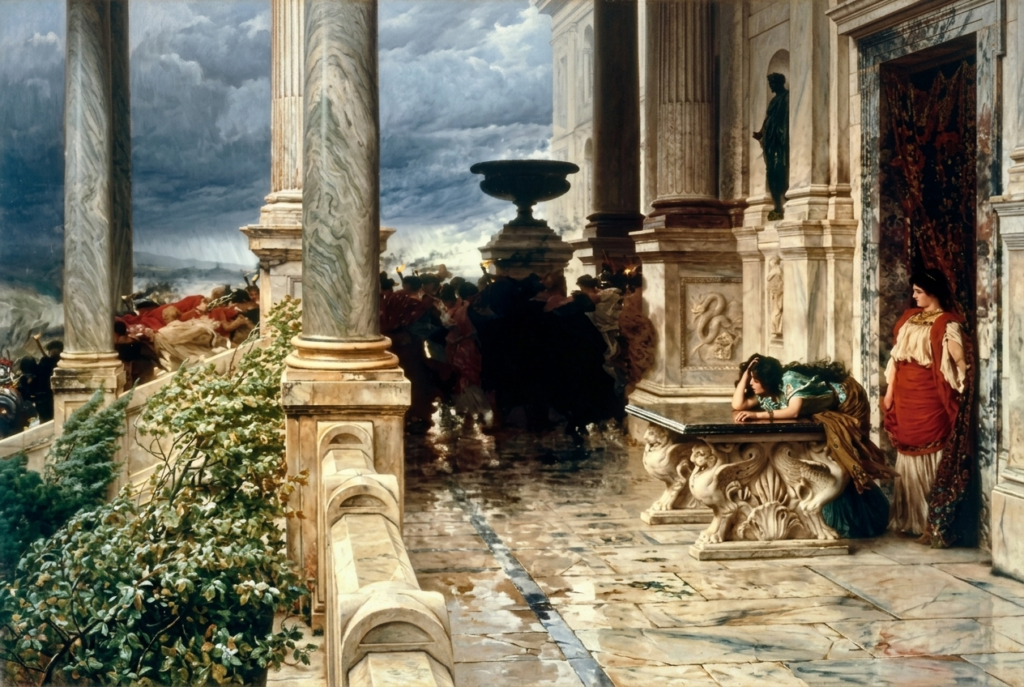
Tacitus says Britannicus was dead, on the funeral pyre, and cremated that same night. Even more suspiciously, the funeral apparatus was prepared in advance.
Cassius Dio adds an even gorier flourish. He claims the poison turned Britannicus’ skin livid. To counter that, Nero had the corpse coated with gypsum to conceal the discoloration.
Heavy rain supposedly washed it away, exposing the evidence. If this theatrical detail is true, someone must have seen it.
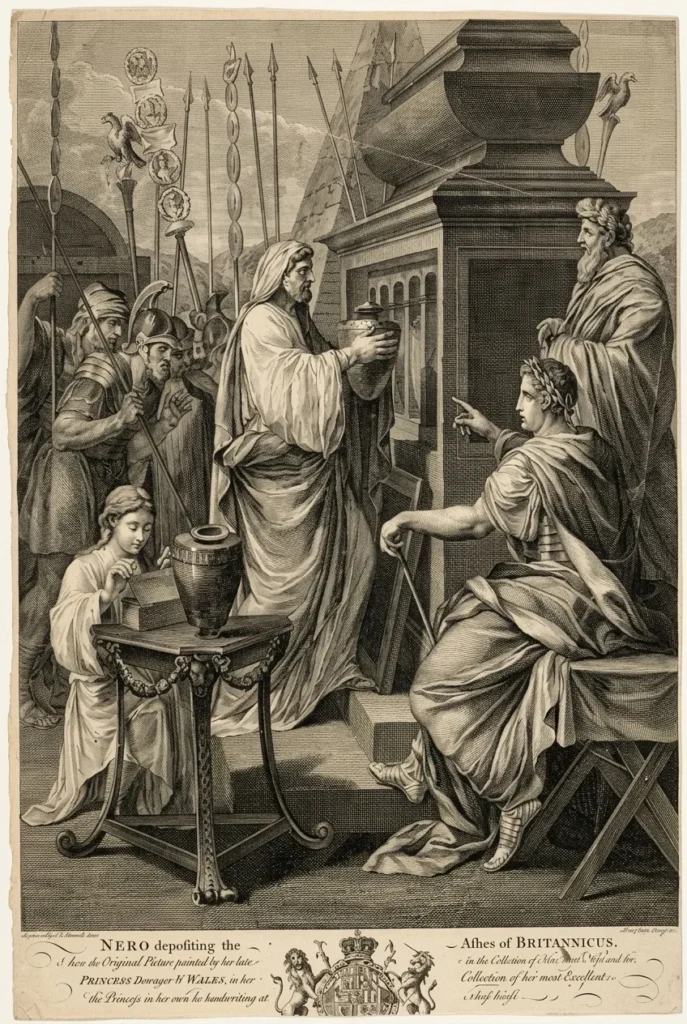
Presumably, there were slaves, attendants, guards, members of the imperial household, funeral personnel, and perhaps incidental bystanders around.
Suetonius says Nero later rewarded Locusta handsomely with a pardon, estates, and even pupils to learn her trade.
Did Romas actually believe Nero’s convenient epilepsy story? Probably not.
But disbelief didn’t equal power. Nero was already acclaimed by the Praetorian Guard, the Senate accepted him, and Britannicus had no independent military backing. Accusing the emperor of murdering Claudius’ son wasn’t exactly a safe position to take.

Did Nero Really Kill Britannicus?
So much for the ancient murder story. Now comes the harder part: did Nero actually do it? Let’s assess.
Ancient Writers
All three major ancient writers accept that Britannicus was murdered by poison.
That doesn’t mean every cinematic detail is equally trustworthy. Repetition is not automatically truth, especially when later writers may drawn on the same hostile traditions.
None of them was an eyewitness. All were writing decades later, and all belonged to a Roman elite that had plenty of reasons to dislike Nero’s behavior, especially his obsession with public performance.
So yes, you could argue that the murder story was sharpened, embellished, or even partly manufactured by hostile writers.
Still, the overlap matters.

Tacitus, Suetonius, and Dio all agree on the central point: Britannicus died suddenly, Nero stood to benefit, and poison was blamed. Their dramatic details differ, but the core story does not.
And there is a lot of circumstantial evidence stacked around it.
The stories may be theatrical. But Nero himself was theatrical. Some of the lurid details may be inventions. Others may preserve distorted or refracted memories of things he actually did or said.
The Roman Penchant For Murder
Moreover, it’s not like murdering a rival was unprecedented or even uncommon. It was the way of life in the Julio-Claudian era.
Since there was no fixed rules of succession, any relative could claim the throne. This created a situation where proximity to the emperor was both thread and opportunity.

For example, Tactitus accuses Tiberius of planning the destruction of Germanicus’ family. His prefect Sejanus suggested they were plotting against the emperor.
Caligula faced serious assassination threats in his lifetime. He was eventually murdered off by the Praetorian Guard, who then elevated Claudius.
Nero’s own mother was accused of poisoning her second husband to inherit his wealth. Then, it was whispered that she poisoned Claudius with a dish of mushrooms.
Nero’s Own Penchant For Murder
Nero himself was a cold-blooded killer. He left plenty of fingerprints.

I suspect it may have started with his dear adopted dad, Claudius. Yes, there is more ancient evidence accusing Agrippina of poisoning him.
But Nero was 16, not six. He understood exactly what was at stake. Claudius’ death put him on the throne. Nero had every bit as much incentive as Agrippina to make sure the emperor didn’t change his mind about the succession.
Women were routinely cast as poisoners in Roman literature. But we know Nero later had access to Locusta and was perfectly willing to use poison when it suited him.
Then there was Agrippina.
When his mother became too overbearing, Nero didn’t simply banish her from court. He tried to kill her with a specially rigged collapsible boat. When she inconveniently survived and swam to shore, he sent armed men to finish the job.
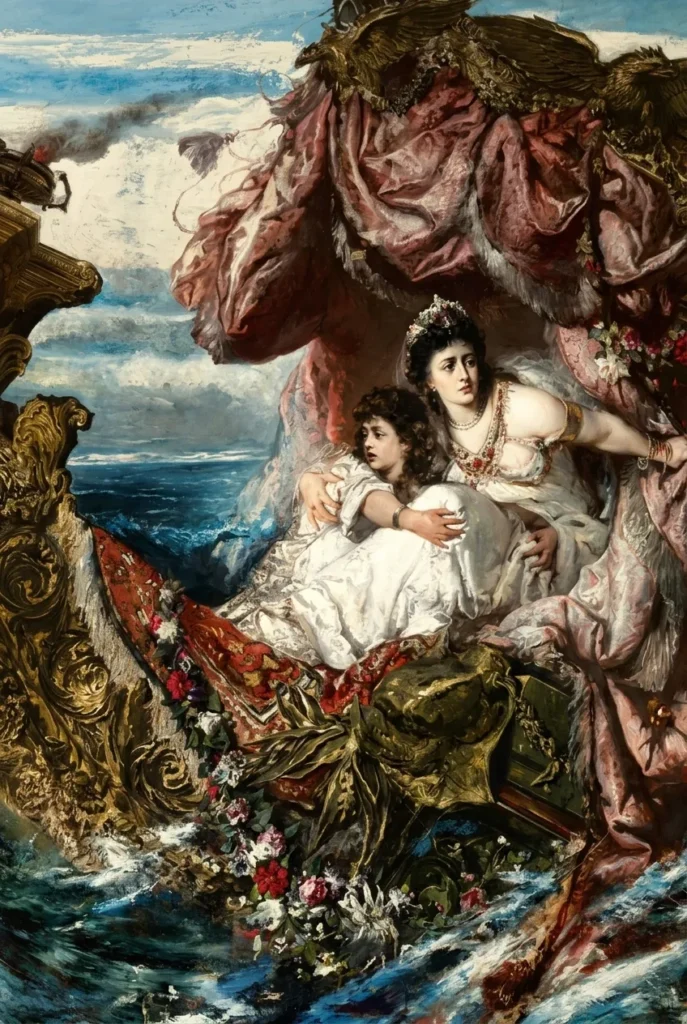
That murder is hardly controversial. Nero didn’t even pretend it hadn’t happened. Ancient writers later delighted in pointing out that he intentionally performed roles on stage involving matricide.
Then there was his wife Octavia. Claudius arranged the marriage to bind Nero more tightly to the imperial family. But Nero wanted Poppaea Sabina instead. Octavia was accused of adultery, exiled, and eventually killed.
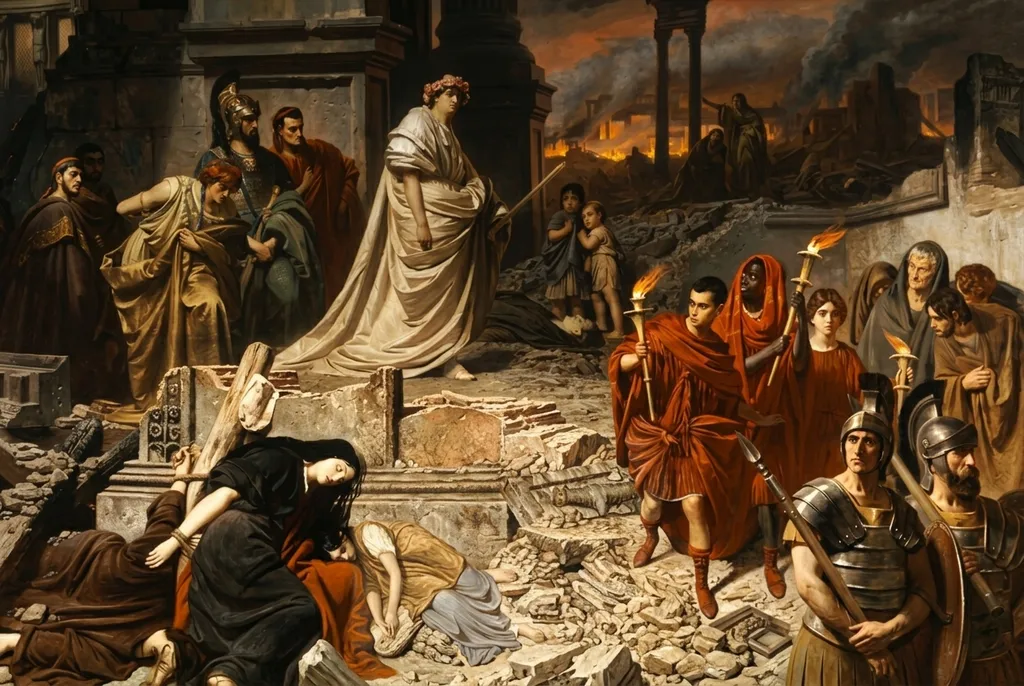
And then came the Christians. After the Great Fire of Rome, Nero blamed them and subjected members of the community to horrifying public executions.
It is a damning record.
None of this proves that Nero poisoned Britannicus. But it makes the accusation much easier to believe. Killing inconvenient people was not outside Nero’s character. It became part of his repertoire.

The Case for Nero
There is, of course, a case for reasonable doubt. Any lawyer can see it.
Britannicus may genuinely have suffered from epilepsy, which Nero immediately claimed was the cause of his collapse. Ancient poison stories are notoriously theatrical, and the exact mechanics described by Tacitus and Suetonius are impossible to verify.
The sources are also hostile and written later. Nero’s reputation became progressively blacker after his death and damnation. Once he was remembered as a matricide and tyrant, another murder fit comfortably into the story.
It’s also possible that Britannicus simply died suddenly and Nero’s enemies later turned an unexplained death into poisoning.
But that still leaves the motive, the timing, Nero’s immediate explanation, the extraordinarily hurried funeral, and Tacitus’ claim that the funeral preparations were ready in advance.
For me, reasonable doubt doesn’t amount to innocence.
Verdict: Guilty
No one can reconstruct Britannicus’ death with certainty. But even allowing for hostile sources and ancient embellishment, I believe Nero killed him.
He had motive, means, and opportunity. And the motive, in particular, was exceptionally clear. Remove Britannicus, and Nero removed the most obvious rival from the Claudian line.
Nero also had a track record of eliminating inconvenient people, and poison was hardly an exotic choice in Roman palace politics. Most damaging of all is Tacitus’ claim of the pre-prepared funeral.
That’s a difficult detail for any Nerophiliac arguing for Nero’s innocence to explain away.
So no, I don’t see Nero as a hapless victim of bad PR.
There’s no forensic evidence, no surviving confession, and no way to prove the case beyond doubt. All we can do is look at motive, circumstances, the ancient accounts, and Nero’s later behavior and make a judicious assessment.
Mine is that he did the deed. The fact that Britannicus could apparently sing better than Nero may simply have been the final insult.
I hope you’ve enjoyed my Roman murder mystery guide. You may find the other Roman histories interesting:
- History of the Rise and Fall of Rome
- History of the Roman Emperors
- Historical Facts about Rome
- Top 10 Worst Emperors Ranked
- History of Nero
- History of Julius Caesar
- History of Hadrian
Pin it for later.