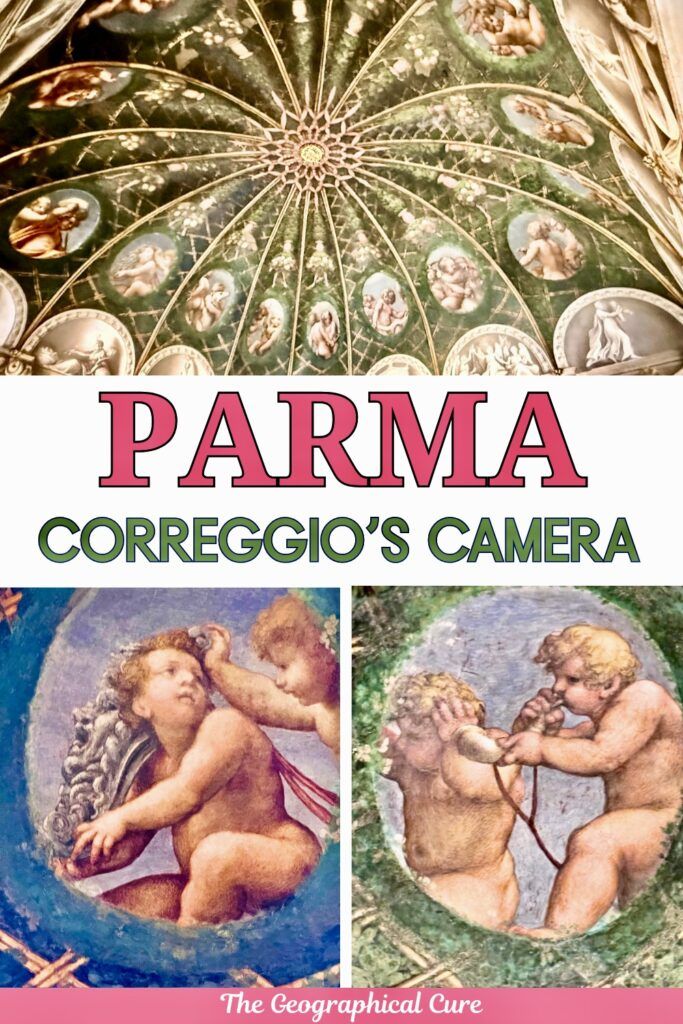
The Camera di San Paolo is Correggio’s first great masterpiece, announcing the arrival of one of the High Renaissance’s most original artists.
The room was the private apartment of the abbess, Giovanna da Piacenza, and Correggio decorated it around 1519.
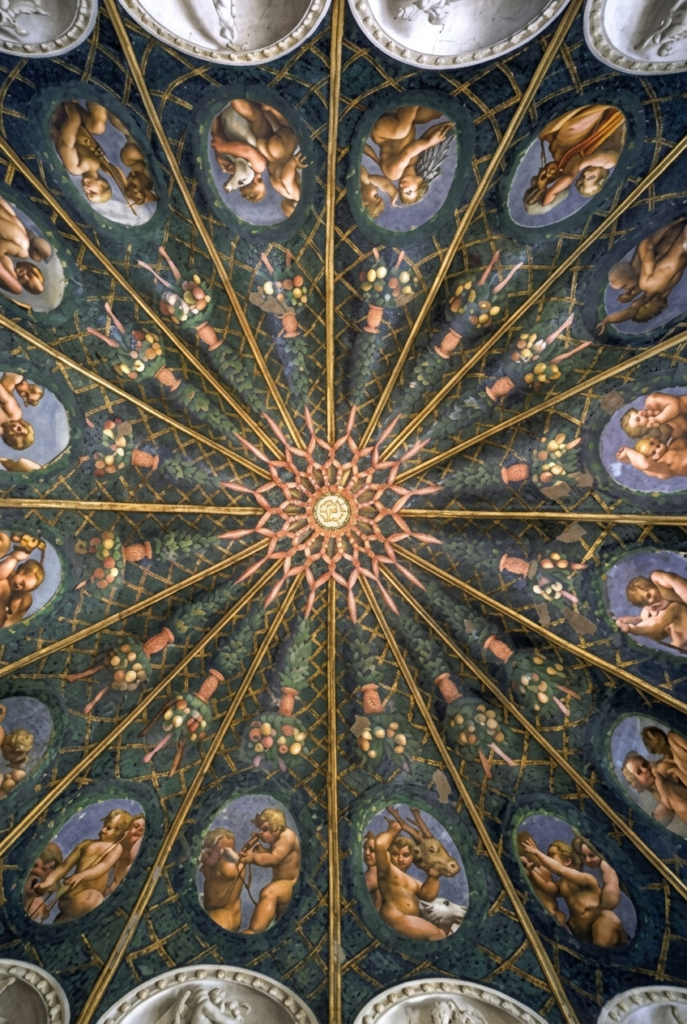
The entire room functions as a unified work of art. The ceiling is painted as a pergola with openings to the sky. Playful putti peer through the oval openings.
The decoration is unusually secular and mythological for a convent setting. In fact, it’s one of the most inventive rooms of the Italian Renaissance. And because it’s tucked away in Parma, it’s virtually tourist free.
Guide To the Camera di San Paolo
Quick Tips
- The easiest way to get to Parma is on a day trip from Bologna. It’s about a 45 minute train ride.
- Tickets: There are two ticket options: the Camera di San Paolo only: €8 or with the Integrated Civic Museums ticket (new in 2026) €15 full price, with access to six civic museums.
- Hours: Monday, Wednesday & Thursday: 9:30 am to 5:30 pm. Sunday until 6:30 pm. And Friday & Saturday: 9:30 am to 10:00 pm. Closed Tuesdays.
- How long? 30-45 minutes for casual visitors, an hour plus if you love Correggio and Renaissance art.
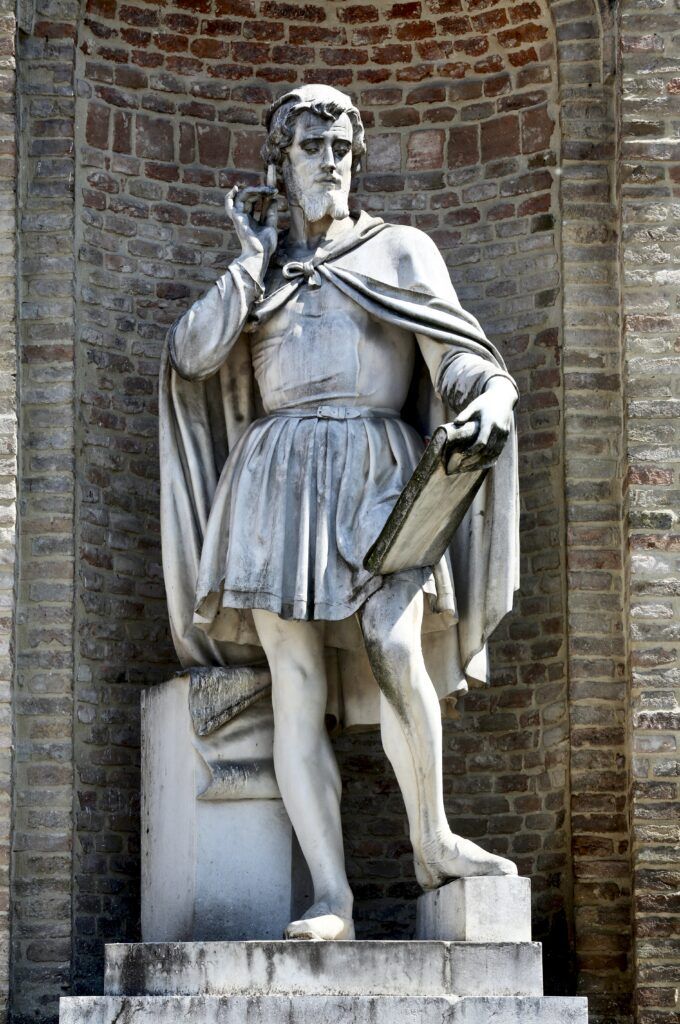
Who is Correggio?
Why was Correggio revolutionary?
He was one of the great artists of the High Renaissance. If you haven’t heard of him, it’s probably because most of his greatest works remain in Parma, rather than in Florence, Rome, or Venice.
Correggio was a nickname, not his real name. Born Antonio Allegri in 1489, he took his name from the small town of Correggio near Parma where he grew up.
Allegro means happy. And Correggio occasionally signed his works that way, a playful nod to the meaning of his surname.
Leonardo da Vinci was his greatest artistic influence. Chronologically, though, Correggio overlaps with the other High Renaissance giants, Raphael and Michelangelo. Yet his soft modeling, luminous light, and illusionistic compositions gave him a style all his own.
But how did a city like Parma produce such a singular original genius?
Artist and art historian Giorgio Vasari claimed that Correggio never visited Rome and therefore never saw Michelangelo’s Sistine Chapel. Other scholars believe Abbess Giovanna may have sent him there.
We simply don’t know. Whether he absorbed ideas firsthand or developed them independently remains one of the intriguing questions about his career.
Surprisingly little is known about Correggio’s life. We do know that he moved to Parma around 1518-19, where he produced the masterpieces that made him famous. Vasari called him the first great painter of Lombardy to work in the “modern manner.”
The last decade or so of Correggio’s life was his most productive and ambitious period. And it’s when he created the works that cemented his reputation.
In 1534, he died unexpectedly at about age 44 or 45 in his hometown of Correggio. The cause of death is unknown.
What we do know is that Correggio pioneered illusionistic techniques. His theatricality and emotional intensity were a link between Renaissance humanism and Baroque dynamism.
Mini History
What is the Camera di San Paolo exactly?
It’s a room located in what remains of the former Benedictine Monastery of St. Paul, founded in the 11th century. The setting is lovely, at the end of an alley of graceful acacia trees in a shaded courtyard.
The monastery flourished in the early 16th century under Abbess Giovanna da Piacenza. An aristocrat with a keen interest in Renaissance humanism, Giovanna commissioned local artists to decorate her private apartments.
Little survives today beyond a cluster of rooms, one of which became Correggio’s first great masterpiece, completed in 1518-19.
The Camera successfully combines exuberance and dignity. But its meaning remains a mystery.
What was Giovanna trying to do or say? Why did she choose a decorative scheme focused on Diana, Roman goddess of chastity and the hunt?
Art historian Erwin Panofsky believed the room was an allegory of the abbess’s virtue, built around the three “mirrors” of Renaissance iconography: the moral, the natural, and the doctrinal.
Roberto Longhi, by contrast, interpreted it as an allegory of the hunt. Arnaldo Barilli believed it reflected the evolution of both society and the individual.
Most likely, Giovanna chose Diana for her association with chastity and perhaps because the goddess’s name echoed her own. You almost feel that, in this room, Giovanna is becoming Diana.
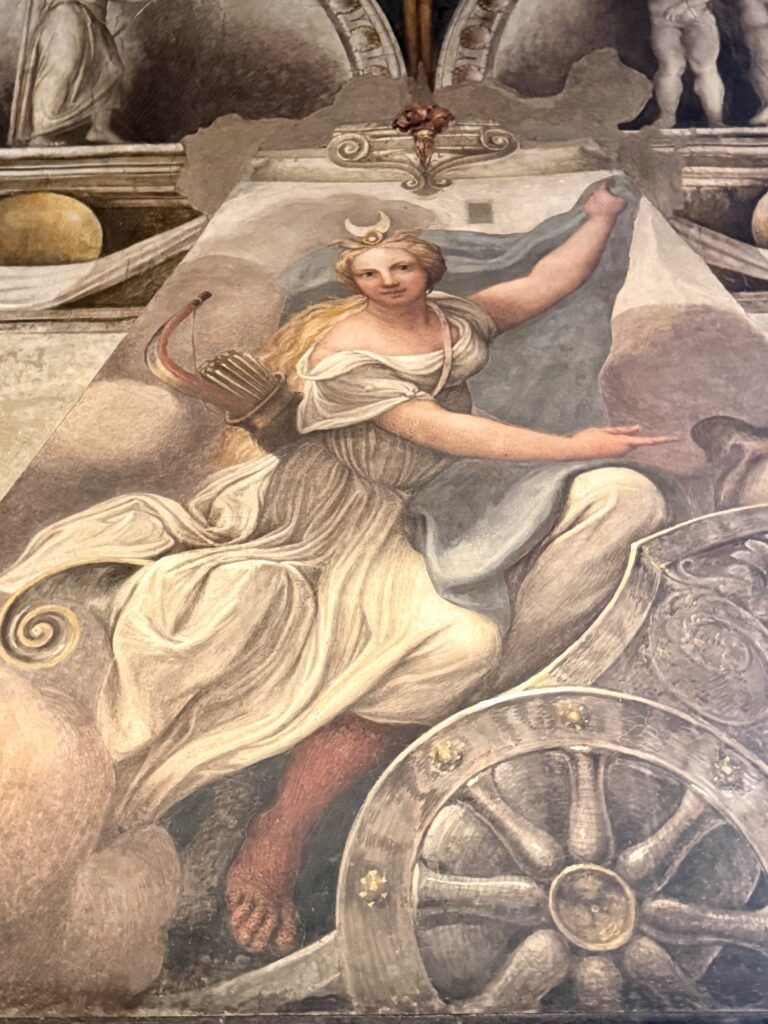
On the north wall of the room, over the hood of the fireplace, Correggio painted Diana on her chariot. She likely represents the abbess, and the partial moon over her head repeats Giovanna’s own coat of arms.
It’s emblazoned with words that basically translate to “do not stick your poker in the fire.” A little reminder that you are in a nunnery and there are some limitations on your behavior.
Based on the theme of decoration, it’s possible that Giovanna entertained in the room or used it as a reception area. If she was celebrating herself, it makes little sense for no one else to see it. Plus, it was simply magnifcent and well worth showing people.
However, the spirit of the Renaissance didn’t last long. In 1524, the convent was sequestered and cut off from the world. Giovanna died shortly thereafter at the age of 45.
The convent endured quietly for several more centuries. But Correggio’s camera fell into complete oblivion until 1774. That year, the German painter Anton Raphael Mengs got special permission to see it and spoke of “Correggio’s miracle.”
Other artists and travelers followed in the 19th century. Nearly 500 years after it was painted, the room still feels beautiful and much more appreciated.
What To See
The Camera di San Paolo is a masterpiece that marks a turning point in Renaissance art. Instead of treating the ceiling as a flat surface, Correggio dissolved the architecture and opened it to an imaginary sky.
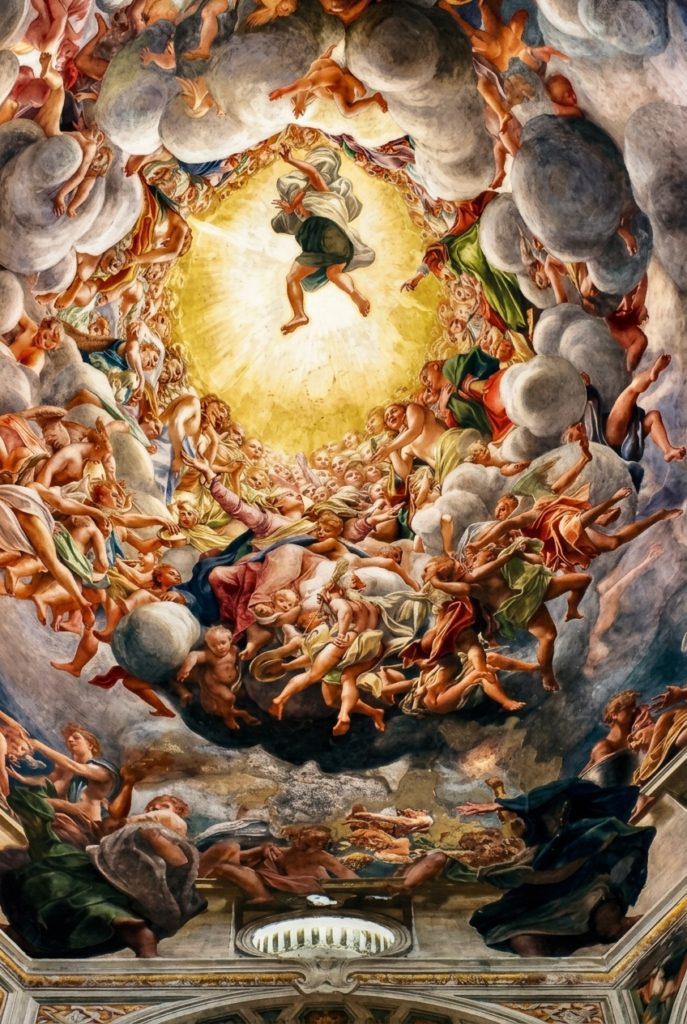
His illusionistic approach reached its full expression a few years later in the domes of San Giovanni Evangelista and Parma Cathedral, helping pave the way for the spectacular ceiling frescoes of the Baroque.
What surprises many visitors is the room’s size. It’s relatively small, making the illusionistic ceiling feel even more immersive. On a sunny day, the room changes as natural light moves across it.
The decoration of this room was a rare private commission. Stylistically, it marks the beginning of Correggio’s mature career and one of the earliest High Renaissance masterpieces in Parma.
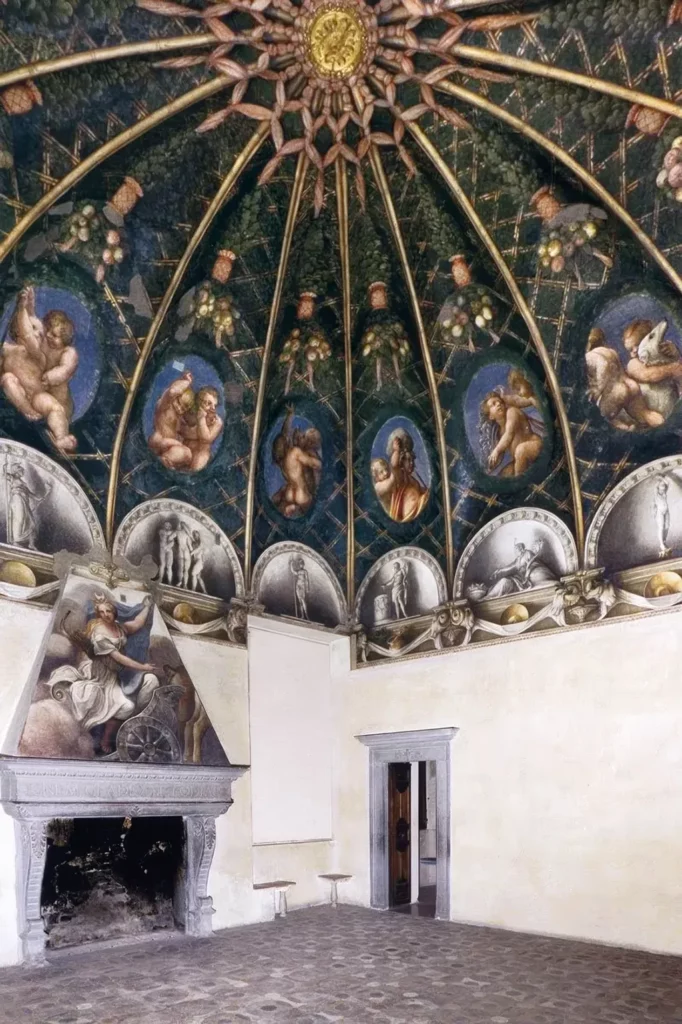
The camera is extraordinarily sophisticated. Its iconography is intellectual. And the illusionistic decoration is designed to impress.
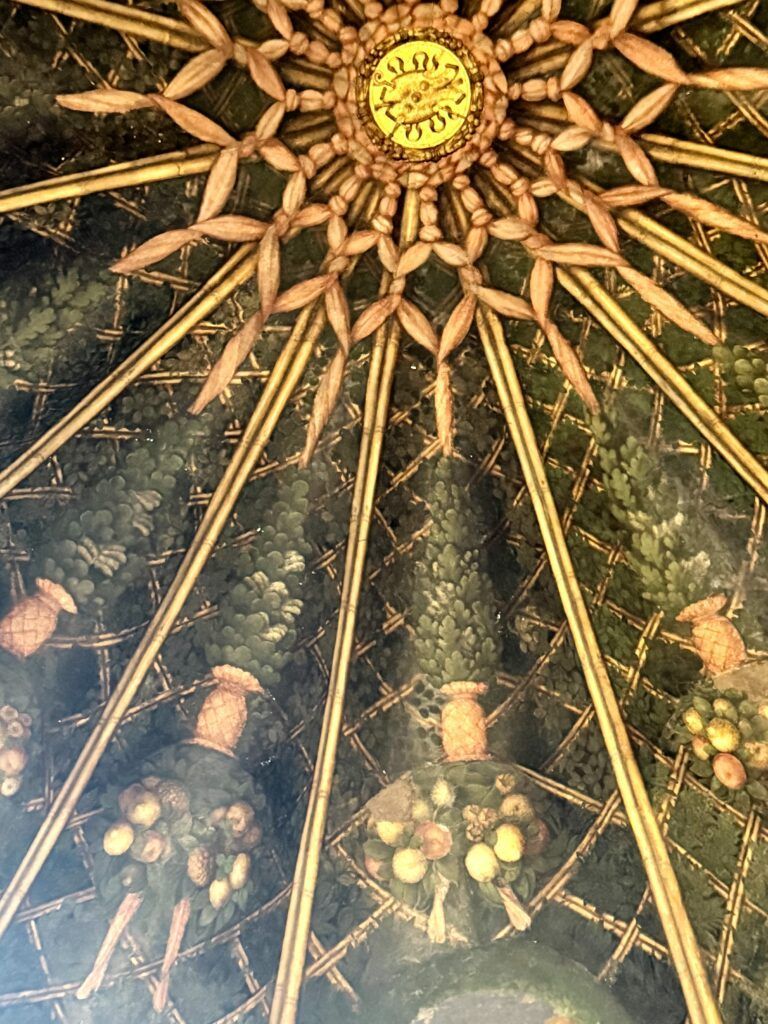
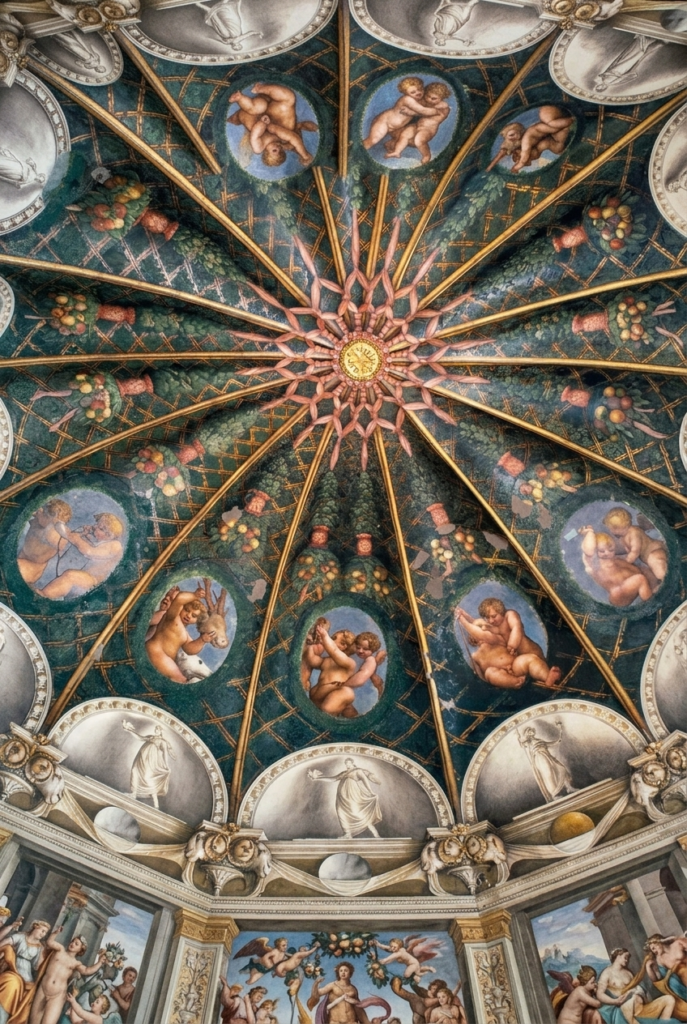
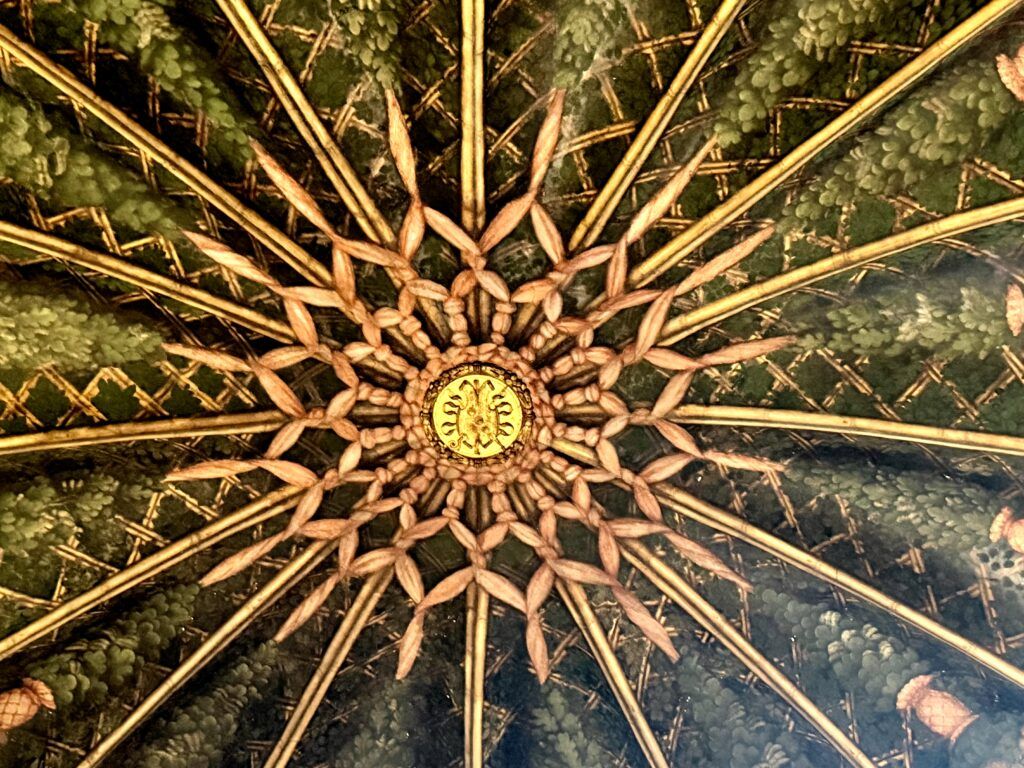
The ceiling is an umbrella vault divided into 16 sections by ribs painted to resemble bamboo. They radiate from the center, where Giovanna’s family coat of arms appears.
The vault resembles a leafy pergola draped with garlands of fruit and flowers. Looking up, it’s easy to forget you’re indoors.
Correggio transforms the ceiling into an open air arbor where nature, mythology, and architecture blend seamlessly.
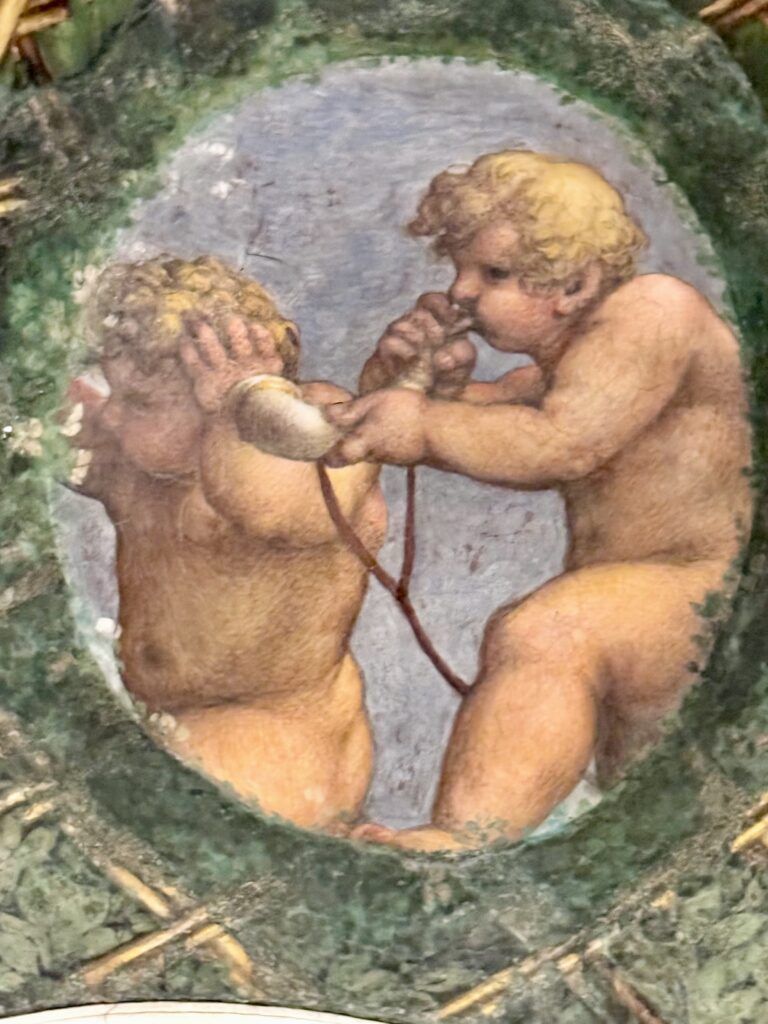
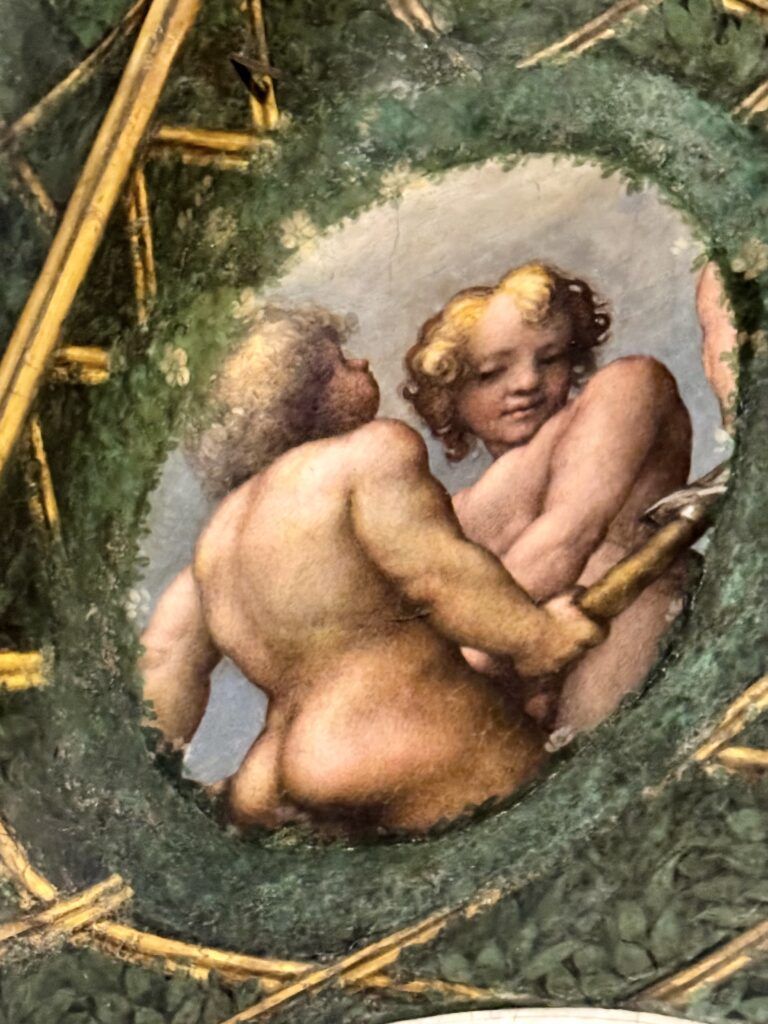
Oval openings reveal playful putti, while below them are lunettes filled with classical figures painted in grisaille. Grisaille is a monochromatic technique using shades of gray to create the illusion of a 3D form.
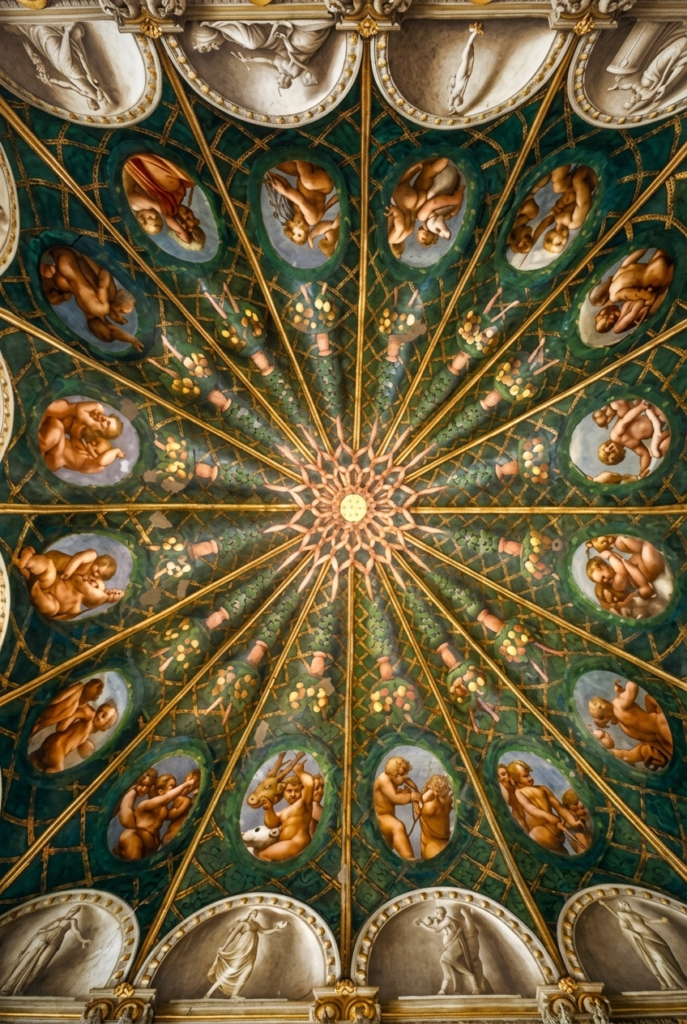
The lunettes rest on an illusionistic cornice supported by ram-head capitals, with painted draperies, pitchers, bowls, and other decorative objects completing the architectural fantasy.
The faux marble lunettes carry symbolic weight. Correggio rendered them in grisaille to resemble carved stone reliefs. Since the entire room celebrates classical antiquity, he was probably evoking the appearance of ancient Roman sculpture or Roman coins.
Painting convincing “stone sculpture” in monochrome was also a celebrated Renaissance skill. Correggio may simply have been demonstrating his virtuosity.
The precise meaning of the lunettes remains elusive. We recognize figures such as Jupiter and Juno, Saturn, Pan, satyrs, the Three Graces, and personifications of the four natural elements. But scholars still debate what the entire decorative program was intended to convey.
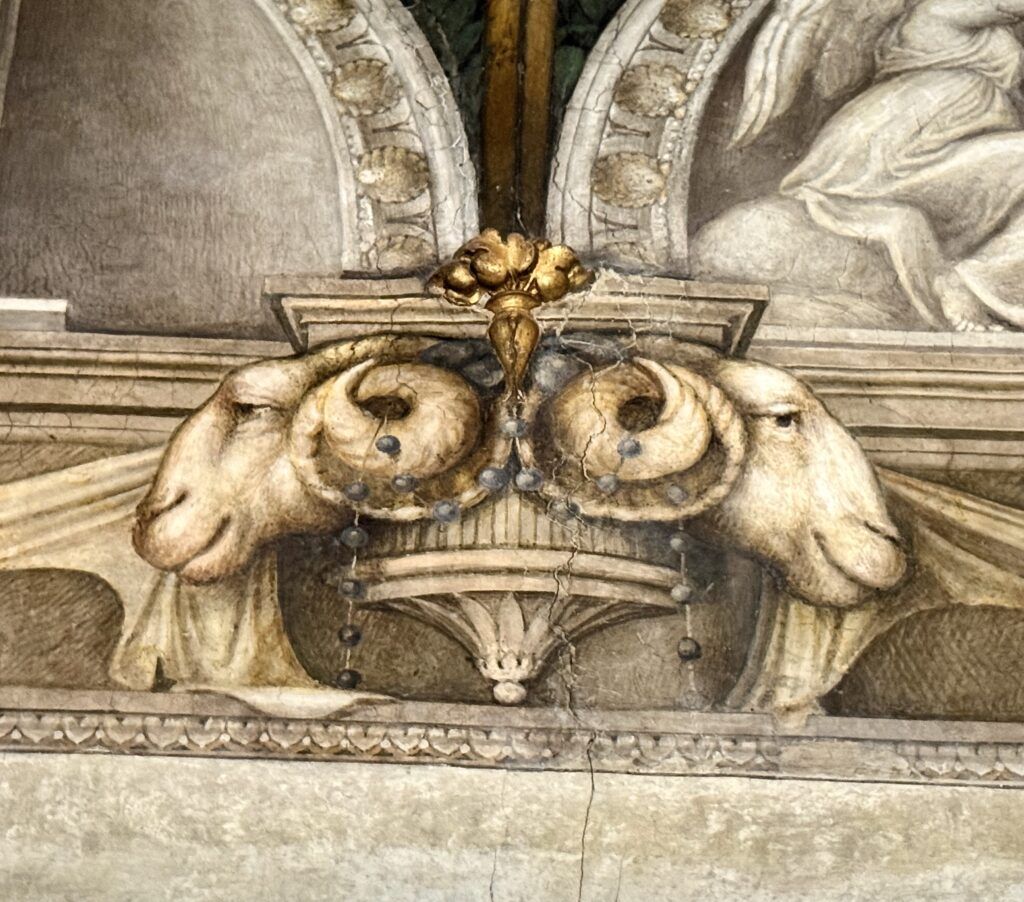
One of my favorite details is the series of paired ram head capitals supporting the painted architecture.
Their curling horns intertwine in the center, with blue beads draped between them.
The rams’ eyes are open and they almost seem to turn and glance at the viewer. It’s another example of Correggio’s delight in blurring the line between architecture and illusion.
Between the capitals, twisting marble draperies support decorative roundels, reinforcing the impression that this was an elegant space for entertaining and conversation.
The liveliest figures in the Camera are the smiling cherubs peering through the oval openings. They’re poised between childhood and adolescence.
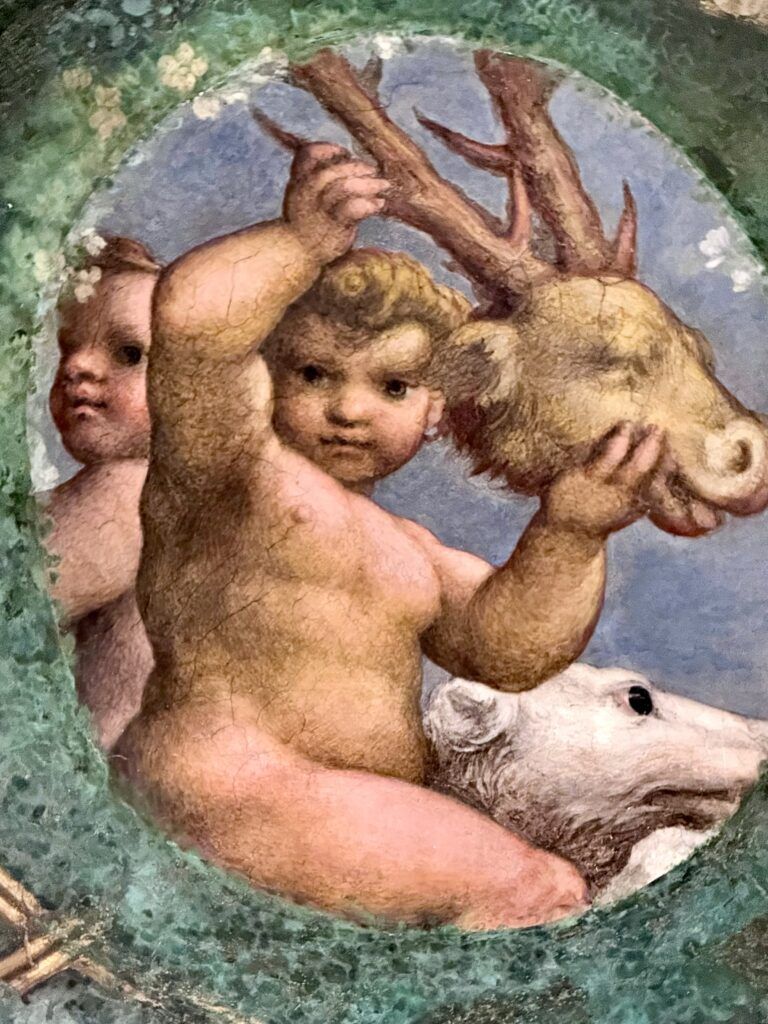
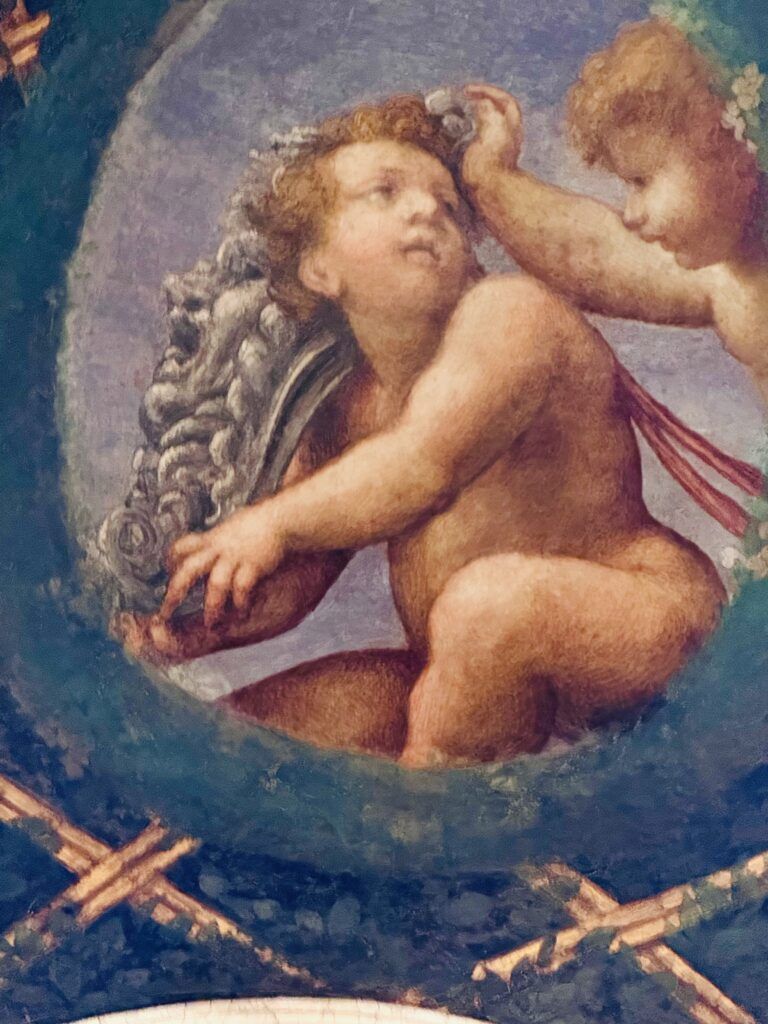
Baby fat is turning to muscle. Correggio seems to have learned something from Michelangelo’s heroic figures. At least one youth recalls Michelangelo’s David in Florence.
The chubby cherubs are allegories. For example, one boy carries a stick representing sleep. Another holds a severed deer head, which invites us to control desire.
The boys are all linked to the room’s hunt theme. They wrestle, climb, blow hunting horns, carry bows, display the heads of slain animals, and romp with their hunting dogs.
If Parma Cathedral shows Correggio at the height of his ambition, the Camera di San Paolo reveals him at the beginning of his genius.
It’s intimate rather than monumental, but no less inventive. More than 500 years later, it still seems fresh, playful, and modern.
I hope you’ve enjoyed my guide to Correggio’s Camera di San Paolo in Parma. You may find these other Italian art guides interesting:
- Italy art bucket list
- Most famous Italian artists
- Best museums in Italy
- Masterpieces in Venice
- Masterpieces in Florence
- Caravaggio trail in Rome
- Bernini trail in Rome
- Michelangelo trail in Florence
- Raphael masterpieces
Pin it for later.