“Claw, claw, Claudius.”
That mocking refrain from I, Claudius captures the way Claudius was seen for most of his life: awkward, stammering, physically impaired, and easy to dismiss.
His own family underestimated him. So did the Roman elite.
And when the Praetorian Guard hauled him out of hiding after Caligula’s murder and proclaimed him emperor, they assumed they’d found a harmless fool they could control.
They were wrong. Let’s explore why.
Biography of Claudius, The Scholar Emperor
Early Life
Parents
Born in 10 BCE, Claudius was, by almost every account, one of the oddest members of Rome’s imperial family. You would never guess it from his pedigree.
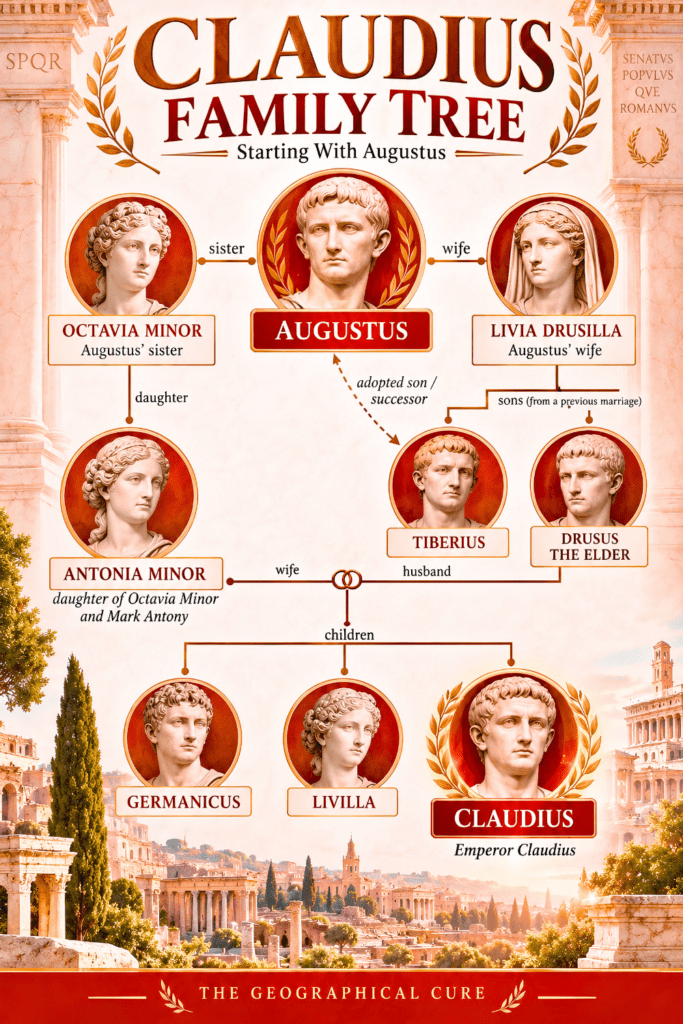
He was born into the heart of the Julio-Claudian dynasty. Augustus had a daughter, Julia, from an earlier marriage. Livia brought two sons of her own, Tiberius and Drusus the Elder. Drusus was Claudius’ father.
His mother, Antonia Minor, had impeccable blood of her own. She was the daughter of Mark Antony and Octavia the Younger, Augustus’ beloved sister. By Roman aristocratic standards, her marriage to Drusus seems to have been unusually happy, and the two were deeply attached.
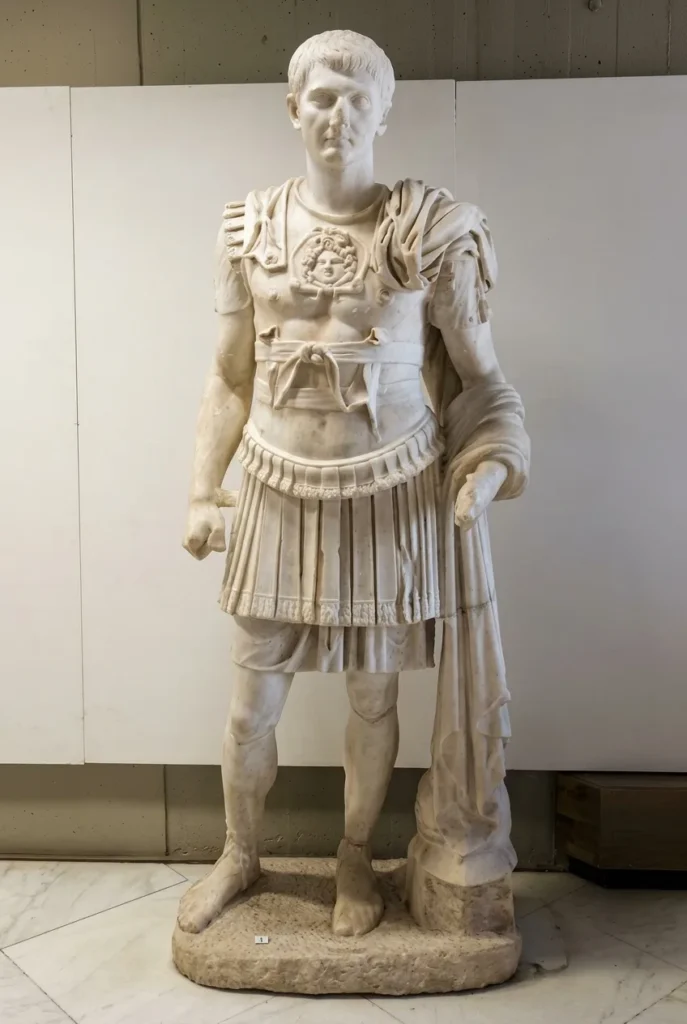
Drusus was everything Rome admired: young, handsome, energetic, militarily gifted, and celebrated for his campaigns in Germany. He also had a reputation for integrity.
Poor Health
And then came Claudius. He did not arrive wrapped in a tidy bow.
In fact, it’s somewhat remarkable that he lived long enough to become emperor.
He was a sickly child from infancy. He suffered from a chronic illnesses, which left him with a collection of physical problems. Not a great start for the little patrician.
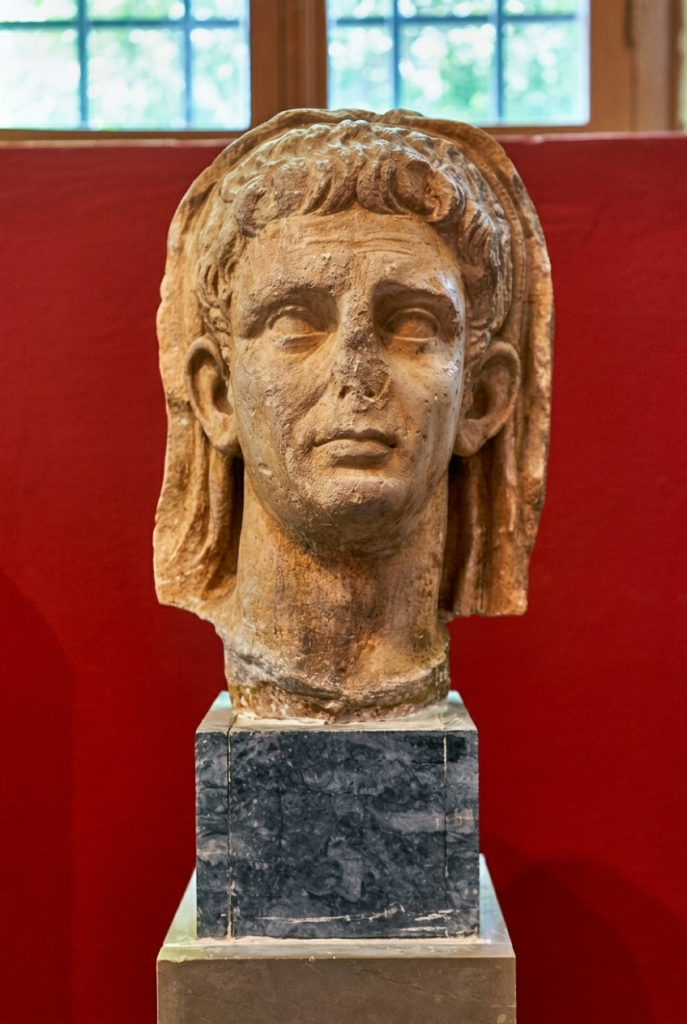
Ancient descriptions mention weak knees, an unsteady gait, shaking of the head, poor control of his facial muscles, a runny nose, and drooling or foaming at the mouth.
He grew up with a grotesquely twisted body and a severe stammer. He was said to “bray” rather than speak.
Modern historians suggest everything from cerebral palsy and polio to Tourette syndrome and other neurological disorders. But there’s no way to diagnose him from ancient descriptions.
What is clear is that his family dismissed him as physically defective. That judgment shaped the way Claudius was treated from childhood.
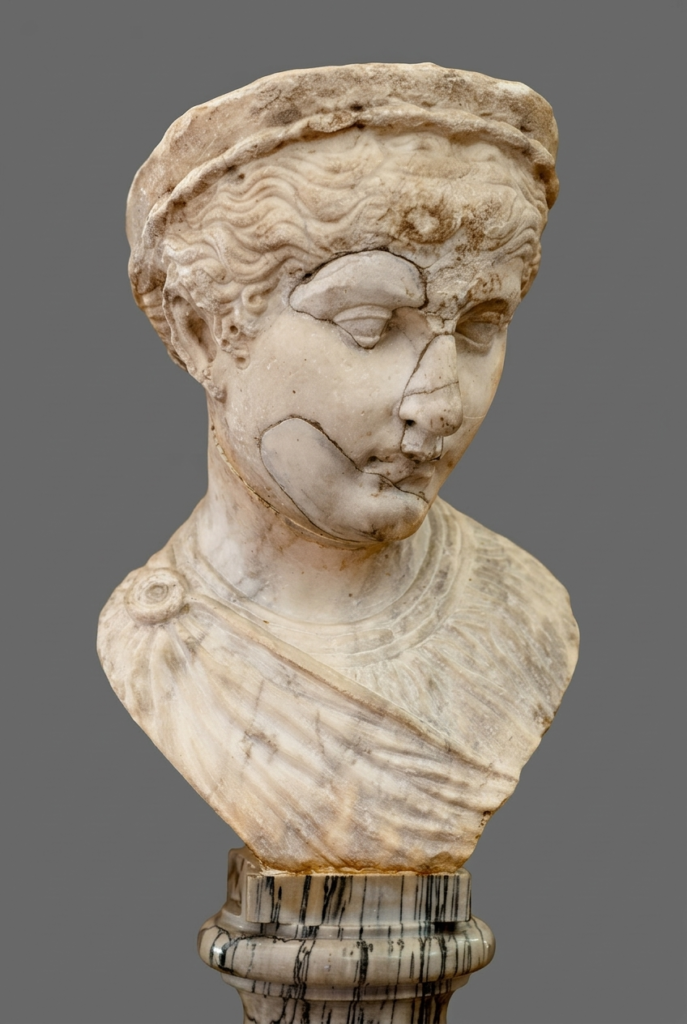
Family Dysfunction
Claudius’ family showed little sympathy for his disabilities. For starters, they were monstrously ableist.
His mother, Antonia Minor, reportedly called him “a monster of a man, not finished by nature.” His sister Livilla mocked him, and his grandmother Livia treated him with open contempt. She reportedly communicated with him largely through notes rather than conversation.
He was kept out of public life and denied the normal political career expected of a Julio-Claudian prince.
The message was clear: Claudius was an embarrassment.
On the upside, being sidelined kept Claudius out of the succession struggle. It gave him plenty of time to read, write, and pursue his scholarly interests.

Imperial Travails
Meanwhile, the rest of the imperial family was tearing itself apart.
The Praetorian prefect Sejanus steadily poisoned Tiberius against Germanicus’ family. Agrippina the Elder was banished, while two of her sons met grim ends.
Nero Caesar was exiled and later died, either by suicide or starvation. Drusus was imprisoned in the imperial palace and eventually starved to death.
Claudius watched all of this from the sidelines.
That kind of upbringing could leave anyone complicated: intelligent and observant, but deeply insecure and hungry for acceptance.

The Harmless Fool & Caligula’s Court
Claudius had spent years being dismissed as harmless. Under Caligula, that reputation may literally have saved his life.
Caligula treated his uncle with open contempt. He and the courtiers mocked Claudius at dinner, laughed at his mannerisms, and played practical jokes on him when he fell asleep.
The humiliation could also turn threatening. Caligula bullied him, squeezed enormous sums of money out of him, and could easily have decided that an imperial uncle was better dead than inconvenient.
But Claudius never looked dangerous enough to eliminate.
He survived by keeping his head down. Or in a book. Or by writing a book.
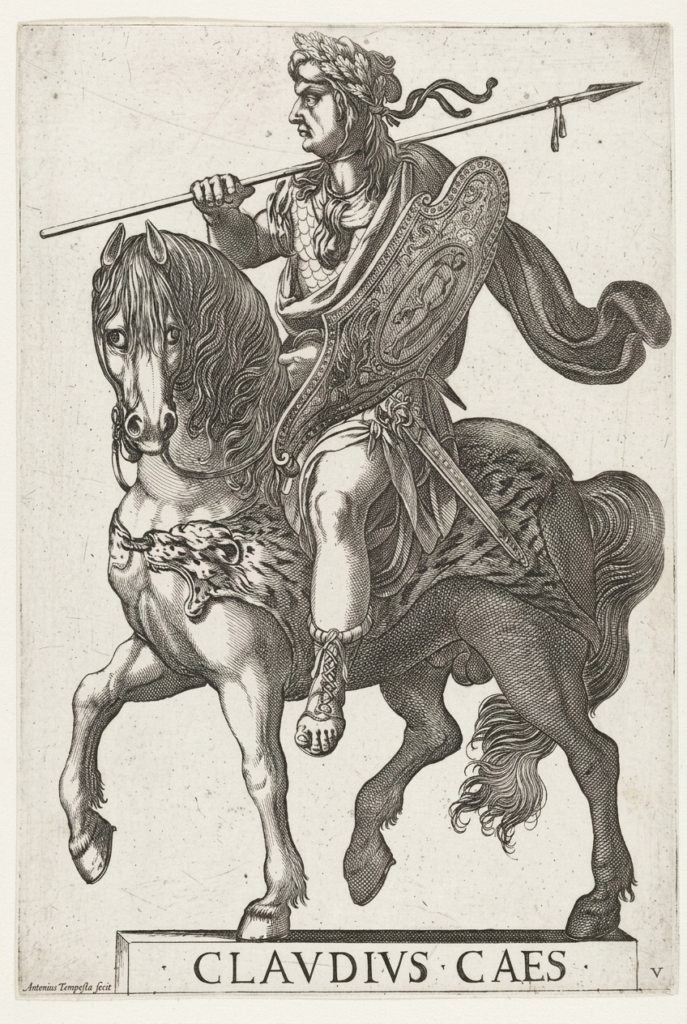
An Emperor by Accident
Caligula’s Assassination
Claudius wasn’t the only one Caligula liked to torment. The emperor spent years humiliating the Praetorian Guard too.
He taunted officers, handed out filthy passwords, and forgot one fairly obvious fact: these men were armed and dangerous.
On January 24, 41 CE, that mistake caught up with him. A group of disaffected Praetorian officers ambushed the emperor and stabbed him to death.
The conspirators planned the assassination carefully enough. What they hadn’t considered, apparently, was the succession.
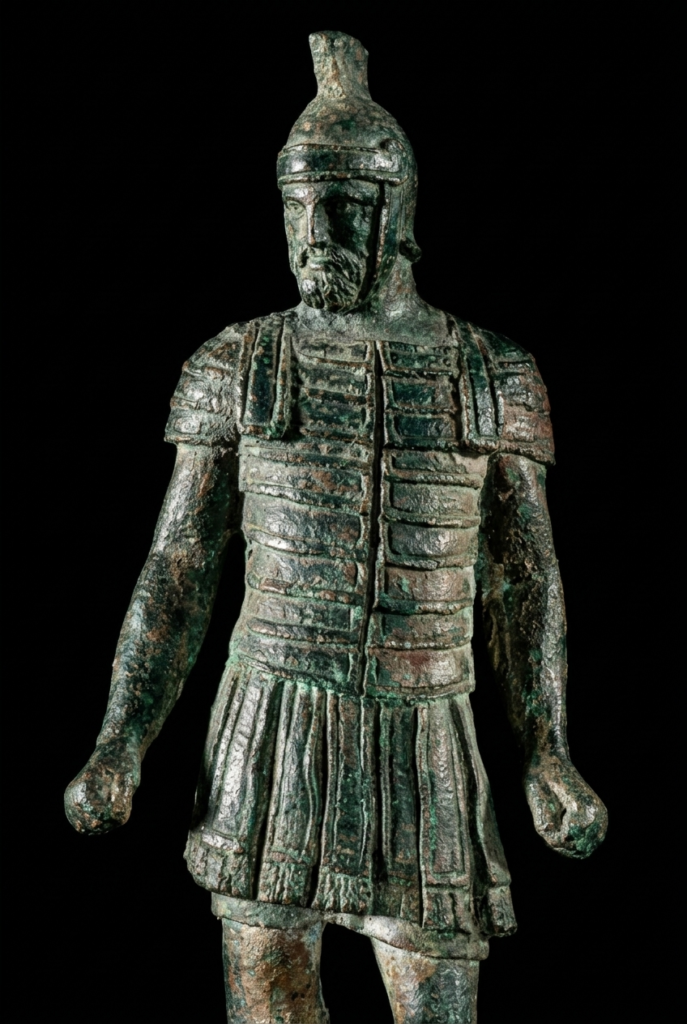
In the chaos that followed, the Praetorians discovered a middle-aged Claudius hiding behind a curtain in the palace. Rather than kill him, the Guard hauled him out and acclaimed him emperor.
And in truth, there weren’t many alternatives.
Claudius Is the Last Men Left Standing
Caligula had no surviving son. His only child, Julia Drusilla, was murdered during the coup, reportedly by having her head smashed against a wall.
Among the adult men of the imperial family, Claudius was the obvious dynastic choice. He also had one quality the Praetorians found reassuring: everyone thought he was a harmless dimwit.
The Guard assumed they were installing a puppet who would reward them generously and cause little trouble. They badly underestimated him.
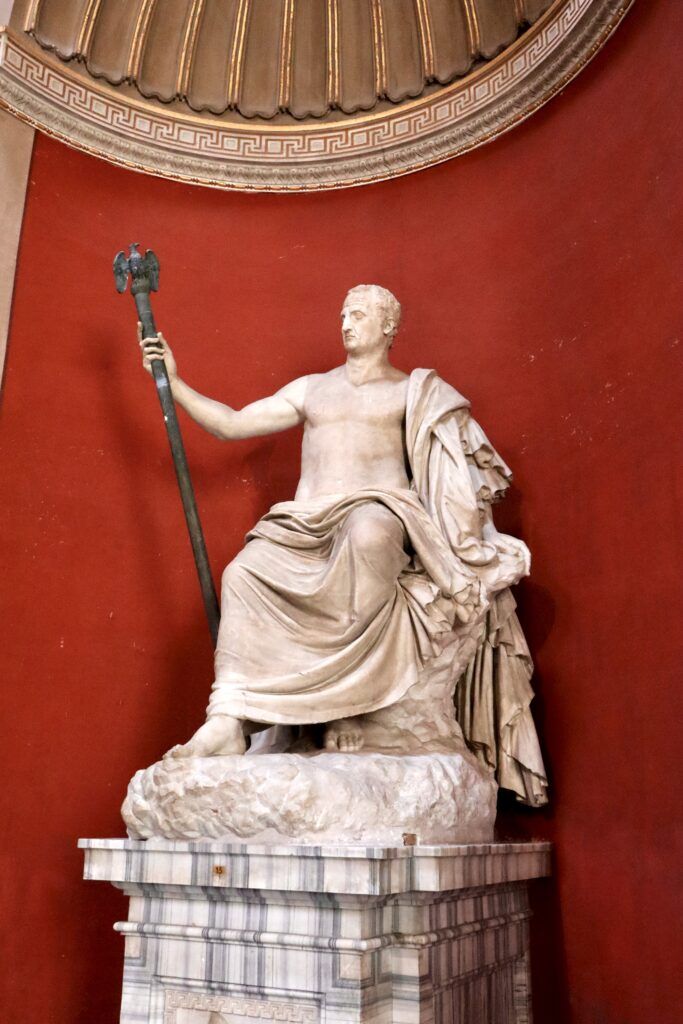
Claudius Takes Control
Once in power, Claudius proved almost everyone wrong.
As emperor, he was energetic, full of ideas, and willing to experiment. His years spent studying history weren’t wasted, especially his close attention to Augustus’ reign.
Claudius tried to borrow Augustus’ political formula: keep the people happy while maintaining a workable relationship with the Senate.
That was easier said than done. Many senators still resented him. But after a lifetime of ridicule, Claudius had become remarkably good at ignoring their sneers.
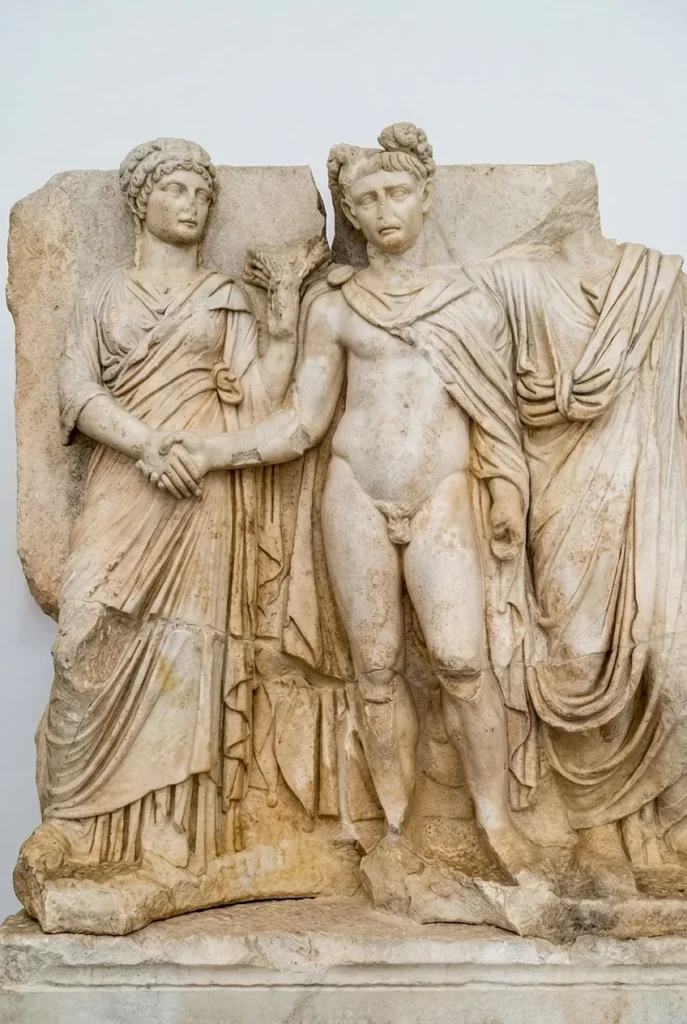
And, crucially, he wasn’t anything like the zany Caligula. That alone must have relieved the Senate.
Claudius was a traditional-minded Roman who shared many senatorial values. At times, he looked every inch the emperor.
Claudius was also surprisingly modern and efficient. He governed like a practical engineer.
He expanded Rome’s water supply, improved its harbor system, strengthened the grain network, and poured money into roads and public works.
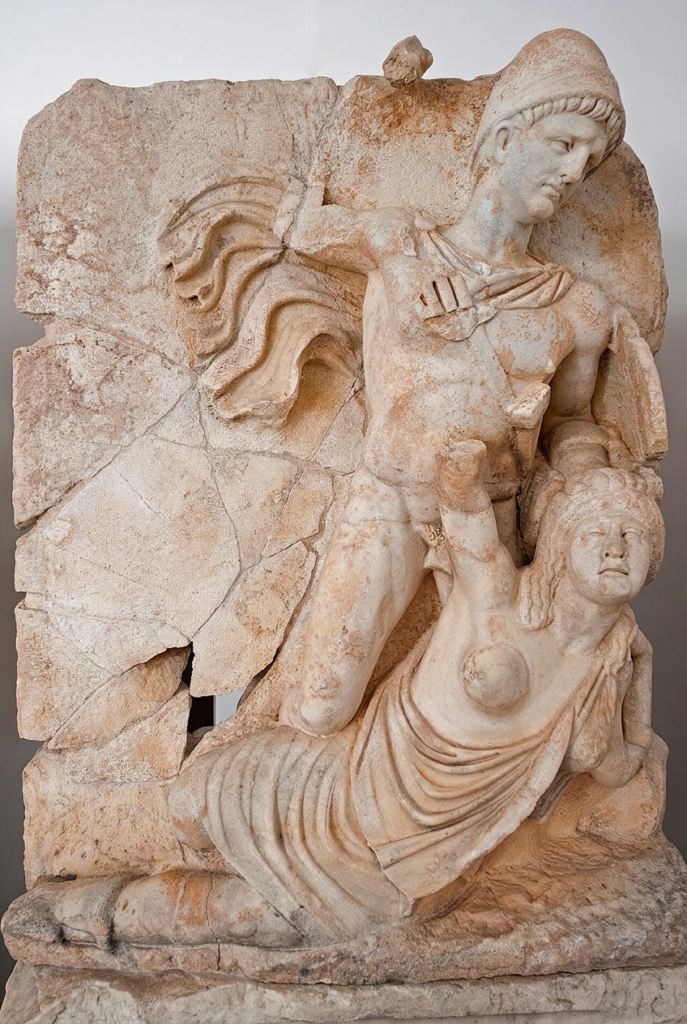
Claudius’ Conquest of Britain
Claudius’ greatest success was his military conquest of Britain, one of the most important imperial campaigns of the 1st century.
In 43 CE, he sent a massive invasion force of roughly 40,000 men across the English Channel under the command of Aulus Plautius. The Romans fought their way inland against British resistance, including forces associated with the powerful Catuvellauni and their leaders Caratacus and Togodumnus.
Once the invasion was well underway, Claudius himself crossed to Britain. Ancient sources say he brought reinforcements that included war elephants, an extraordinary spectacle for the time.
He joined the advance on Camulodunum, modern Colchester, the principal stronghold of the Catuvellauni.
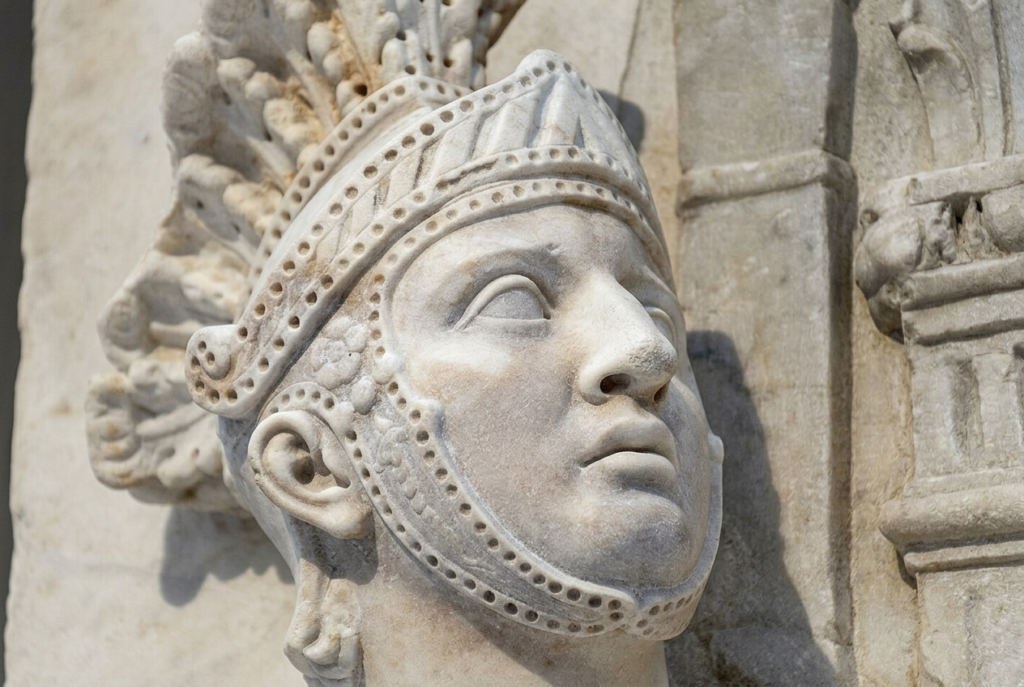
The city fell, and Claudius remained in Britain briefly before returning to Rome. The wider conquest was far from complete and Caratacus wasn’t captured until 51 CE.
Even so, Claudius celebrated a formal triumph in Rome and was praised as the emperor who had brought peoples “beyond the Ocean” under Roman rule.
The Senate also honored him with the Arch of Claudius on the Via Flaminia. The monument itself has long since disappeared. But fragments of its inscription are preserved in the Capitoline Museums.
The Women Around Claudius
Claudius could conquer Britain and manage an empire. His private life was another matter.
Claudius was unlucky in love. By the time he became emperor, he was already on his third wife. Women were a great private vulnerability, and his marriages were personal disasters.
The First Two Wives
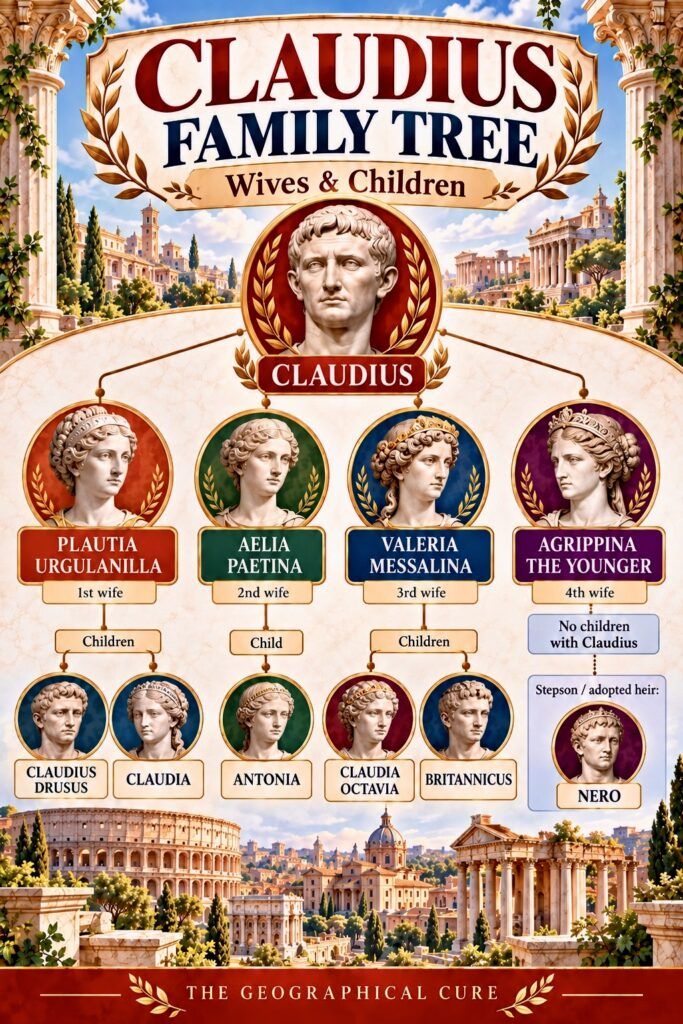
He was first married to Plautia Urgulanilla between AD 9 and 24. The pair divorced due to Plautia’s scandalous love affairs.
Claudius next married Aelia Paetina, probably around 28 CE. The marriage lasted only a few years.
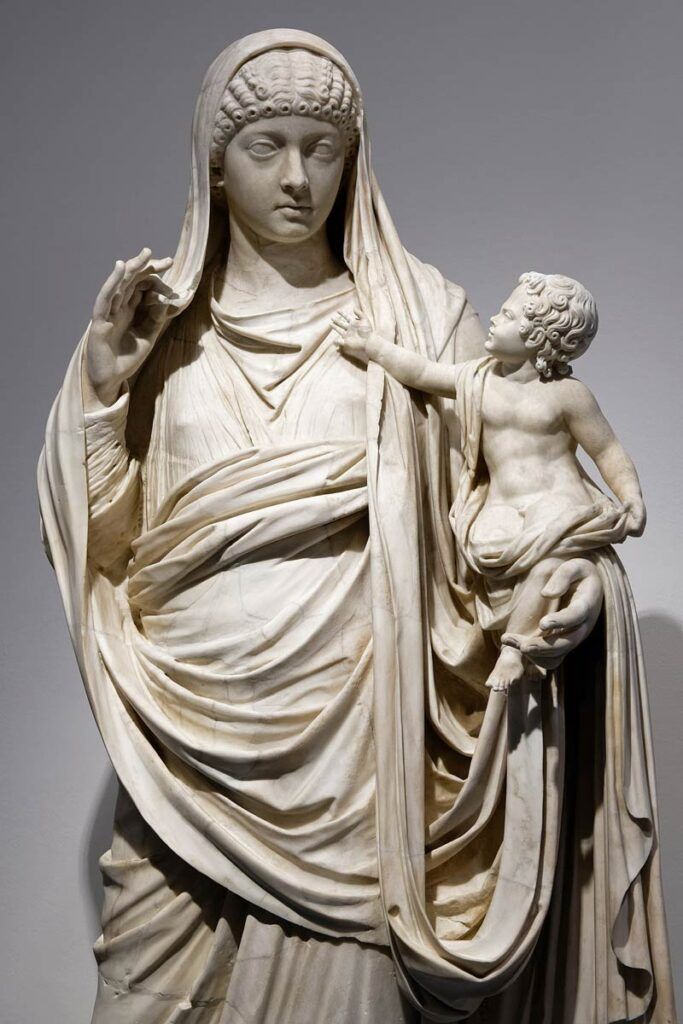
They divorced in 31 CE, the same year Sejanus fell from power. Paetina had ties to his circle, and that was suddenly dangerous. So, the divorce was likely about political survival.
Messalina: Scandal and Betrayal
Undeterred, Claudius tried marriage a third time with Valeria Messalina.
On paper, she was an excellent match: young, blue-blooded, fertile, and deeply connected to the Julilan family.
That mattered enormously to Claudius. He was a Claudian by birth. Although firmly part of the Julio-Claudian dynasty, he was sensitive about lacking direct descent from Augustus.
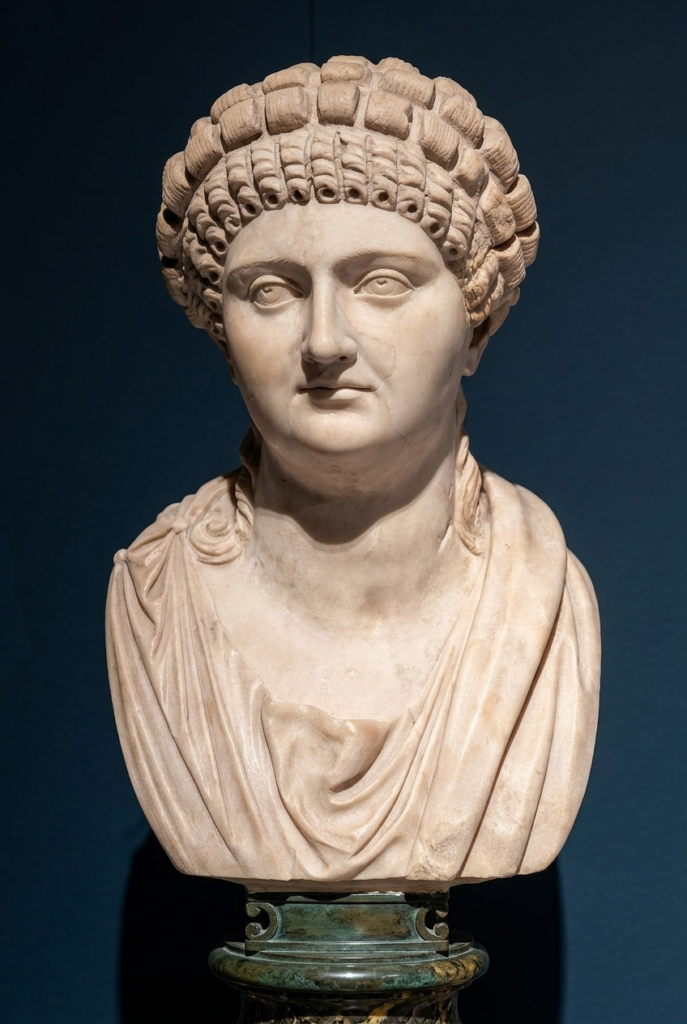
Marrying Messalina shored up that weakness. Through her mother, she descended from Augustus’ sister Octavia, giving their children an even stronger dynastic pedigree.
They married around 38 or 39 CE, while Caligula was still emperor. Later, they had two children, including a son, Britannicus. Claudius seems to have loved her.
But did she turn out to be the model of Roman womanhood everyone thought she was?
No, unfortunately for Claudius, the woman he married for dynastic respectability became an outrageous strumpet. She was notorious for her affairs, meddled in court politics, and plotted against rivals.
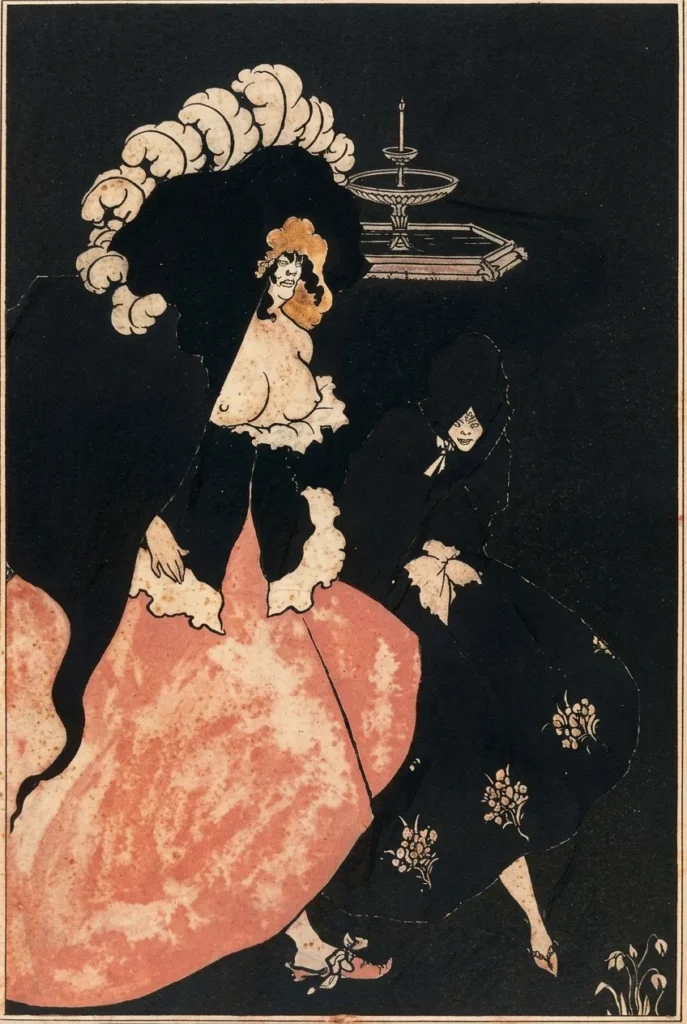
Her final scandal was spectacular and bordered on self-destruction. She staged a mock marriage with her lover, the consul-designate Gaius Silius, while Claudius was still very much alive.
That wasn’t just adultery. If the ceremony was real, she was either cartoonishly reckless or plotting to replace Claudius as emperor.
It was a huge moment, with much at stake. It made Claudius look weak and cuckolded, which played into the stories of him being a fool.
Whichever version was true, Claudius reasonably believed the pair posed a threat to his rule. They were both executed forthwith.
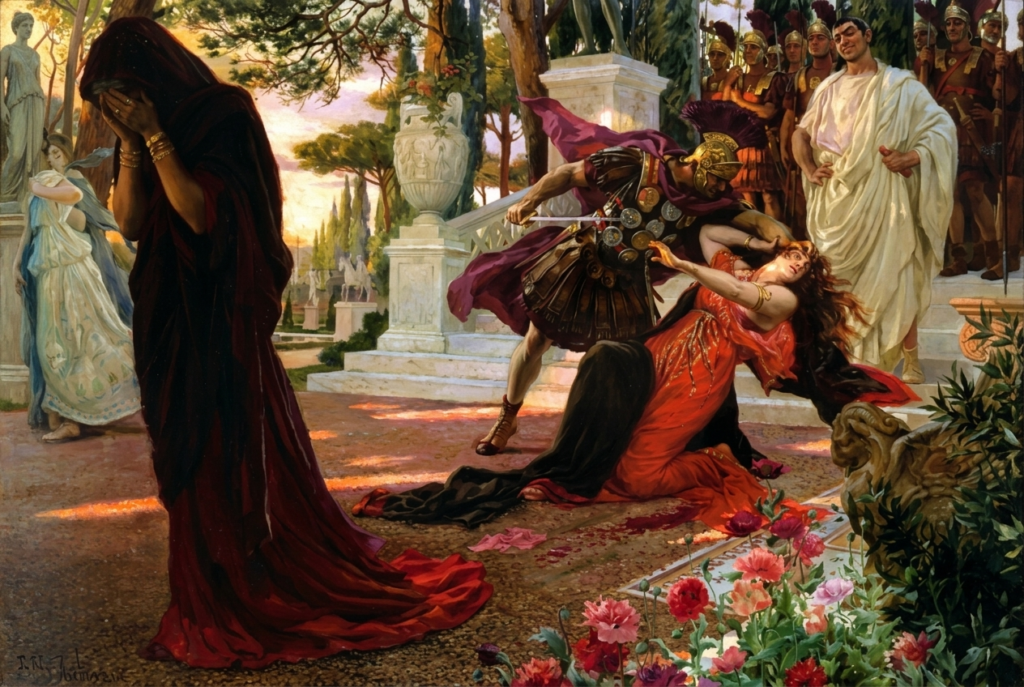
Agrippina the Younger: Rome’s Most Dangerous Mother?
After Messalina’s execution, Claudius needed another wife. Next up was Agrippina the Younger, who also came with an enviable imperial pedigree.
A Dynastic Power Match
She was Germanicus’ daughter, Caligula’s sister, Augustus’ great-granddaughter, and Claudius’ own niece. Her son Nero also carried excellent Julio-Claudian blood.
Agrippina other huge advantages: political acumen, beauty, intelligence, and wealth.
The obvious problem was that she was Claudius’ niece, and there was a 25 year age gap. Roman custom frowned heavily on uncle-niece incest and marriage.
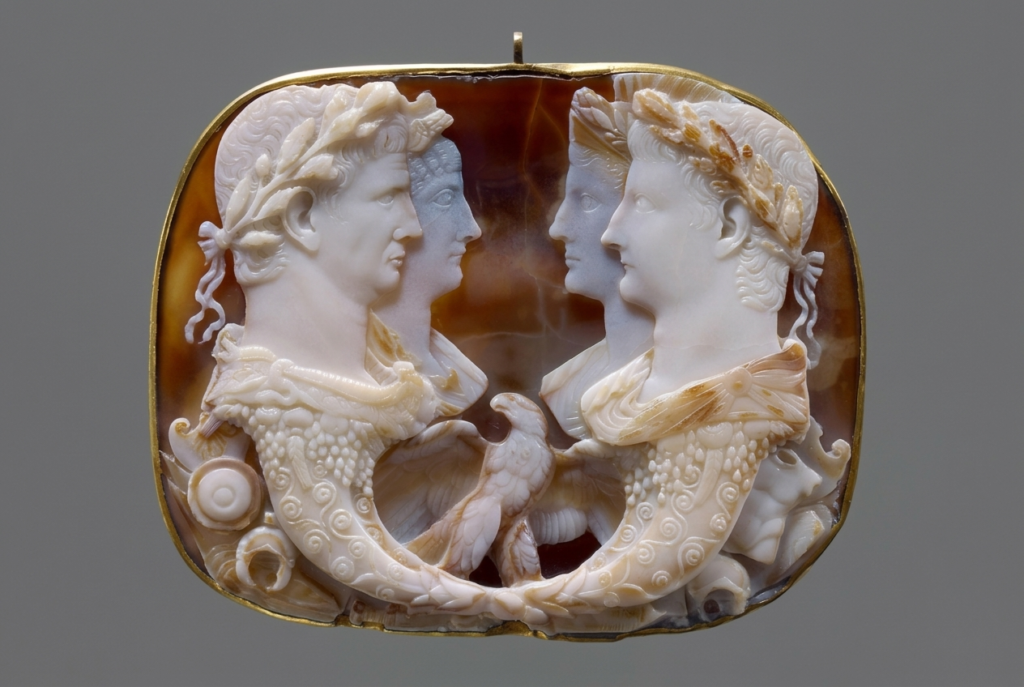
But Claudius was the emperor, and desperate for another dynastic match. In the end, he got his way. The Senate formally approved the uncle-niece marriage, and the pair wed in 49 CE.
The following year, Claudius adopted her son Nero. He then married Nero to his own daughter Octavia, binding the boy more tightly to the imperial family.
Agrippina’s Ruthless Side
Did Claudius get what he bargained for from the marriage? Not quite. Agrippina was every bit as formidable as her mother, but far more ruthless in the way she used power.
Where Agrippina the Elder was loyal, her daughter became increasingly single-minded about securing Nero’s future.

Perhaps there was a reason for her ruthlessness. Agrippina had grown up in an ugly political world, where she learned early that imperial politics was a survival contest.
Even so, she was not simply another Messalina. For much of the marriage, Agrippina was an effective political partner to Claudius.
The real problem was Nero. Once Nero’s interests began to diverge from Claudius’ and Britannicus’, she became the proverbial wicked stepmother.
That put Claudius’ succession problem squarely at the center of their marriage.

Claudius, Brittanicus & Nero: The Succession Dilemma
Who would Claudius leave the empire to?
The obvious answer was his biological son, Britannicus. But Britannicus was still a child, and Rome had no fixed law of succession.
Nero Gets Fast-Tracked
Agrippina saw the opening and pushed Nero forward.
Nero was about four years older than Britannicus and already much closer to adulthood. That mattered.
He could appear in public, receive honors, marry into the imperial family, and be presented to Rome as someone nearly ready to rule.

If Claudius died suddenly, Nero also looked like the safer, more immediately usable heir.
Agrippina took full advantage of that. She promoted Nero relentlessly, and Claudius yielded to her wishes.
Nero was given public honors, appeared prominently beside Claudius, and received the toga virilis early. More and more, he was presented as the natural successor.
Britannicus, meanwhile, was increasingly sidelined. For a time, Agrippina seemed to have won.
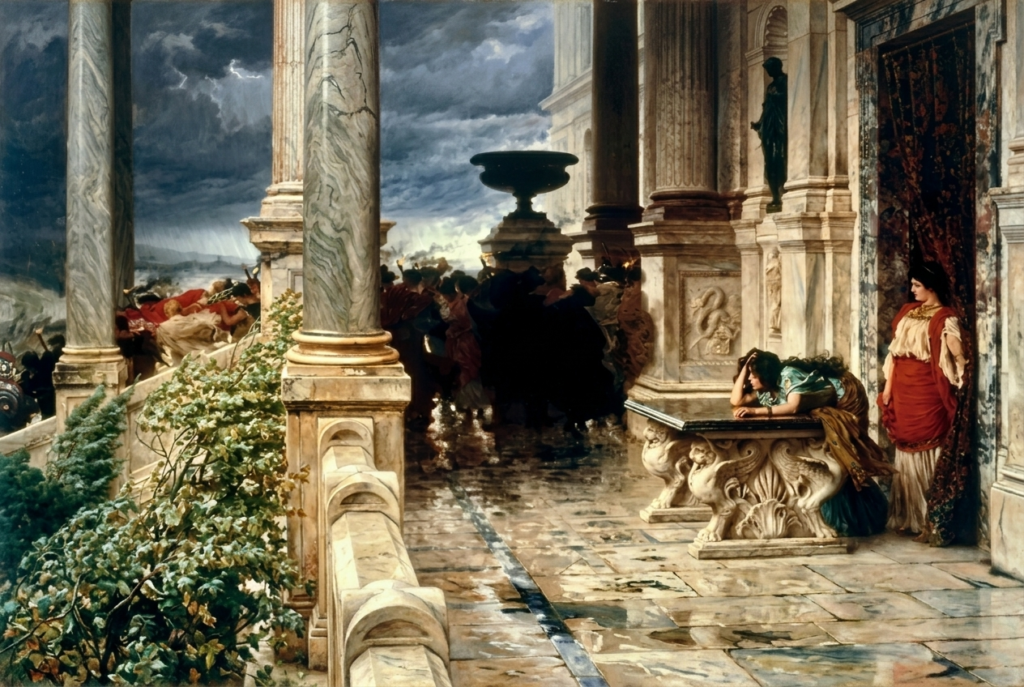
Brittanicus’ Poisoning
But near the end of Claudius’ life, the balance shifted. Ancient writers claim he regretted advancing Nero so far and started showing renewed favor toward Britannicus
Perhaps Claudius was reconsidering the succession or thinking about making the boys co-heirs. Perhaps the shift reflected the souring of his marriage to Agrippina, who he’d grown wary of.
Claudius never got the chance to make any change official.
He died in 54 CE, and Nero became emperor at just 16. Britannicus was only about 13, but his position suddenly became dangerous. As Claudius’ biological son, he was an obvious alternative for anyone unhappy with Nero.
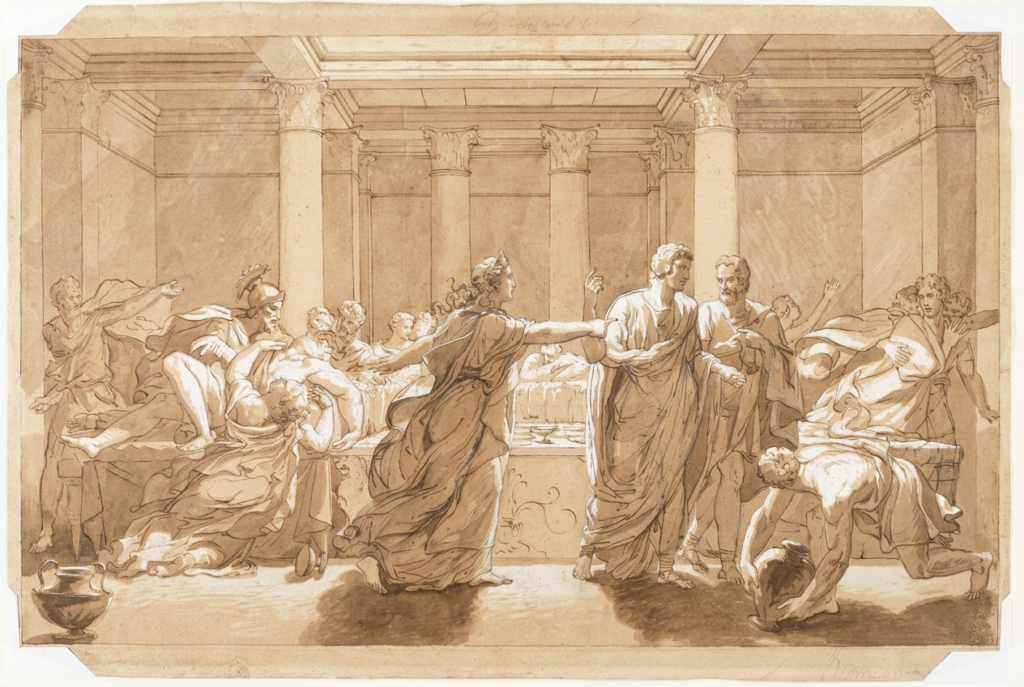
According to Tacitus, relations between the two boys quickly deteriorated. Each tried to embarrass the other, and the rivalry became increasingly poisonous.
Then, in February 55 CE, only months after Claudius’ death, Britannicus suddenly collapsed at dinner in the imperial palace.
The ancient sources say Nero poisoned him. And he probably did.
As the room erupted in alarm, Nero reportedly stayed calm. He told the guests that Britannicus was having an epileptic seizure and there was nothing to worry about.
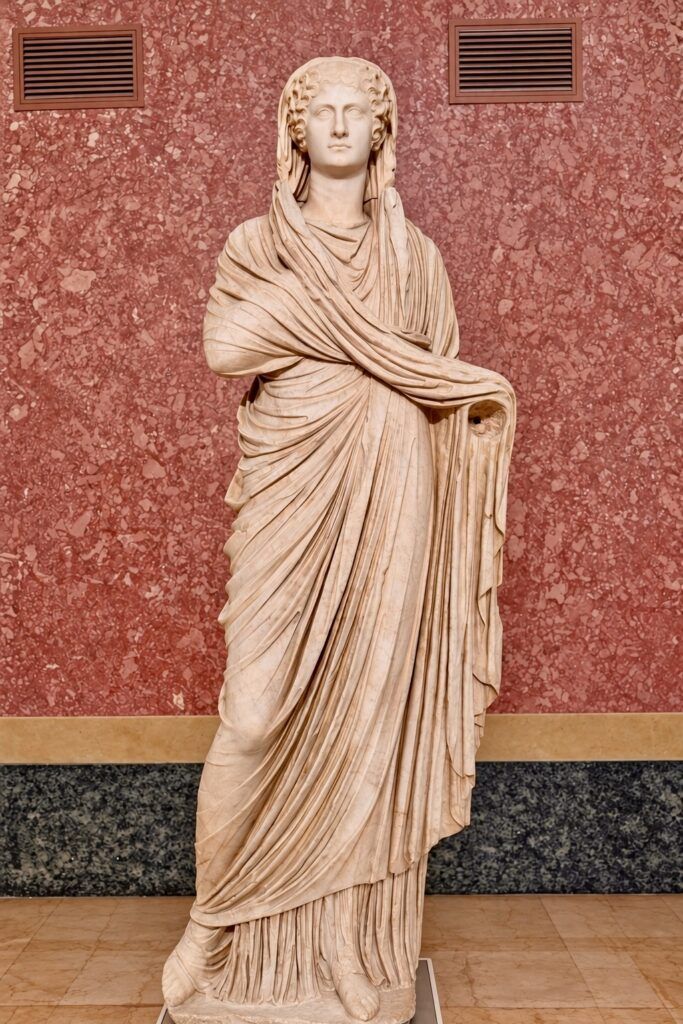
Britannicus was dead before the night was over. His body was removed and buried with suspicious haste.
All eyes fell on Nero. His motive was obvious, but there was no one in Rome powerful enough to hold the emperor accountable.
With Britannicus gone, Nero had eliminated his nearest rival. Five years later, he killed his own mother.
Claudius spent years trying to secure the succession. Fourteen years after his death, Nero died without an heir and the Julio-Claudian dynasty died with him.
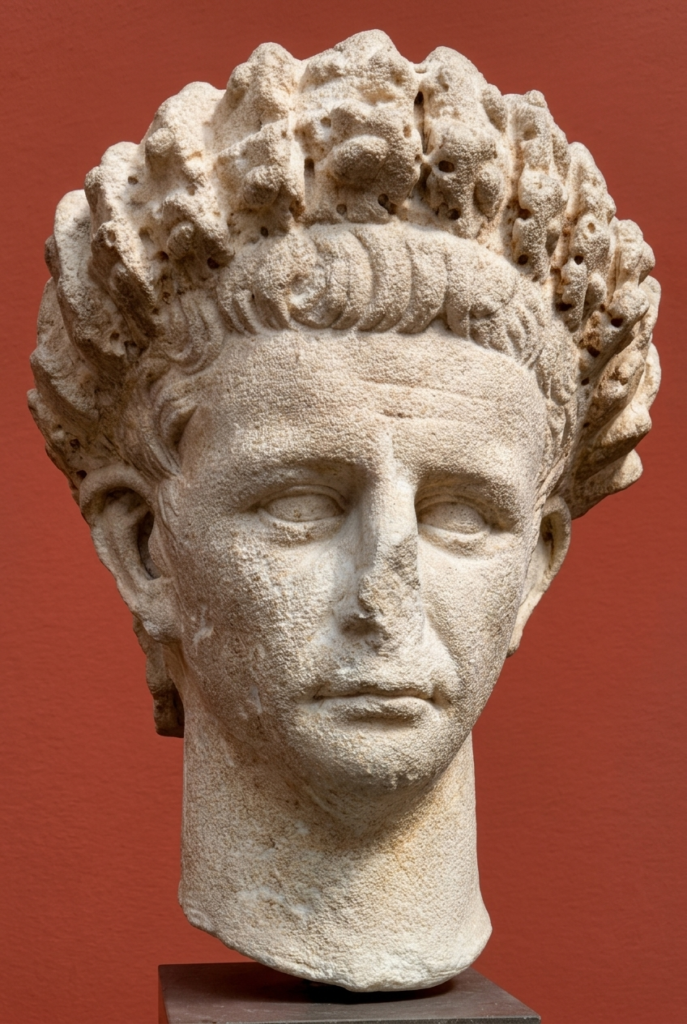
Death by Mushroom?
And is there another poisoning in this tale? Possibly.
When Claudius died, some historians claim that Agrippina poisoned him with a dish of mushrooms.
Is it true? We can’t really tell.
The usual historical sources all point to death by poisoning. The problem is that these writers weren’t eyewitnesses. And they were writing in a literary tradition that loved palace poisonings.
Claudius was also 63, had always been sickly, and could simply have died naturally. There had also been plague in Rome at the time. So Agrippina’s guilt was plausible, but not proven.
Was Claudius Really a Fool?
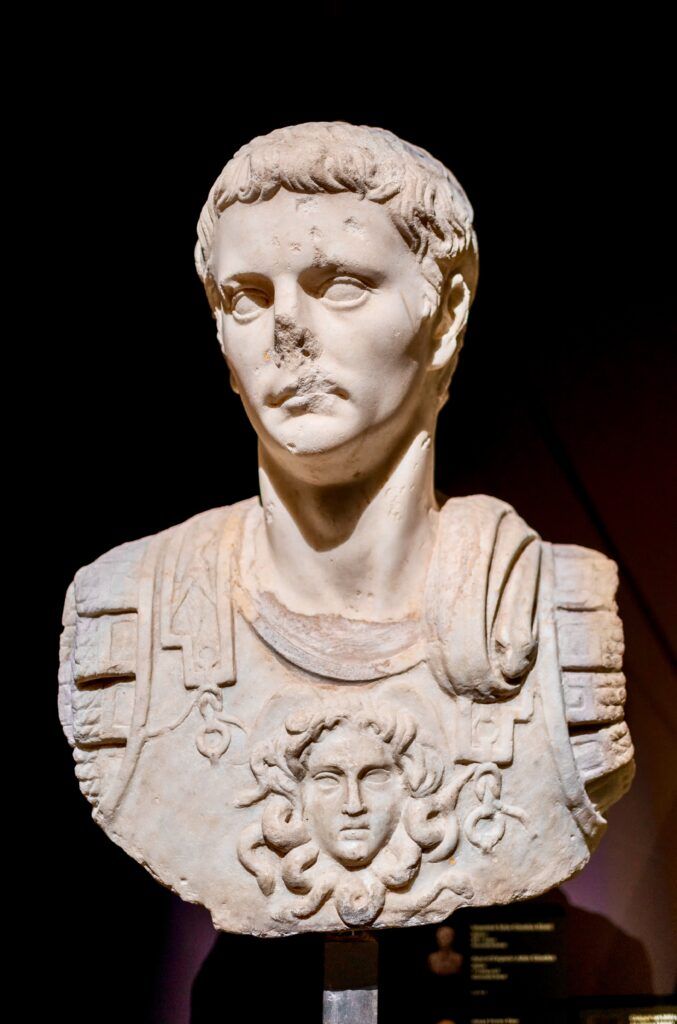
After all that, the old question remains: how much of Claudius’ foolishness was real, and how much was camouflage? Mostly camouflage, I think. It was almost an urban myth.
Disappearing Disabilities?
His behavior is only part of the puzzle. Even more intriguing, the physical signs that defined his “foolish” image became less obvious once he was emperor.
Suetonius makes the striking observation that when Claudius was seated, calm, and not under pressure, he could appear dignified and even impressive.
Even Claudius later insisted that some of his awkwardness was an act. Suetonius didn’t buy it, but the claim is intriguing.
At a minimum, the contrast between the mocked prince and the functioning emperor suggests that his family badly misread him.

A Co-Conspirator?
And if that’s true, it raises another intriguing question: did Claudius know more about the plot against Caligula than he let on?
Some historians have entertained the possibility. There’s no firm evidence that Claudius helped plan the assassination, of course.
But the traditional story of the terrified uncle “hiding behind a curtain” has a theatrical quality. It’s almost suspiciously neat.
The reality is that the Praetorians knew where to find him, took him straight to their camp, and Claudius rewarded them handsomely at once.
None of this proves conspiracy. But it does make his accession look rather more like a coup than an accident.

Claudius’ Deification
Claudius got one final imperial honor after death: deification.
In 54 CE, Agrippina had him declared a god, began a huge temple in his honor on the Caelian Hill, and established a priesthood for his cult.
Nero was less sentimental.
He disrupted the project and absorbed part of the site into his own building schemes, including the vast Domus Aurea. Claudius’ divine monument was effectively swallowed by Nero’s palace complex.
The temple itself is gone, but enormous sections of its platform and supporting walls still survive on the Caelian Hill.

Claudius’ Legacy
Claudius spent most of his life being underestimated.
Yet once he became emperor, Claudius proved far more capable than almost anyone expected. His judgment failed him badly in his private life and succession planning.
But the fool of ancient caricature was never really a fool at all.
I hope you’ve enjoyed my Claudius biography. You may be interested in these other Roman history guides:
- History of the Rise and Fall of Rome
- History of the Roman Emperors
- Historical Facts about Rome
- Top 10 Worst Emperors Ranked
- History of Julius Caesar
- History of Hadrian
Pin it for later.