
There’s a bit of a “choose your Tudor” tendency when it comes to Thomas Wolsey and Anne Boleyn.
I must admit that I love the complicated creature that is Anne. But I also find Wolsey interesting, complex, and extremely clever. Their feud changed the course of English history.
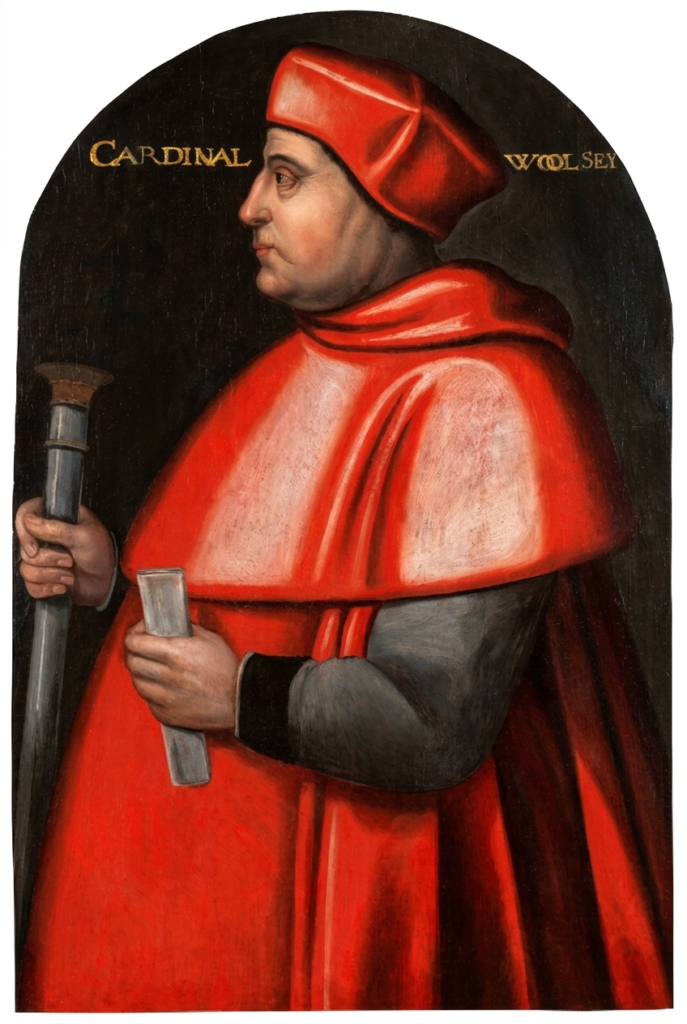
Thomas Wolsey lived from 1473 to 1530 and served two Tudor kings: Henry VII and his far more notorious son, Henry VIII.
Under Henry VIII, Wolsey rose with astonishing speed in a classic rags-to-riches story. He was spectacularly ambitious, loved magnificence, accumulated offices and wealth, could be ruthless, and clearly enjoyed power. But he was also extremely capable, worked like a demon, and had genuine reforming instincts.
The king trusted him, liked him, and increasingly relied on him to run the machinery of government. Title after title followed.
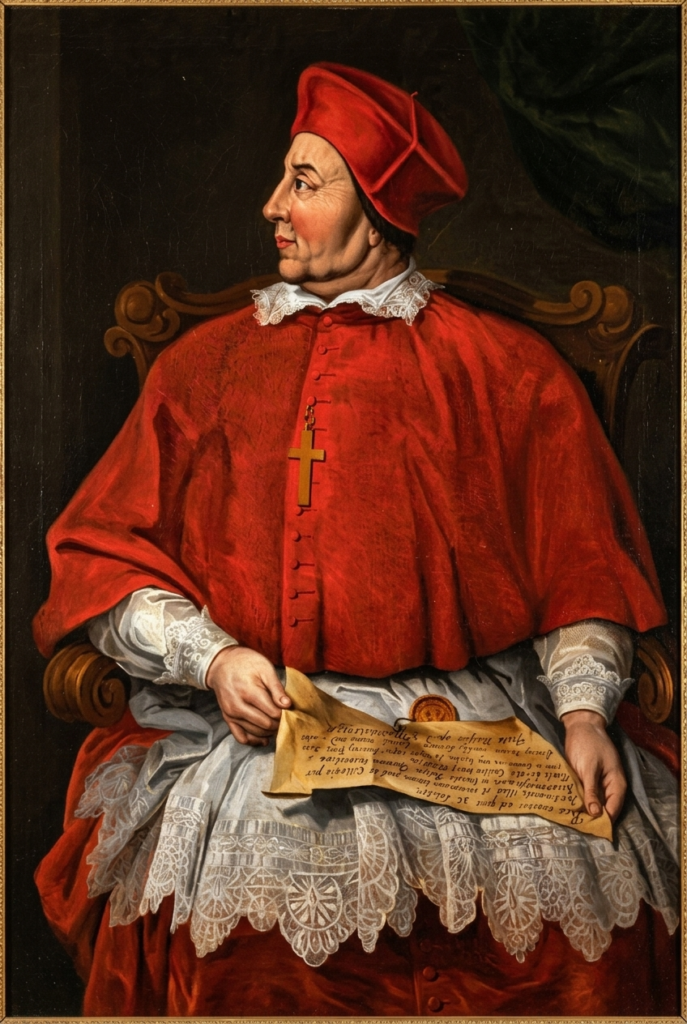
At his peak, Wolsey held an extraordinary concentration of political and religious power. He dominated domestic government, negotiated with Europe’s great powers, and built a lifestyle grand enough to rival the king’s. For years, everything went spectacularly well.
Then, Henry needed the one thing Wolsey couldn’t deliver. The king wanted out of his marriage to Katherine of Aragon so he could marry Anne Boleyn. Wolsey tried to secure an annulment from the pope and failed.
That failure destroyed him. Within months, the king stripped him of power and property. Eventually, Wolsey was arrested for treason. He died on the journey south before he could face Henry again.
Here’s a look at the extraordinary rise, immense power, dramatic fall, and complicated legacy of the “other king.”
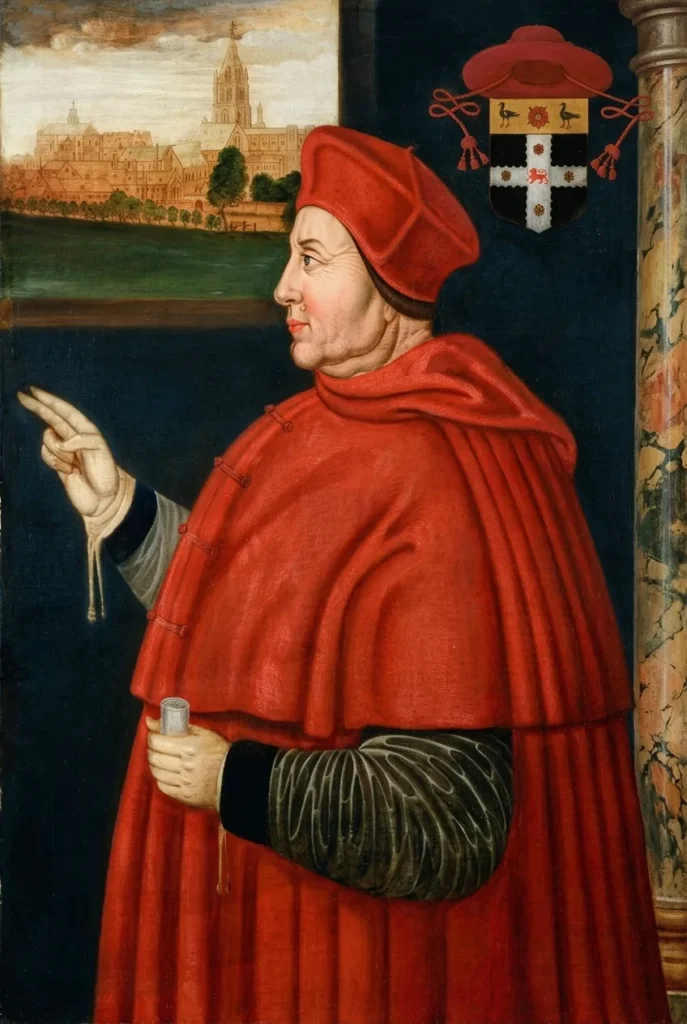
Thomas Wolsey Biography
Early Life
Wolsey was hardly born to power. He came from a fairly prosperous but decidedly non-noble Ipswich family. He was the son of Robert Wolsey, traditionally described as a butcher.
He was sent to Oxford astonishingly young and studied at Magdalen College. A precocious scholar, he earned his bachelor’s degree at around 15, gaining the nickname “the Boy Bachelor.”
Wolsey remained at Magdalen, eventually becoming a Fellow, earning his master’s degree, teaching at the college school, and serving as bursar. He was already showing the administrative ability that would later make him indispensable.

The Priest
The Church was the obvious career path for a brilliant, highly educated young man of Wolsey’s background. He may have resisted the idea initially. But he was ordained on March 10, 1498.
Wolsey almost immediately treated the priesthood as a route into administration and patronage. He was always looking for the right patron to catapult his career forward.
By 1500, he had the rectory of Limington. Then, he became chaplain to Archbishop Henry Deane and worked for Sir Richard Nanfan.
In an unbelievable stroke of luck, Thomas Wolsey found himself in the service of Richard Foxe, a Chief Minister at Henry VII’s court.

Henry VII
When Foxe died, at age 30, Wolsey final got the royal call. He entered Henry VII’s service in the last years of the reign, becoming a royal chaplain around 1507.
That sounds like a purely religious job. But at the Tudor court it was a very useful political foothold. Royal chaplains were educated clerics who might preach, advise, and draft documents.
Henry VII also used Wolsey on diplomatic business. So, Wolsey had already shown the two qualities that later made him indispensable to Henry VIII: speed and administrative efficiency. He was good at getting things done.
But his rise under Henry VII was still modest. He was just one capable cleric among many.

Henry’s Right Hand
When Henry VII died, the 17 year old Henry VIII inherited the throne. Initially, Wolsey feared he was out of a job.
He wasn’t. He became Royal Almoner in 1509.
Henry VII quickly discovered that Wolsey was exceptionally efficient. He began giving him more administrative and diplomatic tasks.
In reality, the young king wasn’t terribly interested in governing. He liked war, ceremony, diplomacy, and pleasure more than paperwork. Wolsey was perfectly positioned to take the paperwork off his hands.
That is when the rocket really took off.
In the church, Wolsey rose quickly. In 1514, he first became Bishop of Lincoln, then Archbishop of York. In 1515, Pope Leo X made him a cardinal and Henry appointed him Lord Chancellor.

In 1518, he was appointed a papale legate. This was significant because it gave Wolsey authority over the English Church to a degree superior to the Archbishop of Canterbury. He even fancied himself as a future pope.
In the years that followed this promotion, the titles and offices continued to pour in thick and fast.
Wolsey was, at varying stages, Dean of Lincoln, Dean of Hereford, Bishop of Bath and Wells, Bishop of Winchester, and finally, and most importantly of all, Prince-Bishop of Durham.
As Lord Chancellor, Wolsey became the second most powerful man in England. He handled the kingdom’s day-to-day administration while a young Henry VIII hunted, jousted, and entertained. Some referred to him as the “other king.”
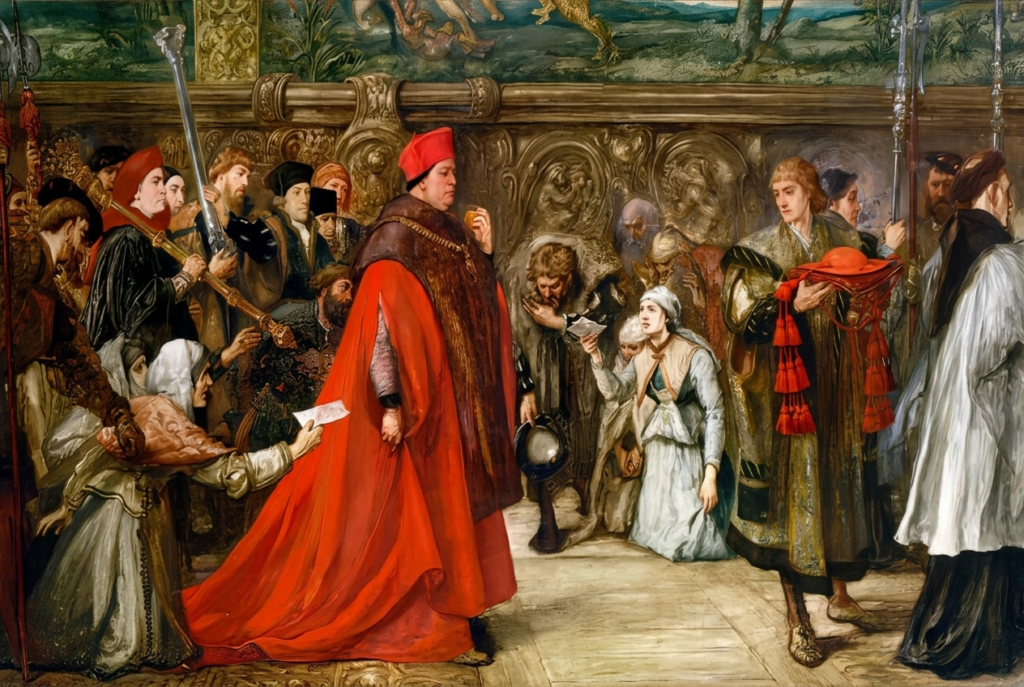
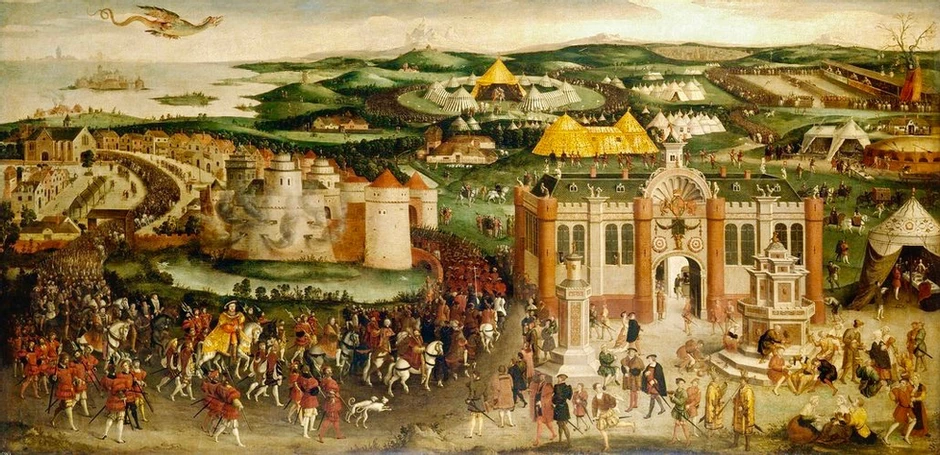
By 1518-20, Wolsey was at the zenith of his power. He negotiated the Treaty of London in 1518.
In 1520, he organized the Field of Cloth of Gold, the meeting between Henry VIII and Francois I of France to show they were both great Renaissance rulers at the height of their power.
Wolsey also reorganized Henry’s Privy Chamber to reduce the influence of courtiers he thought were getting too close to the king. That gives you a good sense of just how powerful he was by then.
Basically, if you wanted to get to Henry, you had to go through Wolsey. He strode as a colossus in the Tudor world.
Power Hungry Or Saintly?
Many history-enthusiasts view Wolsey unfavorably. He’s often reduced to a grasping villain and cast as a manipulative, vainglorious upstart.
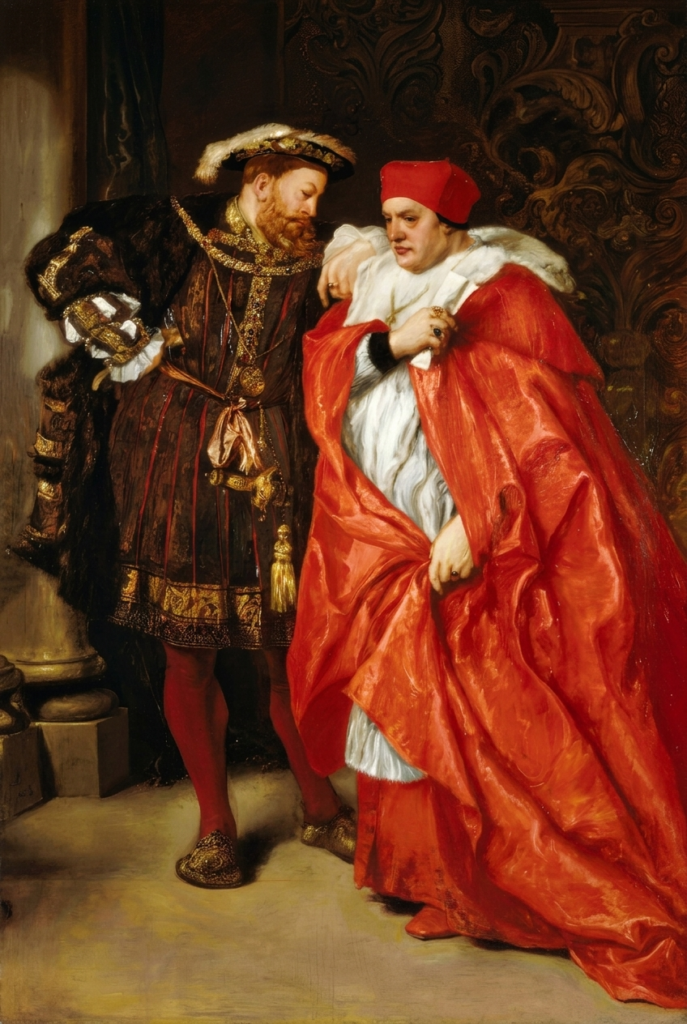
But was he really dark and power hungry? The answer is nuanced. Yes, he was exceedingly haughty and ambitious. But he also did valuable work.
As Lord Chancellor, he pushed the royal courts to hear more petitions from people who lacked the money or status to fight powerful opponents through ordinary legal channels.
The Court of Requests became associated with “poor men’s causes.” And Wolsey’s Star Chamber reforms were meant in part to make powerful men answerable to royal justice.
He also went after enclosure. In 1517–18, his government investigated landlords who had enclosed arable land for pasture, displaced tenants, or allowed villages and farms to decay. Wolsey even ordered some illegal enclosures pulled down and land restored to cultivation.
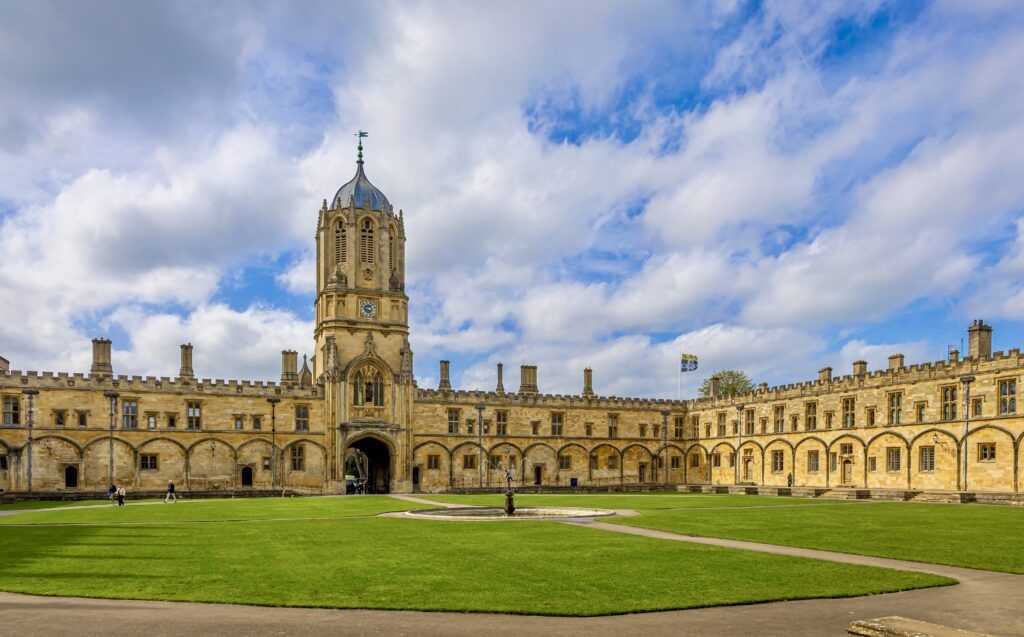
And education really mattered to him. Cardinal College at Oxford, the ancestor of Christ Church, was meant to be a major humanist institution teaching Latin, Greek, philosophy, theology, and scripture.
He also planned a companion college and school in his hometown of Ipswich, and envisioned a broader network of grammar schools supplying talented students to Oxford.
He wasn’t secretly saintly. There was often self-promotion mixed in with the reform.
Yet, he seems to have believed that government ought to work. Powerful nobles shouldn’t simply be able to bully everyone beneath them. Courts should be accessible. Clerical institutions needed reform. Education should expand.

The Mistress
Did Wolsey live like a priest during this time? No, he wasn’t exempt from the temptations of the flesh. He’d patronized ladies of the night before.
But, in 1509, he fell in love with Joan Larke. He installed her in Bridewell House, which had been gifted to him early in Henry’s reign.
They had at least two children: Thomas (born in 1510) and Dorothy (born in 1512). They may have been together a decade, but it’s impossible to know for sure.
The children never lived with them. Again, we don’t know why. It’s possible that Henry, while turning a blind eye to the secret mistress, didn’t want children on the property when guests were there.
By 1519, Wolsey was Lord Chancellor of England and Cardinal. In such an exalted position, it’s likely having a mistress was too problematic.
Wolsey arranged for Joan to marry George Legh and even paid her dowry. It must have hurt.

Wolsey’s Buildings
By this point, Wolsey’s offices and wealth had become extraordinary. And Wolsey wanted a home befitting his station and prestige.
In fact, he had a mania for building and a flair for design. Perhaps it was to compensate for the squalor of his origins or other feelings of insecurity. Whatever the cause, magnificence resulted.
Enter Hampton Court Palace as exhibit 1. Wolsey embraced red brick, then considered one of England’s most fashionable building materials.
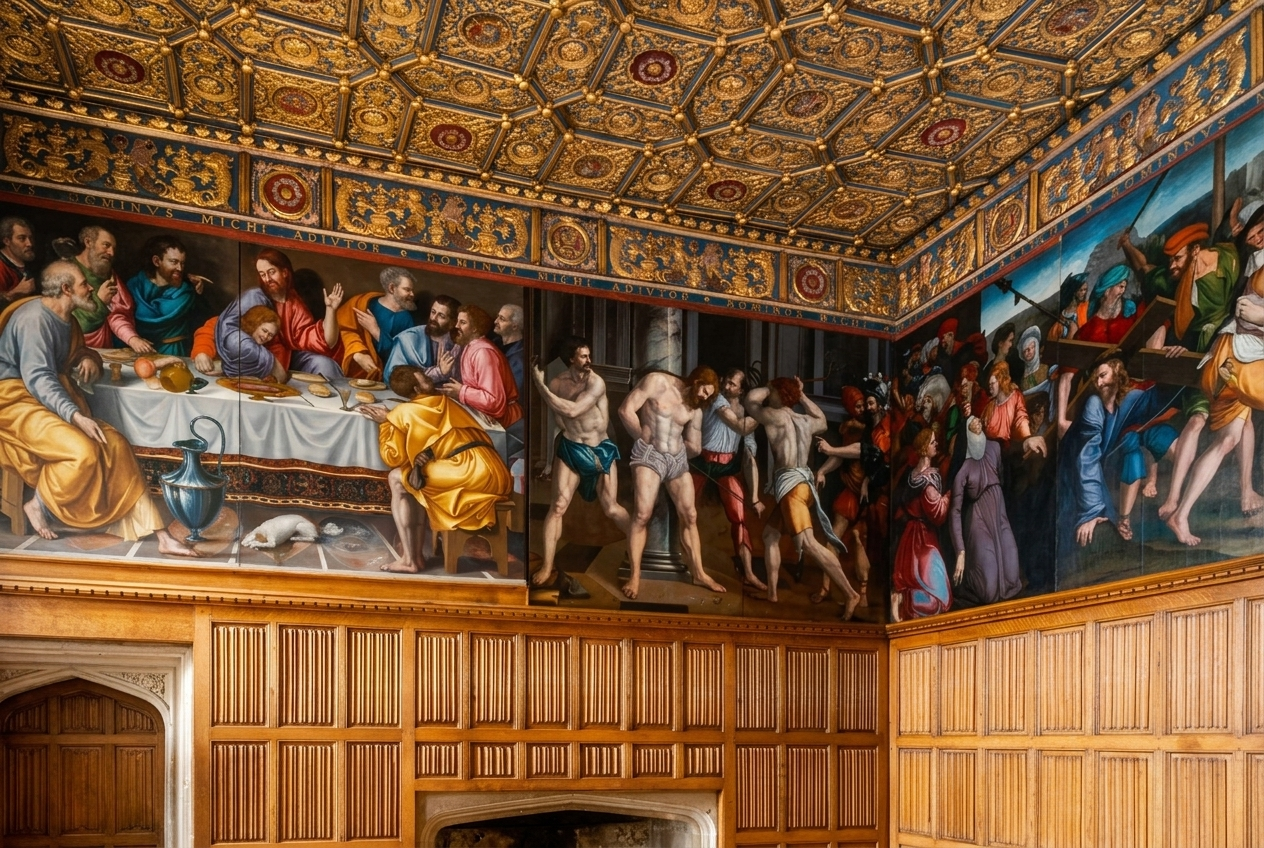
The palace reflected the latest styles of Renaissance Europe and quickly became the most magnificent residence in England. It boasted gilded ceilings, fine tapestries, and richly decorated rooms like the Wolsey Closet.
A tempestuous Henry soon grew jealous of Wolsey’s masterpiece. The finest palace in England, he believed, should belong to the king.
Wolsey tried to placate him, insisting he built Hampton Court solely for Henry’s glory and benefit. He prepared lavish royal apartments for the king and his 1,000 person entourage.
Nor was Hampton Court the cardinal’s only home. No less luxurious was York Palace in London, and he had other nooks and crannies.
The Great Matter
The Annulment Plan
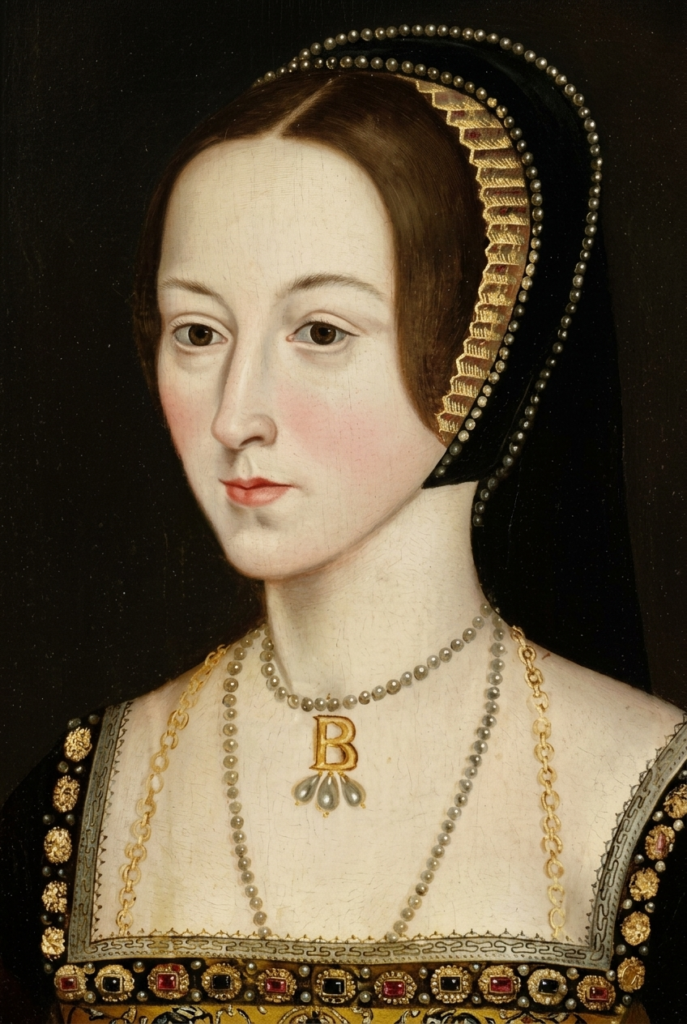
Meanwhile, Queen Katherine failed to produce a male heir and Henry became besotted with Anne Boleyn.
Anne Boleyn would not accept the title of Mistress, she would not accept the title of Mistress-En-Titre, and she would not accept the proposal that her potential children be made legitimate candidates for the throne.
She would settle for nothing less than the titles of wife and Queen.
In 1527, Henry began formally pursuing an annulment.

Wolsey was tasked with resolving the “Great Matter.” His job was to secure Henry’s divorce from Katherine so he could marry Anne.
Wolsey & Rome
This situation was poison for Wolsey. He wasn’t just Henry’s minister.
He was a cardinal and papal legate with connections in Rome. So, he moved cautiously, reluctant to antagonize Rome and perhaps still hoping the king might abandon the risky plan.
His caution angered Anne. She saw him as arrogant, obstructive, and fatally dismissive of her intelligence. He saw her as meddlesome and dangerous. It became one of the greatest feuds in English history.

Henry nonetheless expected Wolsey to deliver. He assumed that, if anyone could get an annulment, it would be Wolsey.
But Pope Clement VII was in a sticky position. Katherine was the aunt of Emperor Charles V, whose troops had just sacked Rome and held the pope at their mercy. Clement’s strategy became delay.
Blackfriar’s Trial
In 1529, however, the pope authorized a special court in England at Blackfriars.
Henry spoke of his troubled conscience over marrying his brother’s wife. Katherine appealed directly to Rome and challenged the court’s jurisdiction.
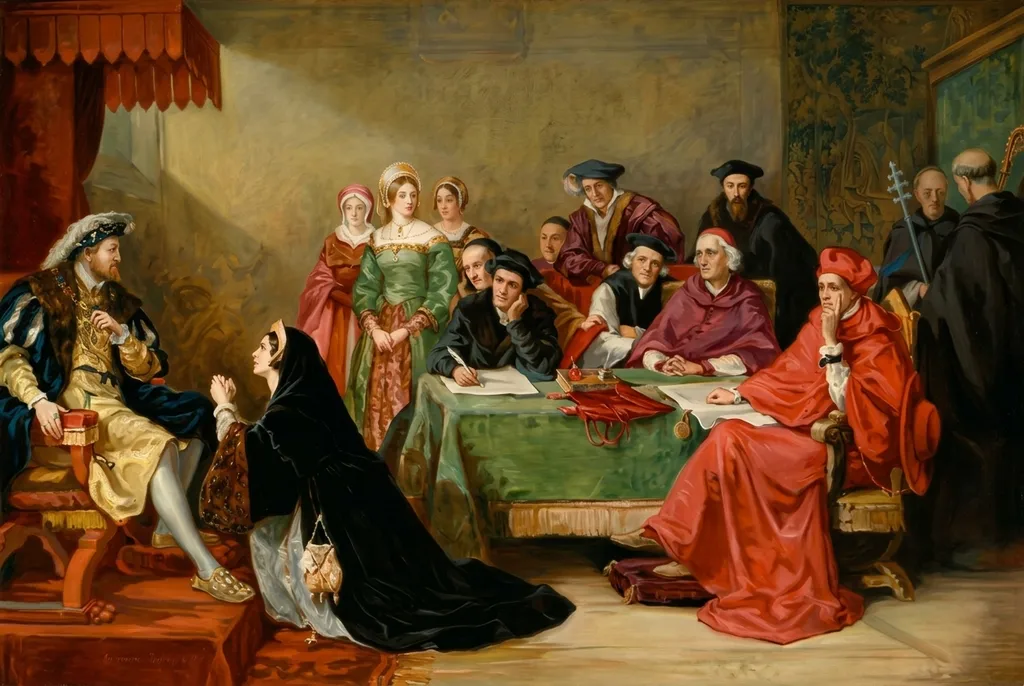
The court didn’t issue a ruling and Clement recalled the case to Rome. The prospect of a quick English annulment was dead.
Wolsey failed at the one task Henry considered absolutely essential. It tore their friendship to shreds.
Henry dismissed Wolsey as Lord Chancellor and replaced him with Thomas More. Wolsey lost enormous amounts of property and income and retreated to his archbishopric of York.
He wasn’t immediately destroyed and Henry still showed him small bits of favor.

Anne’s Intervention
But this is where Anne comes in. Any chance she got, she criticized Wolsey to the king. And her unrelenting enmity had a laundry list.
She blamed him for not securing the annulment. She blamed him for breaking up her relationship with Henry Percy years earlier, and she suspected Wolsey wasn’t committed to making her queen.
Wolsey tried to appease her. Through gritted teeth, he invited her to dine at Hampton Court, sent her gifts from his own collections, and showered her with compliments.
Still, for seven years, like bickering children, the pair vied for King Henry’s attention unceasingly.

The nobles, especially dukes of Norfolk and Suffolk, didn’t like Wolsey either. He’d spent years cutting them down to size and they wanted revenge.
Wolsey’s rivals resented both his power and magnificence. Once he began to fall, his enemies moved quickly against him. Even his friend Thomas More described him as “crafty.”
So was Anne responsible for Wolsey’s downfall? Not altogether. But she definitely was part of the coalition who wanted him gone.
When it came down to it, Henry had a real grievance. And he was forced to make the ultimate choice between the woman he hoped to marry and the most loyal, most capable servant he’d ever had. He chose Anne.
Wolsey’s Treason Charge & Death
In 1529, Wolsey attempted to assuage Henry by gifting him York Palace, a gift Henry accepted with alacrity. The cardinal had lavishly refurbished it on a scale of Hampton Court. Henry decided to use it as a London Palace for Anne and renamed it Whitehall.
But that gift didn’t help Wolsey. The king still stripped him of his titles and seized Hampton Court. He then charged Wolsey with treason for putting loyalty to Rome above the crown.
Wolsey never made it to trial. He fell ill on the journey south and died at 57 before he could be tried and executed.
He’d been in genuinely poor health, not merely stressed and overweight. He had “stones” (either gallstones or kidney stones), jaundice, colic, edema, and recurrent fevers. At his death, he was suffering from a gastrointestinal infection, usually described as dysentery.
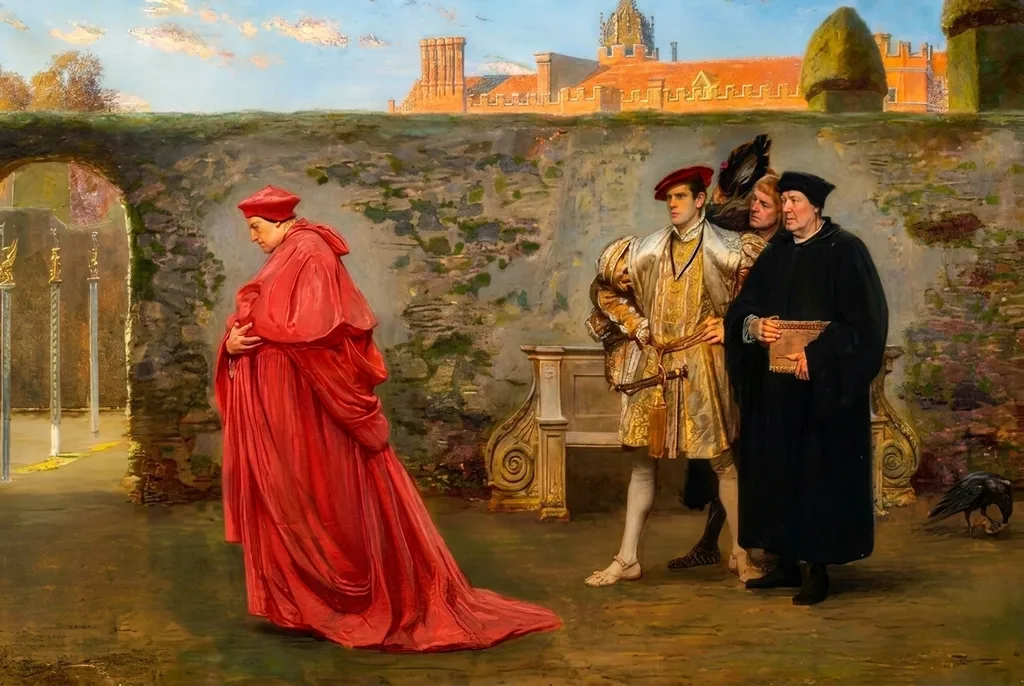
As Shakespeare tells it, Wolsey’s last words were: “had I but served God with half the zeal I served my king, He would not in mine age Have left me naked to mine enemies”
Wolsey was buried in the Lady Chapel of Leicester Abbey in a church once known as the “sepulcher of tyrants.”
According to George Cavendish, Wolsey’s gentleman usher and biographer, a hair shirt was found next to Wolsey’s skin when his body was prepared for burial at Leicester Abbey in November 1530.
Over it he wore a very fine linen shirt. Cavendish says most of Wolsey’s servants didn’t about the hair shirt. Only his confessor did.

That detail gets me. It complicates him enormously. He may have loved power and worldly magnificence, but apparently there was another Wolsey underneath all that scarlet.
For 17 years, Wolsey had stood at the pinnacle of power. Then, almost overnight, he lost everything.
I hope you’ve enjoyed my biography of Thomas Wolsey. You may enjoy these other English histories:
- Royal Whodunits
- English myths
- History of Medieval and Tudor England
- Tudor queens of England
- Power Women of Medieval & Tudor England
- Historical Mistresses and Favorites
- Wives of Henry VIII
- Worst kings of England
- Anglo-Saxon kings of England
Pin it for later.

