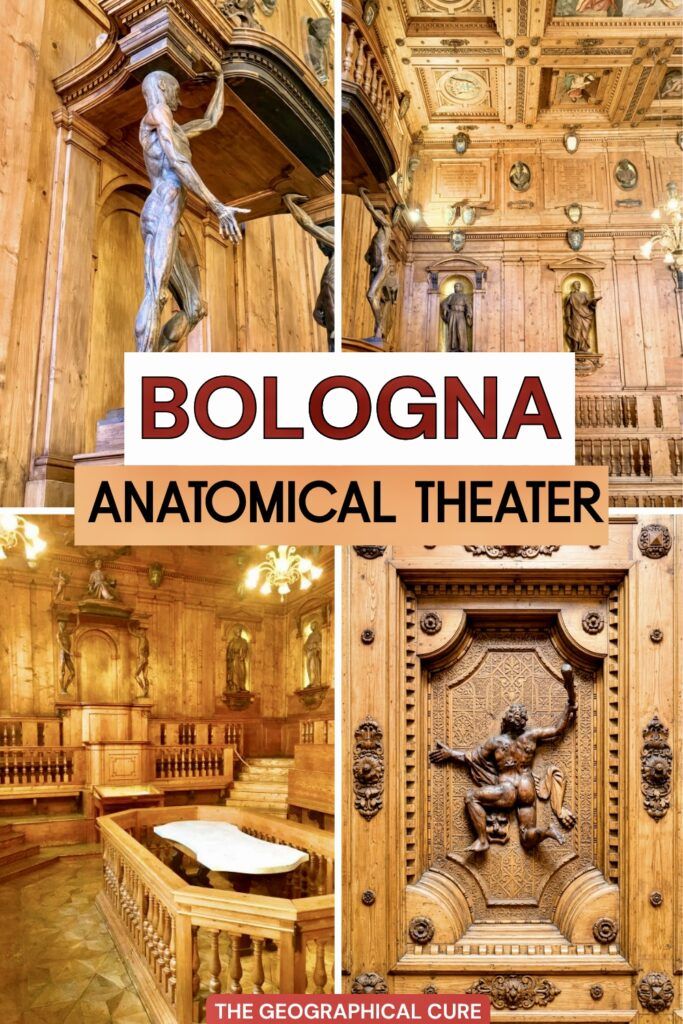
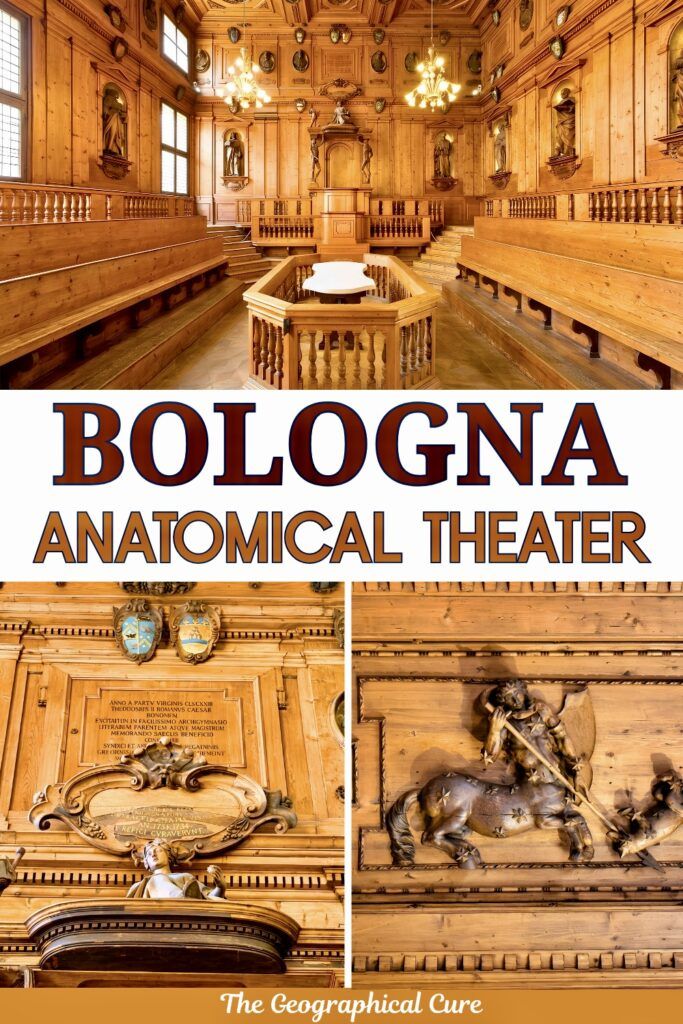
Have a taste for medical minutiae? Get thee to the Anatomical Theater of the Archigninnasio, a historic medical lecture hall in Bologna.
It was designed and built by Antonio Paolucci (called il Levanti), a Bolognese architect and student of the famed artist Carracci.
The Archiginnasio was built in 1562–63 to consolidate Bologna’s university teaching, which was previously scattered around the city. The university remained there until 1803.
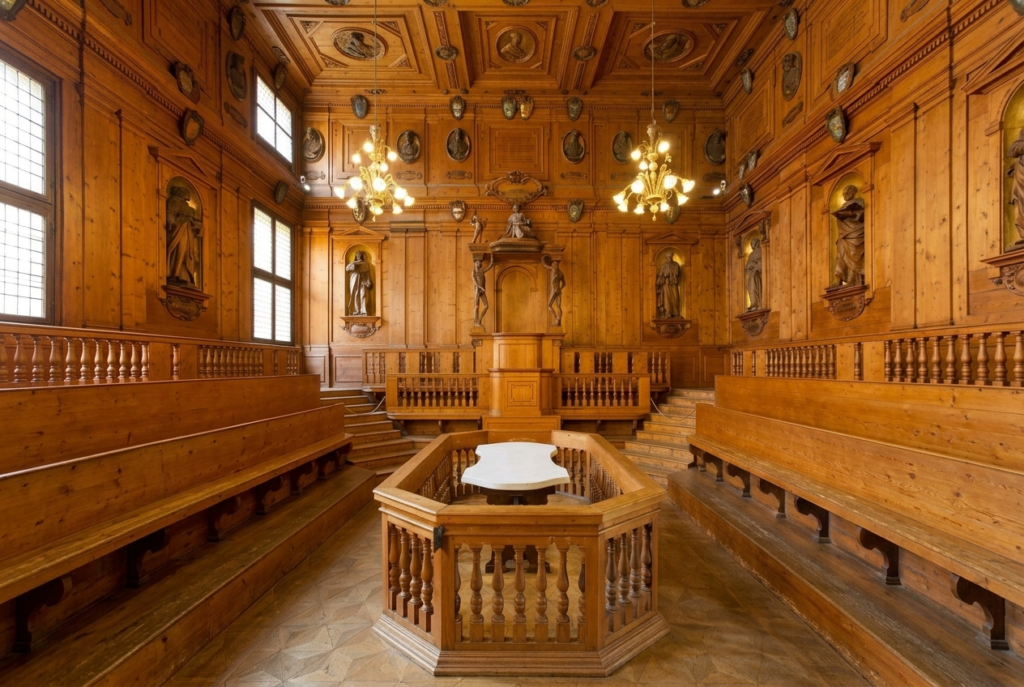
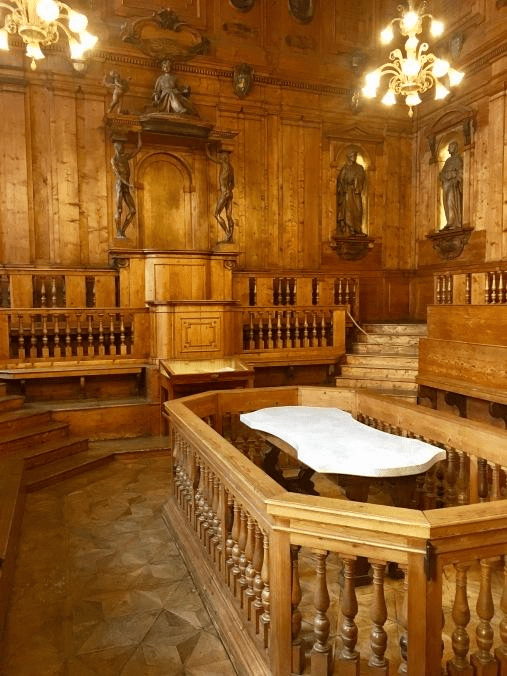
The theater is an amphitheater-shaped hall that once hosted anatomy lessons by candlelight.
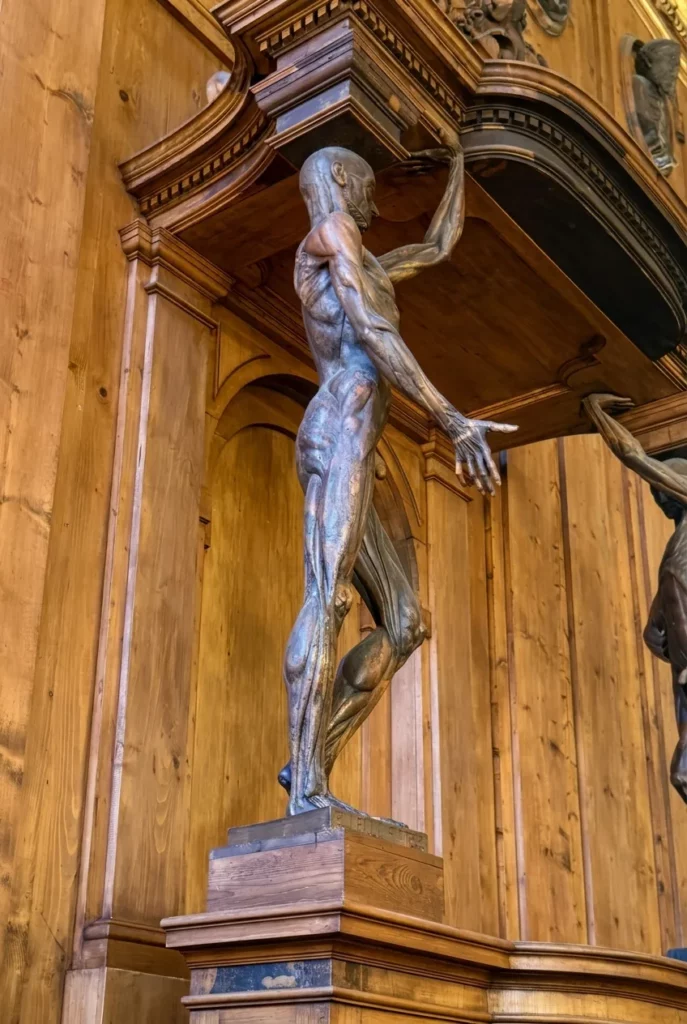
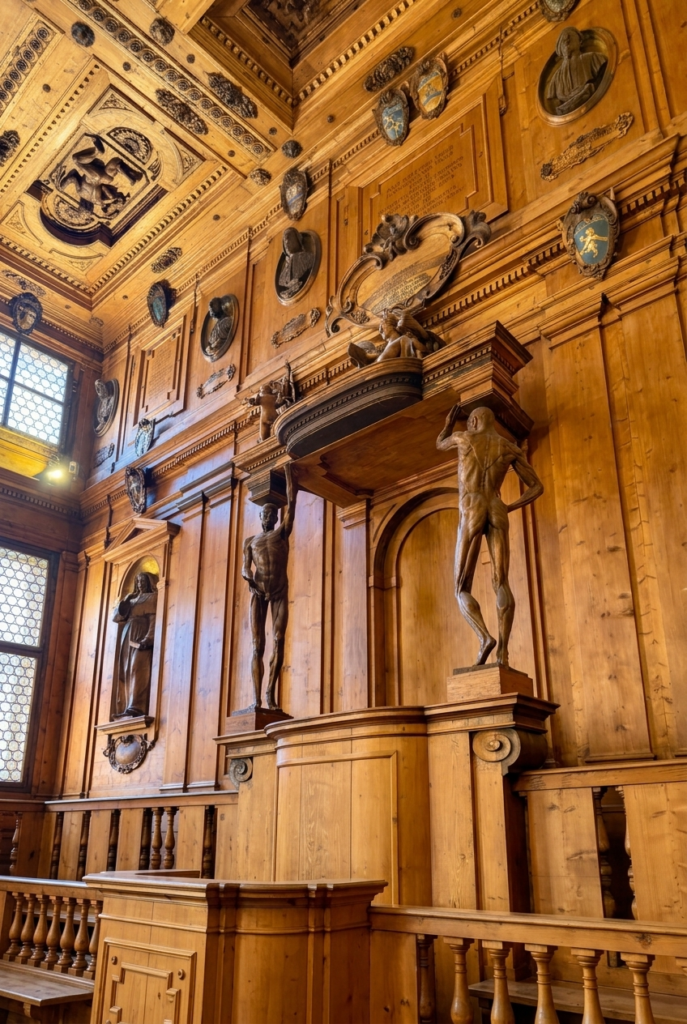
Carved figures of famous physicians peer down from niches. The creepiest and best details are the two Spellati, the flayed anatomical figures supporting the professor’s canopy.
In this guide, I give you a mini history and tell you everything to see at the Anatomical Theater.
>>> Click here to book a guided walking tour that includes the Anatomical Theater
Guide to the Anatomical Theater: What To See
The Room Itself
The theater is almost entirely made of fir wood, which gives it a warm, enclosed, and perhaps slightly claustrophobic appearance.
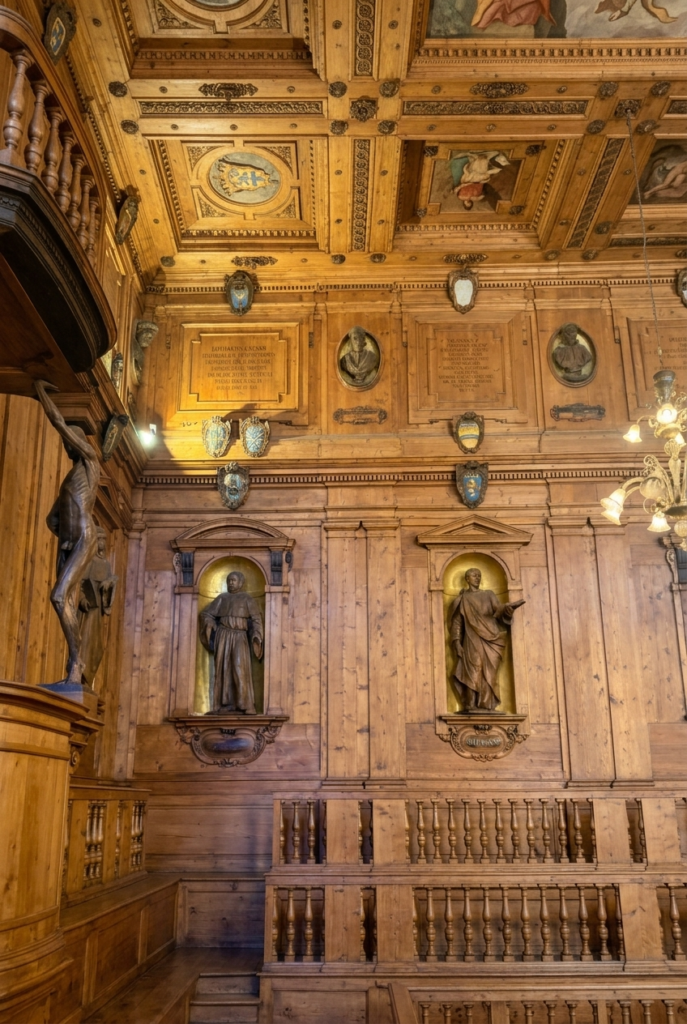
The walls are populated by carved physicians and anatomists. The lower tier contains 12 famous doctors, including Hippocrates, Galen, Mondino de’ Liuzzi, and Marcello Malpighi.
Above them is another tier of 20 anatomists associated with the Bolognese school.
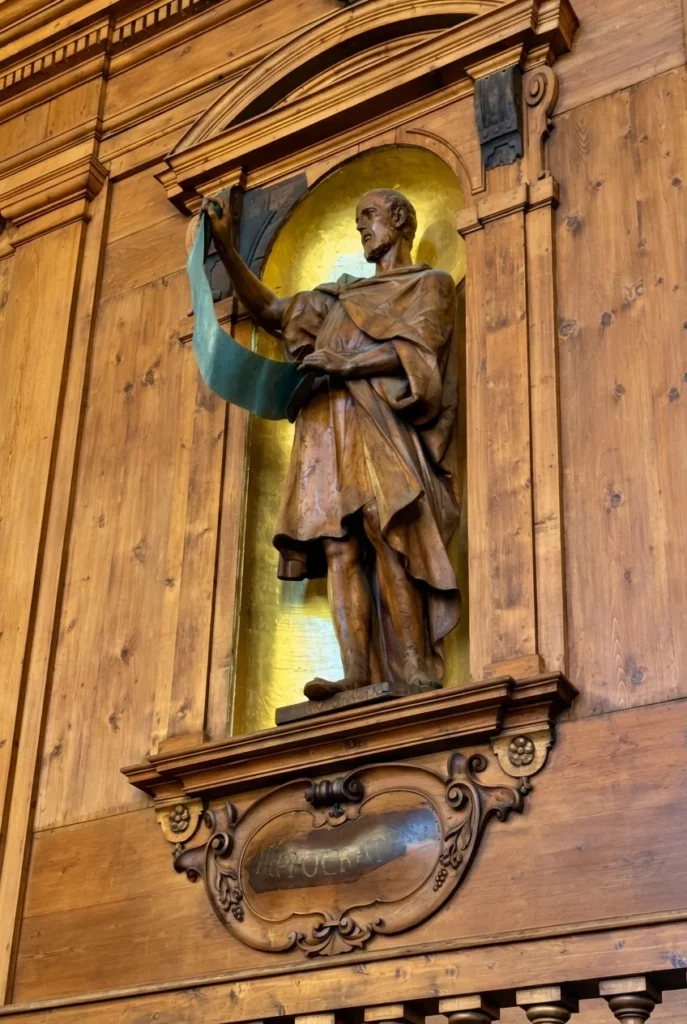
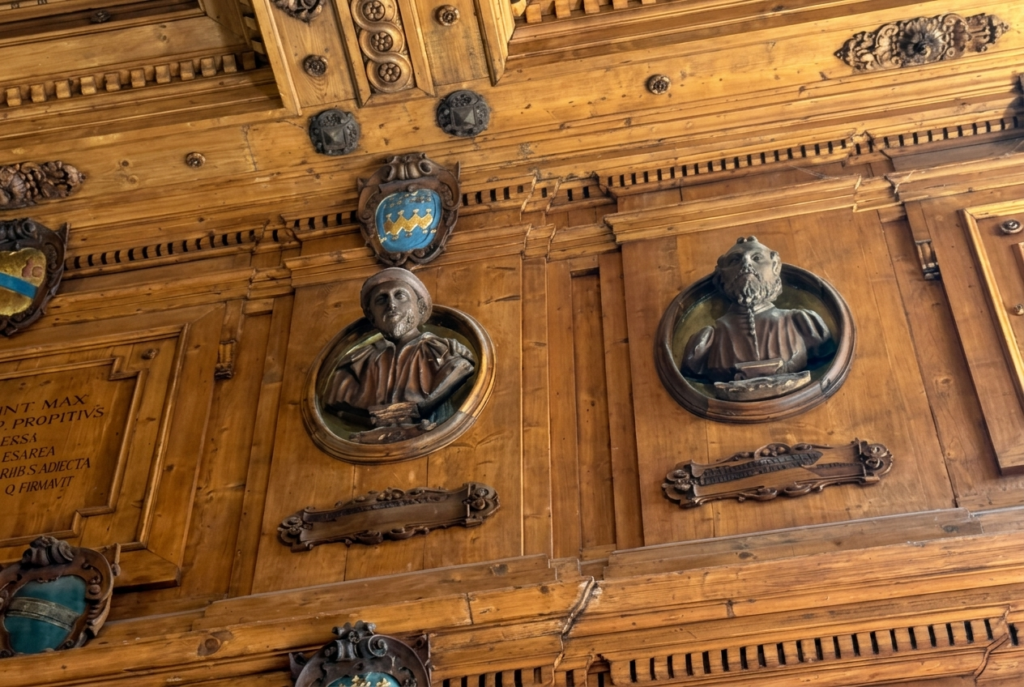
They include figures such as Girolamo Cardano, Alessandro Achillini, Girolamo Mercuriale, Ulisse Aldrovandi, Girolamo Manfredi, and Bartolomeo Maggi, among others.
They turn the entire room into a kind of wooden hall of fame for the history of medicine.
The result? The students were literally surrounded by the great figures of their profession while watching a body being opened in front of them.
That theatricality seems quite deliberate.
The Dissection Table
The marble table in the middle is where the cadaver was placed.
Anatomical dissection had an unusually long history in Bologna. Mondino de’ Liuzzi, a professor at Bologna in the early 14th century, is one of the pivotal figures in the revival of systematic human dissection in medieval European medicine.
The theater didn’t suddenly appear because 17th century Bolognese doctors became interested in anatomy. It represented centuries of medical teaching in Bologna.
The University of Bologna was one of Europe’s great centers for medicine and anatomy, and the theater essentially monumentalized that tradition.
The Spellati
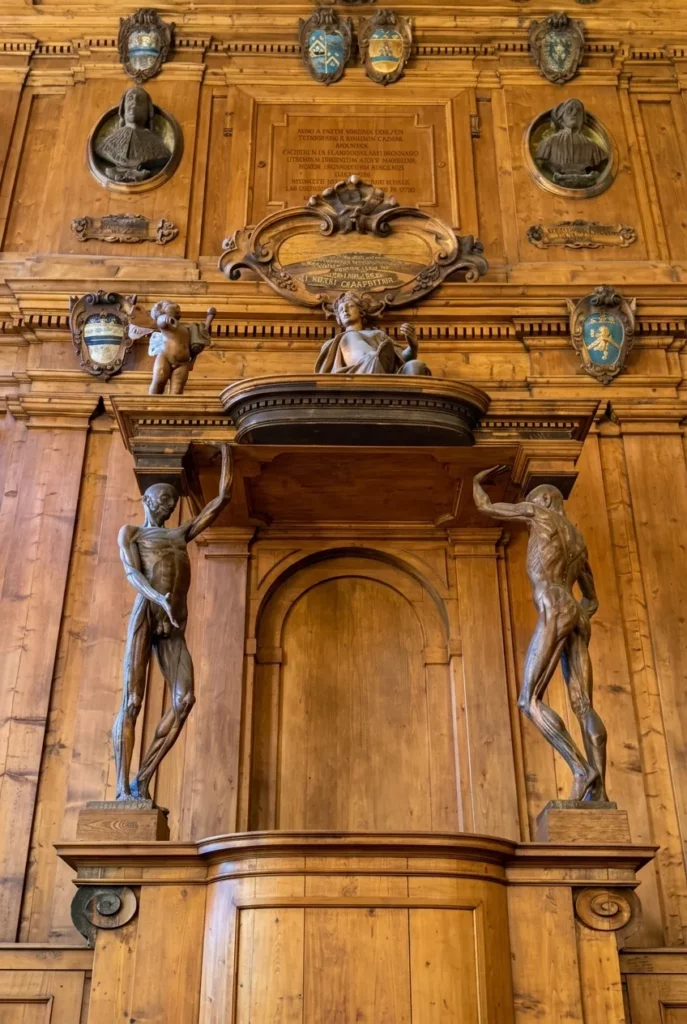
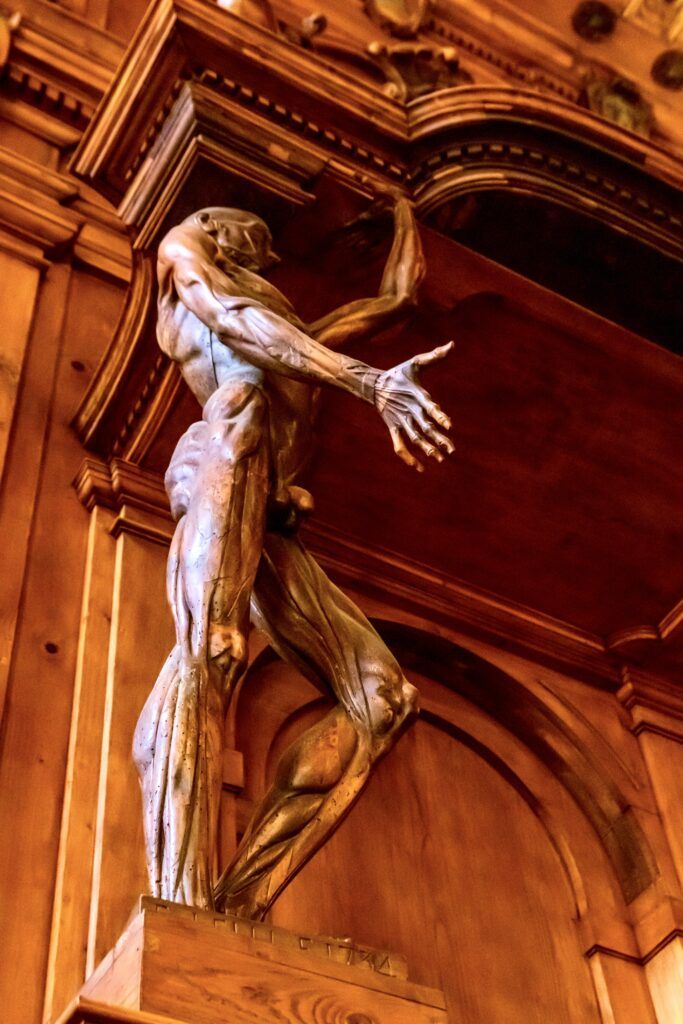
These are the stars. On either side of the professor’s chair are the two spectacular Spellati, or “Skinned Men.”
They were added in 1734 and carved to designs by Ercole Lelli, a Bolognese artist and anatomist famous for extraordinarily accurate anatomical models.
He effectively removed their skin so that the musculature underneath is exposed, almost like an idealized classical statue. They’re simultaneously scientific diagrams, sculpture, and architectural decoration.
But instead of simply being anatomical teaching models, the Spellati function architecturally: the two flayed men support the canopy for the professor’s chair.
That’s wonderfully bizarre. They’re also beautiful sculptures.
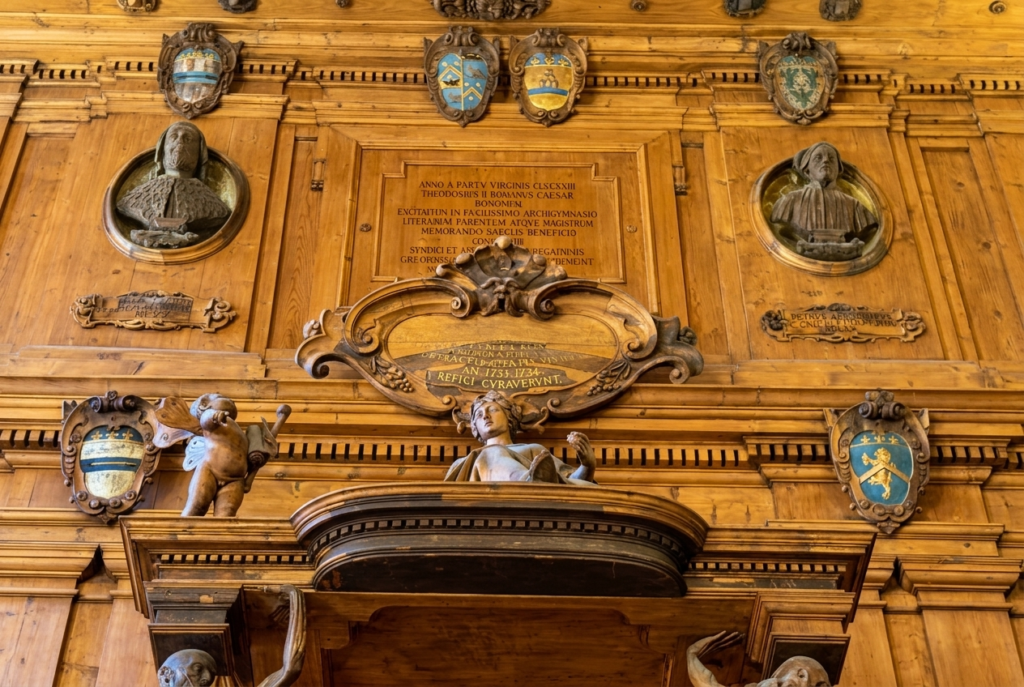
The Professor’s Chair
Look above the Spellati.
There’s a seated female figure representing Anatomy. A little winged putto approaches her bearing a gift.
Normally, in allegorical sculpture, you’d expect him to offer a flower. Instead, he gives her a femur. That may be my favorite detail in the entire room.
The seating arrangement around the professor’s chair tells you something about how anatomy was taught.
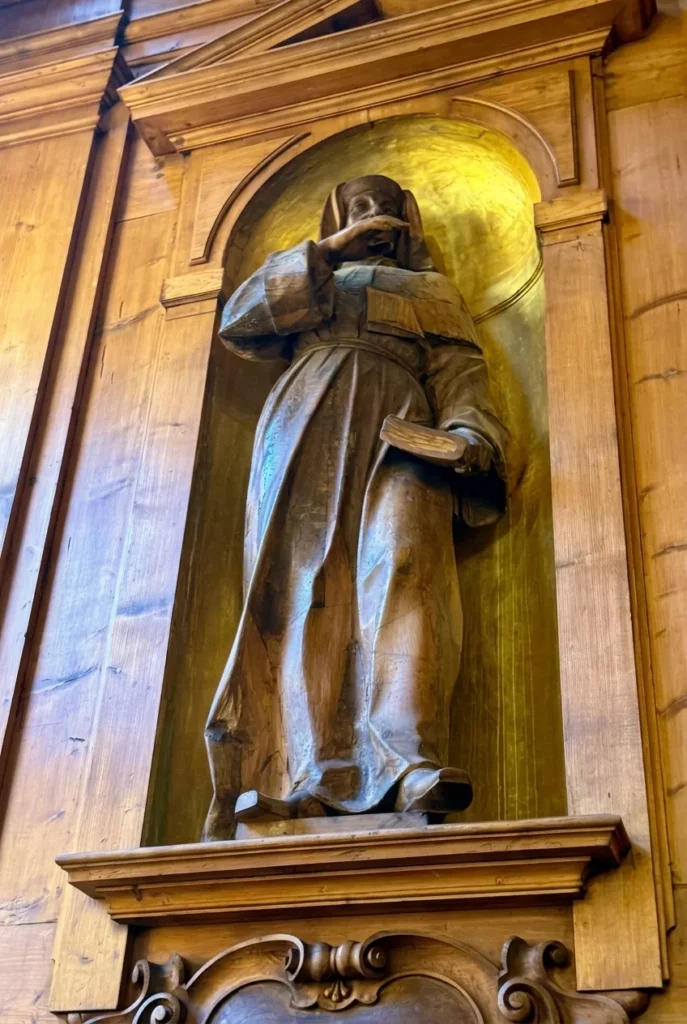
The lecturer sat in the elevated chair and read/explained the authoritative anatomical text. Below him was the demonstrator, who actually pointed out the structures on the corpse.
That division between textual authority and physical demonstration is fascinating because it captures a transitional moment in science.
Medicine was increasingly based on direct observation of the human body. But teaching was still deeply tied to classical authorities such as Galen.
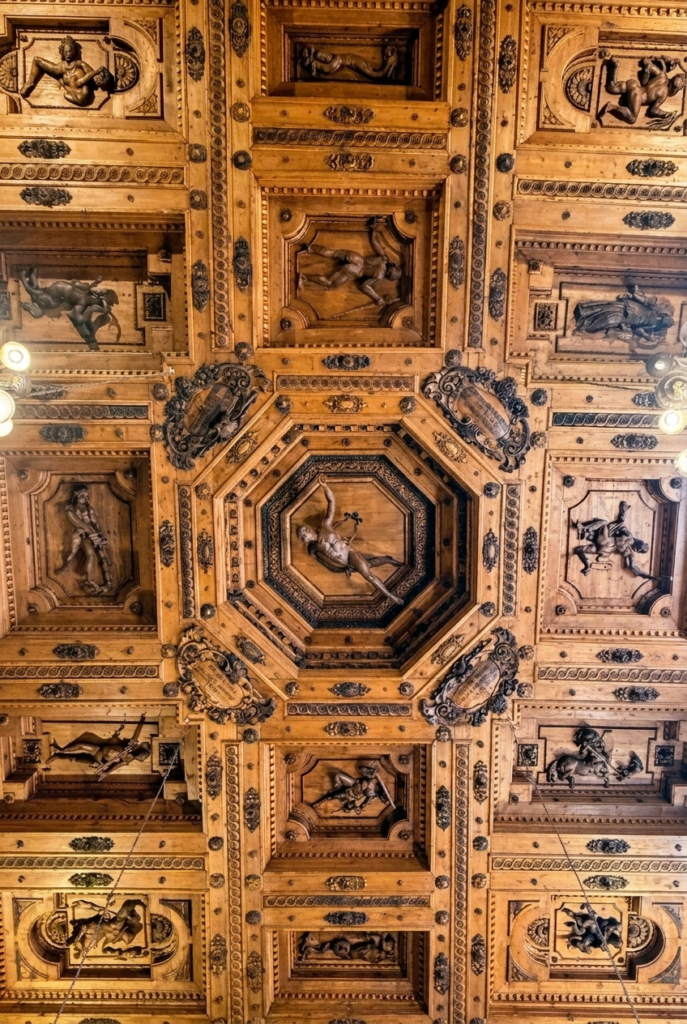
Ceiling
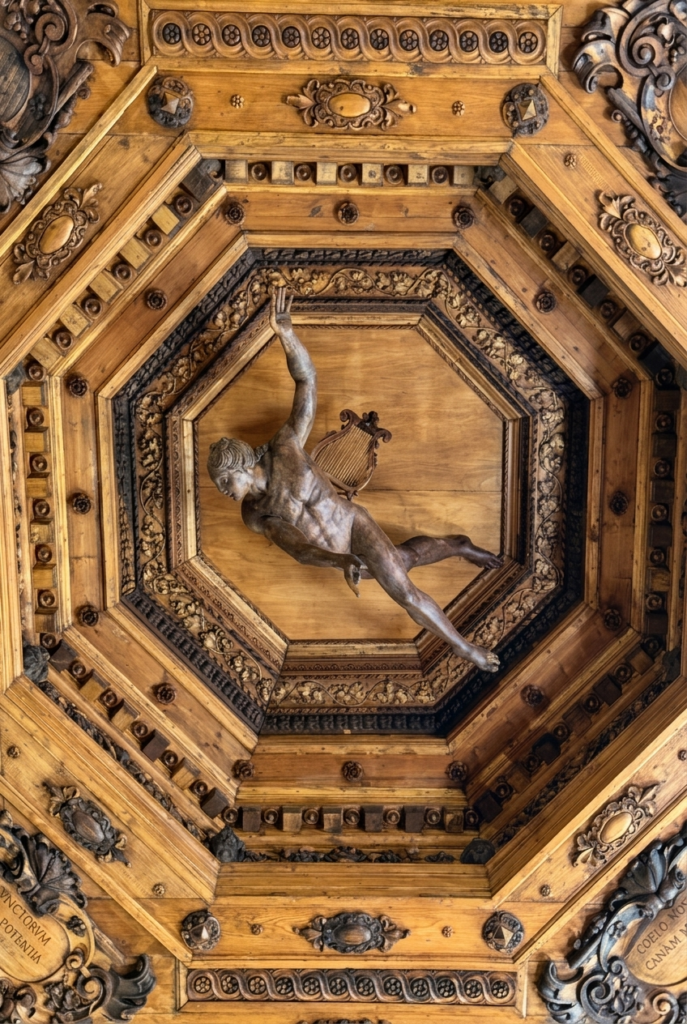
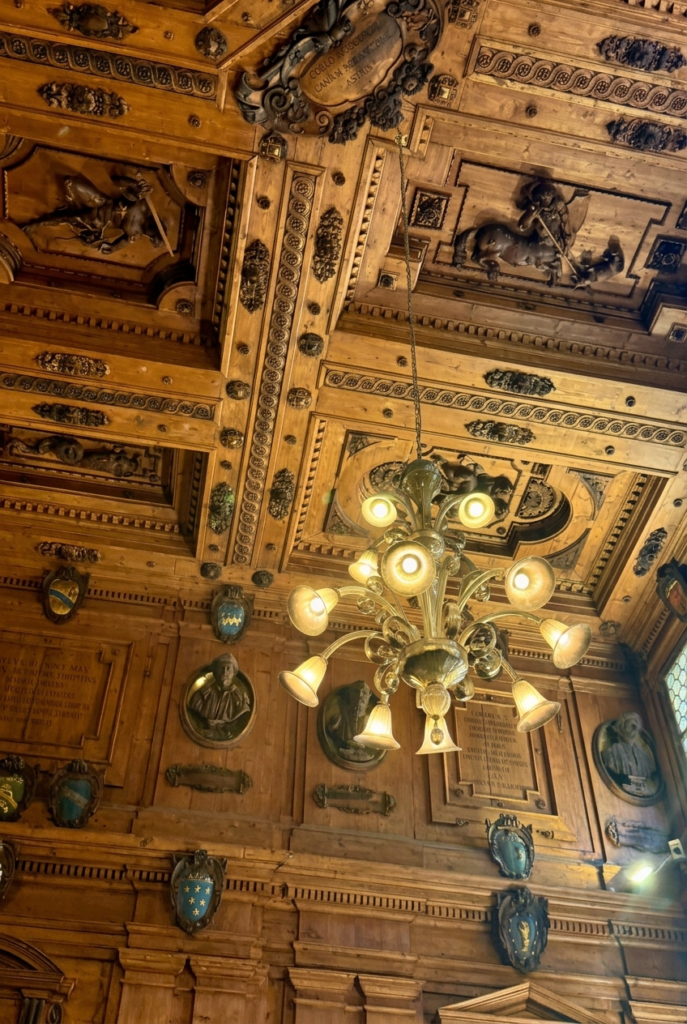
The coffered ceiling dates to 1645 and depicts Apollo surrounded by 14 constellations.
Apollo sits at the center because he was associated with medicine and healing. You can identify him by his lyre.
But the zodiac isn’t simply decorative.
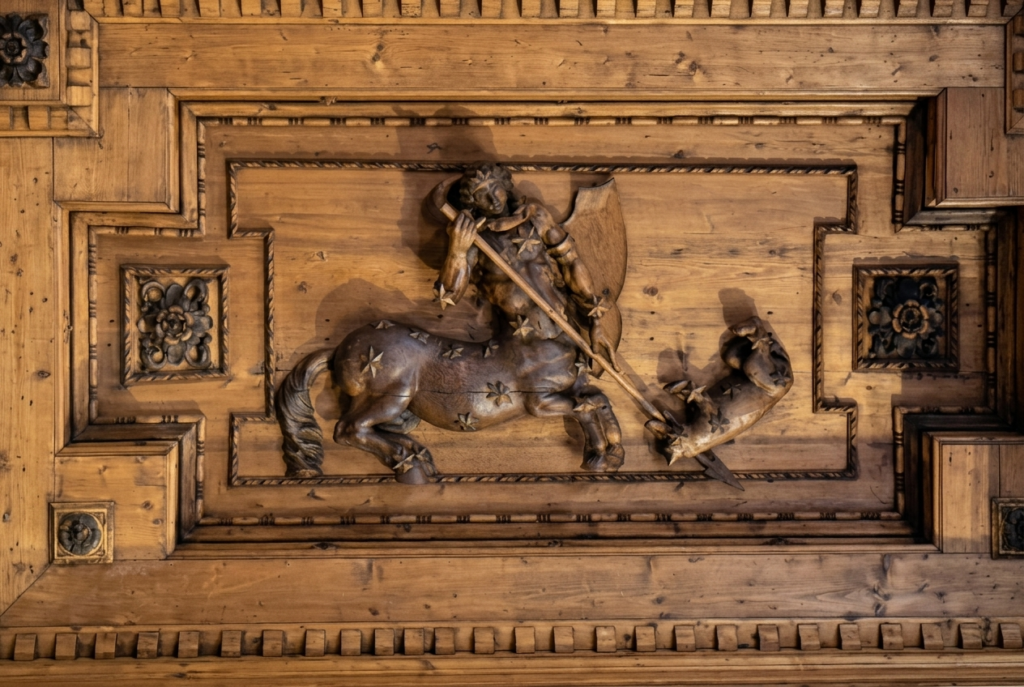
Medicine and astrology were still closely connected.
Physicians believed celestial bodies could affect human health, and astrological considerations could influence diagnosis and treatment.
So while a corpse was being dissected below, students looked upward at a symbolic cosmos governing the body. It’s a wonderful snapshot of how 17th century people understood medicine.
Dissections As Spectacles
Anatomical dissections weren’t simply routine classroom exercises. They could be public academic spectacles, particularly during Carnival season, when cooler weather slowed decomposition.
Professors, students, physicians, dignitaries and invited spectators might attend.
There was a practical reason for winter dissections too: no refrigeration. You wanted cold weather if you were going to keep a corpse around while dissecting it over several days.
So imagine that gorgeous carved room absolutely packed with people staring down at a corpse on the marble table. It’s a long way from a modern medical-school anatomy lab.
Where did the bodies come from?
Historically, European anatomy schools frequently obtained bodies from executed criminals, hospitals and unclaimed dead. Bologna’s legal and ecclesiastical arrangements surrounding dissection changed over time.
Bologna was once part of the Papal States, yet it became an important center of anatomical study. The simplistic idea that “the Catholic Church banned dissection” doesn’t really hold up.
There were restrictions and complicated religious rules surrounding bodies, burial and particular practices. But human dissection was being formally taught at Bologna centuries before this theater was built.
Gaspare Tagliacozzi
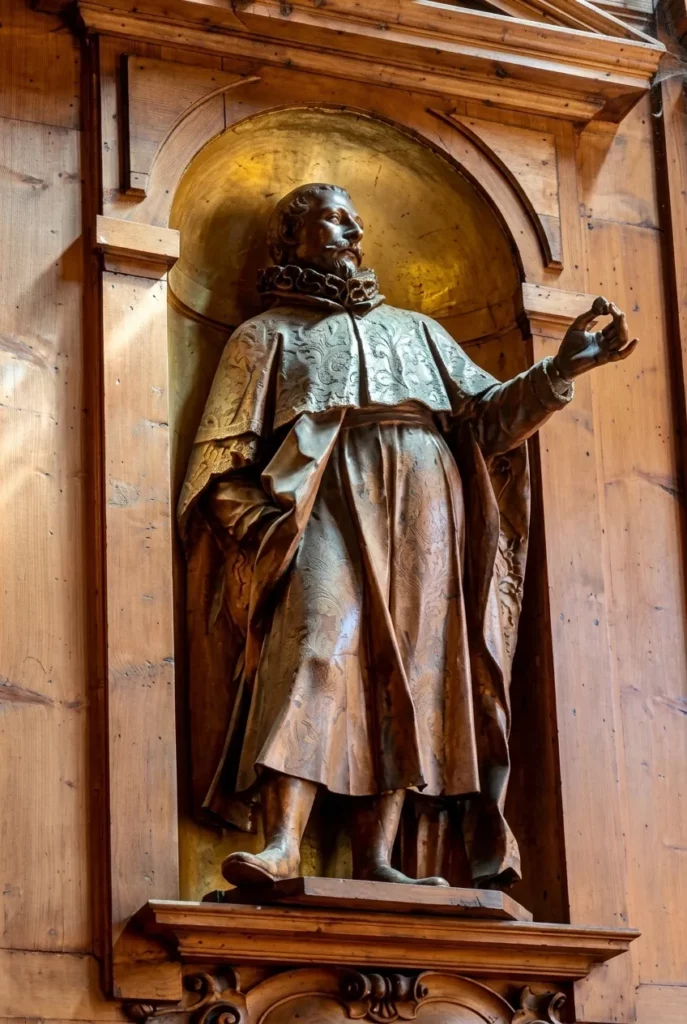
One physician deserves special attention, Gaspar Tagliacozzi.
He was a 16th century professor at Bologna and one of the great pioneers of reconstructive surgery. His specialty was reconstructing the noses of people injured in duels, and you can see him holding one.
Yes, the procedure was as unpleasant as it sounds. He developed a technique in which a flap of skin from the patient’s upper arm was attached to the damaged nose.
The arm remained physically connected to the face for weeks until the graft established a blood supply. Only then was the arm separated.
There are famous early illustrations showing unfortunate patients sitting with an arm strapped to their head.
WWII Bombing
On January 29, 1944, an Allied bomb struck the Archiginnasio.
The eastern wing collapsed. The Anatomical Theater was essentially destroyed.
People sheltered in the basement during the raid. The official Archiginnasio account says around a hundred librarians, readers and passersby emerged from the shelter afterward.
The theater above them was wrecked.
Almost immediately, superintendent Alfredo Barbacci and his team began salvaging pieces of the theater from the rubble.
They recovered statues, carved decoration and thousands of fragments of wood. Workers and craftspeople literally sifted through the debris looking for pieces that could be identified and reused.
That’s why calling today’s theater simply a “reconstruction” doesn’t quite capture it. It’s a painstaking restoration containing substantial original material.
Practical Information for the Anatomical Theater
Where: The Anatomical Theater is located on the upper floor of Palazzo dell’Archiginnasio and is accessible to wheelchair users via an elevator.
Hours: Monday through Saturday 10:00 am to 6:00 pm
Tickets: 10 euros. Guided tour 12 euros.
How Long? 20-30 minutes. Listening to the audio guide (with QR code) takes 12 minutes.
I hope you’ve enjoyed my guide to the Anatomical Theater. You may find these other Emilia-Romagna guides useful:
- One day in Parma itinerary
- Things to do in Modena
- Guide to Parma’s Palazzo della Pilotta
- Parma art guide
- Guide to Correggio’s Camera di San Polo
- Guide to Parma National Gallery
- Guide to Correggio’s cathedral dome fresco
- Guide to Parma Cathedral
Pin it for later.