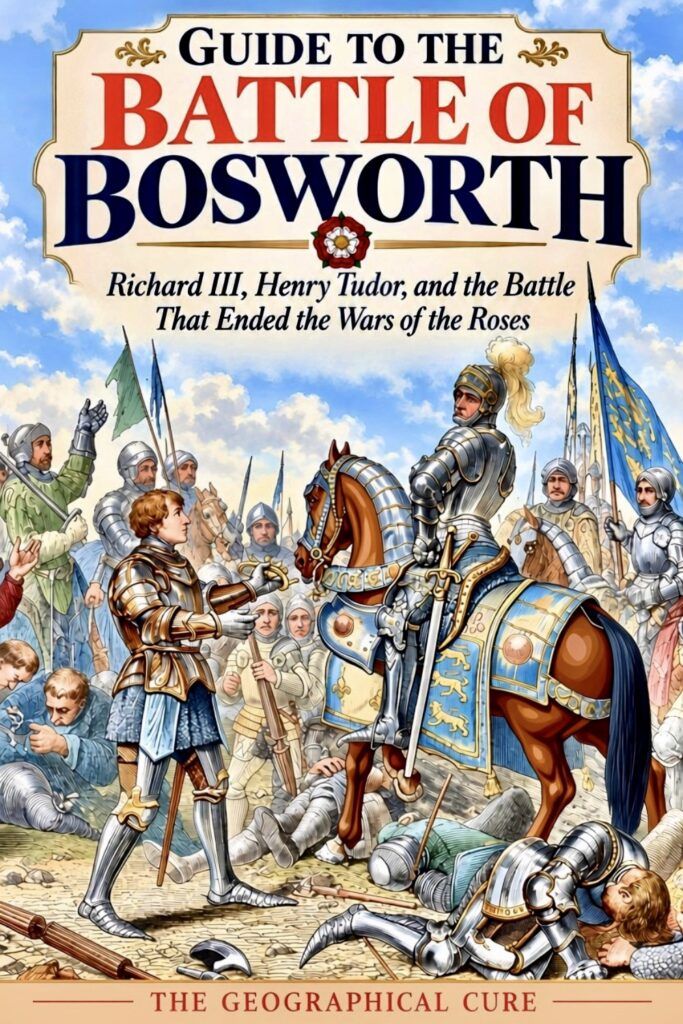
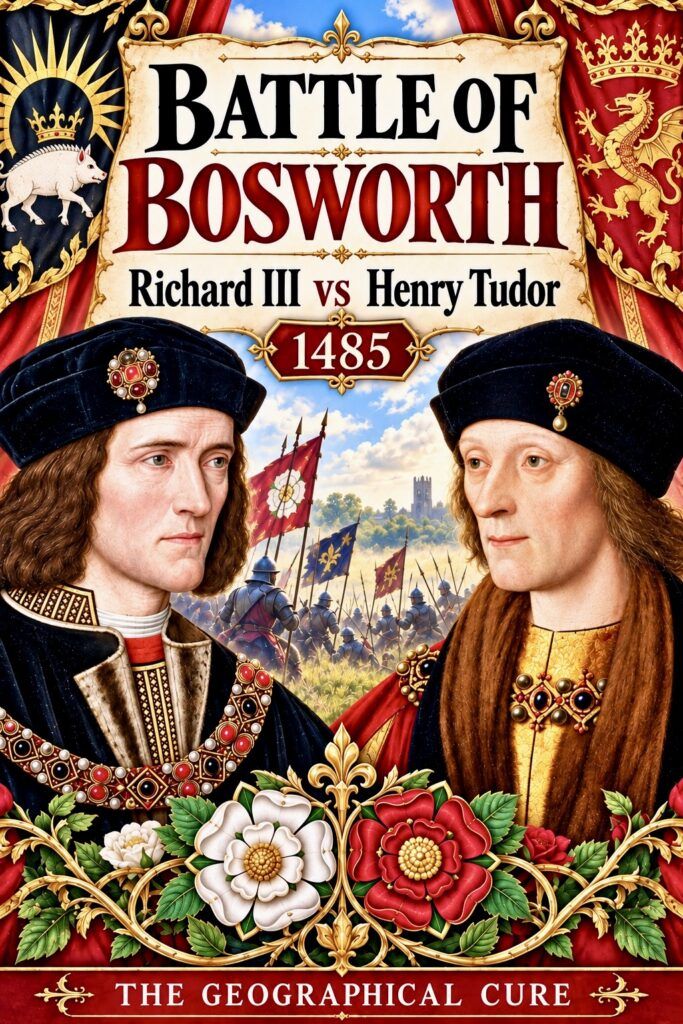
The Battle of Bosworth was a dramatic moment in English history. It marked the end of the Wars of the Roses, with Henry Tudor ushering in the Tudor era.
The two protagonists could hardly have been more different.
Richard III was the Yorkist king of England, later immortalized as Shakespeare’s crooked-backed villain. Henry Tudor was the challenger. His blood claim was shaky, but his ambition certainly wasn’t.
In 1485, they clashed at Bosworth. Richard was betrayed, Henry won, and the Plantagenet age came crashing down.
One man entered the battlefield as king. The other left with the crown.
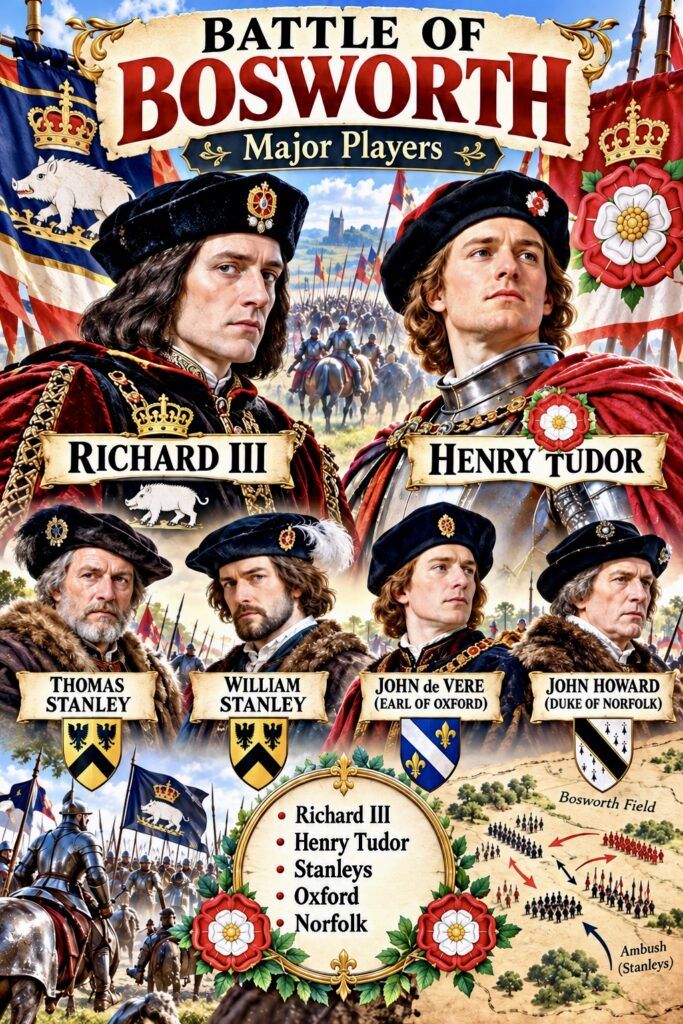
Cast of Characters
Here’s who mattered at Bosworth:
- Richard III — reigning king of England, experienced soldier, and the man Henry Tudor came to overthrow
- Henry Tudor — exiled Lancastrian claimant with a shaky blood claim who would emerge from Bosworth as Henry VII
- John de Vere, Earl of Oxford — Henry’s most experienced military commander and leader of the main Tudor force
- John Howard, Duke of Norfolk — one of Richard’s most loyal supporters and commander of his vanguard; killed during the battle
- Henry Percy, Earl of Northumberland — commanded a large part of Richard’s army but failed to commit his forces at the crucial moment
- Thomas Stanley, Lord Stanley — Margaret Beaufort’s husband, who arrived with thousands of troops but kept everyone guessing about which side he would support
- Sir William Stanley — Thomas Stanley’s brother, whose intervention against Richard during the final clash helped decide the battle

History of the Battle of Bosworth
Prequel
Richard III
The roots of the Wars of the Roses stretched back to 1399, when Henry Bolingbroke seized the crown from his cousin Richard II and became Henry IV.
That usurpation muddied the rules of succession and left rival branches of the Plantagenet family with competing claims to the throne.
Open warfare finally erupted in 1455. For the next three decades, England’s nobility repeatedly switched sides, raised armies, lost fortunes, and occasionally lost their heads over whether York or Lancaster should rule.
By the Battle of Bosworth in 1485, enthusiasm for the family feud had considerably cooled. Many nobles were tired of dynastic warfare and increasingly interested in survival.
Richard III had been king for just over two years. He took the crown in 1483 after Edward IV’s sons were declared illegitimate. But his hold on the throne was never entirely secure.
Richard was also vulnerable.
The Duke of Buckingham had already rebelled against him. His sister-in-law Elizabeth Woodville and Margaret Beaufort were plotting against him. And then there was the awkward matter of the Princes in the Tower.
Richard had taken the crown after his nephew Edward V was declared a bastard. Then Edward and his younger brother disappeared. Not exactly ideal optics for the king.
The Yorkist camp itself was fractured. Richard could still raise a formidable army. But some of England’s most powerful nobles were distinctly unenthusiastic about risking everything for him.
That would matter enormously at Bosworth.
Henry Tudor
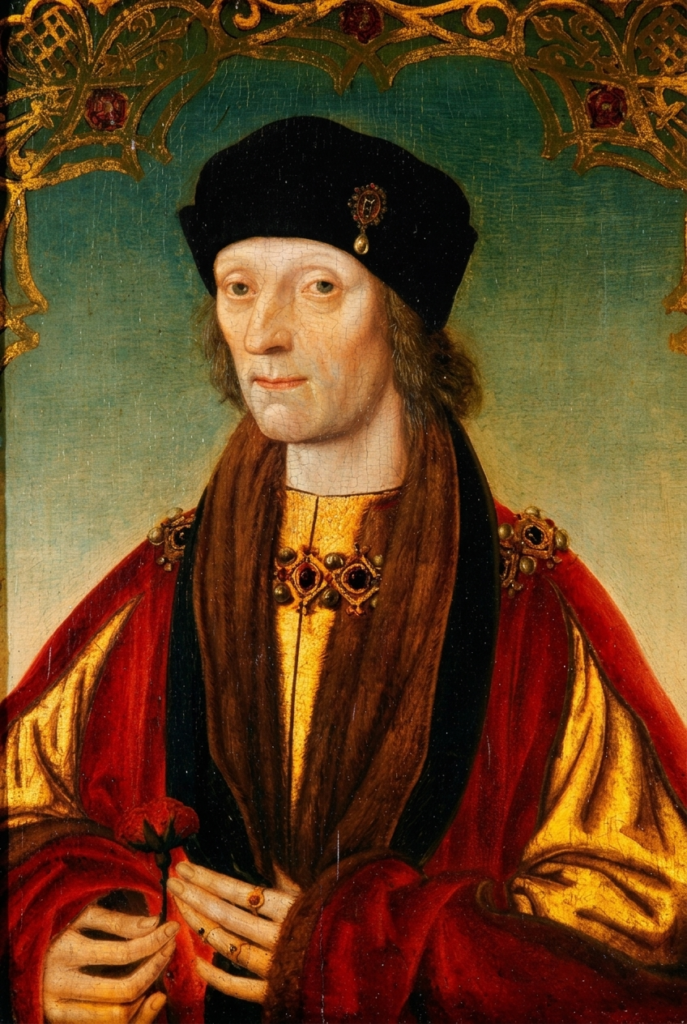
Meanwhile, the Welsh-born Henry Tudor had spent most of his adult life in exile. He fled to Brittany in 1471 and remained there until 1484, when he escaped to France.
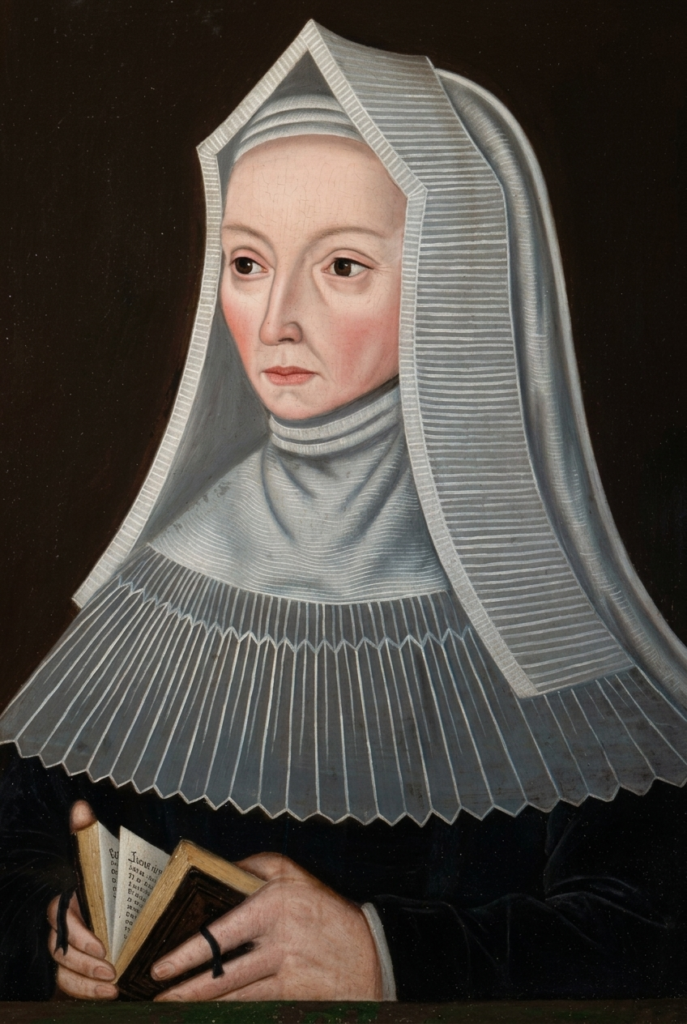
His claim to the English throne was paper-thin. But Henry had something almost as useful as royal blood: Margaret Beaufort for a mother.
Margaret was one of the most powerful women in England. And she was convinced of her son’s destiny and schemed relentlessly on his behalf.

She cultivated an image of extreme piety, while quietly building alliances and keeping Henry politically alive. Her most consequential marriage was her last, to Thomas Stanley.
Stanley was one of the great survivors of the Wars of the Roses. He had troops, money, connections, and a remarkable instinct for ending up on the winning side. Margaret knew exactly what she was doing.
By 1485, Henry finally saw an opening. Richard had enemies. The Yorkists were divided. Margaret had built a network inside England.
All Henry had to do was land, gather an army, march toward a crowned and battle-hardened king, and somehow survive. Simple.
Henry Lands In England
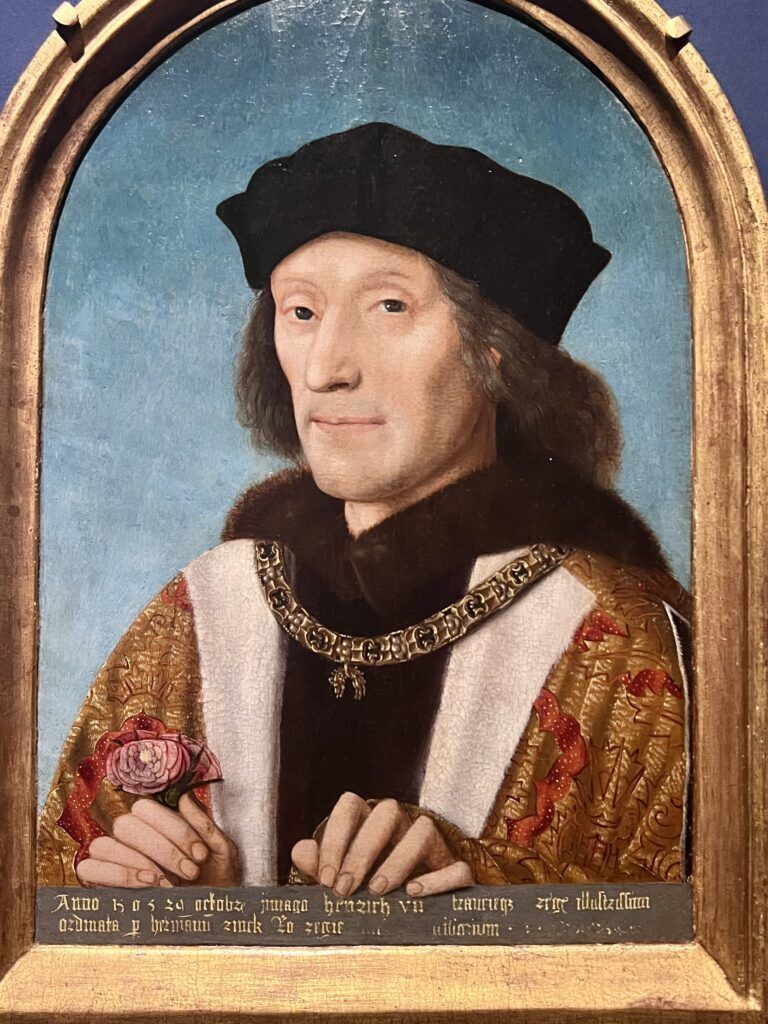
On August 7, 1485, Henry landed near Milford Haven in south Wales with roughly 2,000–2,500 men. Many of them were French mercenaries and English exiles.
He marched through Wales toward Shrewsbury, gathering recruits as he went. By the time he reached Bosworth, his army had grown to perhaps 5,000 men.
Still, Richard outnumbered him. Henry desperately needed the support of the Stanley brothers.
The Stanleys: Playing Both Sides
The problem? Richard needed the Stanleys too.
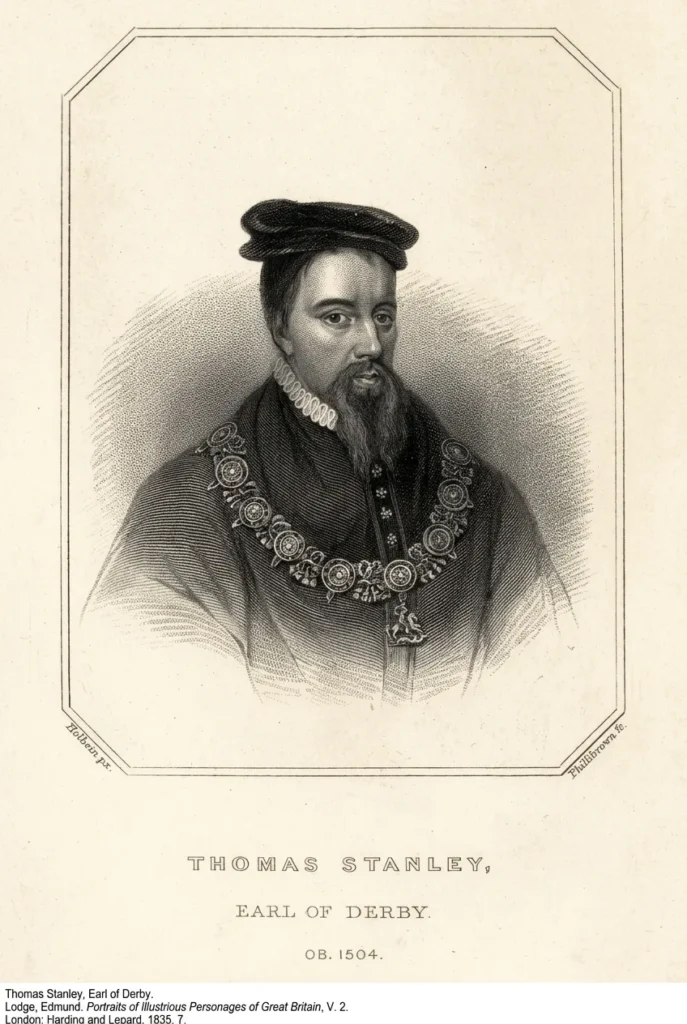
Thomas Stanley was one of the most powerful magnates in England and Margaret Beaufort’s husband. His younger brother William was an experienced Yorkist soldier with substantial forces of his own.
The pair had survived the Wars of the Roses by being extraordinarily careful about backing losers. And now they refused to commit.
Richard knew exactly how dangerous that was. To keep Thomas in line, he took Stanley’s eldest son, Lord Strange, hostage. Even that didn’t settle the matter.

Richard Assembles His Army
Meanwhile, Richard assembled the royal army at Nottingham before marching south toward Leicester.
Whatever enthusiasm some nobles lacked, Richard was still the anointed king of England. He could call on the royal household, noble retainers, archers, infantry, and artillery. Estimates vary, but he probably reached Bosworth with somewhere between 10,000 and 15,000 men.
Henry had perhaps 5,000. On paper, this should not have been much of a contest.
Richard was also the vastly more experienced soldier. He’d fought for his brother Edward IV, commanded armies in the north, and built a reputation as an extremely capable military leader.
Henry Tudor, by contrast, had never fought a battle. Richard seemed to hold almost every advantage. Almost.
The White Rose, Pruned
The armies met on August 22, 1485.
Tradition long placed Richard dramatically atop Ambion Hill. Modern battlefield archaeology has complicated that picture.
Richard probably camped around the hill, but the main fighting took place on lower ground several miles to the southwest.
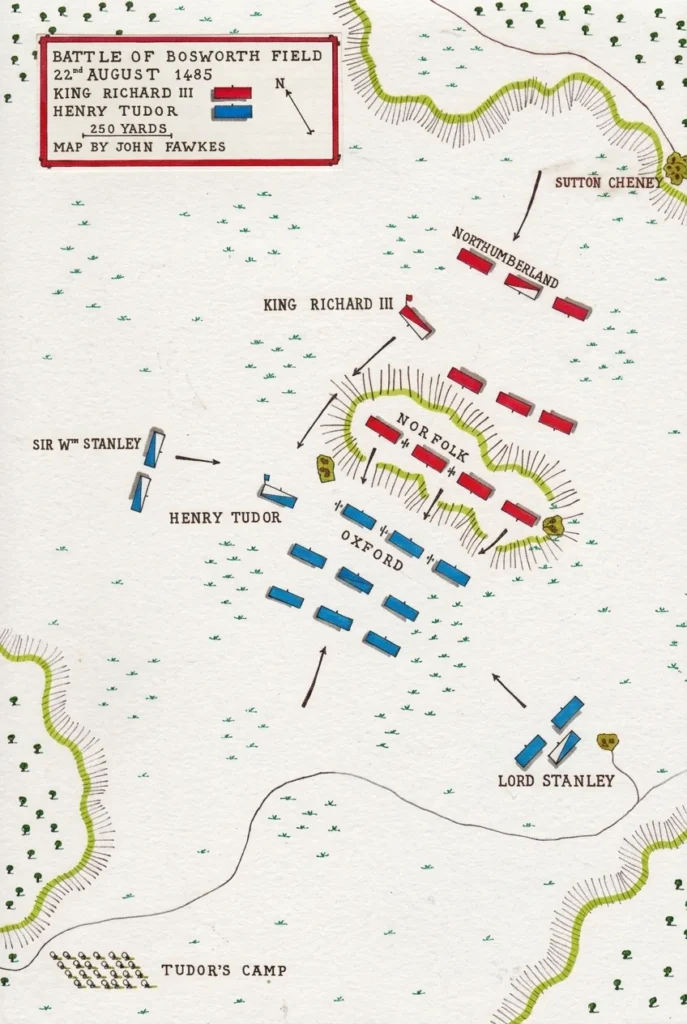
Richard arranged his army with John Howard, Duke of Norfolk, commanding the vanguard and Henry Percy, Earl of Northumberland, controlling another large contingent.
The Stanleys positioned themselves apart from both sides and waited. Very Stanley.
Then, the shooting began. Richard’s artillery opened fire as Henry’s army advanced.
Henry’s experienced commander, John de Vere, Earl of Oxford, maneuvered his men around marshy ground and drove into Norfolk’s forces. Archers exchanged volleys before the armies closed and began fighting hand to hand.
Oxford was badly outnumbered and knew it. He ordered his men to stay tightly packed around their standards so Richard’s larger army couldn’t envelop them.
It worked. Norfolk was killed and the royal vanguard began to buckle.
And Northumberland? He never properly entered the fight.
Later writers naturally smelled treason. But historians still don’t know why the seemingly lily-livered Northumberland deliberately abandoned Richard. Either he couldn’t maneuver his troops through the terrain, feared the Stanleys on his flank, or simply lost control of events.
Whatever the reason, Richard suddenly had thousands of men who were doing him absolutely no good.
Then, Richard spotted Henry. Henry was behind Oxford’s main force with only a relatively small bodyguard. Richard saw his chance to end the entire rebellion with one spectacular blow.
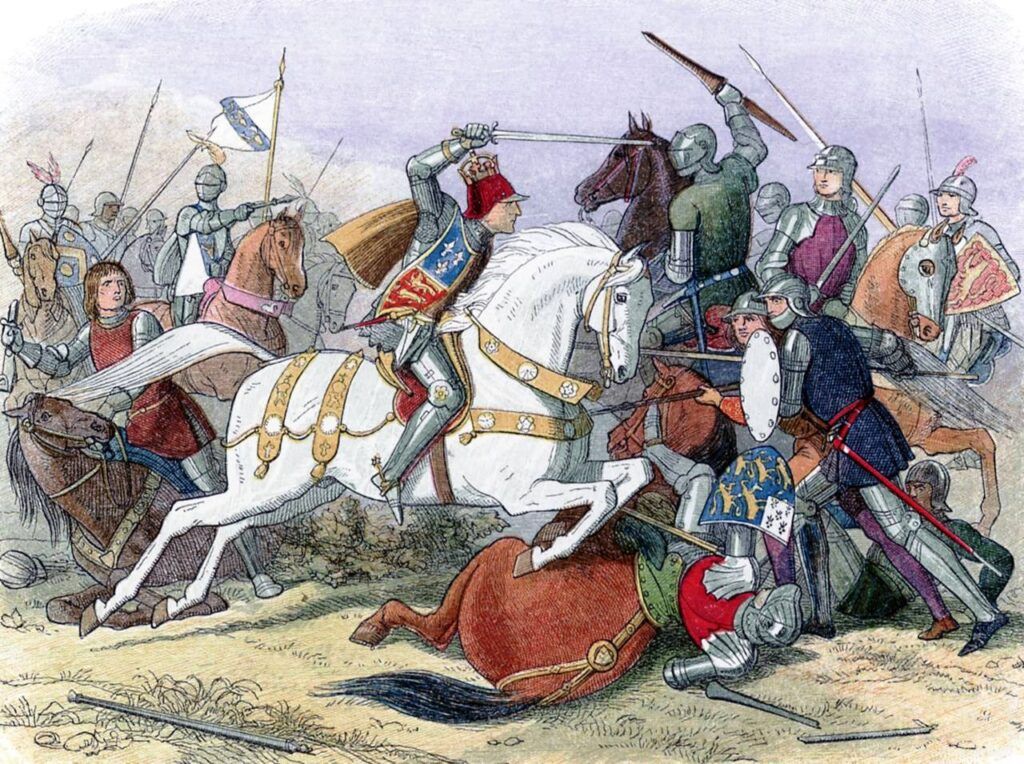
So he gambled everything. He gathered his household knights and launched a furious cavalry charge directly at Henry Tudor.
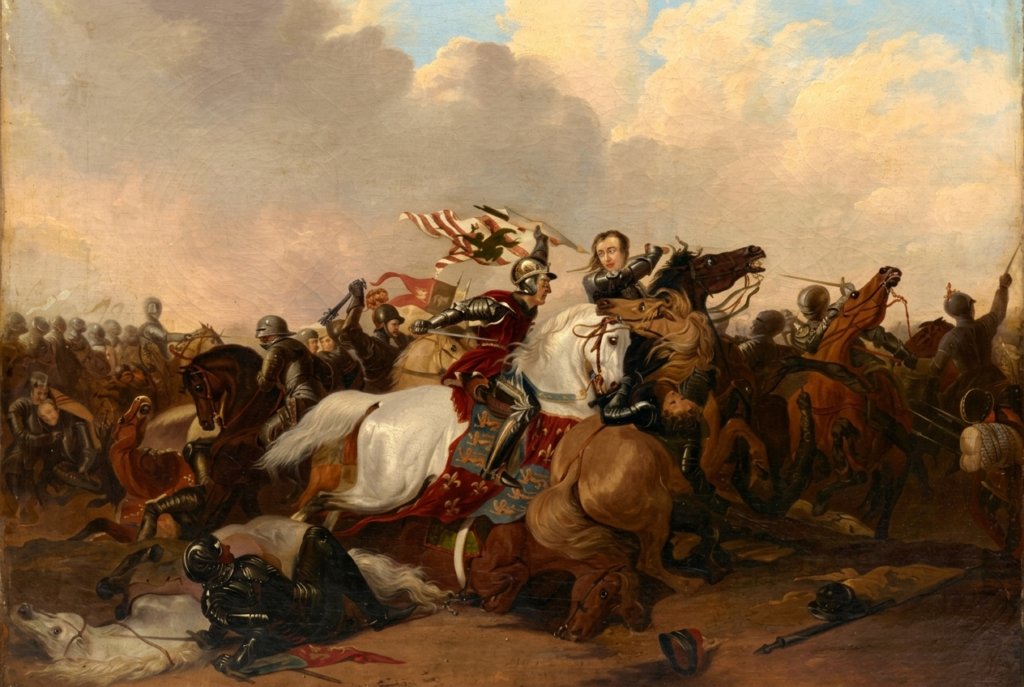
And Richard came frighteningly close to pulling it off. He smashed through Henry’s defenders, killed Henry’s standard bearer William Brandon, and unhorsed the enormous Sir John Cheyne. Henry himself was suddenly within reach.
Then William Stanley finally made his fateful choice. His troops charged into the fight on Henry’s side.
Richard’s gamble had failed. His horse became trapped or went down in the marshy ground. Richard continued fighting on foot while Stanley’s men closed around him.
He had opportunities to flee. He didn’t.
Polydore Vergil, hardly a Richard partisan, later wrote that the king died “fighting manfully” in the thick of his enemies. Later tradition has Richard crying “Treason!” as he realized what had happened around him.
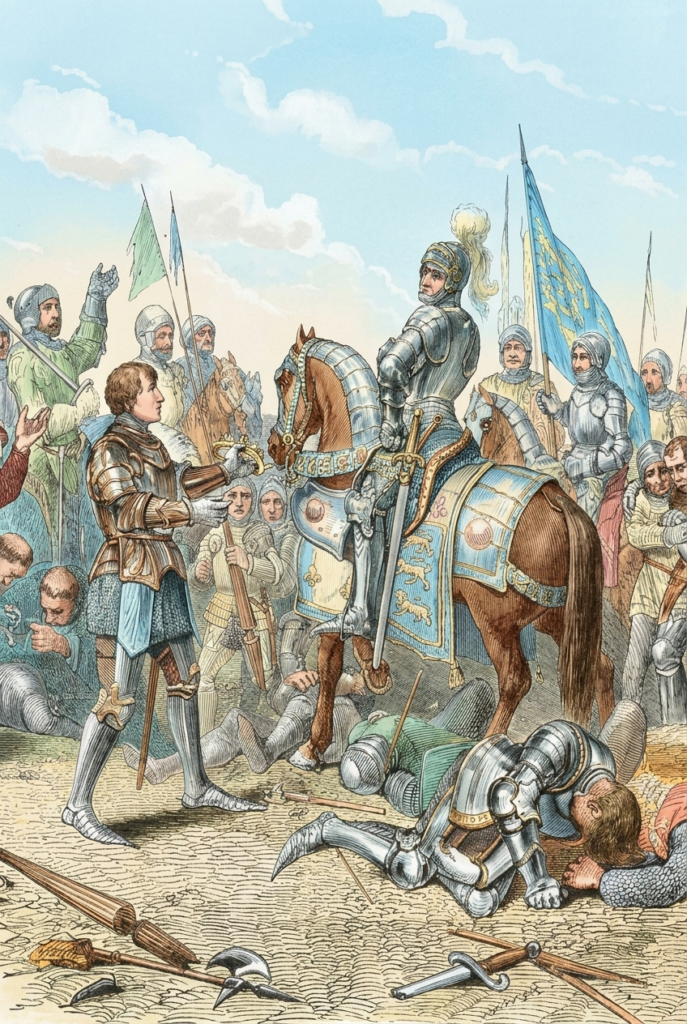
Richard was surrounded and killed. The battle was over.
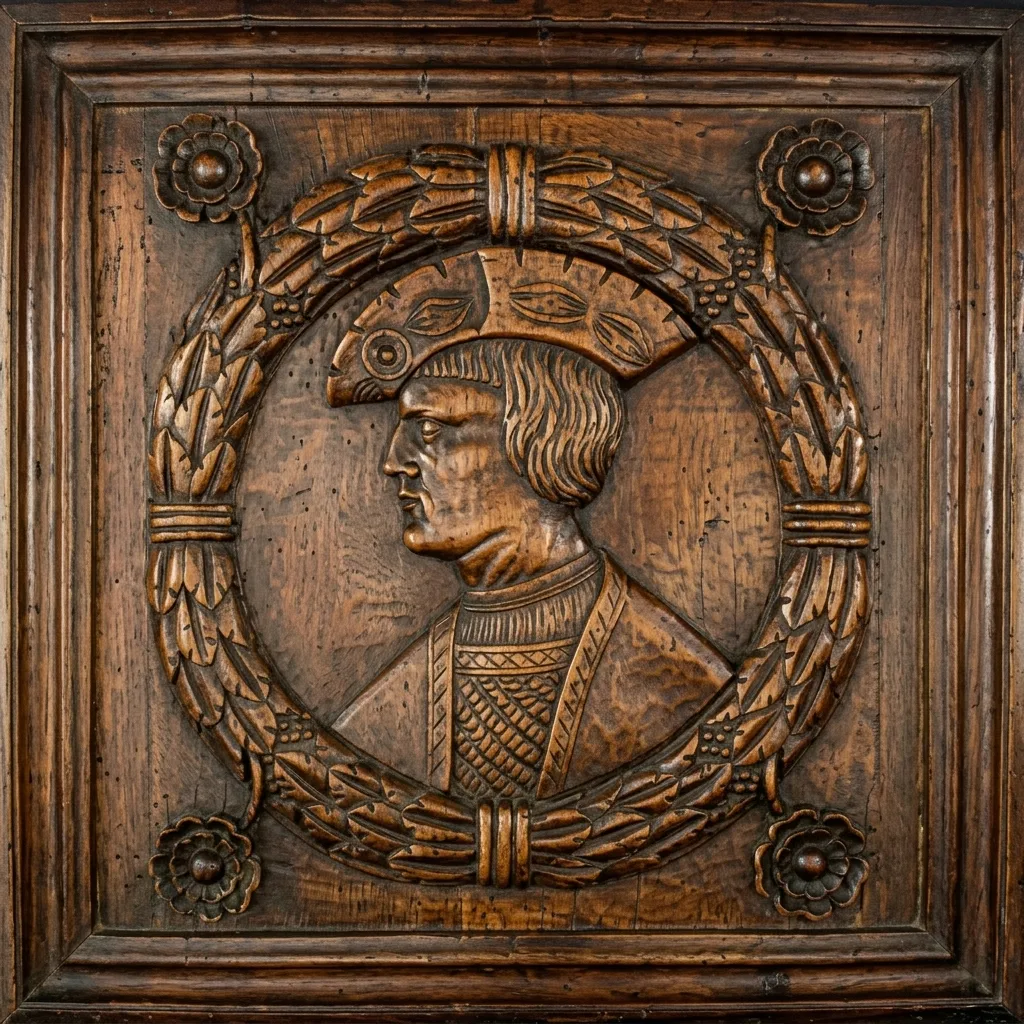
His body was stripped and carried away. His crown was recovered, and Lord Stanley ceremonially placed it on Henry Tudor’s head after the fighting. The exile with the paper-thin claim was suddenly Henry VII.
Richard III became the last English monarch to die in battle. And the Plantagenet dynasty, after more than three centuries, was finished.
Bosworth wasn’t a tidy contest between two equally legitimate heirs. Richard was the crowned king. Henry Tudor’s hereditary claim was decidedly shaky.
But medieval kingship had one brutally simple rule: possession mattered. Henry won the battle, Richard died in it, and the exile with the dubious claim walked away with the crown. The legal justifications could come later.

Visiting Bosworth Battlefield
You can visit the Bosworth Battlefield Heritage Centre in Leicestershire, near Market Bosworth.
The visitor center has a clear, engaging exhibition on Richard III, Henry Tudor, medieval warfare, and the battle itself.
Displays include battlefield models, replica armor and clothing, heraldic flags, weapons, archaeological finds, and plenty of medieval military material. There’s even a game table where you can refight Bosworth yourself.
The exhibition was substantially redeveloped in 2008. Then archaeologists made some extraordinary discoveries during a five year survey of the surrounding countryside.
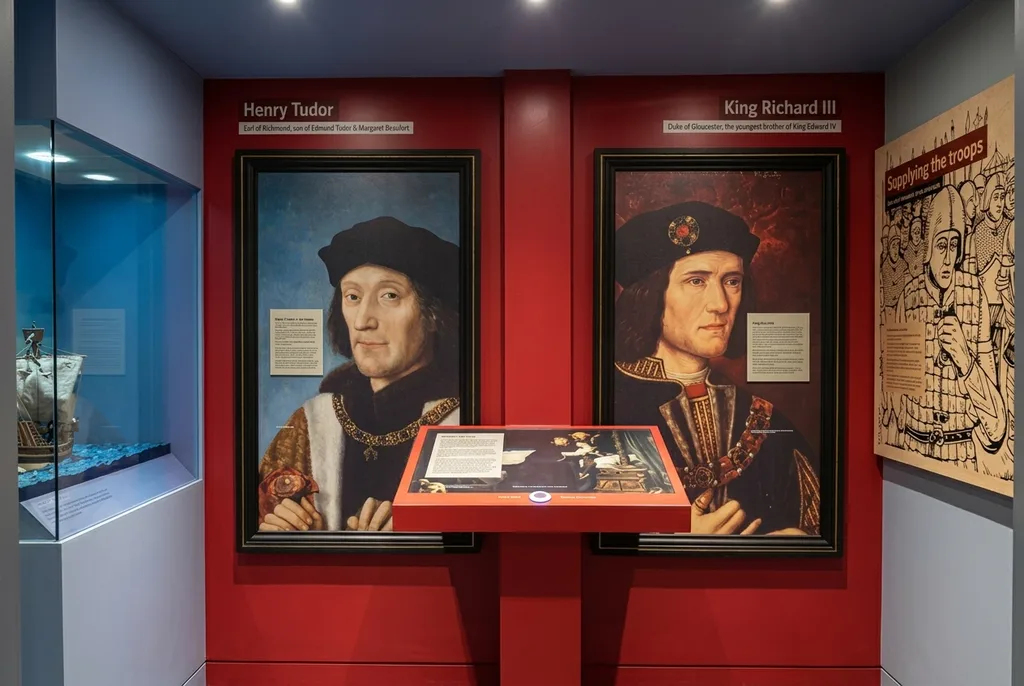
In 2009, they found medieval cannon shot and a tiny silver-gilt white boar badge, Richard III’s personal emblem.
Because the badge was made of silver gilt, archaeologists believe it probably belonged to a high ranking member of Richard’s retinue. Even better, it was found near the marshy area associated with Richard’s final stand.
Those finds helped prove that the main battle was not fought directly below Ambion Hill, as historians had long assumed. It was instead about a mile southwest around Fenn Lane.
The displays gives you a fascinating before-and-after look at how archaeology completely changed the accepted story of Bosworth.
Outside, you can follow the self-guided 1.25 mile Battlefield Trail through the surrounding countryside, with interpretation panels and views toward the actual battlefield. Guided walks are also offered on selected days.
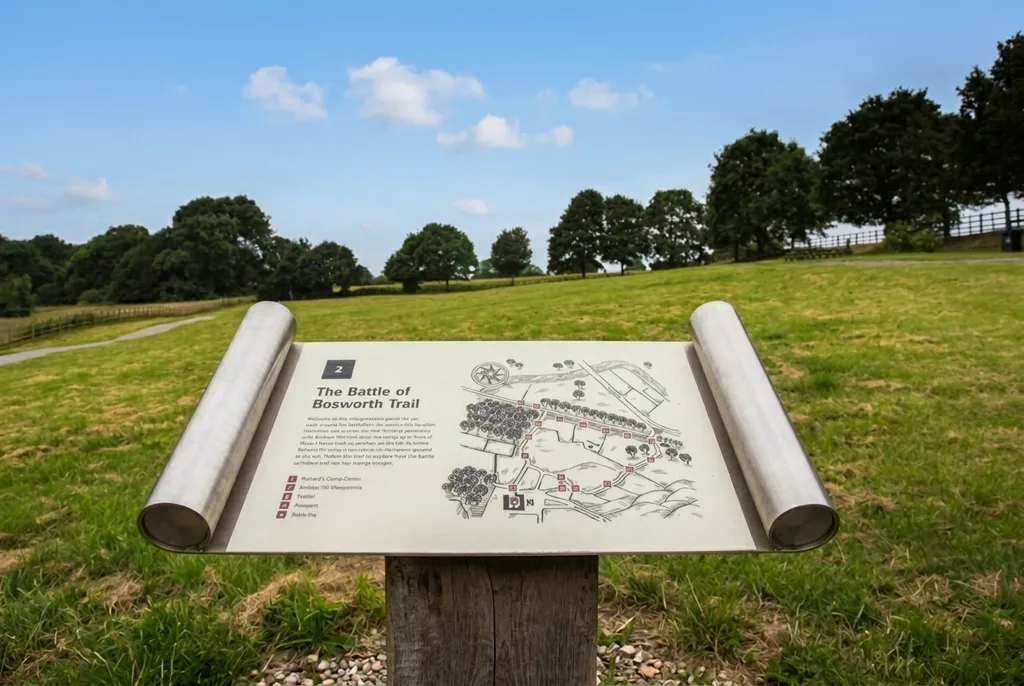
So you’re not necessarily standing on the exact patch of mud where Richard made his last charge. History can be annoyingly uncooperative that way.
The battlefield and self-guided trail are free. Admission to the Heritage Centre exhibition is £10 for adults, with reduced prices for concessions and children.”
I hope you’ve enjoyed my history of the Battle of Bosworth. You may find these other English histories interesting:
- Royal Whodunits
- English myths
- History of Medieval and Tudor England
- Tudor queens of England
- Power Women of Medieval & Tudor England
- Historical Mistresses and Favorites
- Wives of Henry VIII
- Worst kings of England
- Anglo-Saxon kings of England
Pin it for later.