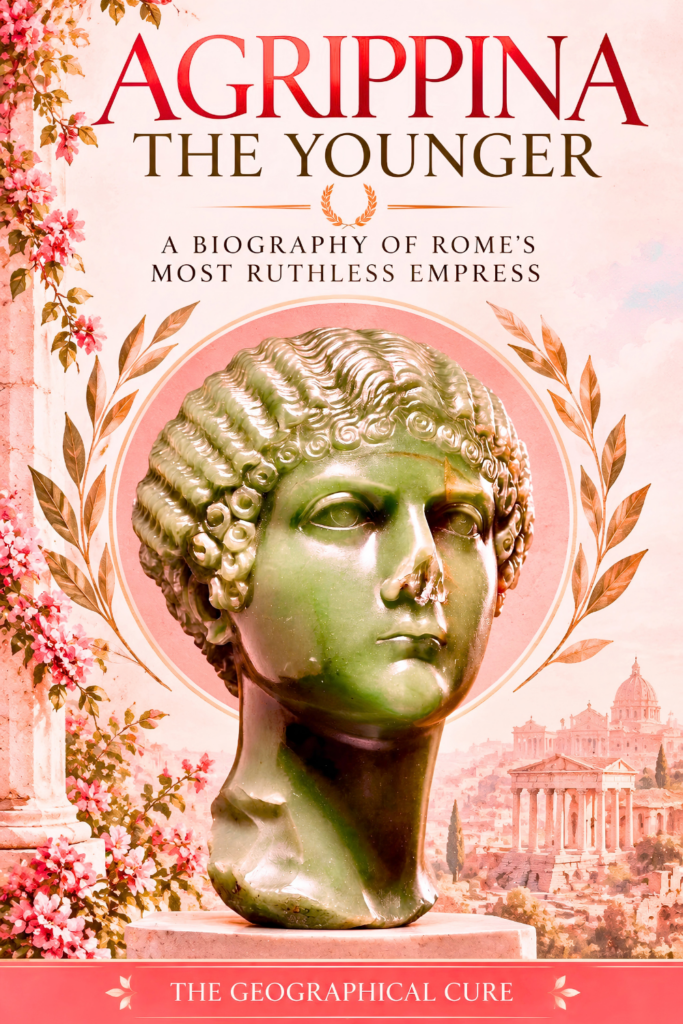
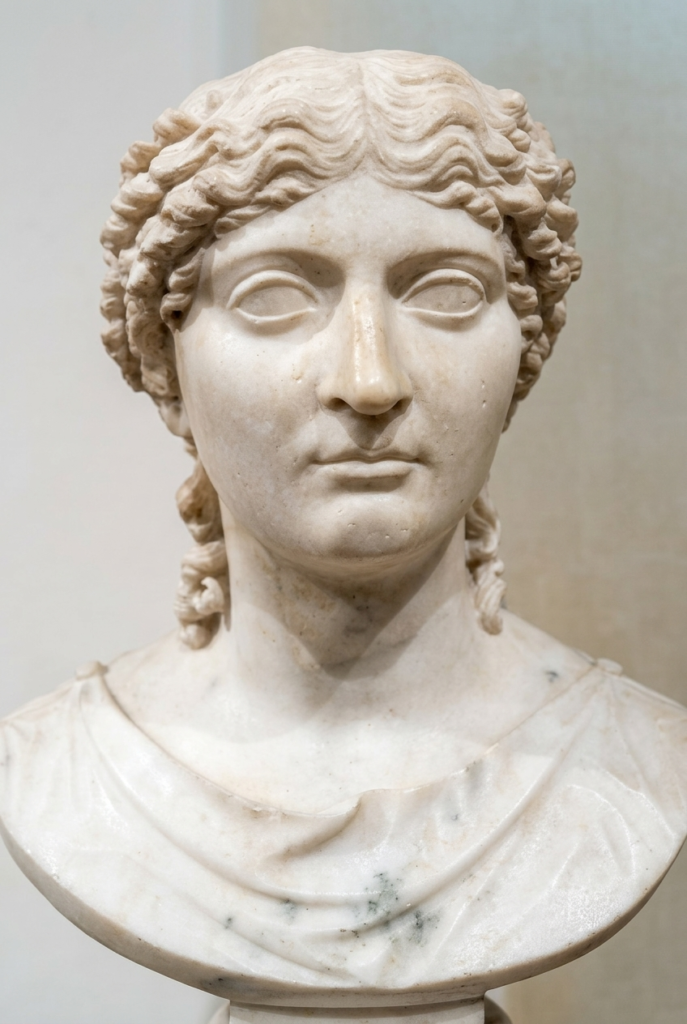
Agrippina the Younger was one of the most powerful and ruthless women in ancient Rome. Few women in history could rival her pedigree.
And she lived through one of the most lurid periods in ancient Roman history. There were plots, counter-plots, poisonings, and murders.
Through it all, Agrippina carved a path to power for her son Nero and pursued that goal with extraordinary zealotry.
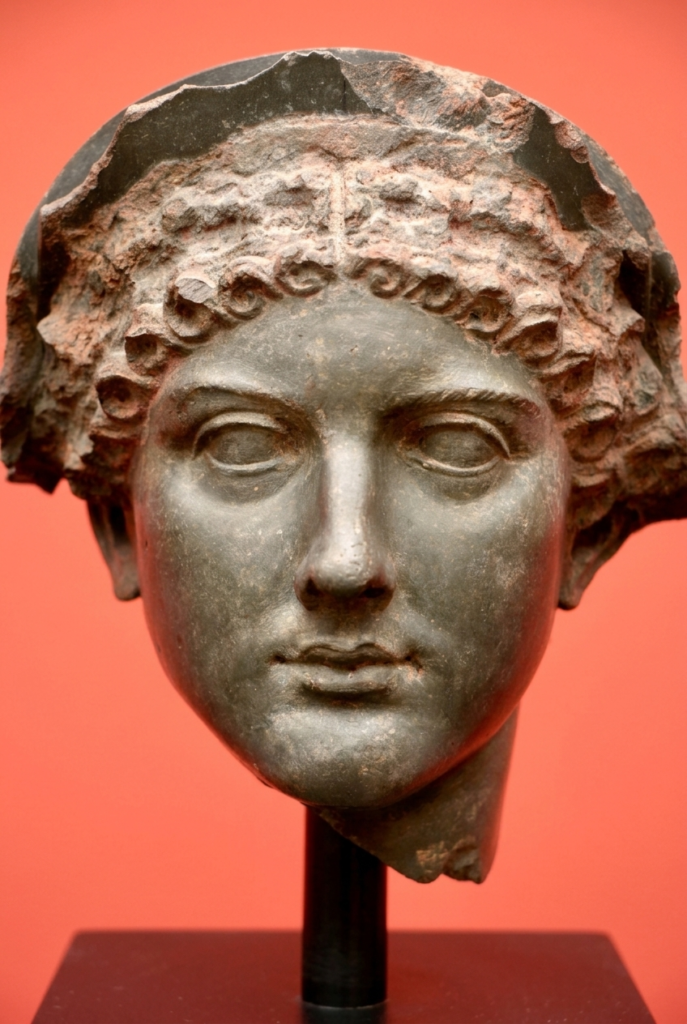
Rivals were pushed aside. Exile didn’t break her.
She survived her brother Caligula, married her uncle Claudius, and may even have poisoned him when his usefulness ran out.
Agrippina honed survival into an art form. She was ambitious, politically gifted, and formidable enough to reshape the imperial succession.
Then it all collapsed. This is her story.
Agrippina Biography: the Woman Behind the Julio-Claudian Throne
Young Agrippina
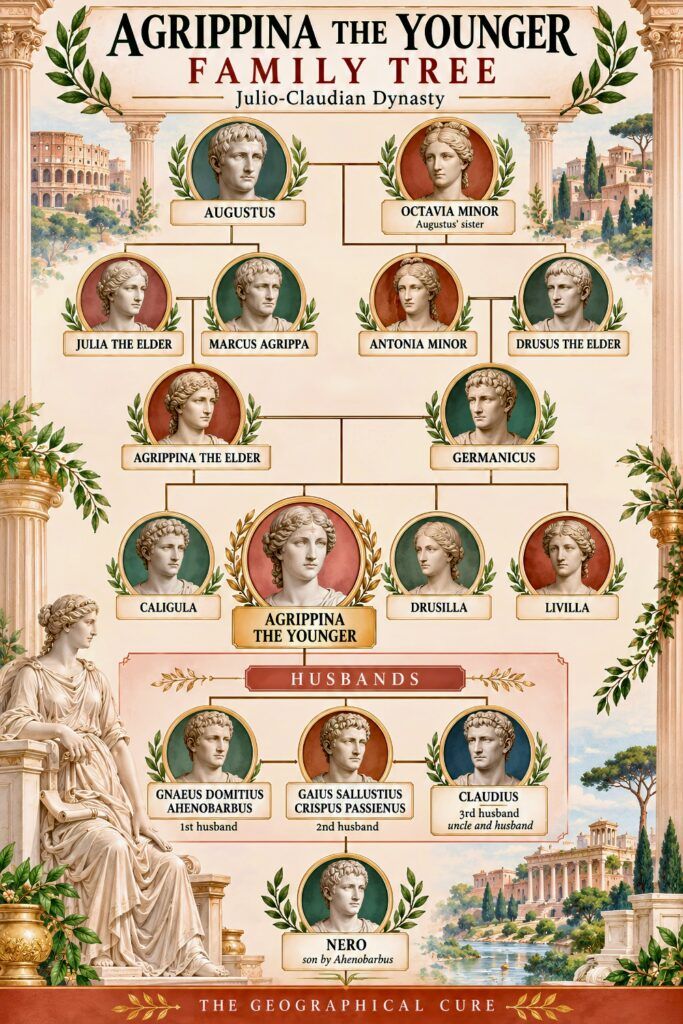
Born in 15 CE at a military camp on the Rhine, Agrippina the Younger entered the world with impeccable imperial credentials. Her parents stood at the center of the ruling Julio-Claudian dynasty.
Her mother, Agrippina the Elder, was the daughter of Marcus Agrippa and Julia the Elder, making her a granddaughter of Augustus.
Her father was Germanicus, the wildly popular general adopted by Emperor Tiberius and widely regarded as the likely future emperor.
Agrippina also had another important family connection. Her older brother was Caligula, who would eventually become emperor himself.
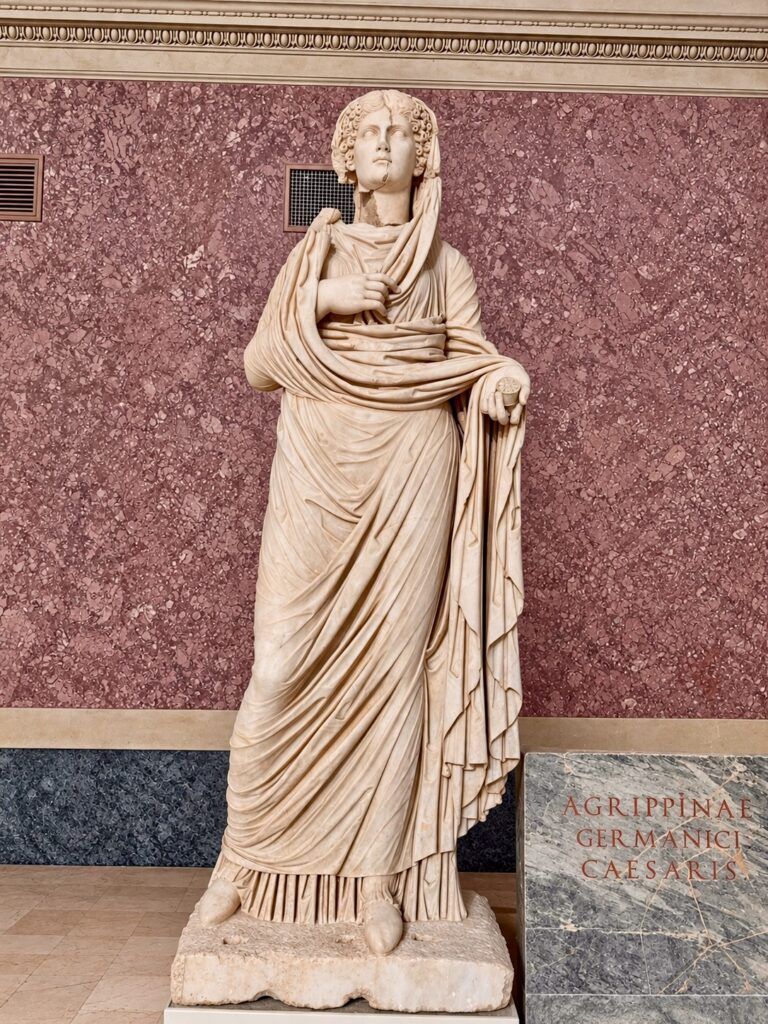
But the family’s fortunes turned early. Germanicus died in 19 CE, when Agrippina was only four. His death horrified Rome and caused an enormous political scandal.
Many Romans suspected poisoning. Suspicion fell heavily on the governor of Syria, Gnaeus Calpurnius Piso.
Some thought Tiberius was behind it, his prefect Sejanus whispering in his ear that Germanicus had designs on his throne. Though there’s no solid evidence that Tiberius ordered Germanicus’ death.
For Agrippina, however, the larger point was brutally simple: one of the most celebrated men in Rome was dead, and the struggle surrounding his family was only beginning.
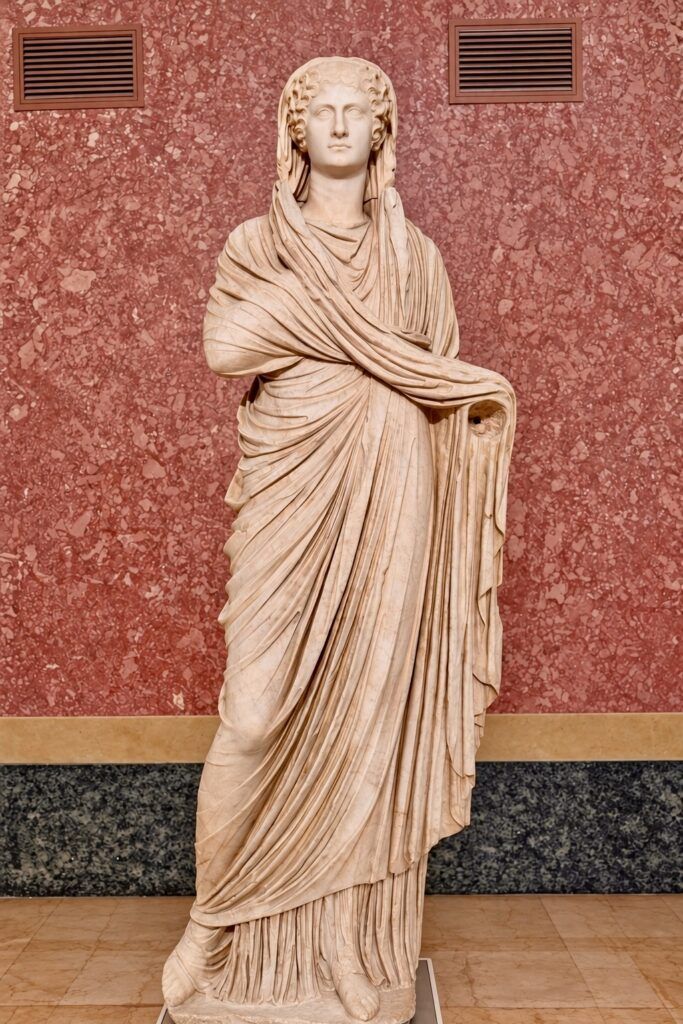
Caligula’s Sister
When Tiberius died, Caligula ascended the throne. His accession initially transformed Agrippina’s fortunes.
He showered his sisters with extraordinary honors, minted coins in their image, and presented them almost as extensions of the imperial household.
But the family love fest didn’t last.
After Drusilla died in 38 CE, the family dynamic changed badly. The immediate trigger was the Lepidus affair in 39 CE.

Marcus Aemilius Lepidus, Drusilla’s widower, was accused of conspiring against Caligula. Agrippina and Livilla were implicated too, apparently through letters or political association.
But imperial affection had limits, especially once a potential rival faction was involved.
Lepidus was executed, and the sisters were stripped of their property and honors. Agrippina and Livilla were packed off into exile.
It was another brutal lesson in Julio-Claudian politics: proximity to the emperor could make you powerful one day and disposable the next.
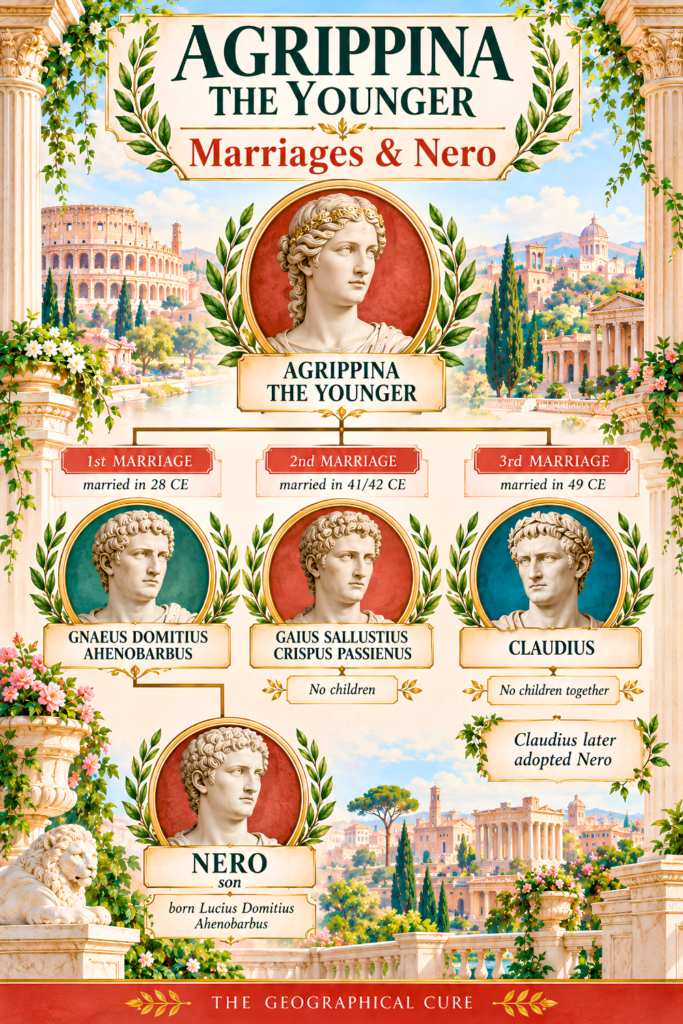
Agrippina’s First Two Marriages
Family connections had given Agrippina status, but they had also nearly destroyed her. Marriage offered another route to security.
Ahenobarbus
In 28 CE, at about age 13, Agrippina married her much older relative Gnaeus Domitius Ahenobarbus. The match was arranged under Tiberius and, like most aristocratic Roman marriages, was political.
Ahenobarbus came from an ancient and prestigious family. The couple had one child, Lucius Domitius Ahenobarbus, born in 37 CE. He would later become Nero.
The Domitii Ahenobarbi had a reputation for arrogance and brutality. Ancient writers portray Nero’s father in especially unflattering terms, claiming he murdered servants and gouged people’s eyes out.
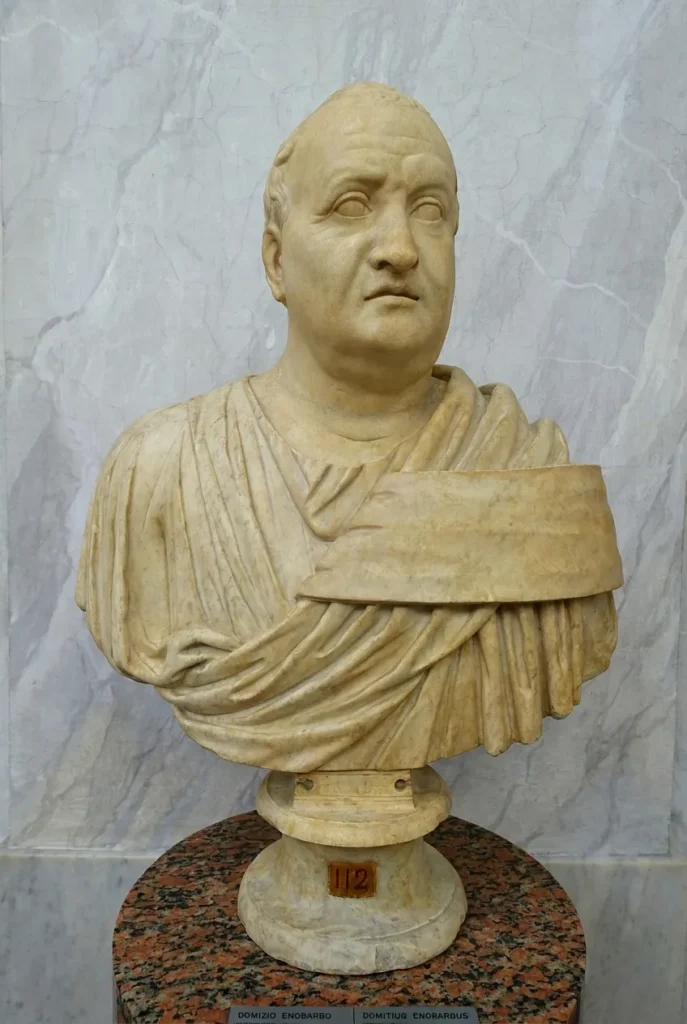
Whether all of that family mythology is fair is another matter. But Nero certainly did little to improve the reputation.
Gnaeus died in 40 CE, apparently from illness. Nero was only three. By then, Agrippina herself was already exile.
Crispus
After the Praetorian Guard murdered Caligula in 41 CE, Claudius became emperor. He recalled Agrippina from exile and restored her property. Not long afterward, she married Gaius Sallustius Crispus Passienus.
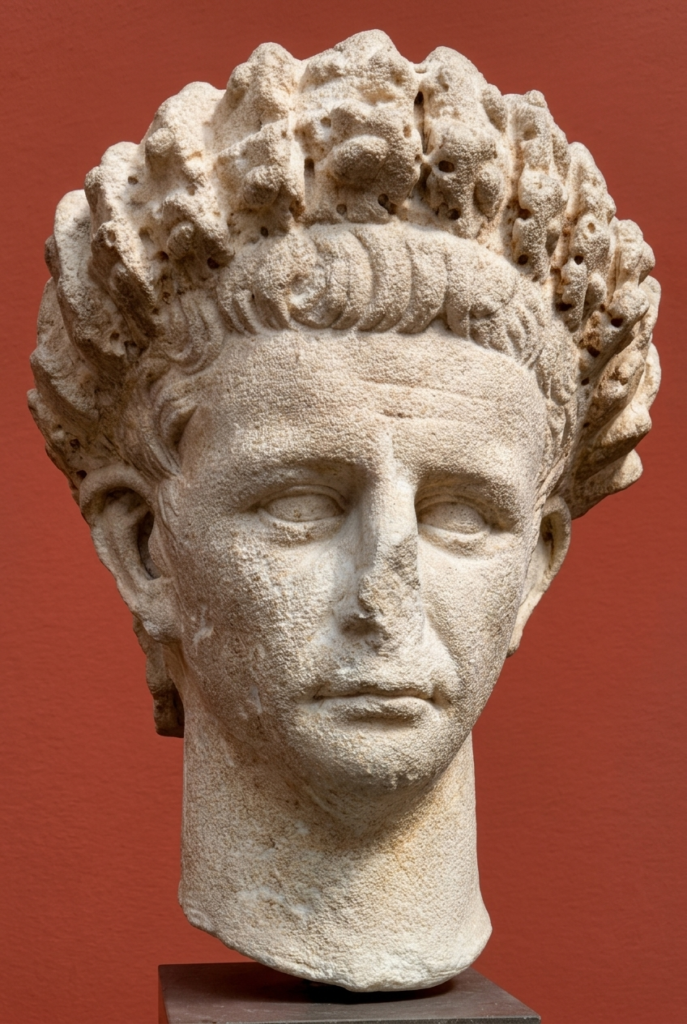
Crispus was a major catch. He was immensely wealthy, twice consul, socially prominent, and politically experienced.
Suetonius says his estate was worth roughly 200 million sesterces. He’d also been married previously to Domitia, Nero’s aunt.
The marriage gave Agrippina money, security, and powerful connections at exactly the moment she was rebuilding her position after exile.
By then, Agrippina and Nero were attracting attention at court. Nero’s popularity made him a potential rival to Britannicus, Claudius’ son. Hiswife Messalina was not amused, and saw Nero as a threat to her son.
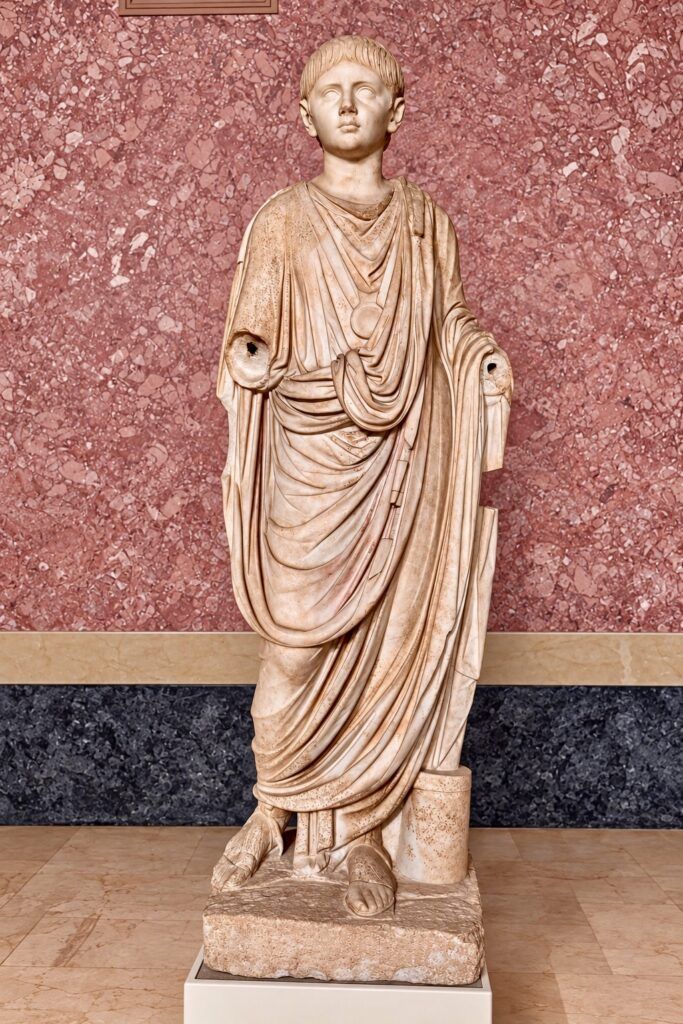
Suetonius reports that she sent assassins to strangle Nero in his sleep. According to the later legend, the killers fled when a snake appeared beneath his pillow.
Whatever the truth of that story, Agrippina’s marriage to Crispus was about to acquire its own sinister legend.
The Poisoner Myth
Then Crispus died, and suspicion eventually settled on Agrippina.
Suetonius claims that Agrippina killed Crispus after persuading him to make her his heir. His death therefore left her both enormously wealthy and conveniently single.
But did she really poison him?
The evidence is extremely thin. Suetonius was writing decades later, and he gives us the accusation without any detailed account of how Crispus died, what poison was supposedly used, who witnessed it, or whether anyone suspected Agrippina at the time.
It certainly makes for a good story. Agrippina was ambitious, and Crispus’ fortune was immense.
But she also had plenty to lose. Crispus was wealthy, well connected, and politically useful. She was already living the high life.
The marriage gave Agrippina security and status. She didn’t need to murder him for it to be a brilliant match.
The poisoning charge may be true, of course, But with the evidence we have, it looks much more like accusation than established fact.

Agrippina Catches Claudius’ Eye
After his wife Messalina was executed for scandal and betrayal, Claudius was in the market for another wife. And he badly wanted to restore the prestige of the imperial family after the chaos of Caligula’s reign.
Agrippina had the pedigree he wanted. She also brought beauty, intelligence, wealth, and serious political skill.
There was one glaring problem: she was his niece, the daughter of his brother Germanicus.
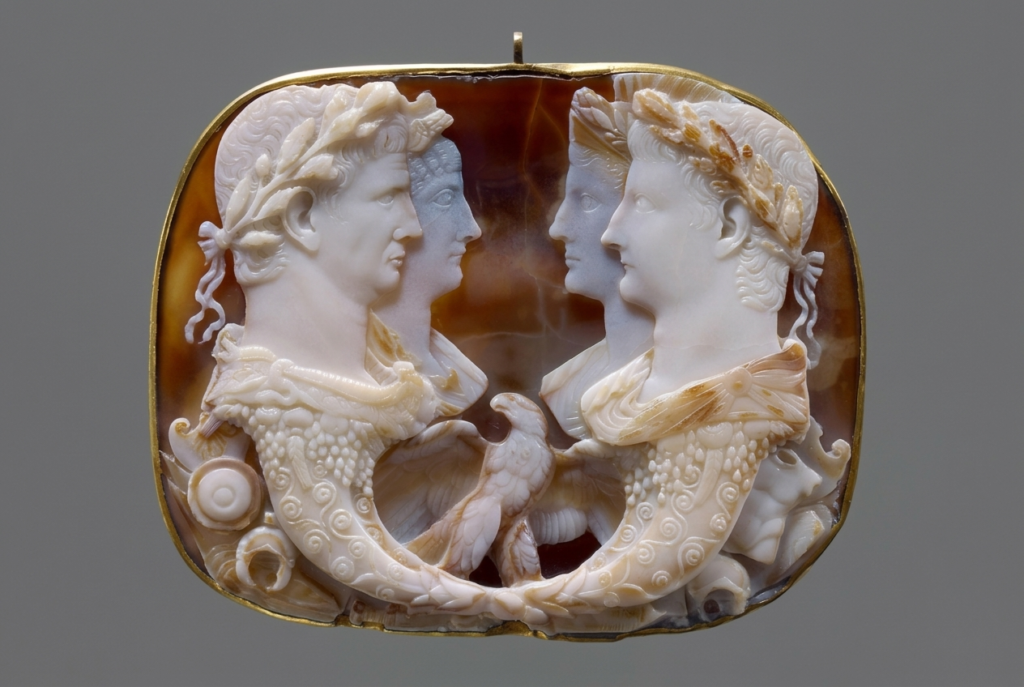
Even by Roman standards, that was taboo. Uncle-niece marriage was prohibited.
Claudius had the Senate legalize the match so they could marry. The roughly 25 year age gap did little to make it seem less creepy.
But that only shows how much the dynastic connection mattered to him.
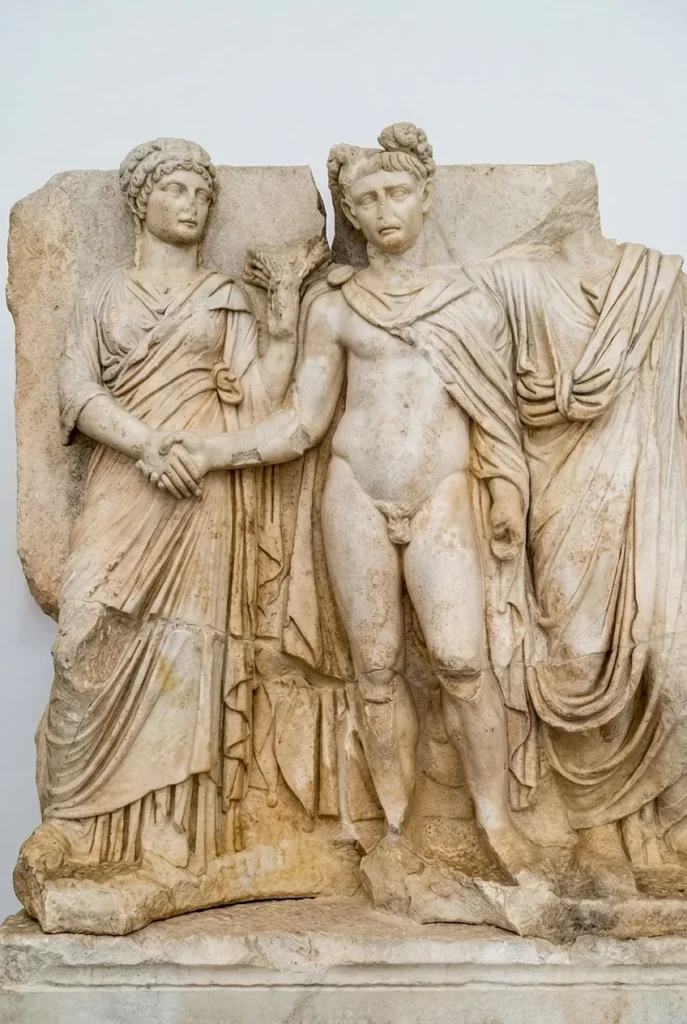
Claudius was a Claudian, not a direct descendant of Augustus. Marrying Agrippina gave him the Julian bloodline he craved and strengthened his claim to stand at the center of the imperial family.
They married in 49 CE.
Nero
Claudius didn’t get Agrippina. She was a package deal. She came with a son, Lucius Domitius Ahenobarbus, and very big ambitions for his future.
Agrippina soon pushed Claudius to adopt him, and he agreed. Lucius became Nero Claudius Caesar and, in effect, Claudius’ elder son.
From there, Nero’s rise accelerated. He received public honors, appeared prominently beside Claudius, and was given the toga virilis early. More and more, he was presented to Rome as the obvious successor.
What was Agrippina thinking?
Probably about survival as much as ambition. If Britannicus grew up and inherited the throne, Nero could become a dangerous rival simply by existing. Agrippina had spent enough of her life watching imperial relatives destroy one another to understand what that could mean.

The Balance Shifts
But, by the end of Claudius’ reign, Agrippina’s carefully built succession plan was starting to wobble.
Nero had the public performance part down. But it was mostly brand building. He had no practical experience in governing.
Ancient writers say Claudius second-guessed the succession. He began showing renewed favor toward Britannicus and may have regretted pushing Nero so far ahead.
That was dangerous for Agrippina. Nero’s position depended on Claudius continuing to back him, and Britannicus was still the emperor’s biological son.
The Death of Claudius
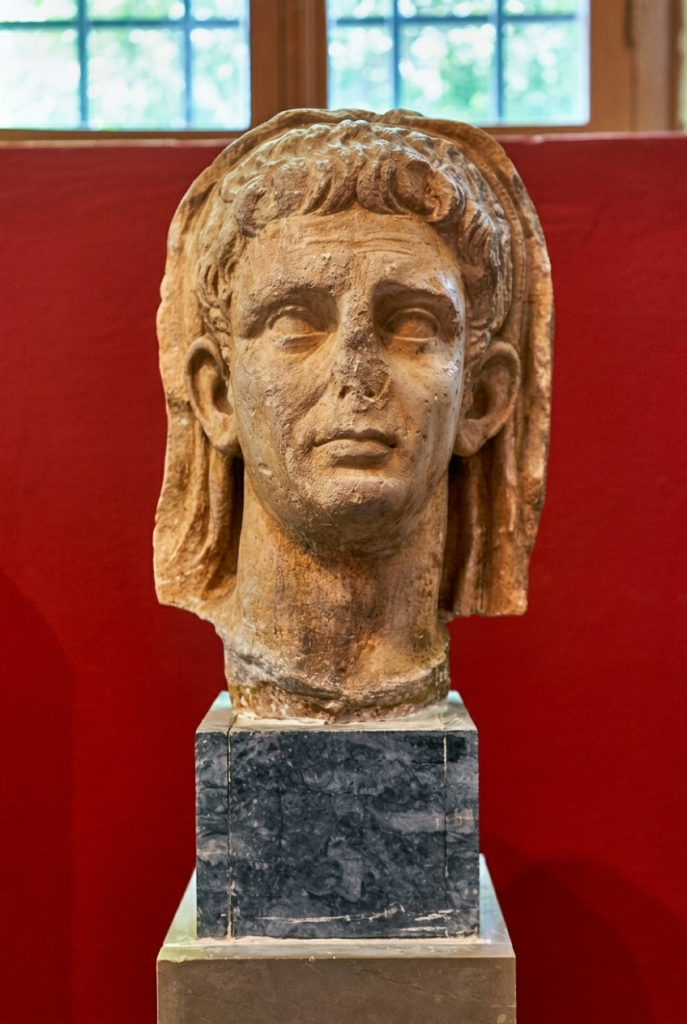
Claudius death in 54 CE kept Nero safe. Ancient writers blamed Agrippina and claimed she poisoned him with a dish of mushrooms.
Is it true? We can’t know for certain.
The usual suspects, Tacitus, Suetonius, and Cassius Dio, all point toward poisoning. But none was an eyewitness, and Roman historians loved a good palace murder.
The case against Agrippina is obvious enough. She had motive.
Claudius was favoring Britannicus, and Nero’s position might not remain secure forever. She also had access to people associated with poison, including the notorious Locusta.

Then, there was the gossip surrounding her second husband, Passienus Crispus, whose death was also later blamed on her. That accusation is much thinner, but it helped cement Agrippina’s reputation as a poisoner.
And what about Nero? Did he do the deed?
Claudius’ death certainly benefited him. Agrippina had already done the hard work: Nero had been adopted, elevated, and presented as the likely successor. Suetonius later claimed Nero was at least aware of the plot, though that can’t be verified.
Could mother and son have colluded? Possibly. But the evidence, such as it is, is much stronger for Agrippina than for Nero.
There’s also a much less dramatic possibility: Claudius simply died of natural causes. He was 63, had longstanding health problems, and ancient accounts of imperial poisoning are notoriously difficult to separate from rumor.

Nero Becomes Emperor
However Claudius died, Nero moved fast. He was taken to the Praetorian camp and acclaimed emperor. The same way Claudius was elevated.
One of Nero’s first major problems was Britannicus, Claudius’ biological son and his most obvious rival. Ancient sources say Nero poisoned him, and the accusation is highly plausible.
HIs motive was obvious. But there was no one in Rome powerful enough to hold the emperor accountable.
Even Tacitus says that you might have thought the death was from natural causes, except for the awkward fact that the funeral pyre was prepared in advance.
With Britannicus gone, Nero had removed his nearest rival.
Five years later, he would kill his own mother.
The Tension Between Agrippina & Nero
At first, Nero ruled cautiously. He was only 16 and had little experience in either government or command.
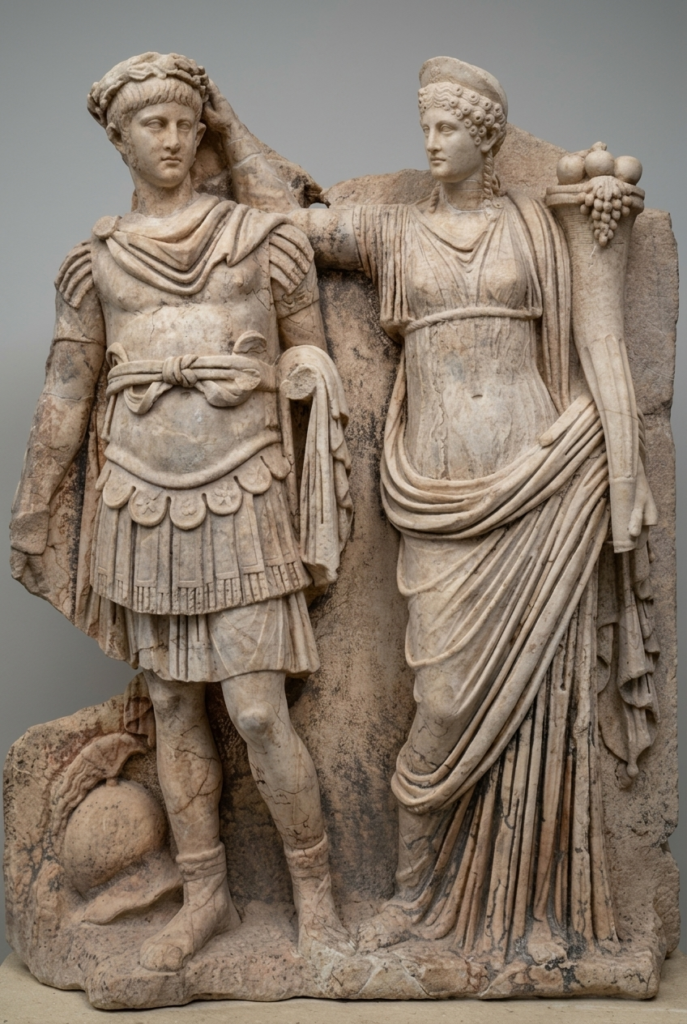
During those early years, Agrippina wielded enormous influence. At times, she seemed to govern alongside her son rather than simply advise him.
Her status was extraordinary. Inscriptions proudly identified Nero as the “son of Agrippina.” It was an unprecedented emphasis on an emperor’s mother.
Coins from the first year of his reign even placed Agrippina’s portrait alongside Nero’s, powerful visual evidence of just how prominent she was.

Ancient writers also describe her pushing the limits of what Roman women were normally allowed to do in public life. She positioned herself near meetings of the Senate and imperial councils, close enough that no one could forget whose ear she had.
So, there seems to have been some initial amity between the two of them. But Agrippina didn’t heed the warning signs.
Nero didn’t remain pliable for long. Like many teenagers handed far too much power, he had no intention of being managed forever.
As he grew more confident, he began resisting his mother’s control. He surrounded himself with friends like Otho, stayed out late, visited brothels, performed music, and squandered money. Agrippina was appalled.
The harder she tried to rein him in, the more he pulled away. She could feel her influence slipping away.
Agrippina’s Murder
The friction eventually between them became open warfare. Nero stripped Agrippina of honors and guards and drove her from the imperial palace. Then, he decided to get rid of her altogether.
His first attempt was an almost comical failure.
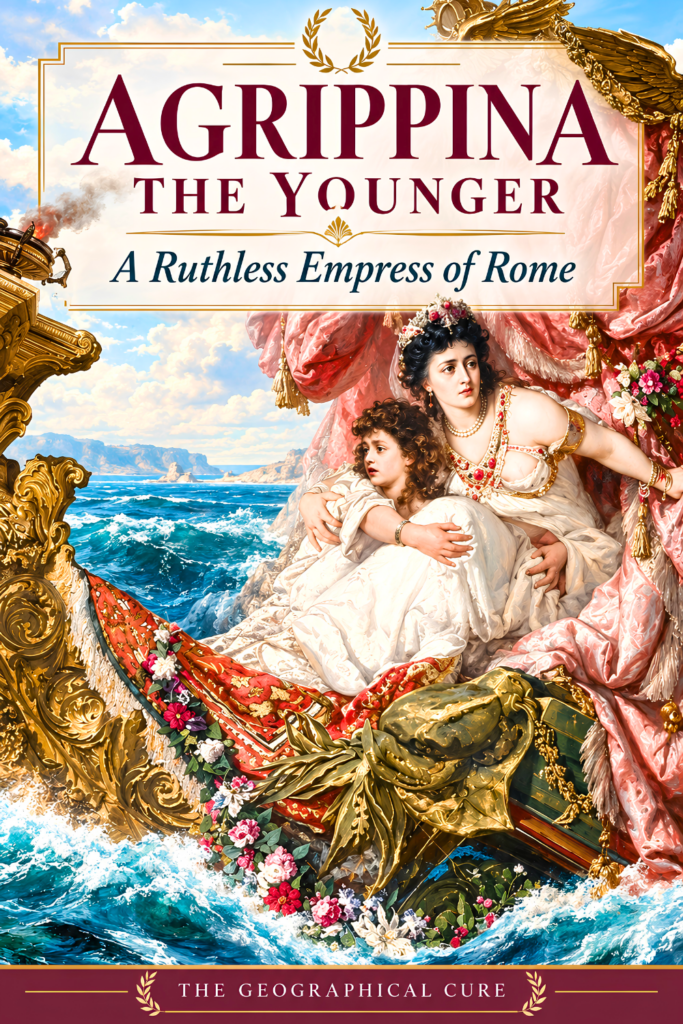
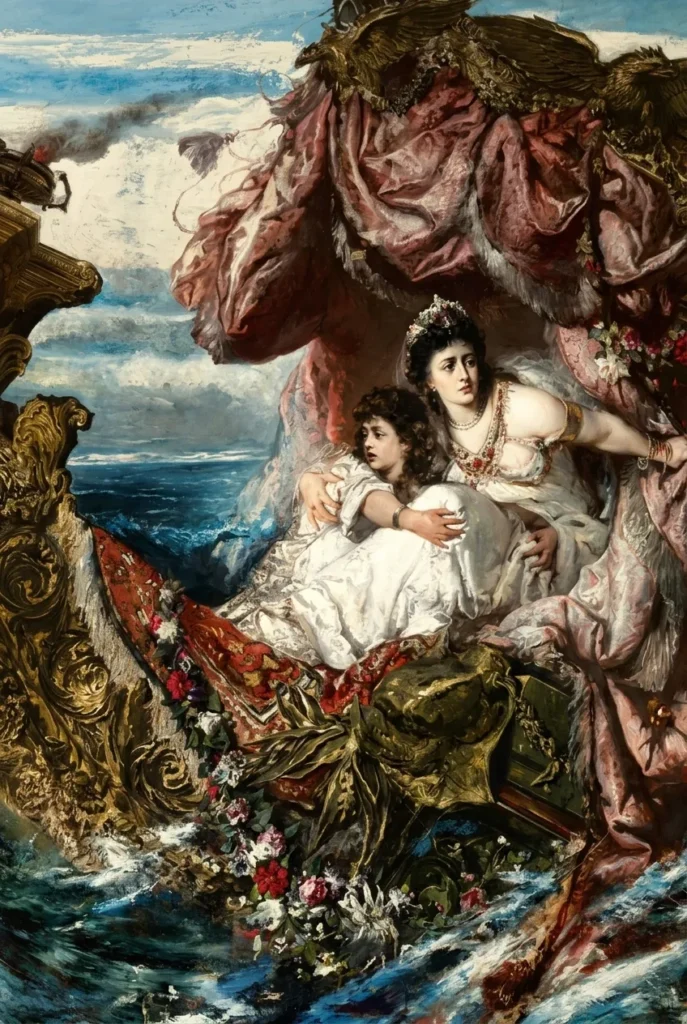
He pretended he wanted a reconciliation and invited her to Baiae for the festival of Minerva. On the return trip, he supplied her with a specially prepared boat designed to collapse and sink.
It failed. He hadn’t realized his mother could swim.
Agrippina survived the wreck and head to shore. Once Nero learned she was still alive, panic set in. An accidental death could be explained away. A failed murder attempt could not.
So he abandoned subtlety and used a hit squad.
Men were sent to Agrippina’s villa and killed her. Nero then tried to present the killing as the aftermath of a plot against his own life. The story fooled few people.

Denounced as a traitor, Agrippina was denied a state funeral and buried in an unmarked grave.
And according to Suetonius, Nero never entirely escaped what he had done. He later claimed to be haunted by his mother’s ghost.
Even dead, Agrippina refused to leave him alone.
Agrippina’s Legacy
Agrippina was undoubtedly ambitious, politically aggressive, and ruthless when Nero’s future was at stake. But the woman who emerges from Tacitus, Suetonius, and Dio is also filtered through a deeply hostile tradition.
Powerful imperial women were easy targets for stories about poison, sex, and manipulation. The real Agrippina was probably dangerous enough without needing every lurid accusation to be true.
I hoe you’ve enjoyed my Agrippina the Younger biography. You may find these other Roman histories interesting:
- History of the Rise and Fall of Rome
- History of the Roman Emperors
- Historical Facts about Rome
- Top 10 Worst Emperors Ranked
- History of Nero
- History of Julius Caesar
- History of Hadrian
Pin it for later.